


How Much Does a Quartzite Kitchen Island Cost?
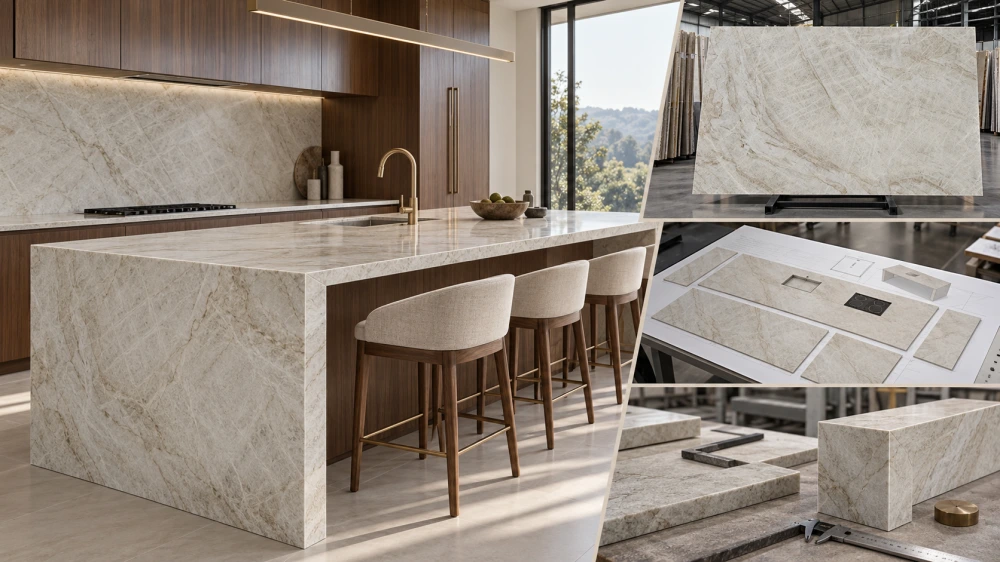
The cost of a Quartzite Kitchen Island depends on much more than the finished square footage of the island. A realistic budget has to account for the actual natural Quartzite slabs, usable cutting yield, fabrication, openings, edge details, waterfall panels, reinforcement where required, quality control, packing and logistics.
That is why two islands with similar finished dimensions can have very different total procurement costs. One may use a relatively calm Quartzite with efficient slab yield and simple edges. Another may require highly selected slabs, directional vein matching, two waterfall ends, a large sink opening, complex miters, additional handling and reinforced export packing.
Direct Budget Answer
Do not budget a Quartzite Kitchen Island from finished area alone. First define the island geometry, then determine how many actual slabs are required, how efficiently they can be cut, what fabrication is needed and what the delivery scope includes. A supplier cannot provide a meaningful project quotation from the words “Quartzite island” and one approximate dimension.
The Main Cost Drivers
| Cost Driver | Why It Changes Cost | Buyer Control |
| Quartzite Selection | Different named stones, blocks and visual grades can carry different material values. | Define the visual target and compare actual available slabs. |
| Slab Grade & Matching | Cleaner backgrounds, preferred movement or closely coordinated slabs may reduce acceptable inventory. | Set an acceptable color and vein range instead of demanding unnecessary uniformity. |
| Usable Slab Yield | Finished island area and purchased slab area are rarely identical. | Approve a CAD or digital cutting layout before finalizing quantity. |
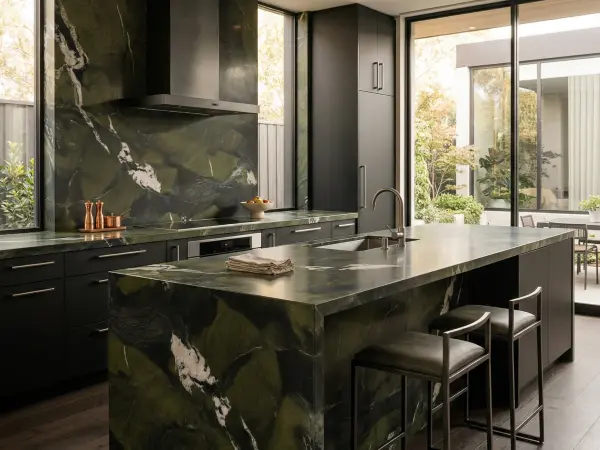
| Waterfall Panels | Vertical ends consume additional slab area and may require matched vein orientation and miters. | Decide early whether the island needs zero, one or two waterfall ends. |
| Openings & Machining | Sink, cooktop, faucet and accessory openings add machining and risk around narrower stone sections. | Finalize appliance models and templates before fabrication. |
| Edge Construction | Simple finished edges and fabricated thick-look miters have different labor and material requirements. | Specify the visible edge detail in the quotation drawings. |
| QC & Dry Layout | Complex multi-piece islands may require additional visual and dimensional confirmation. | Define the evidence required rather than adding unnecessary inspection stages. |
| Packing & Freight | Crate size, piece geometry, weight, route, trade term and destination affect delivered cost. | Request material, fabrication, packing and logistics as separate quotation lines. |
1. Material Grade Is Only the First Layer of the Budget
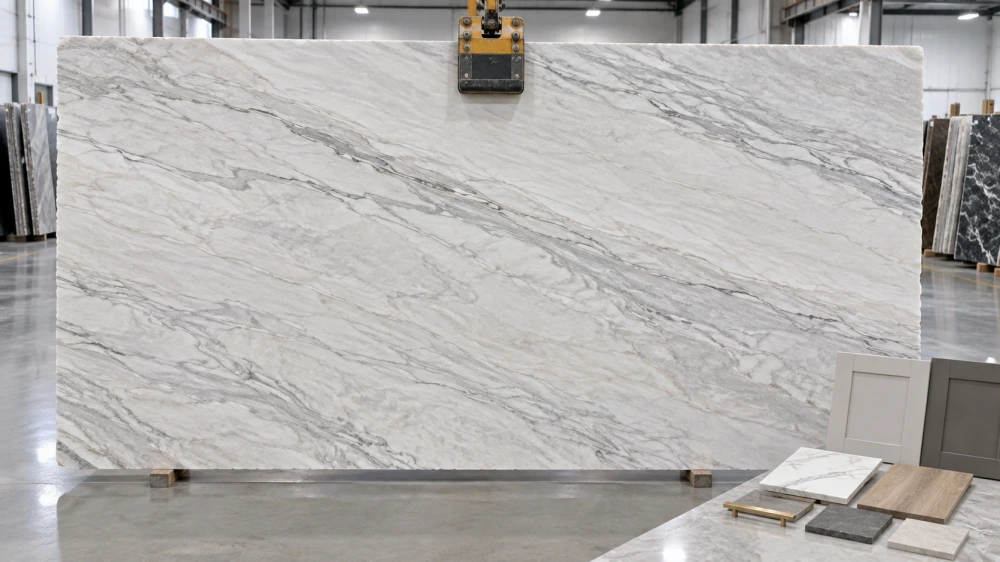
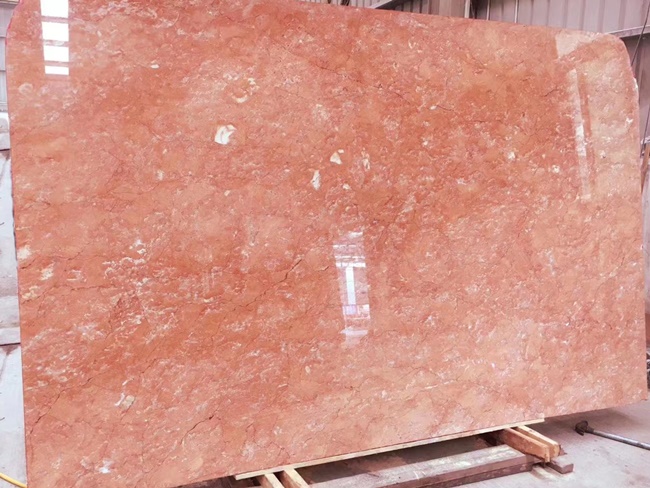
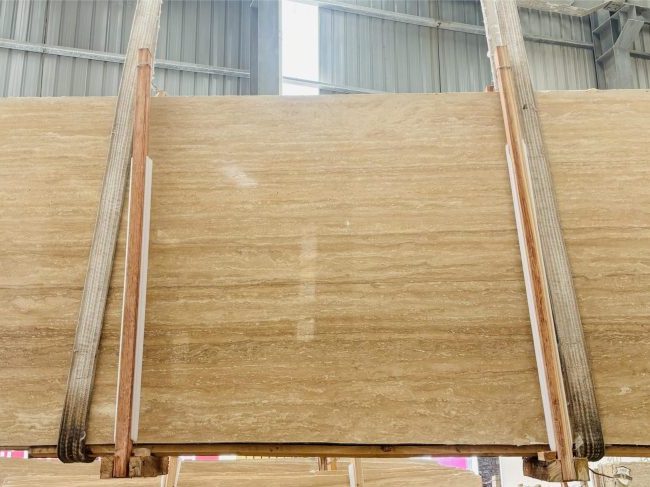
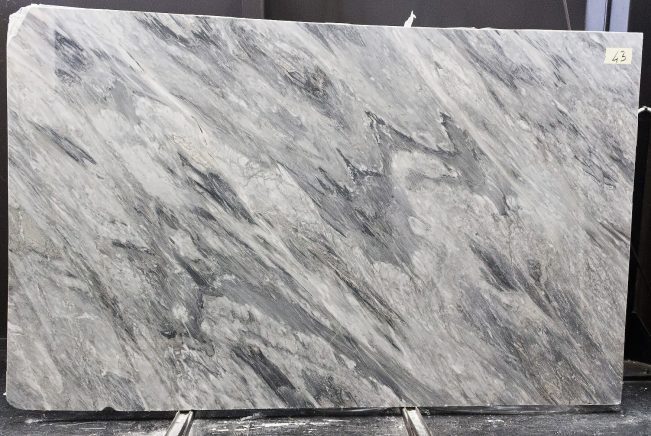
mont blanc quartzite slab grade kitchen island budgetNatural Quartzite is not a standardized product with one global price. Taj Mahal, Mont Blanc, Cristallo, Patagonia, Blue Roma and other commercial varieties can differ significantly in visual character, availability, slab structure and fabrication requirements.
Even within one stone name, buyers may see differences in background tone, vein concentration, crystal areas, natural fissures, resin treatment and overall visual grade. Selecting only premium slabs from a large group can increase the effective material cost because fewer slabs meet the approved visual range.
Buyers who are still defining the material family can begin with the CENTURY STAR Quartzite material collection, but a cost quotation should ultimately reference the actual slabs proposed for the project rather than a generic Quartzite category.
2. Finished Island Area Is Not the Same as Purchased Stone Area
This is one of the most common reasons early Quartzite budgets are inaccurate.
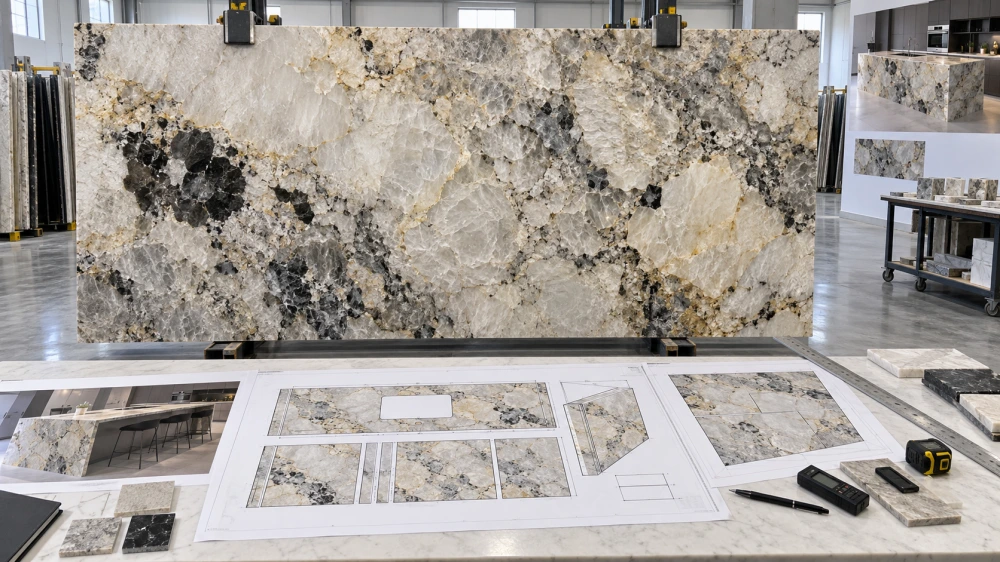
Imagine an island top that appears simple in plan. The buyer may calculate its finished surface area and expect to purchase nearly the same amount of stone. In reality, the fabricator has to position that island within rectangular natural slabs while considering slab dimensions, vein direction, natural features, sink or cooktop openings, seams, miter strips and waterfall panels.
The result is gross slab consumption versus net finished area. The difference between them is the cutting yield.
Why Yield Can Change Quickly
A quiet stone with relatively flexible orientation may allow efficient nesting. A strongly directional slab may need the island top placed lengthwise even if rotating it would save material. A crystal-rich or fissured zone may be visually attractive but unsuitable for a narrow strip around an opening. A waterfall design may also require a large adjacent section of the slab to preserve visual continuity.
This is why professional sourcing should include slab allocation and cutting-layout review. CENTURY STAR’s guide on how procurement teams source Quartzite Kitchen Island projects also treats gross slab quantity and CAD layout as core purchasing controls rather than secondary fabrication details.
3. Island Geometry Determines Fabrication Cost
A rectangular island top with simple finished edges is different from a sculptural island containing miters, waterfalls, large appliance openings and seating overhangs.
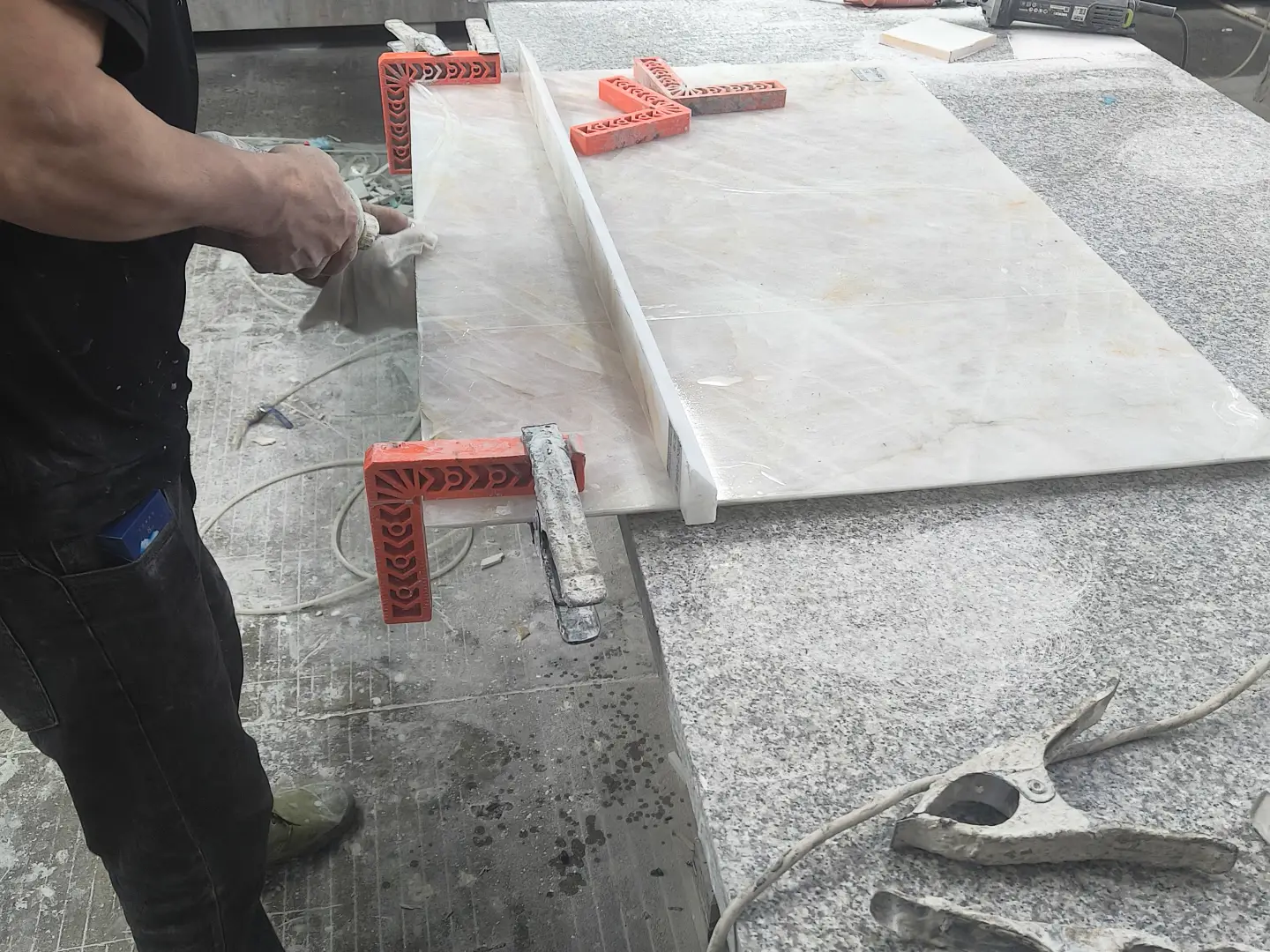
Common fabrication cost drivers include bridge-saw cutting, CNC or waterjet work where required, undermount sink openings, cooktop cutouts, faucet holes, mitered edge construction, polished exposed edges, waterfall joints and local reinforcement or handling measures appropriate to the geometry.
Quartzite can also contain natural fissures, mineral transitions and crystalline zones. These are not automatically defects, but their location can affect the cutting plan. A visually dramatic area that is appropriate across the center of an island may be less desirable beside a large opening where only a narrow stone rail remains.
Mitered Edges and Waterfalls Affect Both Material and Labor
A thick-look miter does more than add edge-polishing labor. It also requires strips from the slab and careful visual coordination with the top. Waterfall panels add full vertical surfaces and make seam accuracy and vein transition more visible.
Therefore, a buyer requesting a “thick island with waterfalls” should specify what that actually means before comparing supplier quotations.
4. Finish, Thickness and Special Design Details Also Matter
The quotation should identify the required finish and stone thickness rather than leaving them assumed. Polished, honed or other specified finishes may involve different processing requirements depending on the actual Quartzite.
Likewise, the visible thickness of the completed island may come from the slab itself or from fabricated edge construction. These are not the same production approach and should not be compared as if they were identical.
Special elements such as integrated stone sinks, curved profiles, complex radii or highly customized edge details move the project further away from standard countertop fabrication and should be priced from drawings.
5. QC and Dry Layout Are Part of the Real Project Cost
Quality control should not be treated as an invisible free service. A simple island may need standard dimensional and surface inspection, while a complex multi-piece project may justify additional dry-layout review, vein-transition checks, piece identification and packing documentation.
The objective is not to add as many inspection steps as possible. It is to establish the evidence necessary to verify that the fabricated pieces match the approved slab layout and drawings before they are packed.
For large international projects, correcting an issue before shipment is usually much more manageable than discovering it after the stone arrives on site.
6. Packing Can Be a Significant Budget Variable
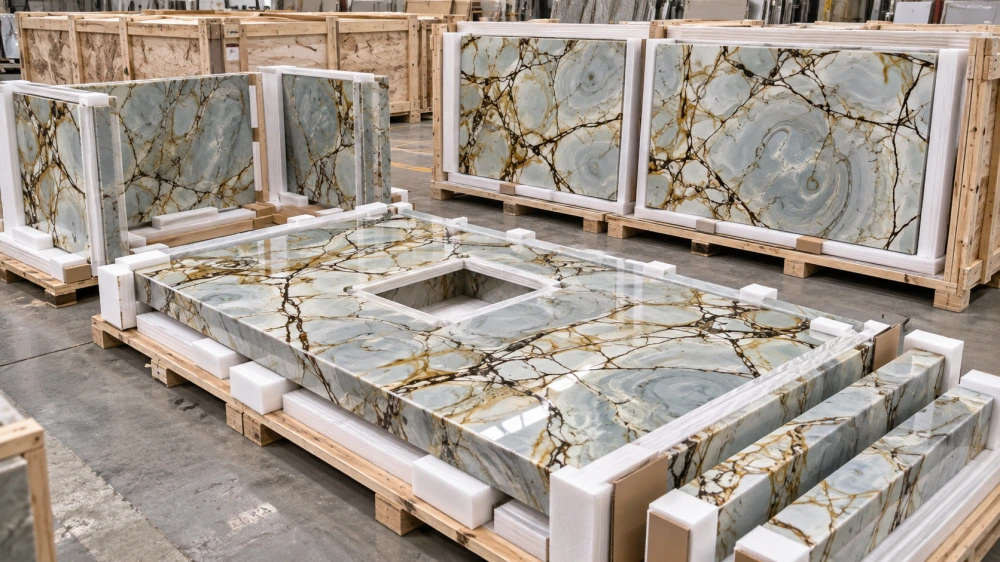
A fabricated Quartzite island cannot be packed like an unprocessed slab. Sink openings, long narrow sections, miters and waterfall pieces require protection designed around the finished geometry.
Export packing may require reinforced wooden crates, internal supports, cushioning, edge protection, waterproof protection and secure fixing. The correct packing design depends on the number of pieces, their dimensions, openings and transport method.
Reducing packing simply to lower the quotation can transfer cost into a much larger damage and replacement risk.
7. Freight and Trade Terms Must Be Separated From Stone Cost
Freight is another reason fixed online Quartzite island prices can be misleading. Logistics depend on origin, destination, crate dimensions, shipment weight, transport mode, trade term and current market conditions.
EXW, FOB, CFR/CIF and delivered quotations do not contain the same scope. Two suppliers can therefore show very different totals even if their actual stone and fabrication costs are similar.
How Can Buyers Control a Quartzite Kitchen Island Budget?
Budget control does not necessarily mean choosing the cheapest stone. It means controlling the variables that create unnecessary cost without weakening the design.
- Finalize the island geometry early. Changing dimensions after slab reservation can destroy an efficient layout.
- Set a realistic visual range. Requiring every slab to look almost identical may unnecessarily restrict available material.
- Review slab yield before purchase. Compare how the actual components fit onto the actual slabs.
- Use waterfalls deliberately. One or two waterfall ends can materially change slab consumption.
- Finalize appliances before cutting. Late sink or cooktop changes can require re-fabrication.
- Specify edge details clearly. Do not compare a basic edge quotation with a full mitered build-up quotation.
- Define QC scope. Use the inspection stages required by the project rather than vague “full QC” language.
- Compare delivered scope. Separate packing and freight so supplier quotes are commercially comparable.
What Information Is Needed for an Accurate Quartzite Island Quote?
A professional supplier should be able to quote more accurately when the buyer provides a complete brief. At minimum, the quotation request should identify the material direction, dimensions, fabrication scope and delivery basis.
| Quote Input | Why It Is Needed | Cost Risk if Missing |
| Stone / Visual Target | Defines the material group and slab-selection level. | Quotation may use an unsuitable grade or different stone. |
| Finished Dimensions | Required for slab quantity and fabrication planning. | Material quantity may be materially wrong. |
| Thickness & Finish | Defines material and processing scope. | Suppliers may quote different specifications. |
| Sink / Cooktop Details | Affects openings, machining and layout. | Fabrication cost and risk can be understated. |
| Edge / Waterfall Scope | Determines extra pieces, miters and slab consumption. | A basic countertop may be quoted instead of the actual island design. |
| Destination & Trade Term | Defines logistics responsibility. | Delivered totals cannot be compared accurately. |
For buyers managing an international supply package rather than only selecting a material, the CENTURY STAR guide to Quartzite Kitchen Island procurement explains how actual slabs, CAD layouts, fabrication approvals, QC, packing and delivery documentation fit together.
Material Cost vs Total Project Cost
One of the most useful distinctions in Quartzite budgeting is between the cost of the raw slabs and the cost of delivering a completed island package.
The raw slab is only the starting material. Once the project requires selection, layout, cutting, openings, finishing, edge assembly, waterfall matching, inspection, packing and logistics, the commercial scope changes.
This is why an apparently expensive slab can sometimes produce an efficient finished project if it fits the island well, while a cheaper slab may generate poor yield and require more material. Budget decisions should therefore be made using the approved fabrication solution, not a raw square-meter comparison.
Frequently Asked Questions
1. Why is there no single price for a Quartzite Kitchen Island?
Because natural Quartzite varies by stone, slab grade, dimensions and availability, while every island can have different dimensions, waterfalls, cutouts, edges, finishes, packing and delivery requirements. A meaningful price requires a defined project scope.
2. Is Quartzite priced by finished island area or by slab?
Material may be commercially quoted in different ways, but procurement quantity has to reflect the actual slabs required. Finished island area does not automatically equal purchased stone area because cutting yield, vein direction, natural features and additional components affect gross slab consumption.
3. Do waterfall ends make a Quartzite island more expensive?
They normally increase project scope because vertical panels require additional material, fabrication and mitered joints. They can also reduce slab yield if the design requires visual continuity between the top and side.
4. Why can two suppliers quote very different prices for the same Quartzite?
The quotations may not contain the same slab grade or project scope. One may include selected slabs, fabrication, miters, openings, QC, packing and delivery while another may quote mainly raw material. Compare the specifications and inclusions before comparing totals.
5. Does a larger slab always reduce kitchen island cost?
No. A larger slab can improve yield or reduce seams in some layouts, but its value depends on the actual island geometry, pattern direction and usable areas. The cutting layout is more important than slab size alone.
6. How do sink and cooktop openings affect the budget?
They add machining and influence the cutting layout. Large openings also create narrower surrounding stone sections that may require more careful placement, handling or project-specific reinforcement considerations.
7. Should freight be included when comparing Quartzite island prices?
Yes, if the commercial decision is based on delivered project cost. However, freight should be shown separately because rates, routes, shipment dimensions and trade terms can change. A slab or factory price should not be confused with delivered cost.
8. What should I send to get an accurate quotation?
Provide the preferred Quartzite or visual direction, finished drawings or dimensions, quantity, thickness, finish, sink and cooktop information, edge profile, waterfall scope, other fabrication requirements, destination and requested trade term. Actual slab selection can then be coordinated as the quotation progresses.
References
- Natural Stone Institute — Dimension Stone Design Manual Resource Library. The current manual includes guidance on stone selection, quartz-based stones and countertop fabrication and installation considerations.