


Quick Summary: Budgeting Grey Marble for a luxury Kitchen Island requires more than multiplying the finished countertop area by a marble price per square meter. The real project budget can include the selected stone variety and visual grade, actual slab dimensions, gross slab consumption, vein and tone matching, cutting yield, sink and cooktop openings, mitered thick-look edges, waterfall panels, reinforcement, CAD layout work, quality control, reinforced export packing, freight, spare material, structural support, and site handling. Grey stones commercially supplied within the marble category can also vary considerably in geological characteristics, surface behavior, natural fissures, availability, and slab size. Procurement teams should therefore price the actual slabs and fabricated island package rather than rely on a generic Grey Marble unit rate.
Why Unit Price Is Not Total Cost
A Grey Marble supplier may quote material by square meter, square foot, slab, or finished component. These figures can appear comparable even when the commercial scopes are completely different.
One supplier may be pricing polished slabs only. Another quotation may include slab cutting and standard edge finishing. A more complete quotation could include the island top, waterfall ends, sink and cooktop openings, mitered build-ups, reinforcement, CAD layout, trial fitting, quality control, export crates, and shipping.
For this reason, procurement teams should first normalize the scope before deciding which quotation is more economical.
Finished Island Area Is Not Purchased Marble Area
An island measuring 3200 × 1100 mm has a visible top area of approximately 3.52 square meters, but the project may require substantially more gross material. Waterfall panels, miter strips, vein direction, slab trimming, openings, natural fissures, unsuitable zones, and spare material all affect consumption.
If the island must be produced with deliberate vein flow from the horizontal top into a vertical waterfall end, the cutting layout may sacrifice otherwise usable areas of the slab. That extra consumption belongs in the budget even though it does not appear in the finished countertop area.
A Lower Slab Rate Can Produce a Higher Finished Cost
A smaller or visually inconsistent slab may require additional seams, another slab, or greater selective cutting. A slightly more expensive slab with better dimensions and cleaner usable areas can sometimes reduce the total fabricated cost.
This is why slab dimensions and cutting yield should be reviewed alongside the quoted material rate.
Design Logic: Price the Actual Kitchen Island Design
The design of the island directly affects material consumption and fabrication cost. Before a final quotation is requested, the procurement team should define the island length, width, cabinet layout, seating overhang, sink position, cooktop position, waterfall ends, exposed sides, edge thickness, seams, and surrounding finishes.
Simple Countertop Versus Sculptural Island
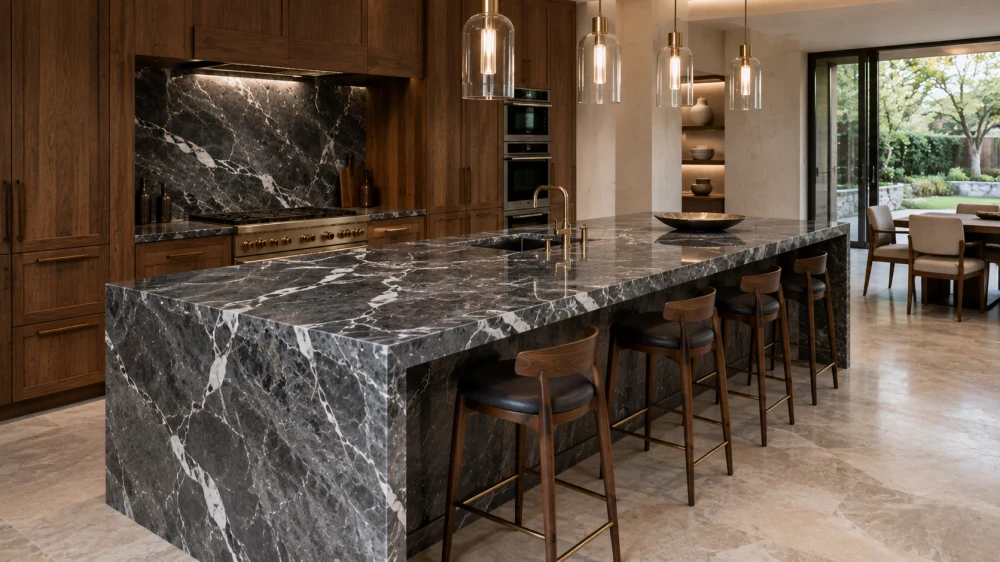
A straightforward rectangular top with one sink opening is relatively efficient to fabricate. A sculptural luxury island with two waterfall ends, thick mitered edges, curved elements, stone-clad elevations, integrated shelving, or complex appliance interfaces can require substantially more material and labor.
For budgeting purposes, these should be treated as individual fabricated components rather than one countertop measured only by area.
Grey Marble Can Be Either Quiet or Highly Graphic
Some Grey Marble selections have a relatively calm, cloudy appearance, while others contain strong white veins, charcoal movement, or pronounced directional bands. The design team should decide whether the goal is restrained tonal continuity or a more dramatic stone composition.
That decision changes the amount of selective cutting required and therefore influences material yield.
Waterfall Ends Add More Than Vertical Area
A waterfall panel adds the full vertical side area, but its real cost can also include visual matching, mitering, reinforcement, alignment, edge protection, and additional crate space.
When two waterfall ends are specified, buyers should expect both material consumption and fabrication complexity to increase.
Material Cost Logic
Grey Marble Variety Influences the Starting Price
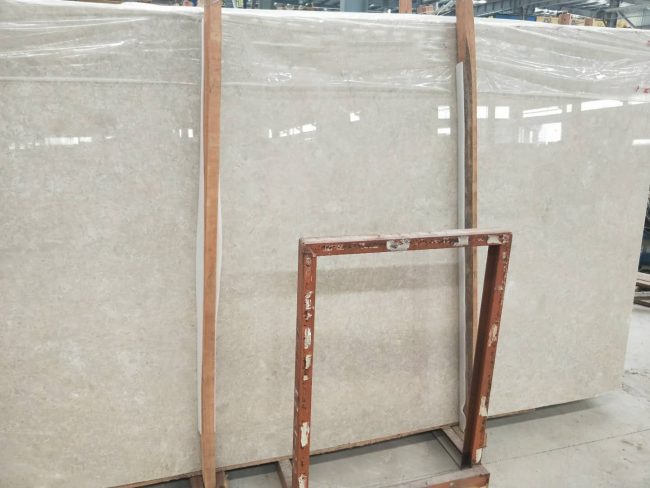
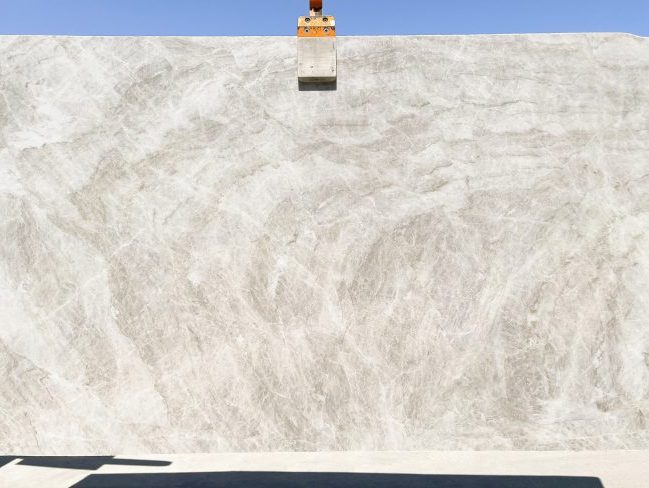
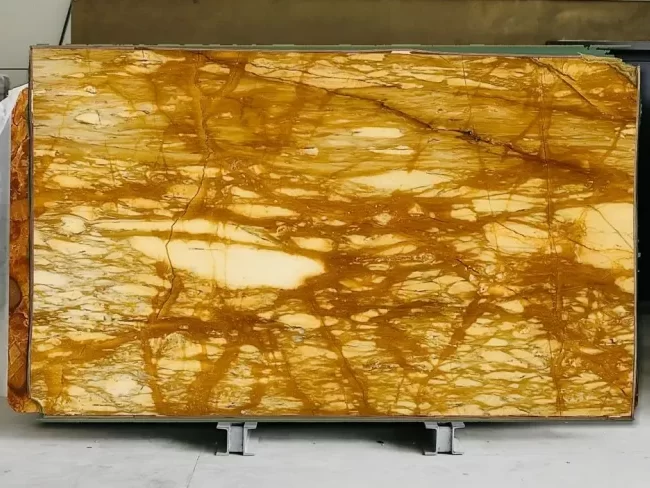
Commercial Grey Marble includes a wide range of appearances and supply conditions. Tundra Grey can provide a softer light-to-medium grey direction, Bardiglio can show stronger smoky movement, Grigio Carnico may offer darker and more dramatic contrast, while Pietra Grey is widely specified for its deep grey field and fine white linear veining.
Commercial classifications can vary, and some stones sold within the Grey Marble market may have different geological classifications. Buyers should therefore verify the actual material and its technical properties rather than relying on the trade name alone.
Procurement teams comparing different marble directions can review CENTURY STAR’s Marble material collection before narrowing the project specification.
Visual Grade Affects Cost
Within the same material, slabs with balanced tone, desirable vein placement, limited distracting repairs, and strong usable dimensions can command a higher price than lower-grade or less visually controlled slabs.
A luxury Kitchen Island concentrates a large amount of stone in one highly visible object, so premium projects often justify paying more for the correct slab rather than trying to save money on material that compromises the overall design.
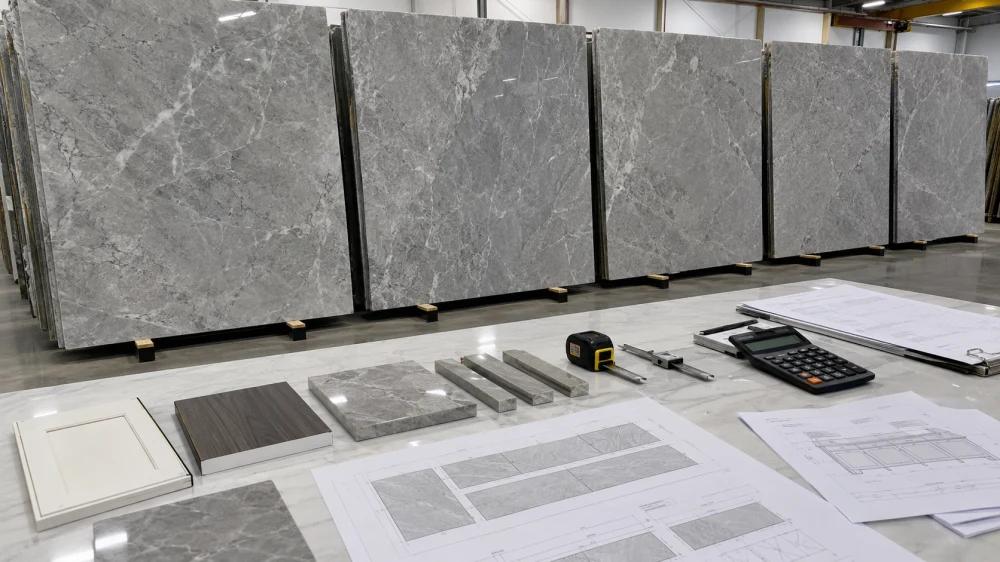
Slab Dimensions Influence Yield
Actual slab size is one of the most important budget variables. A long island may require an uninterrupted piece that only certain slabs can provide.
If the desired top cannot fit within the available usable dimensions, the project may need a seam or an additional slab. Buyers should therefore request actual slab measurements before accepting a material quotation.
Natural Features Reduce Usable Area
Marble can contain natural fissures, calcite lines, resin-treated areas, mesh backing, and localized repairs. These conditions are not automatically defects, but they influence where the factory should position sink openings, cooktop cutouts, narrow rails, and miter strips.
A visually acceptable area may still be unsuitable for a structurally vulnerable component.
Finish Can Affect Both Price and Appearance
Polished Grey Marble usually creates deeper color and stronger contrast. Honed finishes reduce reflection and often support a softer contemporary appearance.
Special leathered or brushed treatments may be available for some materials, but finish options and technical suitability should be confirmed for the actual stone.
Engineering Cost Logic
CAD Cutting Layout Should Come Before Final Quantity Approval
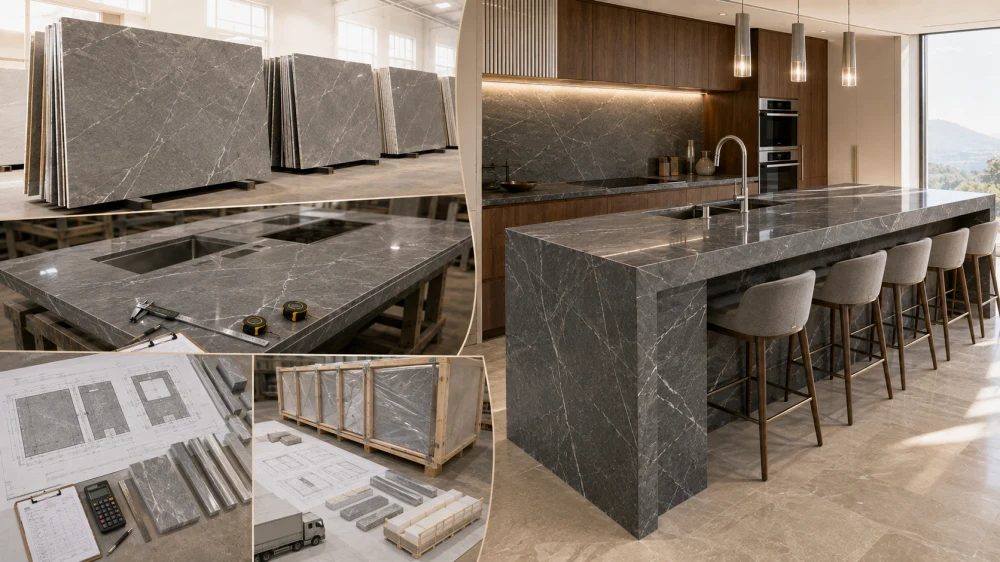
A preliminary slab-to-piece CAD layout should show the main island top, waterfall panels, sink opening, cooktop opening, edge strips, seams, vein orientation, and spare pieces.
This allows procurement teams to see whether the quoted gross slab quantity is reasonable and whether a different slab or layout could improve yield.
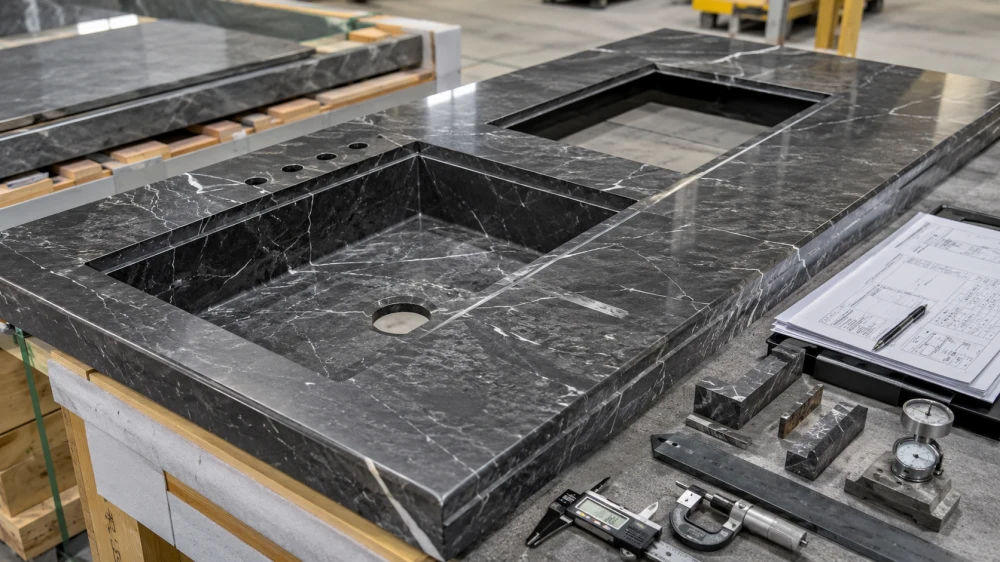
Sink Openings Add Processing and Risk
An undermount sink requires accurate cutting and a finished exposed inner edge. The opening also creates narrow stone sections around the front and rear rails.
The fabricator should review natural fissures and repaired areas before positioning these cuts. Additional temporary reinforcement may be needed during transportation.
Cooktop Cutouts Can Be Major Cost Drivers
A large cooktop opening removes a substantial amount of stone and can leave long narrow sections. Final appliance specifications should therefore be approved before cutting.
Changing appliance models after fabrication can result in expensive modification or replacement.
Mitered Thick-Look Edges Require Additional Fabrication
Many premium islands use a visually thick edge without using a solid slab of the same thickness. The effect can be produced using mitered strips cut from matching Marble.
This requires accurate 45-degree cutting, adhesive control, reinforcement, alignment, corner finishing, and additional handling. The cost should therefore appear as fabrication rather than being hidden inside a generic countertop rate.
Seating Overhang Requires Support Planning
A large seating overhang should not rely on Marble alone. Depending on the span, overhang depth, stone thickness, cabinet structure, and engineering requirements, the design may require concealed steel, brackets, rails, or another support system.
Even when this support is supplied by another contractor, it should still be included in the complete Kitchen Island budget.
Marble Performance Should Be Understood Before Purchase
Grey Marble is still marble. Acidic foods and liquids can etch carbonate-based stone surfaces. Sealing may help reduce absorption and staining risk, but it does not prevent acid etching.
A honed finish may make some everyday patina less visually prominent than a highly polished finish, but it does not eliminate the chemical reaction.
Premium pricing should therefore not be interpreted as maintenance-free performance.
Logistics, Packaging, and Delivery Cost Logic
Large Marble Components Require Purpose-Designed Packing
A finished island top containing a sink or cooktop opening is more vulnerable than an uncut slab. Waterfall panels, mitered edges, polished surfaces, narrow rails, and exposed corners require specific protection.
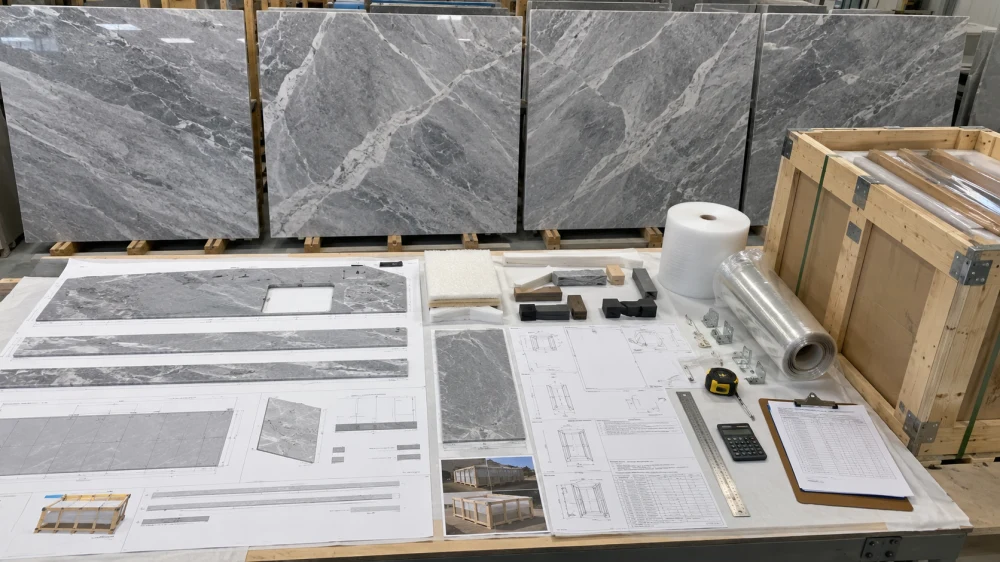
Suitable export packaging may include thin foam separators, edge guards, waterproof protection, rigid internal fixing, temporary support around openings, and reinforced fumigated wooden crates.
Long Components Increase Crate Cost
A long island top can require an oversized crate with heavier framing and more internal reinforcement. This may increase packing cost even when the quantity of Marble is relatively small.
Packed Dimensions Matter More Than Net Stone Area for Freight
International transport is influenced by the final crate dimensions, weight, route, container loading plan, destination, and trade term.
Procurement teams should request estimated packed cargo information before comparing logistics costs.
Site Access Can Change the Final Budget
The factory may be able to fabricate a very large one-piece island, but that does not guarantee the component can reach the kitchen.
Doorways, elevators, staircases, corridors, cranes, glazing openings, temporary storage, installation manpower, and lifting equipment should be evaluated before final panel sizes are approved.
Replacement Risk Is Higher with Visually Distinct Slabs
If a unique Grey Marble slab is heavily veined or unusually dark, a replacement sourced several months later may not match the original project.
Premium projects should consider retaining compatible spare material from the approved slab group.
Procurement Logic: Build the Budget in Separate Layers
Layer 1: Marble Material
Include the actual material, slab numbers, grade, thickness, finish, gross slab quantity, and any reserved spare material.
Layer 2: Slab Selection and Yield
Include selective cutting, vein orientation, waterfall matching, layout restrictions, and material loss caused by visual requirements.
Layer 3: Fabrication
Include cutting, sink and cooktop openings, faucet holes, mitered edges, waterfall panels, exposed-edge finishing, reinforcement, seams, and other custom operations.
Layer 4: Engineering and Drawings
Include CAD layout, shop drawings, appliance coordination, cabinet dimensions, structural support interfaces, and final measurement control.
Layer 5: Quality Control
Include slab approval, dimensional inspection, surface inspection, miter and edge inspection, trial fitting, waterfall relationship review, piece numbering, and packing inspection.
Layer 6: Packaging
Include reinforced crates, foam protection, separators, edge guards, waterproof materials, internal fixing, and temporary reinforcement around vulnerable cutouts.
Layer 7: Logistics and Site Handling
Include inland transport, export handling, international freight, insurance where selected, destination handling, unloading, storage, site delivery, and final movement to the kitchen.
Global and Market Pricing Insight
Grey Marble pricing varies by quarry source, commercial variety, slab dimensions, visual grade, availability, finish, and international demand. This makes one universal global price range unreliable for premium Kitchen Island projects.
The project itself also influences pricing. Large-format islands with fewer seams, dramatic waterfall panels, and controlled vein transitions increase the value of slabs with large usable dimensions.
At the same time, contemporary luxury interiors are using grey stone in different ways. Some projects favor soft warm-grey marble with restrained movement, while others use dark charcoal materials to create a more architectural focal point.
That visual diversity means that procurement teams should compare actual slab packages rather than broad color categories.
Where the project prioritizes a different maintenance profile or highly controlled manufactured pattern, buyers may also compare CENTURY STAR’s Sintered Stone Kitchen Island guide before final material approval.
Grey Marble Kitchen Island Cost Structure
| Cost Area | Main Cost Drivers | What Buyers Should Request | Hidden Budget Risk |
|---|---|---|---|
| Grey Marble | Stone variety, visual grade, slab dimensions, thickness, finish, availability | Actual numbered slabs, dimensions, finish, and gross quantity | Low unit price but poor slab size or usable yield |
| Visual layout | Vein direction, focal areas, waterfall continuity, selective cutting | Preliminary slab-to-piece CAD layout | Extra slabs required after design approval |
| Fabrication | Sink, cooktop, faucet holes, miters, waterfall panels, edges, reinforcement | Itemized fabrication quotation based on drawings | Special processing charged later |
| Structural support | Seating overhang, span, cabinet structure, concealed steel | Cabinet and support drawings | Support added only after stone arrives |
| Quality control | Dimensions, surface, openings, edges, miters, trial fit | Staged QC photos and dimensional records | Problems discovered after shipment |
| Packaging | Piece size, openings, miters, edge protection, crate structure | Packing plan and internal crate photographs | Large fabricated pieces treated like standard stone |
| Freight and delivery | Packed size, weight, route, trade term, unloading, site access | Estimated packed cargo and defined delivery scope | Factory price compared with delivered project cost |
Budget Strategy
Approve the Design Before Optimizing the Price
Trying to reduce cost before the island configuration is defined can create misleading estimates. Finalize the main dimensions, waterfall strategy, edge appearance, sink, cooktop, and seating zone first.
Compare Actual Slabs
Request current slab photographs, videos, dimensions, and quantity. A real budget is much more reliable once the supplier knows which material can actually be allocated to the project.
Use a Preliminary CAD Yield Plan
Before accepting the final gross material quantity, review how the major components fit across the proposed slabs. This can reveal whether the layout is efficient or unnecessarily wasteful.
Separate Material, Fabrication, Packing, and Freight
An itemized quotation makes cost changes transparent. If the buyer removes one waterfall end, for example, it becomes easier to identify the reduction in slab quantity, fabrication, packing, and possibly freight.
Use Premium Material Where It Has the Greatest Visual Value
The most attractive slab area should normally be assigned to the main countertop and highly visible waterfall end. Quieter areas can be used for less prominent components when structurally suitable.
Keep a Practical Contingency
Final site dimensions, material yield, structural requirements, replacement risk, freight changes, and installation access can affect a custom natural-stone project. A premium budget should therefore allow for project-specific adjustments.
Common Budget Mistakes
Calculating Cost from Finished Top Area Alone
This ignores waterfall panels, edge strips, natural features, openings, slab dimensions, selective layout, and spare material.
Comparing Grey Marble Only by Square-Meter Price
Visual grade and usable slab dimensions can have more impact on total project value than a small difference in material rate.
Ignoring Vein Direction
Directional Grey Marble can require less efficient cutting to achieve the intended visual composition.
Leaving Appliance Details Until After Production Starts
Sink and cooktop changes can result in expensive rework or replacement.
Assuming a Thick-Looking Edge Is a Simple Standard Edge
Mitered build-ups require additional material strips, precision fabrication, adhesive work, finishing, and protection.
Ignoring Marble Etching in the Purchasing Decision
Sealing may reduce absorption but does not prevent acid etching. Maintenance expectations should be discussed before the material is approved.
Underestimating Packaging and Installation Access
Large island components may require reinforced crates, special lifting equipment, additional site labor, and carefully planned access.
FAQ
1. How is the cost of a Grey Marble Kitchen Island calculated?
The complete cost should include gross slab consumption, Grey Marble variety and grade, finish, cutting yield, visual layout, sink and cooktop openings, mitered edges, waterfall panels, reinforcement, drawings, quality control, packaging, freight, structural support, and site handling.
2. Why do prices vary between different Grey Marble slabs?
Prices can vary because of quarry source, visual grade, background tone, vein character, slab dimensions, natural fissures, repairs, usable yield, availability, and supplier inventory. Slabs with the same commercial name do not necessarily have identical value.
3. What fabrication costs are easy to miss?
Common hidden items include sink polishing, cooktop cutouts, faucet holes, miter strips, waterfall fabrication, reinforcement, seam finishing, trial fitting, vein-layout work, and special handling for oversized pieces.
4. What logistics costs should be included in the budget?
Buyers should consider reinforced crates, cutout reinforcement, inland transport, international freight, insurance where applicable, destination handling, unloading, temporary storage, site delivery, and movement of the finished components into the kitchen.
5. Is the cheapest Grey Marble slab usually the best budget option?
No. A slab with a higher unit price may have better dimensions, more usable area, stronger visual quality, or more efficient waterfall yield. This can reduce seams, waste, additional slabs, and replacement risk.
6. When is the best time to request a final quotation?
The most reliable quotation can be prepared after the project has defined the actual slabs, island dimensions, cabinet structure, sink and cooktop models, waterfall design, edge detail, overhang support, cutting layout, packaging standard, and delivery scope. Final dimensions should still be verified before cutting.
Final Note / Practical Takeaway: Budgeting Grey Marble for a luxury Kitchen Island is a process of controlling the complete fabricated package, not simply finding the lowest slab rate. Material grade establishes the starting point, but actual slab dimensions, visual yield, waterfall matching, openings, mitered edges, structural support, QC, reinforced packing, freight, and site handling can materially change the final cost. Procurement teams should approve actual slabs, use preliminary CAD layouts to understand yield, separate material from fabrication and logistics, and finalize the technical design before cutting. A reliable budget is the one that exposes the major cost drivers early and reduces the chance of unexpected fabrication, replacement, or delivery costs later.
References
- Natural Stone Institute. Dimension Stone Design Manual, current applicable edition.
- Natural Stone Institute. Natural Stone Care and Maintenance Guidance, current applicable guidance.
- ASTM International. ASTM C503/C503M, Standard Specification for Marble Dimension Stone, where applicable to the selected material classification.
- ASTM International. ASTM C1528/C1528M, Standard Guide for Selection of Dimension Stone.