


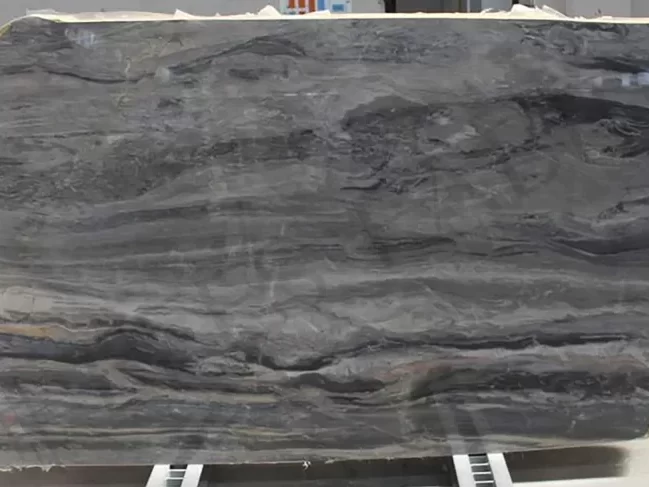
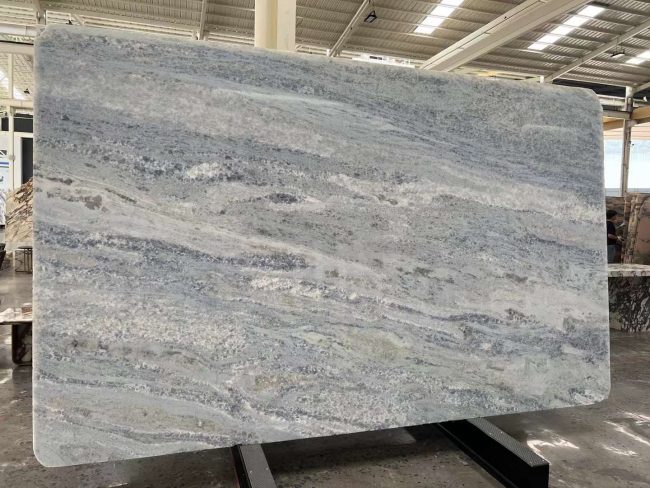
Quick Summary: The price of White Marble for a premium Kitchen Island cannot be calculated reliably from the finished countertop area alone. The total budget can include the selected marble variety and grade, actual slab dimensions, gross slab quantity, visual selection, vein matching, cutting yield, sink and cooktop openings, mitered edge build-ups, waterfall panels, reinforcement, CAD layout work, quality control, protective packaging, freight, spare material, and installation coordination. Carrara, Calacatta Gold, Statuario, Volakas, and other white marbles can occupy very different budget levels because availability, vein quality, slab size, usable yield, and visual grading vary significantly. Buyers should therefore compare complete fabricated packages rather than isolated slab rates.
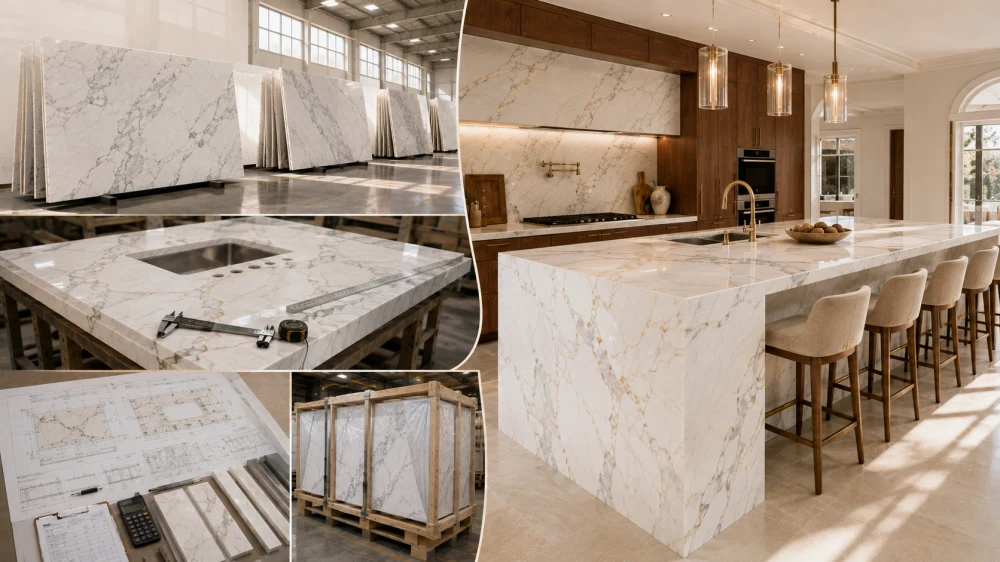
Why Unit Price Is Not Total Cost
A White Marble supplier may quote by square meter, square foot, slab, or fabricated piece. These numbers can look easy to compare, but they often represent very different commercial scopes.
One quotation may cover only polished slabs. Another may include cutting and standard edge polishing. A third may include the finished island top, waterfall ends, mitered edges, sink cutout, reinforcement, dry layout, export crates, and freight.
For a premium Kitchen Island, the lowest material rate is therefore not automatically the lowest project cost.
Finished Area Is Not Gross Marble Consumption
An island measuring approximately three meters by one meter does not simply require three square meters of Marble. The factory must work within actual slab dimensions and allow for trimming, vein orientation, openings, edge strips, waterfall panels, natural fissures, visually unacceptable zones, and spare material.
If a highly veined Calacatta slab must be positioned in a particular direction, the most visually successful cutting plan may create more waste than the most efficient nesting plan.
Premium Marble Pricing Includes Visual Selection
White Marble is often valued according to characteristics that are difficult to reduce to a standard commodity rate. Buyers may pay more for a cleaner white background, balanced grey veining, warmer gold accents, larger slab size, lower repair visibility, or a slab pair suitable for a dramatic waterfall composition.
This means that two slabs carrying the same commercial name can still occupy different price positions.
Design Logic: Define the Premium Island Before Pricing It
The island design controls a significant part of the final budget. Procurement teams should establish overall length and width, sink position, cooktop position, seating zone, edge thickness, waterfall ends, exposed elevations, cabinet structure, seam preference, and surrounding finishes before requesting a serious quotation.
Simple Top Versus Architectural Island
A rectangular Marble countertop with one sink opening is relatively straightforward. A sculptural island with two waterfall ends, thick mitered edges, curved sections, an integrated stone shelf, complex appliance openings, or strong vein continuity requires more fabrication and usually more gross material.
The visual design should therefore be translated into fabrication components before the budget is compared.
Waterfall Ends Change Both Material and Fabrication Cost
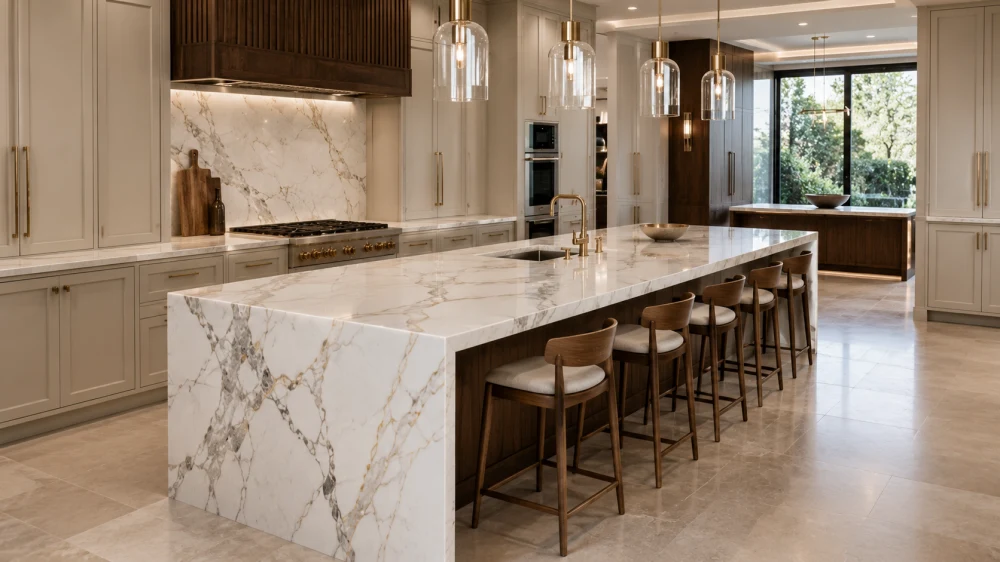
A waterfall end uses additional full-height Marble and requires accurate edge coordination with the main countertop. Where the design expects the vein movement to continue from horizontal top to vertical side, the factory must reserve suitable areas of the slab and plan the joint carefully.
A second waterfall end increases this requirement again and may affect whether one, two, or more slabs are needed.
Thick-Looking Edges Are Usually Fabricated Details
A premium island may visually appear to use very thick Marble even when the primary slab is a standard architectural thickness. This effect can be created with mitered edge strips.
Mitered build-ups require accurate 45-degree cutting, bonding, reinforcement, color-controlled adhesive, corner finishing, and additional protection during transport. These costs should not be confused with raw slab price.
Material Cost Logic
White Marble Variety Has a Major Influence on Price
Carrara Marble is generally associated with a softer white-to-grey background and finer grey veining. Calacatta selections can offer broader movement, brighter white fields, and in some cases warm gold accents. Statuario is often selected for a strong white background and more graphic grey veining, while Volakas can provide flowing grey movement with a softer visual rhythm.
These descriptions are useful for design direction, but price should always be based on the actual slabs available for the project.
Slab Grade Matters
Within one commercial variety, a cleaner or more visually balanced slab can cost more than material with heavier background variation, dense veins, repairs, or less desirable dimensions.
Premium Kitchen Island projects often concentrate the visual value of the slab in a single large surface. As a result, buyers may deliberately choose higher-grade slabs even when the material rate is higher.
Slab Size Can Reduce or Increase Total Cost
A more expensive large slab may create a lower total project cost if it allows the island top and important vertical components to be cut efficiently.
A cheaper but smaller slab can require an additional seam or another complete slab. Procurement teams should therefore compare usable slab dimensions rather than price per square meter alone.
Vein Direction Affects Yield
Strongly directional Marble can create significant cutting restrictions. The island top, waterfall panels, and edge strips may need to follow a deliberate visual direction instead of the most economical nesting orientation.
This is one reason premium Calacatta or Statuario island projects can consume more gross material than the finished countertop area suggests.
Natural Fissures and Repairs Influence Usable Material
Natural fissures, calcite lines, resin treatment, mesh backing, and localized repairs can be present in Marble slabs. These conditions are not automatically unacceptable, but they can affect where pieces are cut.
A slab area that is suitable for a broad countertop field may not be suitable for a narrow sink rail or miter strip.
Buyers comparing Marble with other natural surfaces can review CENTURY STAR’s Natural Stone Guide covering key types, features, and applications.
Engineering Cost Logic
CAD Layout Has Commercial Value
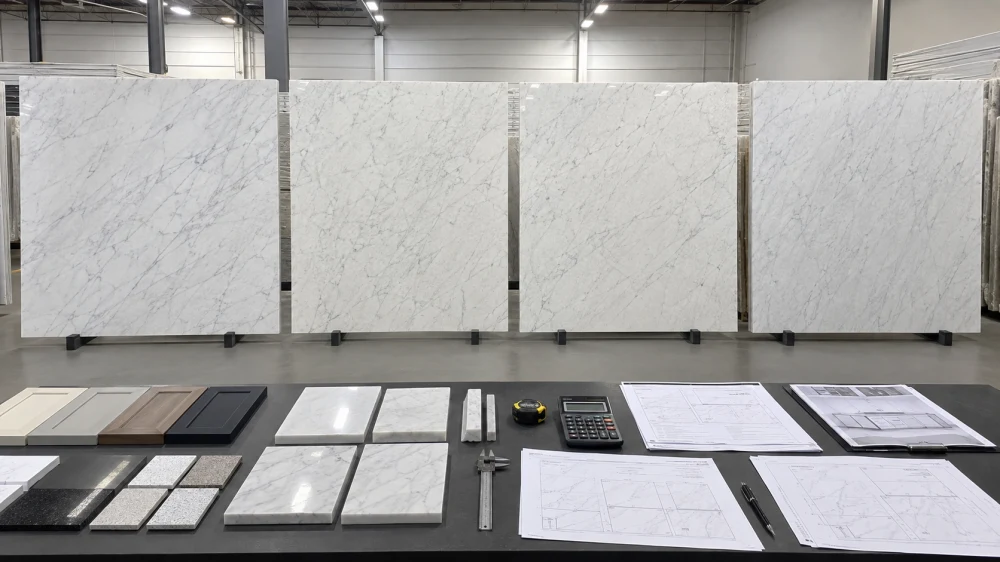
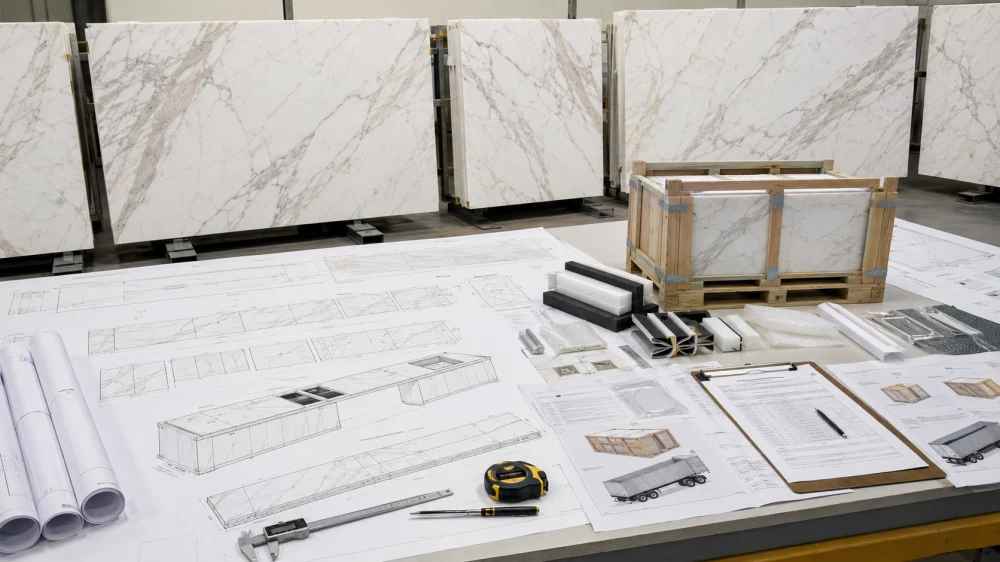
Before final material quantity is accepted, the supplier should prepare a preliminary slab-to-piece layout showing the main top, waterfall panels, sink opening, cooktop opening, miter strips, seams, and spare material.
This allows buyers to understand why a certain number of slabs is required and whether another slab size or layout could improve yield.
Sink Cutouts Add Processing
An undermount sink requires accurate CNC or waterjet fabrication and a finished exposed inner edge. The remaining Marble rails around the opening must also be reviewed for natural fissures and handling risk.
Complex sink shapes or multiple basins can increase processing time.
Cooktop Openings Can Increase Risk
Large cooktop cutouts remove significant material and can create narrow front and rear rails. Final appliance information should be supplied before fabrication.
Changing the cooktop after cutting may require modification or complete replacement of the countertop.
Faucet and Accessory Holes Should Be Included in the Quote
Faucets, soap dispensers, filtered-water taps, pop-up outlets, and other accessories can add drilling operations. Individually these may appear minor, but a complete quotation should identify what is included.
Overhang Support Is Part of the Project Budget
A seating overhang should not rely on Marble alone. Depending on thickness, span, overhang depth, cabinet structure, expected loading, and project engineering, steel frames, brackets, rails, or other concealed supports may be required.
These supports may be supplied by the cabinet contractor, metalwork contractor, or another party, but they still belong in the total Kitchen Island budget.
Natural Marble Requires Realistic Use Expectations
White Marble can etch when exposed to acidic foods and liquids. Sealing may reduce absorption and staining risk, but it does not prevent the chemical reaction responsible for etching.
Honed Marble may make some everyday patina less visually obvious than a highly polished surface, but it does not make the material acid-proof.
Budget planning should therefore include realistic care expectations rather than assuming that a premium price makes Marble maintenance-free.
Logistics, Packaging, and Delivery Cost Logic
Large Island Tops Need Stronger Packaging
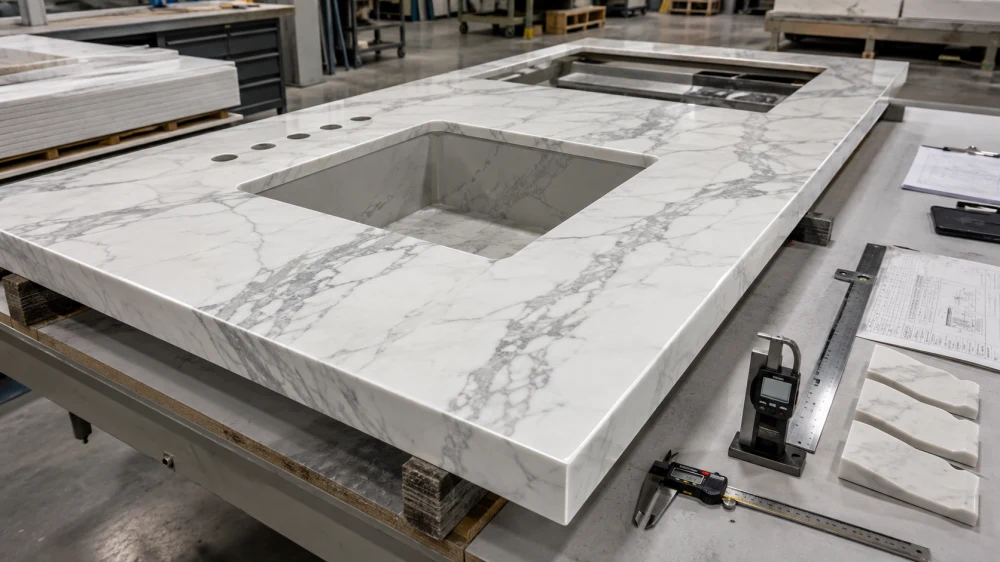
A long Marble countertop with a sink or cooktop opening is more vulnerable than a simple rectangular slab. Finished edges, narrow rails, miter strips, and waterfall panels need protection against impact and flexing.
Export packaging may include foam, thin separators, edge guards, temporary reinforcement, waterproof protection, secure internal fixing, and reinforced fumigated wooden crates.
Openings May Require Temporary Support
Sink and cooktop openings can require rigid temporary bars or backing for transportation. This reinforcement should be designed so the installation team can identify and remove it safely when appropriate.
Crate Size and Weight Affect Freight
A premium island with large panels can create long, heavy crates. Freight should therefore be calculated using packed cargo dimensions and weight rather than net Marble area.
Long crates may also affect container loading, destination handling, forklift requirements, and final delivery access.
Site Delivery Can Become a Major Hidden Cost
Large Marble components may require special unloading, additional labor, lifting frames, suction equipment, stair or elevator coordination, and temporary storage.
The budget should distinguish port delivery, warehouse delivery, curbside delivery, project-site delivery, and movement into the final kitchen.
Replacement Risk Has Financial Value
If a unique Calacatta or Statuario slab breaks during transport or installation, sourcing a visually compatible replacement months later may be difficult.
Premium projects should consider whether to keep suitable spare material from the original slab group and whether cargo insurance is appropriate for the shipping route.
Procurement Logic: Build the White Marble Budget in Layers
Layer 1: Raw Material
Include the selected Marble variety, actual slab numbers, grade, thickness, finish, gross slab quantity, and spare material.
Layer 2: Visual Selection and Yield
Include selective slab allocation, vein orientation, waterfall continuity, bookmatching where relevant, and material loss caused by visual requirements.
Layer 3: Fabrication
Include straight cutting, CNC work, sink and cooktop openings, faucet holes, exposed-edge finishing, mitering, waterfall panels, reinforcement, and other custom details.
Layer 4: Engineering and Drawings
Include shop drawings, slab layouts, cabinet coordination, appliance templates, support planning, seams, and final dimension control.
Layer 5: Quality Control
Include slab approval, dimensional inspection, edge and surface inspection, trial layout, waterfall relationship review, piece numbering, and packing inspection.
Layer 6: Packaging
Include reinforced crates, foam, edge guards, waterproof protection, separators, temporary support around openings, and internal fixing.
Layer 7: Logistics and Site Handling
Include inland freight, export handling, international shipping, insurance where applicable, destination fees, unloading, storage, site delivery, and movement to the kitchen.
Global and Market Pricing Insight
White Marble prices vary widely because the category contains both relatively accessible materials and highly selective premium slabs. Quarry availability, visual grade, block quality, slab size, international demand, finish, and supplier inventory all influence the price.
For this reason, a global article should not present one fixed White Marble price as though it applies to every Calacatta, Carrara, Statuario, or Volakas island.
The more useful procurement method is to request quotations against the same project drawings and compare the actual slab package, fabrication, packing, and logistics on an equivalent basis.
Premium island projects also increasingly use large uninterrupted tops and matched waterfall ends. This raises the value of large clean slabs and makes visual yield a more important component of price.
A more expensive slab can sometimes be the better commercial choice when it provides cleaner usable dimensions and avoids an additional slab, seam, or complex visual compromise.
White Marble Kitchen Island Cost Structure Table
| Cost Area | Main Price Drivers | What Buyers Should Request | Hidden Cost Risk |
|---|---|---|---|
| White Marble slabs | Variety, visual grade, slab size, thickness, finish, availability | Actual numbered slab photos, dimensions, and gross quantity | Low square-meter rate but unsuitable slab dimensions |
| Visual layout | Vein direction, waterfall matching, selective cutting, usable yield | Preliminary CAD slab-to-piece layout | Additional slab required after design approval |
| Fabrication | Sink and cooktop cutouts, miters, waterfall panels, edges, drilling | Itemized fabrication quotation from approved drawings | Openings and edge work charged later as extras |
| Structural support | Overhang depth, span, cabinet construction, steel framing | Cabinet and support drawings | Support added after stone production |
| Quality control | Slab approval, dimensions, miters, openings, surface, trial layout | Defined QC stages with photographs | Problems discovered after delivery |
| Packaging | Piece size, openings, miters, reinforcement, crate structure | Packing specification and internal crate photographs | Finished island pieces packed like standard stone |
| Freight and delivery | Packed dimensions, weight, shipping route, trade term, site access | Packed cargo data and defined delivery responsibility | Factory price compared with installation-ready delivered cost |
Budget Strategy
Start with Actual Slabs, Not a Generic Marble Rate
Ask suppliers to show current slab options that meet the design direction. Once dimensions and visual quality are known, the factory can estimate real yield more accurately.
Prepare a Preliminary Cutting Layout Early
A CAD layout can reveal whether the top, waterfall panels, and edge strips fit efficiently into the proposed slabs. It can also show whether a change in seam or waterfall strategy could reduce gross material consumption.
Separate Material, Fabrication, Packing, and Freight
This allows procurement teams to understand where the budget is concentrated and compare suppliers on the same commercial basis.
Prioritize the Most Visible Slab Areas
Not every piece requires the strongest veining. Premium slab sections should be allocated to the main countertop and the most visible waterfall elevation. Less prominent pieces can use quieter areas where technically suitable.
Approve Drawings and Material Before Cutting
Final cabinet dimensions, sink and cooktop information, slab numbers, vein layout, waterfall design, seams, edge details, and support conditions should be approved before fabrication begins.
Corrections made during drawing review are normally far less expensive than replacing fabricated Marble.
Consider an Alternative Material When the Use Profile Requires It
White Marble offers a natural appearance that manufactured materials cannot reproduce exactly, but it also carries maintenance and etching considerations.
Projects prioritizing highly controlled pattern consistency or different maintenance characteristics can compare CENTURY STAR’s Kitchen Island guide to Sintered Stone before final material approval.
Common Budget Mistakes
Multiplying Finished Island Area by the Slab Price
This ignores cutting yield, waterfall panels, edge strips, natural features, openings, and spare material.
Comparing Different Marble Grades as if They Are Identical
Two slabs with the same commercial name may have significantly different visual quality, usable dimensions, and price.
Ignoring Waterfall Matching
Vein-controlled waterfall ends can increase gross material consumption and fabrication complexity.
Leaving Sink and Cooktop Details Until Late
Changes to appliance openings after fabrication can create costly rework or complete replacement.
Ignoring Overhang Support
A long seating area may require structural support that is separate from the Marble quotation.
Budgeting Packaging as a Minor Standard Charge
Large tops, openings, polished edges, and mitered details require project-specific protection.
Comparing FOB Material Price with Delivered Project Cost
Freight, customs-related scope, destination handling, unloading, local delivery, and site movement can materially change the final budget.
FAQ
1. How is the price of a White Marble Kitchen Island calculated?
The total price should consider gross Marble slab quantity, slab grade, finish, vein layout, cutting yield, sink and cooktop openings, edge processing, waterfall panels, reinforcement, drawings, QC, packing, freight, site handling, and installation-related scope. Finished countertop area alone is not enough.
2. Why can Calacatta or Statuario Kitchen Island prices vary so much?
Pricing can vary because of slab background quality, vein character, slab dimensions, availability, repairs, visual grade, usable yield, supplier inventory, and project-specific fabrication. Two slabs carrying the same commercial name may therefore have very different values.
3. What hidden fabrication costs should buyers check?
Common hidden items include sink and cooktop cutouts, faucet drilling, polished sink edges, mitered build-ups, waterfall panels, reinforcement, seam finishing, special vein-layout work, trial fitting, and handling of oversized pieces.
4. What shipping costs are often missed when budgeting a Marble island?
Buyers may overlook reinforced crates, temporary cutout supports, inland transport, freight calculated from packed size and weight, insurance, destination handling, unloading, storage, and movement of large pieces into the kitchen.
5. Is a cheaper White Marble slab always the better budget choice?
No. A more expensive slab can provide better dimensions, cleaner usable areas, stronger visual composition, or more efficient waterfall cutting. That can reduce waste, additional slabs, seams, and replacement risk.
6. When should buyers request the final Kitchen Island quotation?
The most reliable final quotation can be prepared after the selected slabs, cabinet dimensions, sink and cooktop models, waterfall strategy, edge design, overhang support, cutting layout, packing requirement, and delivery scope are sufficiently defined. Final dimensions should still be confirmed before cutting.
Final Note / Practical Takeaway: A White Marble price guide for premium Kitchen Island projects should explain where the total budget is created rather than reduce the decision to one slab rate. The selected Marble and visual grade establish the starting price, but actual slab dimensions, vein-controlled yield, waterfall panels, mitered edges, appliance openings, support, QC, reinforced packaging, freight, and site handling can substantially change the final cost. Procurement teams should compare actual numbered slabs, request a preliminary cutting layout, separate material from fabrication and logistics, and approve the complete design before cutting. The strongest budget is therefore the one that predicts the major cost drivers early and protects the value of the premium Marble throughout fabrication, shipment, and installation.
References
- Natural Stone Institute. Dimension Stone Design Manual, current applicable edition.
- Natural Stone Institute. Natural Stone Care and Maintenance Guidance, current applicable guidance.
- ASTM International. ASTM C503/C503M, Standard Specification for Marble Dimension Stone.
- ASTM International. ASTM C1528/C1528M, Standard Guide for Selection of Dimension Stone.