


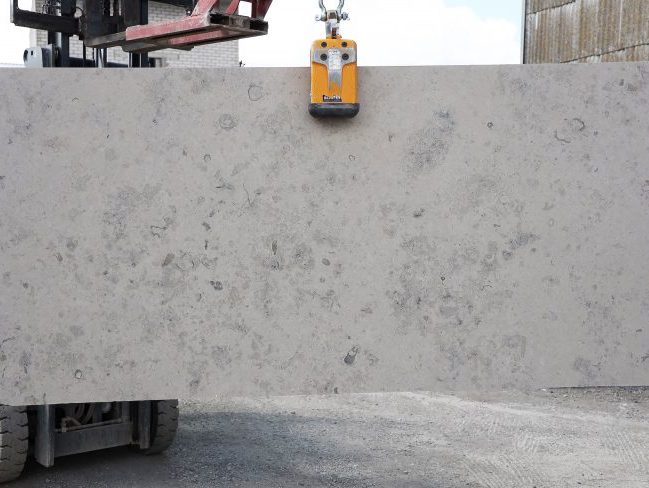
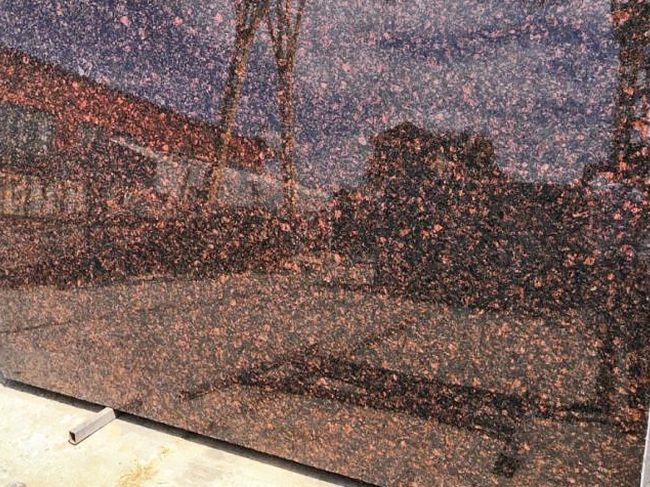
Quick Summary: Budgeting Granite for a luxury Shower Wall requires more than multiplying the finished wall area by a slab price. The real project budget can include gross slab consumption, slab selection and matching, cutting loss, surface finishing, large-format panel fabrication, valve and fixture openings, niche components, benches or returns, edge treatment, CAD drawings, quality control, protective packaging, freight, site access, installation coordination, and replacement risk. Granite varieties also differ significantly in availability, slab dimensions, visual consistency, natural fissures, finish, and fabrication complexity. In a wet-area project, the stone panel is not the waterproofing system, so substrate, membrane, drainage, joints, sealants, and installation must be budgeted separately. A reliable budget therefore starts with drawings and actual material availability, not with a generic square-meter price.
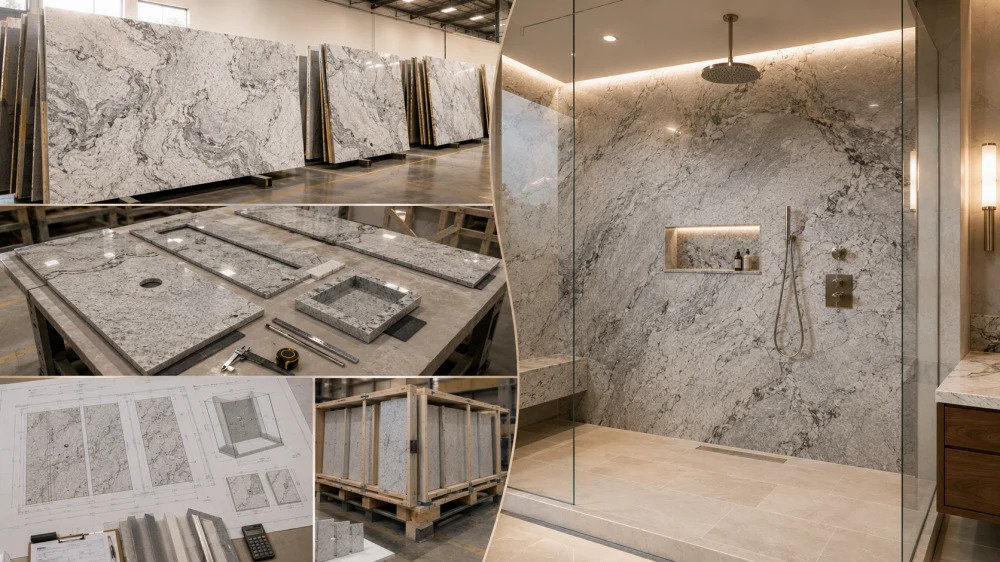
Why Unit Price Is Not Total Cost
A supplier may quote Granite by square meter, square foot, slab, or fabricated panel. That number is useful, but it represents only one part of the Shower Wall budget.
A luxury shower may include three full-height walls, a niche, a bench, valve cutouts, shower-head openings, returns, glass interfaces, bookmatched or vein-controlled panels, and tightly coordinated joints. The finished wall area may look simple on an architectural plan, while the actual fabrication package requires significantly more gross material and processing.
The most common budgeting mistake is therefore comparing one supplier’s raw slab price with another supplier’s fabricated-panel price. These quotations are not commercially equivalent.
Finished Wall Area and Purchased Stone Area Are Different
If a shower has 12 square meters of visible wall surface, that does not mean exactly 12 square meters of Granite can be purchased. The factory must work within real slab dimensions, panel sizes, grain or movement direction, defects, edge trimming, cutouts, and spare-material requirements.
A slab containing an attractive central area may also have damaged edges or visual sections that the designer does not want on the main elevation. These areas reduce usable yield even though they remain part of the purchased slab.
Luxury Layout Requirements Increase Yield Loss
Where the design requires continuous movement, balanced panel matching, or a specific visual sequence, the factory may need to use less efficient cutting positions. A technically efficient nesting plan and a visually optimized layout are not always the same.
The procurement team should therefore ask for gross material consumption after a preliminary slab-to-panel layout rather than budgeting from finished wall area alone.
Design Logic: Budget the Intended Shower, Not a Generic Wall
The design concept directly affects cost. Before requesting a serious quotation, procurement teams should define the number of walls, finished dimensions, ceiling height, niche geometry, bench details, panel orientation, joint preference, valve positions, glass interfaces, exposed corners, and adjacent materials.
Large Panels Versus Smaller Panels
Larger Granite shower wall panels can reduce visible joints and create a stronger luxury appearance. However, larger pieces can also increase fabrication, packing, handling, transport, and installation complexity.
A large panel that fits on the slab may still be too large for the elevator, bathroom door, corridor, stairwell, or installer’s lifting system.
Budgeting should therefore consider the largest practical installed panel rather than simply the largest panel the factory can cut.
Niches, Benches, and Returns Add More Than Area
A shower niche may use relatively little stone by area, but it can require several individually fabricated pieces: back panel, side returns, top, bottom, shelf, miters, and finished edges.
Likewise, a bench can add horizontal pieces, fascia panels, edge treatment, slope coordination, and additional joints. These details should be priced as fabrication components rather than treated as simple square-meter additions.
Material Cost Logic
Granite Variety Changes the Starting Material Cost
Granite is a broad commercial category. Common grey, black, white, brown, and speckled varieties may have relatively stable supply, while certain blue, green, highly figured, or unusual materials can carry a much higher raw-material value.
Availability also affects budget. A beautiful Granite may be suitable for a single residential shower but difficult to source consistently for a hotel package requiring many bathrooms.
Procurement teams can browse CENTURY STAR’s Granite material collection when comparing available visual directions before requesting project-specific pricing.
Slab Size Influences Total Material Consumption
A lower-priced slab can create a higher total material cost if its dimensions do not suit the wall-panel schedule. Larger usable slabs may improve yield, reduce joints, and lower the number of slabs required.
Procurement teams should therefore request actual slab dimensions before comparing suppliers.
Color and Pattern Matching Can Increase Material Cost
Some Granite varieties are relatively visually consistent, while others have strong movement, large mineral structures, or broad tonal differences. Projects requiring several visually coordinated panels may need selective slab allocation.
The cost is not only the material itself. More selective grading can reduce usable yield and increase the amount of stone that must be purchased.
Surface Finish Affects the Budget
Polished Granite is common, but honed, leathered, brushed, flamed, or other finishes may be specified depending on the product and design.
Not every finish is equally appropriate for every stone or Shower Wall concept. Special finishing can require additional production steps, samples, or factory handling and should be confirmed before the quotation is finalized.
Sealing Should Be Product-Specific
Granite is often described broadly as low-absorption stone, but individual products can differ. Procurement teams should not assume that every Granite requires the same sealing schedule or that every slab requires sealing at all.
Where a sealer is recommended for the selected material and finish, include product, labor, testing, and future maintenance considerations in the overall project scope.
Engineering Cost Logic
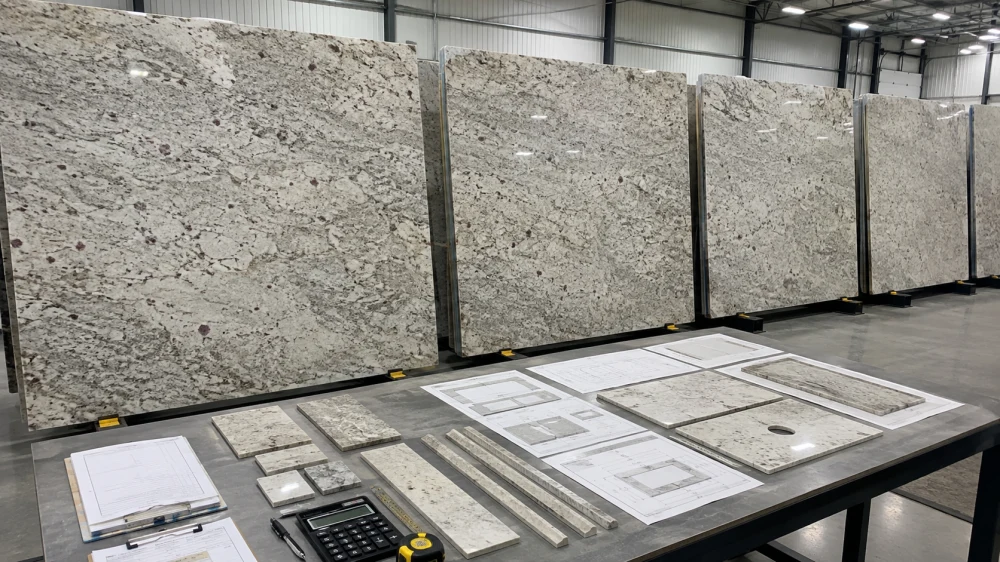
CAD and Shop Drawings Have Real Value
A luxury shower package should be fabricated from controlled drawings showing panel dimensions, orientation, joints, niche components, valve holes, shower-head outlets, bench pieces, returns, and piece numbers.
Drawing preparation may appear to be an administrative cost, but it reduces the much larger risk of incorrectly fabricated stone.
Fixture Openings Add Fabrication Cost
A typical luxury shower can contain thermostatic controls, mixers, hand-shower outlets, body jets, shower-head arms, electrical controls, and glass fittings.
Each opening must be accurately positioned and fabricated. Multiple openings can also create narrow stone sections that require more careful cutting and temporary reinforcement.
Internal Corners and Cutout Geometry Matter
Cutouts should follow the stone condition, fabrication method, project requirements, and appropriate engineering guidance. Sharp internal corners or narrow bridges between openings can increase breakage risk.
A low fabrication quotation that ignores these details may create higher replacement costs later.
Edges and External Corners Add Processing
External shower corners may use mitered Granite, finished exposed edges, profiles, or another architectural detail.
Mitering increases fabrication because pieces must be accurately cut, aligned, finished, protected, and installed. The visual benefit should therefore be considered alongside the added processing and transport risk.
Panel Thickness Must Match the System
Thickness should be selected according to the Granite, panel dimensions, fabrication requirements, installation system, edge details, and project engineering.
Reducing thickness may lower stone weight but can introduce different handling or support requirements. Procurement teams should not change thickness simply to reduce the raw-material price.
Waterproofing Is a Separate Budget
Granite is the visible wall finish. It is not a substitute for the waterproofing system behind the shower.
The project should separately budget the appropriate substrate, waterproof membrane, penetrations, drainage interfaces, sealants, movement treatment, and installation labor required by the specified wet-area system and local construction requirements.
Joint Design Influences Both Appearance and Cost
Fewer joints may improve the luxury appearance but usually require larger panels. More joints can reduce individual piece size and simplify access, yet increase alignment and finishing work.
Procurement teams comparing panelization strategies can review CENTURY STAR’s stone wall joint techniques guide as additional project-planning context.
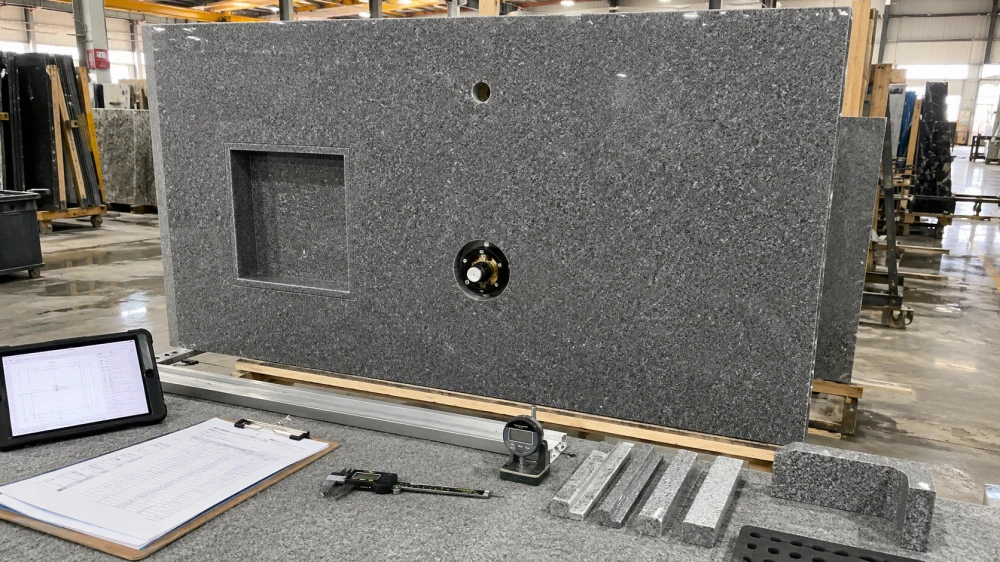
Logistics, Packaging, and Delivery Cost Logic
Large Shower Panels Need Project-Specific Packing
Large fabricated Granite panels should not be packed like ordinary tiles. The crate must support the finished geometry and protect polished surfaces, openings, narrow sections, exposed edges, and miters.
Suitable export packing may include foam, separators, waterproof protection, edge guards, rigid internal fixing, temporary supports, and reinforced fumigated wooden crates.
Packaging Cost Can Rise with Panel Size
Fewer large panels may reduce installation joints but increase crate dimensions, structural reinforcement, handling equipment, and freight complexity.
A budget should therefore compare panelization options as systems rather than assuming that the fewest pieces always produce the lowest total cost.
Crate Volume and Weight Affect Freight
International freight is influenced by shipment volume, weight, route, loading method, destination, and commercial terms. A project using heavy large-format Granite can have a logistics profile very different from a small local vanity order.
Freight should therefore be quoted against the expected packed cargo rather than estimated only from the net stone area.
Destination Handling Can Become a Hidden Cost
The buyer should identify who is responsible for unloading, forklift or crane access, temporary storage, site delivery, floor access, and final movement to the bathroom.
A quotation that ends at the port and a quotation that reaches the project site represent very different commercial scopes.
Breakage and Replacement Risk Should Be Budgeted
Large pieces containing several fixture openings may be more vulnerable during handling than simple rectangular panels.
Procurement teams should consider whether the project needs spare material, replacement pieces, additional protective framing, or transit insurance. For unusual Granite, keeping spare material from the original batch can be particularly valuable.
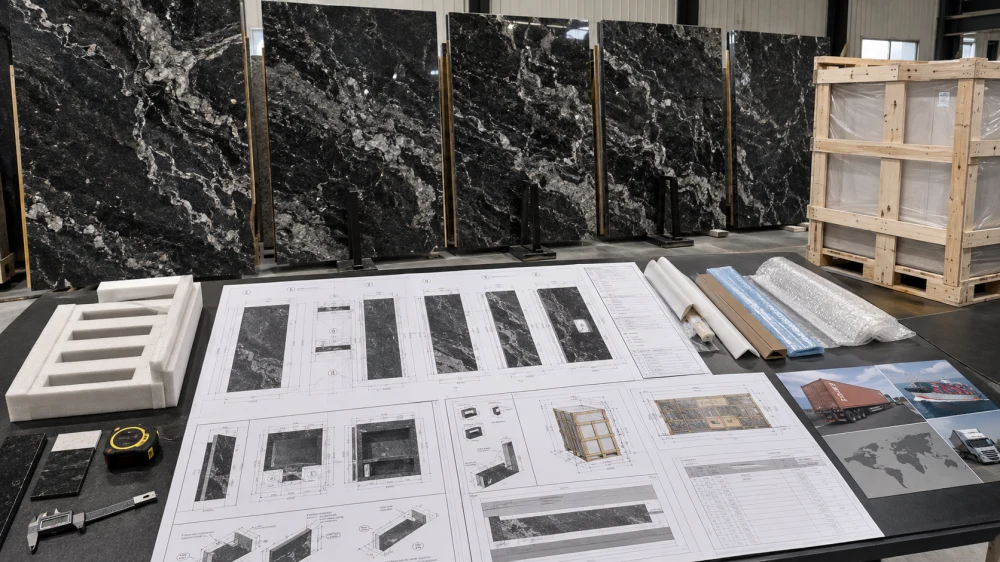
Procurement Logic: Build the Budget in Cost Layers
A professional budget should separate the project into clear commercial layers. This makes quotations easier to compare and allows buyers to understand where changes affect the final cost.
Layer 1: Material
Include selected Granite, gross slab quantity, thickness, finish, visual grading, and any spare material.
Layer 2: Fabrication
Include panel cutting, openings, drilling, niches, bench pieces, edge finishing, miters, reinforcement, numbering, and special processing.
Layer 3: Engineering and Project Preparation
Include shop drawings, layout planning, slab-to-panel allocation, fixture coordination, dimensional review, and special attachment-related preparation where required.
Layer 4: Quality Control
Include material inspection, dimensional checks, surface inspection, dry-layout or panel-sequence confirmation, and packing inspection where these services form part of the supplier scope.
Layer 5: Packaging
Include crates, framing, foam, separators, edge protection, waterproof materials, temporary supports, and special packaging for vulnerable panels.
Layer 6: Logistics
Include inland transport, port handling where applicable, ocean or air freight, customs-related scope, local delivery, insurance where selected, and unloading responsibility.
Layer 7: Site Installation
Where the stone supplier does not include installation, the project budget still needs qualified labor, waterproofing coordination, adhesives or mechanical systems as specified, lifting tools, sealants, joints, and final cleaning.
Global and Market Pricing Insight
Granite pricing varies significantly by origin, variety, quarry availability, slab size, quality range, finish, order quantity, and fabrication scope. For that reason, global budget guides should be cautious about presenting one universal per-square-meter price as if it applies to every luxury shower project.
A more reliable approach is to obtain project-specific quotations using the same drawings, panel schedule, finish, fabrication scope, packing standard, and commercial term.
The market is also increasingly shifting toward larger-format architectural stone applications. This can reduce visible joints but moves a greater share of the budget toward engineering, fabrication accuracy, handling, and logistics.
For premium projects, the cheapest raw Granite is therefore not always the lowest-cost solution. A slightly more expensive slab with dimensions and visual consistency that suit the shower layout may reduce waste, seams, fabrication complications, and replacement risk.
Granite Shower Wall Cost Structure Table
| Cost Area | Main Cost Drivers | What Buyers Should Request | Typical Hidden Risk |
|---|---|---|---|
| Granite material | Variety, availability, slab size, thickness, finish, grading | Actual slab dimensions, photos, quantity, and gross consumption | Low slab price but poor usable yield |
| Layout and selection | Visual matching, panel orientation, selective cutting, spare material | Preliminary slab-to-panel CAD layout | Additional slabs required after visual approval |
| Fabrication | Large panels, openings, niches, miters, edges, reinforcement | Itemized fabrication scope from approved drawings | Cutouts and edges quoted later as extras |
| Wet-area engineering | Substrate, membrane, drainage, joints, attachment, sealants | Separate wet-area and installation specification | Stone price incorrectly assumed to include waterproofing |
| Quality control | Slab review, dimensions, openings, finish, panel sequence, packing | Defined QC checkpoints and photographs | Problems discovered only after delivery |
| Packaging | Panel size, openings, edge protection, crate structure | Packing specification and internal crate photographs | Large fabricated panels packed like standard tiles |
| Freight and delivery | Crate size, weight, route, trade term, destination access | Packed cargo data and clearly defined delivery scope | Port price compared with delivered-site price |
Budget Strategy
Start with a Preliminary Panel Schedule
Even before final site measurements, a preliminary elevation can identify likely panel sizes, joint positions, niches, and major cutouts. This gives suppliers enough information to estimate gross material and fabrication more realistically.
Request Actual Slab Options Before Final Material Approval
Budgeting becomes more accurate when buyers know the dimensions and quality of available slabs. This also reveals whether the desired material can produce the intended large panels efficiently.
Ask for Material, Fabrication, Packing, and Freight Separately
This structure makes supplier comparisons clearer and allows changes to be evaluated quickly. If the panel layout changes, the buyer can see whether the increase comes from additional stone, fabrication, packaging, or all three.
Set a Contingency for Custom Natural-Stone Work
Natural variation, final site dimensions, replacement requirements, logistics changes, or additional fabrication can affect a custom stone project. A professional budget should leave reasonable room for project-specific adjustments rather than treating the first estimate as an absolute final cost.
Approve Before Cutting
Final drawings, Granite slabs, layout, fixture positions, finish, panel sequence, and fabrication details should be approved before production. The cheapest change is usually the one made before cutting begins.
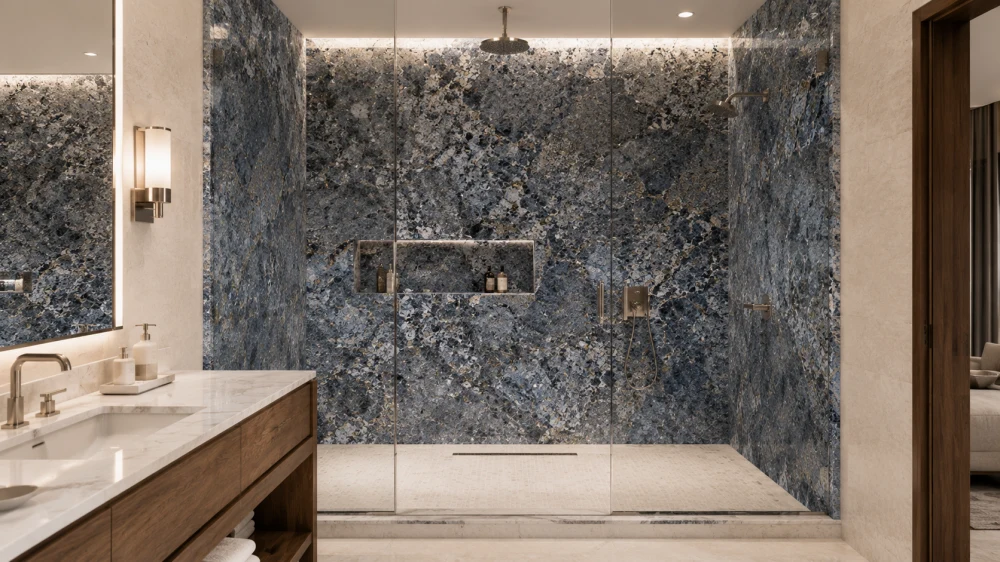
Common Budget Mistakes
Using the Finished Wall Area as the Material Quantity
This ignores slab yield, cutting waste, visual selection, niches, returns, edge pieces, and spare material.
Comparing Raw Slab Price with Fabricated Panel Price
The two quotations may include completely different scopes and should not be compared directly.
Ignoring Fixture Openings
Valves, outlets, niches, and glass interfaces can add meaningful fabrication and reinforcement requirements.
Assuming Granite Is the Waterproofing System
The stone surface does not replace the substrate, membrane, drainage, joints, and wet-area detailing behind it.
Choosing Oversized Panels Only to Reduce Joints
Very large panels can increase packing, freight, handling, and site-installation costs.
Leaving Packaging Until the End
Finished panels with openings and edges need purpose-designed protection. Packaging should be considered during the quotation stage.
Ignoring Site Access
An inexpensive factory solution can become expensive if panels need to be recut or specially handled because they cannot reach the bathroom.
FAQ
1. How is the cost of a Granite Shower Wall calculated?
The budget should include gross Granite slab consumption, finish, fabrication, openings, niches, edge details, engineering or drawing work, QC, packaging, freight, and installation-related scope. Multiplying finished wall area by a slab rate normally underestimates the complete project cost.
2. Why can two Granite Shower Wall quotations be very different?
The suppliers may be quoting different Granite grades, slab dimensions, thicknesses, finishes, cutting yields, fabrication scopes, panel sizes, packaging standards, freight terms, or delivery responsibilities. The quotations should be normalized before price comparison.
3. What hidden fabrication costs should buyers check?
Common items include valve openings, drilling, niche pieces, bench components, miters, exposed-edge finishing, reinforcement, panel numbering, special layout work, dry-layout inspection, and additional handling for large pieces.
4. What logistics costs are often missed in the first budget?
Buyers may overlook reinforced crates, special edge protection, inland transport, freight based on packed dimensions and weight, cargo insurance, destination handling, unloading equipment, storage, and movement from the delivery point to the bathroom.
5. Is cheaper Granite always better for controlling a Shower Wall budget?
No. A lower-priced slab can result in greater waste, more joints, additional slabs, or higher fabrication risk if the dimensions and visual quality do not suit the wall layout. Total installed value is more important than raw slab price alone.
6. When should procurement teams ask for the final Granite Shower Wall quotation?
The most accurate quotation can be prepared after the main wall dimensions, panel strategy, selected Granite, finish, fixture openings, niche or bench details, fabrication requirements, packaging standard, and delivery scope are sufficiently defined. Final site measurements should still be confirmed before cutting where required.
Final Note / Practical Takeaway: Budgeting Granite for a luxury Shower Wall works best when the project is priced as a complete system rather than as a stone slab. Material selection establishes the starting cost, but slab yield, large-panel fabrication, openings, niches, edge details, wet-area engineering, quality control, reinforced packaging, freight, site access, and installation can materially change the final budget. Procurement teams should request actual slab dimensions, prepare a preliminary panel layout, separate material from fabrication and logistics, and compare suppliers on an equivalent scope. The strongest budget is not the one with the lowest unit rate; it is the one that identifies the major cost drivers before production and reduces the probability of expensive changes, breakage, or replacement later.
References
- Natural Stone Institute. Dimension Stone Design Manual, current applicable edition.
- ASTM International. ASTM C615/C615M, Standard Specification for Granite Dimension Stone.
- ASTM International. ASTM C97/C97M, Standard Test Methods for Absorption and Bulk Specific Gravity of Dimension Stone.
- ASTM International. ASTM C1528/C1528M, Standard Guide for Selection of Dimension Stone.
- ASTM International. ASTM C1242, Standard Guide for Selection, Design, and Installation of Dimension Stone Attachment Systems, where relevant to mechanically attached wall systems.