


Quick Answer
The price of a green onyx slab can vary significantly depending on its origin, colour, translucency, veining, slab size, thickness, finish, grade, and purchasing volume, typically falling within a range of roughly US$20–130 per square foot. However, current supplier references show substantially different levels: some export listings are around US$7.79–23.38/ft², while premium, highly translucent green onyx can be quoted at US$42–130/ft² or around US$60–95/ft² from retail-oriented suppliers.
These figures should be treated as budgetary price references rather than fixed market prices. Green onyx is a natural stone with considerable variation from slab to slab, and the final project cost can increase significantly due to factors such as fabrication, reinforcement, backlighting, crating, shipping, installation, and other processing charges.
What Is a Green Onyx Slab?
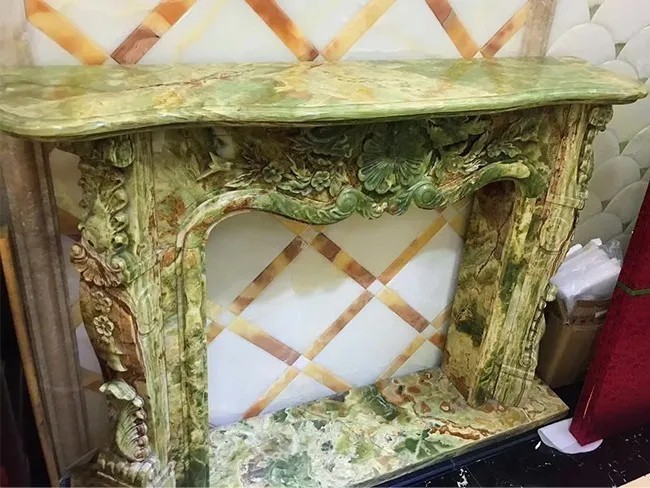
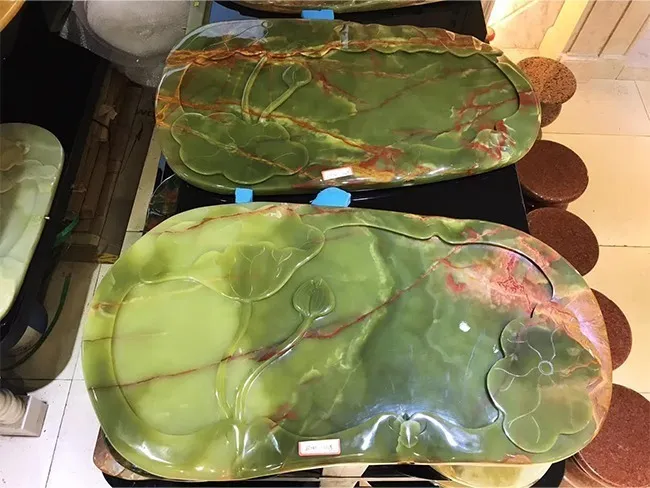
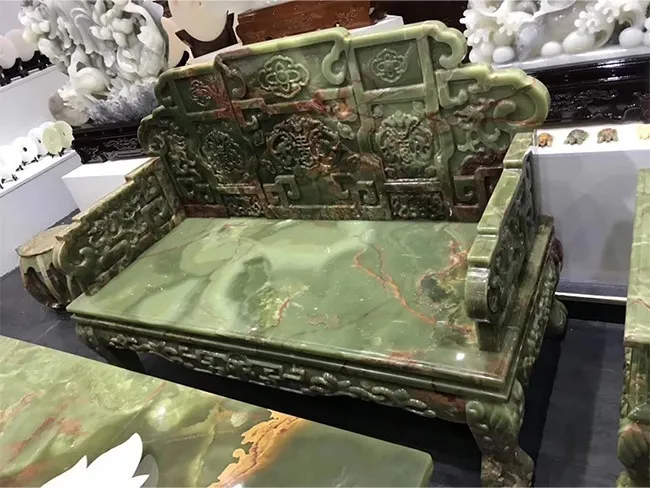
A green onyx slab is a large-format natural stone panel, cut from an onyx block, which is processed for use in architecture and interior design. It is not valued for its conventional structural performance, but rather for its distinctive colour, translucent character, flowing veining, and ability to create a dramatic visual effect when illuminated from behind. Depending on the deposit, green onyx can range in colour from pale mint and jade tones to deeper green backgrounds with white, yellow, brown, red, or darker mineral patterns.
This translucency is one of the main reasons why green onyx occupies a premium position in the decorative stone market. For example, a supplier listing for green onyx from Iran describes a light green background with warm, white, cloud-like veins, noting that the material becomes translucent when backlit. Other suppliers list green onyx from various origins, including Iran, Turkey, and India. Slab thicknesses commonly available are around 10, 15, 20, and 30 mm, depending on the product and fabrication requirements.
For buyers, this means that simply asking “How much does green onyx cost?” will not yield a meaningful quotation. A professional enquiry should specify whether the project requires standard slabs, book-matched slabs, a selected colour, consistent veining, translucent material for backlighting, cut-to-size panels, or prefabricated components. Each of these requirements can affect the price considerably.
Green Onyx Slab Price Reference by Market Level
There is no single international price for green onyx. Publicly available listings show a wide range of prices, which is normal for a natural material where appearance and selection can be more important than simple dimensions.
For example, one supplier currently lists 3/4-inch green onyx at approximately US$7.79–23.38 per square foot, while another lists green onyx slabs at US$42–130 per square foot ex-factory. The final price depends on factors such as slab selection and specifications. A US-based supplier provides a starting price of around US$28.80/ft² under a project-based supply model, while a Miami-based retail and development company lists green-toned onyx products at around US$60–95/ft².
These examples demonstrate why an “average green onyx price” can be misleading. A commercial buyer sourcing ordinary production material by the container load may receive a very different price from a homeowner selecting one highly figured slab from a local showroom.
Green Onyx Price Reference
| Green onyx market level | Indicative price | Typical purchasing situation |
| Entry-level/export material | US$8–25/ft² | Standard selections, larger-volume sourcing |
| Mid-range material | US$25–45/ft² | Better color and veining, project purchasing |
| Premium green onyx | US$45–80/ft² | Selected slabs, stronger translucency or appearance |
| High-end / designer selection | US$80–130+/ft² | Rare patterns, premium color, bookmatching, special selection |
| Retail/project showroom examples | Around US$60–95+/ft² | Smaller quantities, selected slabs, local service |
These are indicative references, not guaranteed quotations. Public listings vary in whether they include packaging, freight, taxes, fabrication, or other charges. For example, one current U.S.-oriented listing explicitly states that its displayed price includes ocean freight to a U.S. port under a stated benchmark, whereas an ex-factory listing does not represent the same delivered cost structure.
Why Is Green Onyx More Expensive Than Ordinary Stone?
The price of a green onyx slab is more influenced by appearance than by physical size alone. With many conventional building stones, buyers tend to focus on factors such as thickness, strength, finish, and quantity. With onyx, however, the visual characteristics of the individual slab can become the primary consideration when making a purchase.
For example, a slab with an intense emerald or jade-green background, attractive translucent zones, balanced veining and a clean visual composition may command a substantial premium over a slab with weaker colouring or irregular patterns. This is particularly pertinent when the stone is to be installed as a feature wall, reception desk, bar front, vanity unit or backlit architectural centrepiece.
Natural variation is therefore part of the product rather than a defect. Two slabs from the same quarry or block may look quite different from each other. This is why suppliers often encourage customers to inspect photographs of slabs or physical samples before confirming an order.
For high-end projects, the buyer cannot simply request ‘green onyx’. Instead, the specification may include requirements such as a dark green background, high translucency, low open porosity, continuous veining, a bookmatched arrangement, specific slab dimensions, and a polished finish. The more restrictive the selection criteria, the smaller the available supply and the higher the potential price.

The Main Factors That Determine Green Onyx Slab Cost
- Color and Background Tone
Color is one of the first characteristics buyers notice. Light green, jade green, emerald green, olive green, and mixed-color onyx can have very different market positions.
A uniform green background may be preferred for minimalist interiors, while heavily veined green onyx is often selected for luxury feature walls. The commercial value depends on the intended application and current availability rather than a universal color hierarchy.
- Veining and Pattern
Veining can have a major effect on price. A slab with attractive, naturally flowing veins that can be aligned across adjacent panels is much more valuable for a bookmatched wall than an otherwise similar slab with random visual distribution.
This becomes particularly important for large hospitality projects. Designers may purchase several slabs specifically because the vein direction needs to continue across a wall or counter.
- Translucency
Translucency is one of green onyx’s defining characteristics. When a slab is illuminated from behind, portions of the stone can transmit light and reveal patterns that are less obvious under normal lighting.
This is why backlit applications are frequently associated with green onyx. Current supplier information specifically lists backlit walls, feature panels, countertops, shower walls, backsplashes, sinks, and basins among possible applications.
However, not every green onyx slab performs identically under lighting. Buyers intending to install LED backlighting should request actual slab photographs or translucent samples where possible rather than assuming that all green onyx will produce the same effect.
- Thickness
Thickness directly affects material usage and processing requirements. Current commercial listings show green onyx in thicknesses such as 10, 15, 20, and 30 mm, while some suppliers offer additional custom options.
A 20 mm slab and a thinner decorative panel should not be compared solely by square-foot price because their intended applications and fabrication requirements may differ.
- Slab Size
Large slabs generally provide more design flexibility, especially for countertops, feature walls, reception desks, and bookmatched installations. Current supplier data shows green onyx slab dimensions reaching approximately 300 × 180 cm, although actual available dimensions depend on the block and supplier.
Larger pieces can also involve additional handling, packing, reinforcement, and transportation requirements. Therefore, size can affect both material price and logistics cost.
Green Onyx Price by Thickness
Thickness is another useful way to organize a purchasing inquiry, although it should not be used as a standalone predictor of price.
| Thickness | Typical use | Relative cost consideration |
| 10 mm | Decorative panels, selected interior applications | Lower material consumption |
| 15–16 mm | Wall panels, furniture and selected interior uses | Moderate |
| 18–20 mm | Countertops, vanities, architectural surfaces | Common premium specification |
| 30 mm | Heavy-duty or substantial visual applications | Higher material and handling cost |
| Custom thickness | Specialized architectural projects | Quote required |
Public supplier listings confirm that green onyx is available in several thickness configurations, including 16, 18, 20, and 30 mm depending on the product and source.
Does the Origin of Green Onyx Affect the Price?
Yes. The origin of a stone can affect its availability, visual characteristics, logistics, and, ultimately, its delivered price.
Green onyx is commercially associated with several production regions, including Iran, Turkey, and India, as well as other markets that produce stone. Different deposits produce different colours and vein structures, so ‘Iranian green onyx’ or ‘Turkish green onyx’ does not necessarily refer to a standardised appearance.
For international procurement, origin also influences transportation distance and export logistics. A low ex-factory price can become much less attractive once freight, insurance, crating, port charges, customs duties and inland delivery are added.
For this reason, professional buyers should distinguish between the following:
- EXW price
- FOB price
- CFR/CIF price
- Delivered warehouse price
- Fully fabricated and installed price
A supplier quoting US$30/ft² EXW is not necessarily cheaper than a supplier quoting US$38/ft² for delivery to the project location.
How Much Does a Green Onyx Slab Cost for a Typical Project?
A useful way to understand the market is to estimate the material cost for a defined surface area.
Suppose a feature wall requires 100 ft² of green onyx.
At US$30/ft², the material reference would be:
100 × US$30 = US$3,000
At US$60/ft²:
100 × US$60 = US$6,000
At US$100/ft²:
100 × US$100 = US$10,000
The difference is substantial even before fabrication and installation are considered. This illustrates why project specifications should be finalized before comparing quotations.
A 100-ft² wall does not necessarily require exactly 100 ft² of purchased slabs either. Cutting patterns, slab dimensions, vein matching, openings, edge conditions, and breakage allowances can create additional material requirements.
For bookmatched projects, material utilization may be even lower because the buyer is prioritizing visual continuity rather than maximizing square-foot yield.
Green Onyx Slab Cost vs. Total Installed Cost
One of the biggest mistakes in green onyx budgeting is treating the slab price as the total project cost.
The actual budget can contain several layers:
Stone material → selection → reinforcement → cutting → polishing → edge fabrication → backlighting → packing → freight → customs → installation → sealing/finishing
For example, a premium slab purchased at US$70/ft² may not result in a US$70/ft² finished surface. Fabrication and installation can add a meaningful amount, particularly when the design includes curved cuts, sink openings, bookmatching, miters, reinforced edges, or integrated lighting.
Backlit installations require additional planning. The stone must work visually with the lighting system, and the substrate and LED arrangement must be designed so that the illumination appears sufficiently uniform.
For high-value commercial interiors, it is often better to request a complete fabricated-project quotation rather than comparing raw slab prices alone.
Is Green Onyx Suitable for Countertops and Vanities?
Green onyx is often used for vanity tops, decorative countertops, reception desks, bar counters, and other feature surfaces, particularly in areas where appearance is more important than heavy-duty commercial use. Current supplier catalogues specifically list countertops and vanity tops as green onyx applications.
However, buyers should distinguish between decorative suitability and universal durability. Onyx is generally considered a premium decorative natural stone rather than a direct alternative to granite or engineered stone in all applications.
For a bathroom vanity unit, an occasional-use countertop, a luxury hotel bar, or a decorative reception desk, however, its visual character can be highly attractive. For heavily used commercial kitchens or surfaces exposed to aggressive chemicals, however, the material should be evaluated against the project’s actual performance requirements.
Therefore, the decision should consider not only price, but also maintenance, sealing, edge design, exposure conditions, expected traffic, and the consequences of potential staining or scratching.
Green Onyx for Backlit Feature Walls
Arguably, one of the strongest reasons to choose green onyx over an ordinary opaque stone is backlighting.
Its natural translucent structure allows light to interact with the mineral patterns, transforming a relatively flat slab into a luminous architectural surface. Suppliers specifically market green onyx for use in backlit walls and feature panels, highlighting its translucency as a defining product property.
However, the final visual effect depends on more than just the thickness of the stone. Slab translucency, mineral concentration, LED colour temperature, the distance between the light source and the stone, diffuser design, substrate, and lighting uniformity all influence the finished appearance.
For this reason, designers should request photographs of the actual slabs under backlighting, rather than merely a standard photograph taken in daylight. The same slab can appear considerably different under natural and artificial light.
How to Reduce Green Onyx Procurement Costs?
There are several ways to control costs without simply choosing the cheapest stone.
- Buy by project volume
Larger orders can improve commercial pricing, particularly when several slabs can be selected from the same block or production batch.
- Accept a broader color range
If the design permits several shades of green, the supplier has more material to choose from and may be able to offer a better price.
- Avoid unnecessary custom fabrication
Complex cut-to-size processing, unusual edge profiles, and multiple openings increase fabrication labor.
- Optimize slab layout
Good nesting can reduce offcuts. This is especially important for large projects.
- Separate material and installation quotations
Requesting itemized costs makes it easier to identify where the budget is increasing.
- Confirm logistics early
For imported stone, freight can materially change the final landed price. A lower ex-factory quote is not necessarily the lowest total cost.
What Should You Ask a Green Onyx Supplier?
A professional RFQ should provide suppliers with enough information to enable them to quote for comparable products. At a minimum, the following information should be provided: the required quantity; slab dimensions; thickness; finish; colour preference; application; destination; and whether bookmatching is required.
For example, instead of asking:
‘Please quote green onyx.’
A more useful request would be:
‘Please quote for 80 m² of natural green onyx slabs, approximately 20 mm thick, polished and suitable for a backlit feature wall. The slabs should have a consistent green background and bookmatched vein selection. Please provide EXW and FOB pricing, slab dimensions, packing details, available origins, and current production lead times.’
This reduces ambiguity and enables different suppliers to provide quotes for essentially the same specification.
Green Onyx Slab Price: What Is a Reasonable Budget?
Based on publicly available current supplier references, a preliminary budgeting framework could look like this:
US$15–30/ft²: economical commercial sourcing or less selective material
US$30–50/ft²: mid-range green onyx with more attractive selection
US$50–80/ft²: premium material suitable for visually important interiors
US$80–130+/ft²: highly selected, distinctive, translucent, or designer-grade material
This should not be interpreted as a universal market price list. Current public listings already show why the range is broad: one source lists approximately US$7.79–23.38/ft², another US$42–130/ft², and a Miami project/development source gives examples around US$60 and US$95/ft².
Frequently Asked Questions About Green Onyx Slab
Q1. How much does a green onyx slab cost per square foot?
A broad current reference range is approximately US$20–130+ per square foot, with many commercial and premium products falling somewhere in the middle. The actual quotation depends strongly on selection, origin, thickness, and purchasing terms.
Q2. Why is green onyx so expensive?
Green onyx is valued for its natural color, veining, translucency, and rarity of visually desirable slabs. Highly selected material and bookmatched slabs can command significantly higher prices than ordinary production-grade stone.
Q3. Is green onyx more expensive than marble?
It can be, particularly for premium translucent or highly figured slabs. However, prices overlap considerably, so the specific grade and selection should be compared rather than the material names alone.
- Can green onyx be backlit?
Yes. Its translucent character makes it particularly suitable for backlit feature walls, panels, counters, and decorative architectural elements. The exact lighting effect depends on the slab’s translucency and the lighting system.
Q5. How thick is a green onyx slab?
Common commercial specifications include approximately 16–20 mm, with 30 mm and other custom thicknesses also available depending on the supplier and application.
Q6. Does green onyx vary from slab to slab?
Yes. Natural onyx has inherent variation in color, mineral distribution, and veining, so two slabs from the same source may not look identical. For high-end projects, slab selection and matching should be confirmed before production.
Green Onyx Slab Price: Quick Reference for Buyers
| Buyer requirement | Expected price impact | What to clarify |
| Standard green color | Lower to moderate | Exact shade and acceptable variation |
| Strong natural veining | Moderate to high | Pattern and vein direction |
| High translucency | Higher | Backlighting performance |
| Bookmatched slabs | Higher | Matching sequence and slab selection |
| 20–30 mm thickness | Higher | Structural and fabrication requirements |
| Large slab dimensions | Moderate to high | Available block size and handling |
| Custom cut-to-size | Higher | CAD drawings and cutting tolerances |
| Small order | Often higher per ft² | MOQ and stock availability |
| Container/project volume | Potentially lower | Volume, packing and Incoterms |
| Premium origin/selection | Higher | Quarry/source and quality grade |
Conclusion: How Much Should You Budget for Green Onyx Slabs?
If you are preparing a preliminary budget, a realistic broad reference for green onyx slabs based on current publicly listed supplier prices is US$20–130+ per square foot. For practical planning purposes, many projects initially work with a material budget of US$30–80/ft², which can then be refined after confirming colour, veining, translucency, thickness, slab size, origin, quantity, and delivery terms. Current market listings demonstrate that lower export-level prices and substantially higher premium selections both exist, so an average price would conceal these important differences.
The most important point for buyers is that green onyx is a natural stone for which selection is paramount. Price is determined not only by square footage, but also by how desirable the individual slabs are, and how well they meet the project’s visual and technical requirements. For example, a pale, lightly patterned slab, a richly veined emerald slab and a highly translucent bookmatched pair may all be sold as ‘green onyx’ while occupying very different price brackets.
To receive an accurate quotation, provide the supplier with a complete specification rather than requesting a generic price. Include the required area, slab thickness, preferred colour, veining requirements, finish, application, bookmatching requirements, destination, quantity, and Incoterm. This approach produces much more comparable quotations and reduces the risk of choosing what seems to be an inexpensive slab, only to discover that the cost of fabrication, freight, selection losses, or special processing substantially increases the final project cost.
In short: the slab price is only the starting point. For green onyx, the real purchasing decision should be based on appearance, specification, yield, logistics, fabrication, and total installed cost—not the advertised price per square foot alone.
In addition, the above price range is for reference only. Please consult the corresponding supplier for specific prices.