


How Much Does a Quartzite Kitchen Island Cost?
Kuvarsit Mutfak Adası'nın maliyeti, adanın bitmiş metrekare alanından çok daha fazlasına bağlıdır. Gerçekçi bir bütçede şu unsurlar dikkate alınmalıdır: gerçek doğal kuvarsit levhalar, kullanılabilir kesim verimi, imalat, delikler, kenar detayları, şelale panelleri, gerekli yerlerde takviye, kalite kontrolü, ambalaj ve lojistik.
Bu nedenle benzer bitmiş boyutlara sahip iki ada, toplam tedarik maliyetleri bakımından çok farklı olabilir. Birisi, verimli levha verimi ve basit kenarları olan nispeten sakin bir kuvarsit kullanabilir. Diğeri ise yüksek kalitede levhalar, yöneltici damar eşleşmesi, çift şelale ucu, geniş bir lavabo deliği, karmaşık eklemler, ek taşıma ve güçlendirilmiş ihracat ambalajı gerektirebilir.
Doğrudan Bütçe Cevabı
Bir Kuvarsit Mutfak Adası'nın bütçesini yalnızca bitmiş alan üzerinden yapmayın. Önce adanın geometrisini belirleyin, ardından kaç gerçek levhanın gerektiğini, bunların ne kadar verimli kesilebileceğini, hangi imalatın gerekli olduğunu ve teslimat kapsamının neleri içerdiğini belirleyin. Tedarikçi, “Kuvarsit ada” ve tek bir yaklaşık boyut ifadesinden anlamlı bir proje teklifi veremez.
Ana Maliyet Etkenleri
| Maliyet Etkeni | Neden Maliyeti Değiştirir | Alıcı Kontrolü |
| Kuvarsit Seçimi | Farklı isimli taşlar, bloklar ve görsel kaliteler farklı malzeme değerleri taşıyabilir. | Görsel hedefi belirleyip mevcut gerçek levhaları karşılaştırın. |
| Levha Kalitesi ve Eşleştirme | Daha temiz arka planlar, tercih edilen hareket veya yakın koordineli levhalar kabul edilebilir envanteri azaltabilir. | Gereksiz homojenlik talep etmek yerine kabul edilebilir renk ve damar aralığını belirleyin. |
| Kullanılabilir Levha Verimi | Bitmiş ada alanı ile satın alınan levha alanı nadiren aynıdır. | Miktarı kesinleştirmeden önce CAD veya dijital kesim düzenini onaylayın. |
| Şelale Panelleri | Dikey uçlar ekstra levha alanı tüketir ve eşleştirilmiş damar yönü ile eklemler gerektirebilir. | Ada'nın sıfır, bir veya iki şelale ucu gerektirip gerektirmediğini erken karar verin. |
| Delikler ve İşleme | Lavabo, ocak, musluk ve aksesuar delikleri dar taş bölgelerinde işçilik ve riski artırır. | Cihaz modellerini ve şablonları imalattan önce netleştirin. |
| Kenar Yapısı | Basit bitmiş kenarlar ve kalın görünümlü imalat eklemleri farklı işçilik ve malzeme gereksinimlerine sahiptir. | Teklif çizimlerinde görünen kenar detayını belirtin. |
| Kalite Kontrolü ve Kuru Düzen | Karmaşık çok parçalı adalar ek görsel ve boyutsal onay gerektirebilir. | Gereksiz denetim aşamaları eklemek yerine gerekli kanıtları belirleyin. |
| Ambalaj ve Nakliye | Kutu boyutu, parça geometrisi, ağırlık, rota, ticaret şartı ve varış noktası teslimat maliyetini etkiler. | Malzeme, imalat, ambalaj ve lojistiği ayrı teklif hatları olarak isteyin. |
1. Malzeme Kalitesi Sadece Bütçenin İlk Katmanıdır
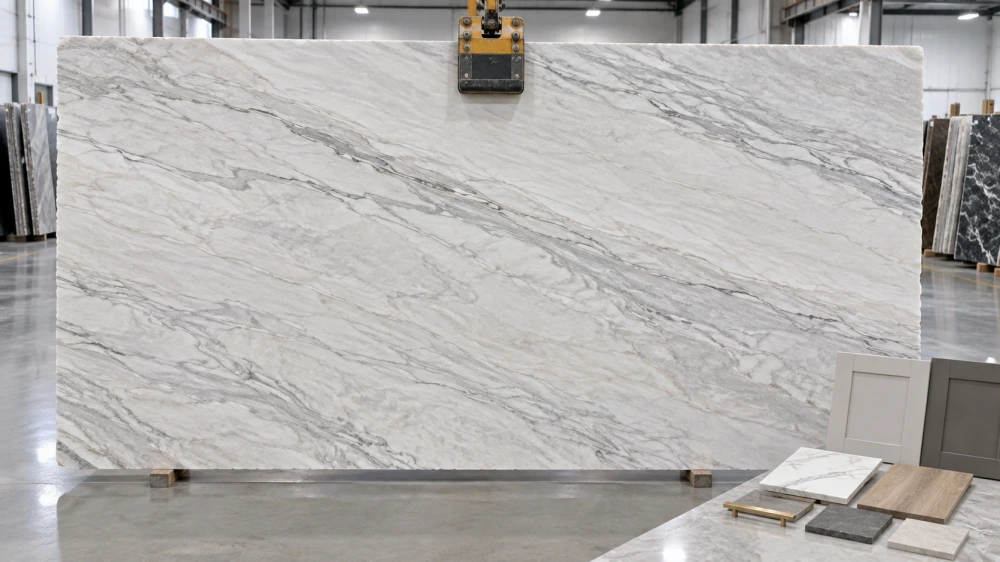
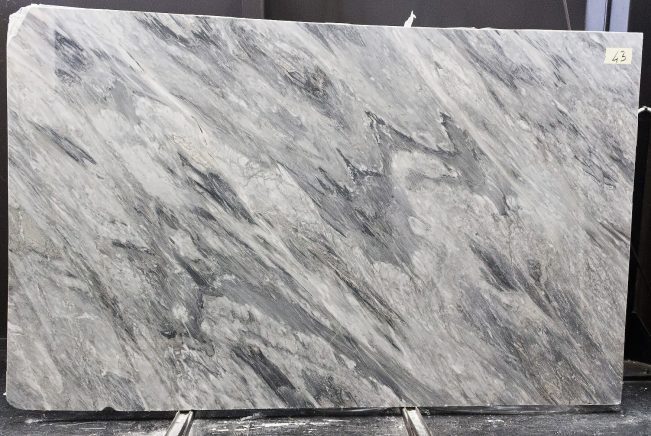
mont blanc kuvarsit levha kalitesi mutfak ada bütçesiDoğal Kuvarsit, tek bir küresel fiyata sahip standartlaştırılmış bir ürün değildir. Taj Mahal, Mont Blanc, Cristallo, Patagonia, Blue Roma ve diğer ticari çeşitler görsel karakter, mevcudiyet, levha yapısı ve imalat gereksinimleri açısından önemli ölçüde farklılık gösterebilir.
Aynı taş adı içinde bile alıcılar arka plan tonu, damar yoğunluğu, kristal alanları, doğal çatlaklar, reçine işlemesi ve genel görsel kalitede farklılıklar görebilir. Büyük bir gruptan yalnızca premium levhaları seçmek, etkin malzeme maliyetini artırabilir çünkü onaylanmış görsel aralığına uygun levha sayısı daha azdır.
Hâlâ malzeme ailesini belirleyen alıcılar CENTURY STAR ile başlayabilirler Kuvarsit malzeme koleksiyonunu, ancak bir maliyet teklifi sonunda genel bir Kuvarsit kategorisinden ziyade projeye önerilen gerçek levhalara atıfta bulunmalıdır.
2. Bitmiş Ada Alanı, Satın Alınan Taş Alanı ile Aynı Değildir
Bu, erken Kuvarsit bütçelerinin yanlış olması en yaygın nedenlerden biridir.
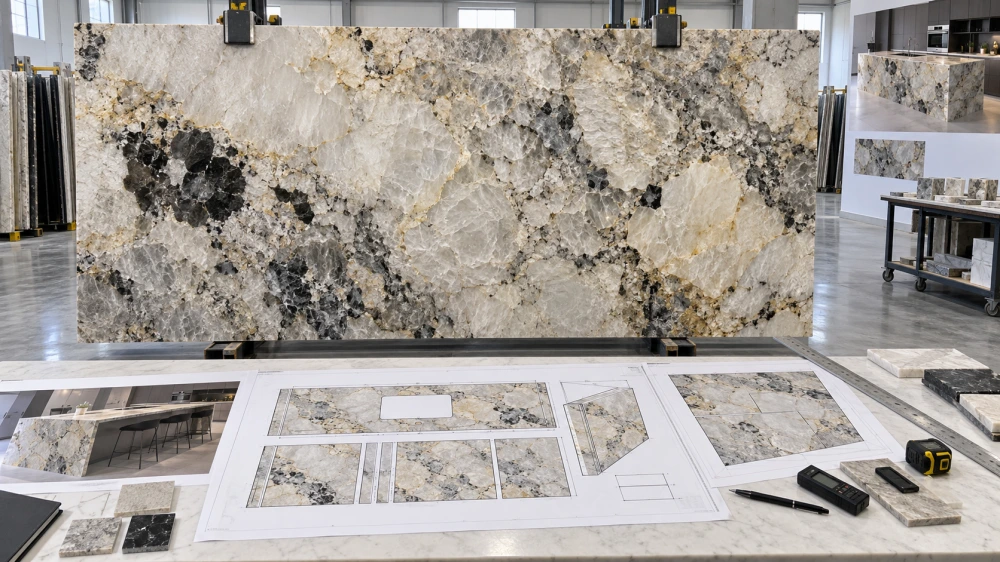
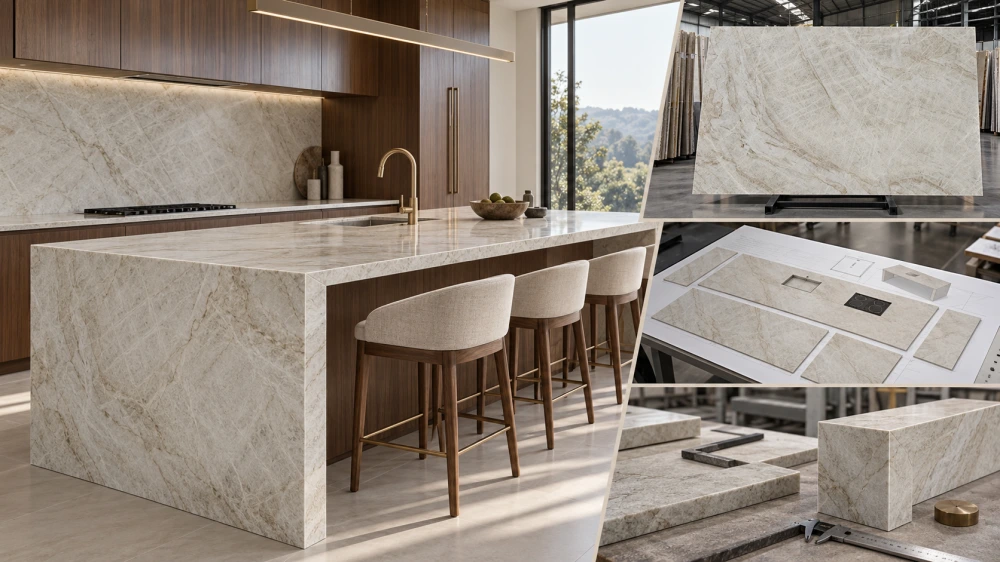
Planında basit görünen bir ada üstü düşünün. Alıcı bitmiş yüzey alanını hesaplayıp neredeyse aynı miktarda taş satın almayı bekleyebilir. Aslında imalatçı, bu adayı dikdörtgen şeklindeki doğal levhalara yerleştirirken levha boyutlarını, damar yönünü, doğal özelliklerini, lavabo veya ocak deliklerini, derzleri, eklemler ve şelale panellerini dikkate almak zorundadır.
Sonuç olarak brüt levha tüketimi versus net bitmiş alan. Aradaki fark kesim verimidir.
Verimin Neden Hızlı Değişebileceğini Anlamak
Nispeten esnek yönü olan sessiz bir taş, verimli yuvalama imkânı sağlayabilir. Kuvvetli yönlü bir levha, dönerek malzeme tasarrufu sağlasa bile ada üstünün uzunlamasına konumlandırılması gerekebilir. Kristal zengini veya çatlaklı bölge görsel açıdan çekici olsa da bir delik çevresindeki dar şerit için uygun olmayabilir. Şelale tasarımı da görsel sürekliliği korumak için levhanın büyük yan bölmesini gerektirebilir.
This is why professional sourcing should include slab allocation and cutting-layout review. CENTURY STAR’s guide on how procurement teams source Quartzite Kitchen Island projects also treats gross slab quantity and CAD layout as core purchasing controls rather than secondary fabrication details.
3. Island Geometry Determines Fabrication Cost
A rectangular island top with simple finished edges is different from a sculptural island containing miters, waterfalls, large appliance openings and seating overhangs.
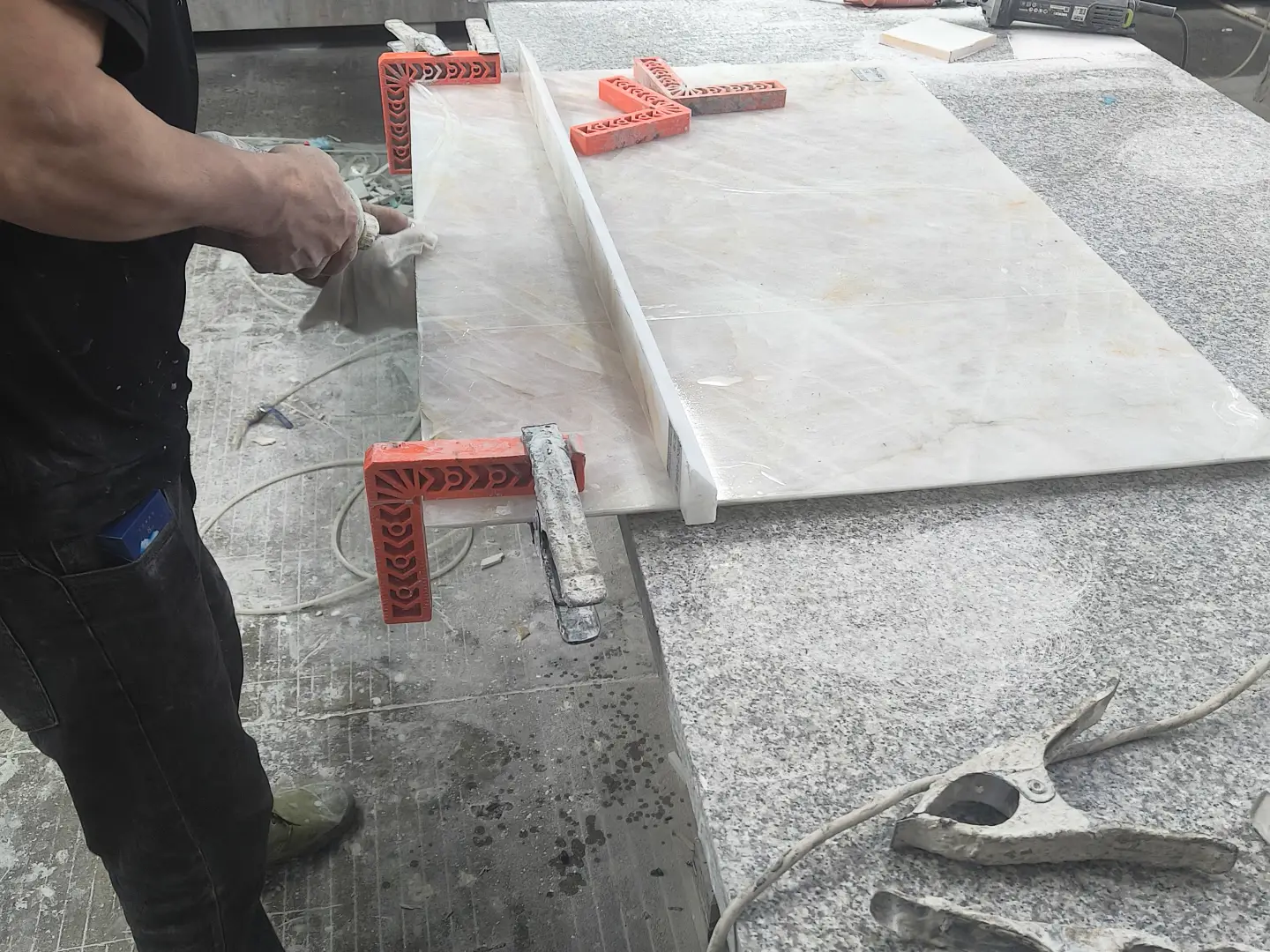
Common fabrication cost drivers include bridge-saw cutting, CNC or waterjet work where required, undermount sink openings, cooktop cutouts, faucet holes, mitered edge construction, polished exposed edges, waterfall joints and local reinforcement or handling measures appropriate to the geometry.
Quartzite can also contain natural fissures, mineral transitions and crystalline zones. These are not automatically defects, but their location can affect the cutting plan. A visually dramatic area that is appropriate across the center of an island may be less desirable beside a large opening where only a narrow stone rail remains.
Mitered Edges and Waterfalls Affect Both Material and Labor
A thick-look miter does more than add edge-polishing labor. It also requires strips from the slab and careful visual coordination with the top. Waterfall panels add full vertical surfaces and make seam accuracy and vein transition more visible.
Therefore, a buyer requesting a “thick island with waterfalls” should specify what that actually means before comparing supplier quotations.
4. Finish, Thickness and Special Design Details Also Matter
The quotation should identify the required finish and stone thickness rather than leaving them assumed. Polished, honed or other specified finishes may involve different processing requirements depending on the actual Quartzite.
Likewise, the visible thickness of the completed island may come from the slab itself or from fabricated edge construction. These are not the same production approach and should not be compared as if they were identical.
Special elements such as integrated stone sinks, curved profiles, complex radii or highly customized edge details move the project further away from standard countertop fabrication and should be priced from drawings.
5. QC and Dry Layout Are Part of the Real Project Cost
Quality control should not be treated as an invisible free service. A simple island may need standard dimensional and surface inspection, while a complex multi-piece project may justify additional dry-layout review, vein-transition checks, piece identification and packing documentation.
The objective is not to add as many inspection steps as possible. It is to establish the evidence necessary to verify that the fabricated pieces match the approved slab layout and drawings before they are packed.
For large international projects, correcting an issue before shipment is usually much more manageable than discovering it after the stone arrives on site.
6. Packing Can Be a Significant Budget Variable
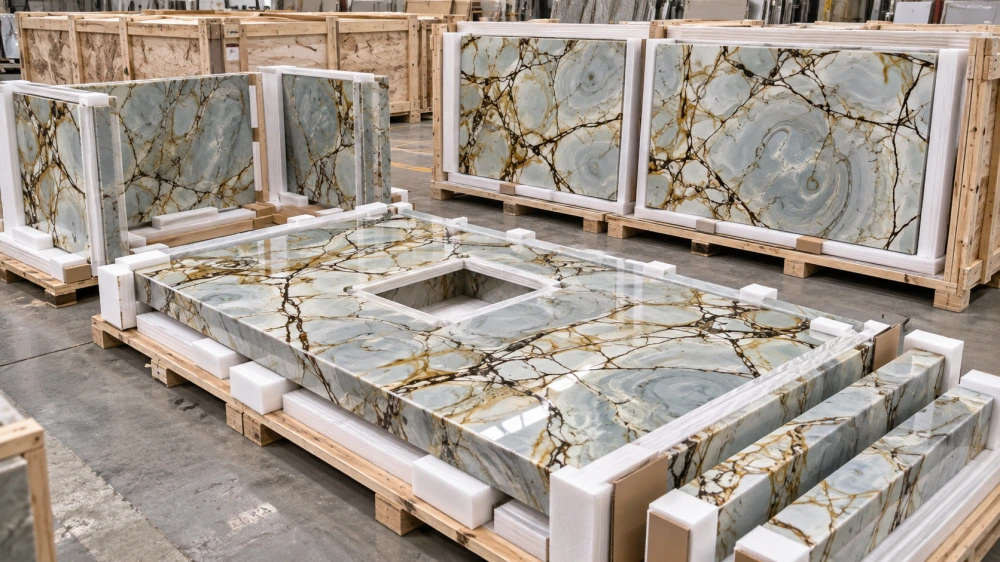
A fabricated Quartzite island cannot be packed like an unprocessed slab. Sink openings, long narrow sections, miters and waterfall pieces require protection designed around the finished geometry.
Export packing may require reinforced wooden crates, internal supports, cushioning, edge protection, waterproof protection and secure fixing. The correct packing design depends on the number of pieces, their dimensions, openings and transport method.
Reducing packing simply to lower the quotation can transfer cost into a much larger damage and replacement risk.
7. Freight and Trade Terms Must Be Separated From Stone Cost
Freight is another reason fixed online Quartzite island prices can be misleading. Logistics depend on origin, destination, crate dimensions, shipment weight, transport mode, trade term and current market conditions.
EXW, FOB, CFR/CIF and delivered quotations do not contain the same scope. Two suppliers can therefore show very different totals even if their actual stone and fabrication costs are similar.
How Can Buyers Control a Quartzite Kitchen Island Budget?
Budget control does not necessarily mean choosing the cheapest stone. It means controlling the variables that create unnecessary cost without weakening the design.
- Finalize the island geometry early. Changing dimensions after slab reservation can destroy an efficient layout.
- Set a realistic visual range. Requiring every slab to look almost identical may unnecessarily restrict available material.
- Review slab yield before purchase. Compare how the actual components fit onto the actual slabs.
- Use waterfalls deliberately. One or two waterfall ends can materially change slab consumption.
- Finalize appliances before cutting. Late sink or cooktop changes can require re-fabrication.
- Specify edge details clearly. Do not compare a basic edge quotation with a full mitered build-up quotation.
- Define QC scope. Use the inspection stages required by the project rather than vague “full QC” language.
- Compare delivered scope. Separate packing and freight so supplier quotes are commercially comparable.
What Information Is Needed for an Accurate Quartzite Island Quote?
A professional supplier should be able to quote more accurately when the buyer provides a complete brief. At minimum, the quotation request should identify the material direction, dimensions, fabrication scope and delivery basis.
| Quote Input | Why It Is Needed | Cost Risk if Missing |
| Stone / Visual Target | Defines the material group and slab-selection level. | Quotation may use an unsuitable grade or different stone. |
| Finished Dimensions | Required for slab quantity and fabrication planning. | Material quantity may be materially wrong. |
| Thickness & Finish | Defines material and processing scope. | Suppliers may quote different specifications. |
| Sink / Cooktop Details | Affects openings, machining and layout. | Fabrication cost and risk can be understated. |
| Edge / Waterfall Scope | Determines extra pieces, miters and slab consumption. | A basic countertop may be quoted instead of the actual island design. |
| Destination & Trade Term | Defines logistics responsibility. | Delivered totals cannot be compared accurately. |
For buyers managing an international supply package rather than only selecting a material, the CENTURY STAR guide to Quartzite Kitchen Island procurement explains how actual slabs, CAD layouts, fabrication approvals, QC, packing and delivery documentation fit together.
Material Cost vs Total Project Cost
One of the most useful distinctions in Quartzite budgeting is between the cost of the raw slabs and the cost of delivering a completed island package.
The raw slab is only the starting material. Once the project requires selection, layout, cutting, openings, finishing, edge assembly, waterfall matching, inspection, packing and logistics, the commercial scope changes.
This is why an apparently expensive slab can sometimes produce an efficient finished project if it fits the island well, while a cheaper slab may generate poor yield and require more material. Budget decisions should therefore be made using the approved fabrication solution, not a raw square-meter comparison.
Sıkça Sorulan Sorular
1. Why is there no single price for a Quartzite Kitchen Island?
Because natural Quartzite varies by stone, slab grade, dimensions and availability, while every island can have different dimensions, waterfalls, cutouts, edges, finishes, packing and delivery requirements. A meaningful price requires a defined project scope.
2. Is Quartzite priced by finished island area or by slab?
Material may be commercially quoted in different ways, but procurement quantity has to reflect the actual slabs required. Finished island area does not automatically equal purchased stone area because cutting yield, vein direction, natural features and additional components affect gross slab consumption.
3. Do waterfall ends make a Quartzite island more expensive?
They normally increase project scope because vertical panels require additional material, fabrication and mitered joints. They can also reduce slab yield if the design requires visual continuity between the top and side.
4. Why can two suppliers quote very different prices for the same Quartzite?
The quotations may not contain the same slab grade or project scope. One may include selected slabs, fabrication, miters, openings, QC, packing and delivery while another may quote mainly raw material. Compare the specifications and inclusions before comparing totals.
5. Does a larger slab always reduce kitchen island cost?
No. A larger slab can improve yield or reduce seams in some layouts, but its value depends on the actual island geometry, pattern direction and usable areas. The cutting layout is more important than slab size alone.
6. How do sink and cooktop openings affect the budget?
They add machining and influence the cutting layout. Large openings also create narrower surrounding stone sections that may require more careful placement, handling or project-specific reinforcement considerations.
7. Should freight be included when comparing Quartzite island prices?
Yes, if the commercial decision is based on delivered project cost. However, freight should be shown separately because rates, routes, shipment dimensions and trade terms can change. A slab or factory price should not be confused with delivered cost.
8. What should I send to get an accurate quotation?
Provide the preferred Quartzite or visual direction, finished drawings or dimensions, quantity, thickness, finish, sink and cooktop information, edge profile, waterfall scope, other fabrication requirements, destination and requested trade term. Actual slab selection can then be coordinated as the quotation progresses.
Referanslar
- Natural Stone Institute — Dimension Stone Design Manual Resource Library. Mevcut kılavuz, taş seçimi, kuvars temelli taşlar ve tezgah imalatı ile kurulum hususları hakkında rehberlik içermektedir.