


How are Stone Curb Stones Beveled? What is the Cost of Beveling? What are the Quality Standards for Curb Stones?
In the details of road construction, the beveling process of stone curbs may seem minor, but it directly affects pedestrian safety and the aesthetics of the road.
In municipal engineering and landscaping, the price of beveling granite curb stones is usually maintained in the range of 1-2 yuan per meter. This price is mainly affected by three factors: the quality of raw materials, the processing technology standards, and regional market differences.
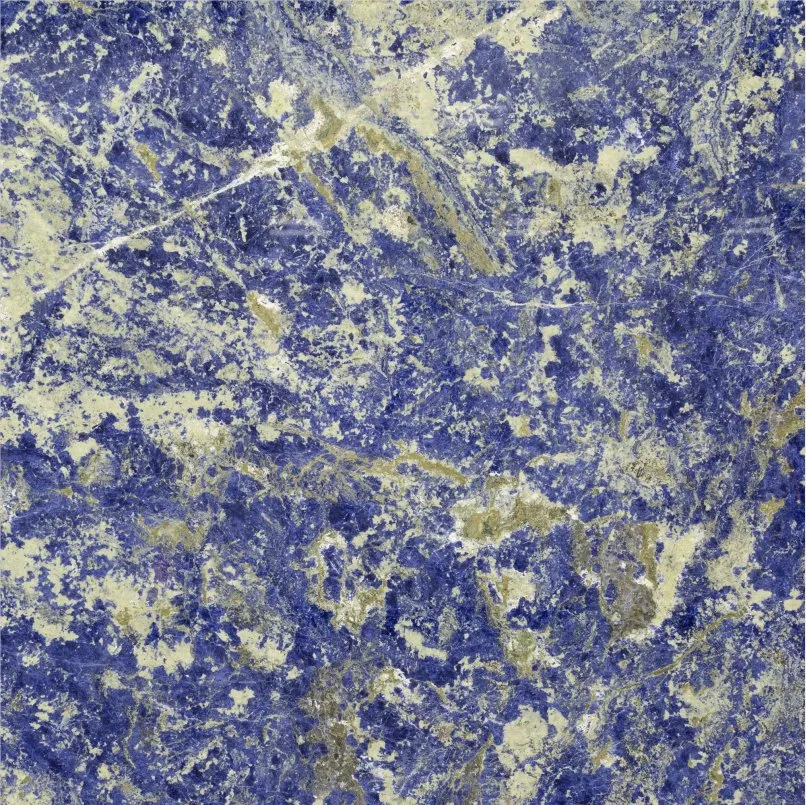
When using medium-to-low-grade granite such as sesame grey or yellow rust stone, with a Mohs hardness of about 6-7 and a cutting loss rate controlled at 8%-12%, the processing cost is relatively economical. Using a diamond saw blade for 45-degree bevel cutting, combined with a water-cooled polishing process, can ensure that the flatness of the cross-section reaches a tolerance range of 0.5mm.

Three Processing Methods for Stone Curbs Beveling
There are three main methods for beveling stone curbs: fully automatic beveling, semi-automatic beveling, and manual beveling. Fully automatic beveling uses a specialized beveling machine, which can work automatically after setting the parameters. However, this type of equipment is not common in stone factories, mainly because it occupies a large area and has low utilization.
Currently, the most widely used method is a combination of semi-automatic infrared cutting machine beveling and manual beveling. Semi-automatic beveling is achieved by adjusting the tilt of the infrared cutting machine’s saw blade; this method is mainly suitable for beveling angles.
For curb stones requiring rounded corners, especially 1-2cm quarter-rounded corners, manual beveling is the most common method. Operators can complete this by gently grinding with a grinder. Larger rounded corners of around 5cm require the most skill, needing workers to grind little by little, maintaining a consistent curvature to ensure the curb stones are neatly arranged.
Market Stone Curb Price Details for Beveling Costs
The price of curb stone beveling varies depending on the processing difficulty and technical requirements. Currently, the market price for beveling is 2-3 yuan per meter, which is the most basic and economical choice.
For 1-2cm rounded corners, the price is approximately 3 yuan per meter. However, for larger rounded corners of 4-5cm, due to the complexity of the process and higher technical requirements, the cost reaches 5 yuan per meter. Processing costs for special specifications will be significantly higher. For example, the processing cost for curved chamfers or composite chamfers (double-sided 45-degree angles + 1mm rounded corners) will be 30%-50% higher than ordinary chamfers. However, large-volume purchases (such as exceeding 1000 linear meters) usually yield certain price discounts.


Currently, the industry generally adopts a pricing model of “base material cost + processing fee,” with the chamfering process accounting for approximately 25%-35% of the overall processing cost. Price fluctuations are closely related to the wear rate of diamond tools (saw blades typically need to be replaced every 2000 meters) and labor costs.
Quality Standards and Requirements for Stone Curbs
The quality of curbstones has strict standards and specifications. Regarding straightness, the deviation should not exceed 10mm; the height difference between adjacent blocks should be controlled within 3mm; the joint width deviation should be ±3mm; and the elevation deviation of the top surface of the curbstone should be ±10mm.
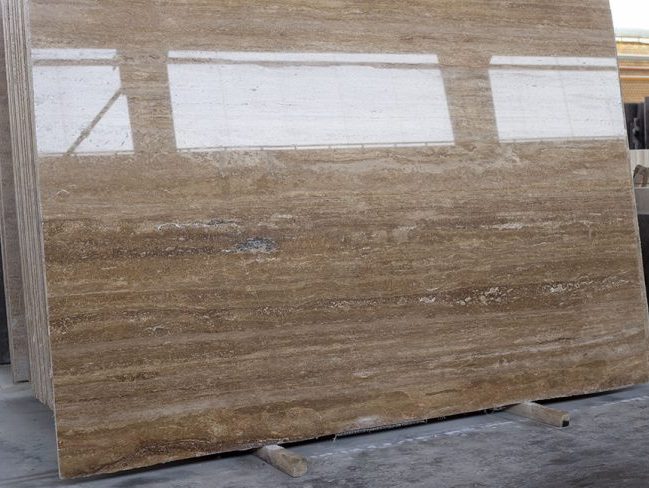
In terms of material, curbstones must be made from uniformly textured natural granite through mechanical cutting. The stone must meet strength requirements, have uniform color, be free of cracks, have intact edges and corners, a consistent appearance, and be free of obvious spots or color differences. Weathering is not permitted.
In terms of processing, materials must be cut to uniform lengths, and exposed surfaces must be machine-cut and polished. The allowable error for length is ±20mm, and the allowable error for width, thickness, and height is ±2mm.
Based on cross-sectional dimensions, curb stones can be classified into H-type, T-type, R-type, F-type, TF-type upright curb stones, and P-type flat curb stones. Classified by line type, they include curved curb stones and straight curb stones. Flamed curved curb stones can be used in conjunction with straight curb stones.

Stone Curb Functions and Installation Methods
As a type of stone slab, curb stones serve to distinguish between carriageways, sidewalks, green spaces, medians, and other parts of the road.
Its basic function is to ensure the safety of pedestrians and vehicles and to ensure neat road edges. In terms of installation methods, curb stones mainly come in upright, angled, and flat types.
During loading and unloading, regulations stipulate that the curbstones must not be dropped, smashed, bumped, or struck to avoid damage. These detailed requirements ensure that the curbstones can perfectly perform their function after installation, while maintaining an aesthetically pleasing appearance.
