


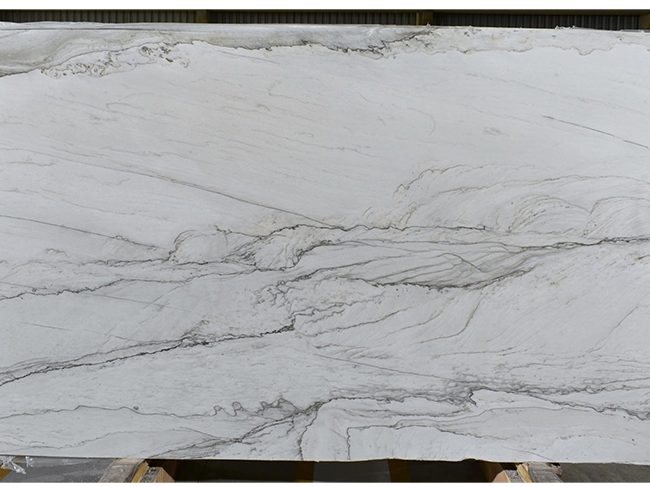
Quick Summary: A white marble kitchen island is most appropriate when the project prioritizes authentic natural beauty, distinctive veining, luxury identity, and a surface that can develop a natural patina over time. It works especially well in high-end residential kitchens, villa interiors, show kitchens, chef-led entertaining spaces, boutique hospitality projects, and custom islands where the client understands marble maintenance. White marble is less suitable when the owner expects complete resistance to acidic foods, stains, scratches, and visible wear. Successful projects depend on selecting the right marble, reviewing full slabs, planning vein direction, reinforcing sink and cooktop openings, choosing an appropriate finish, protecting overhangs, sealing the surface, and setting realistic care expectations before installation.

Design Logic: Why White Marble Works for Kitchen Islands
A kitchen island is often the largest horizontal surface in an open-plan home. It may function as a preparation counter, breakfast bar, serving station, social center, storage unit, and architectural focal point. Because it is visible from several directions, the island material has a stronger visual influence than a short perimeter countertop.
White marble is frequently selected because it creates an immediate sense of natural luxury. Grey, gold, beige, violet, or soft mineral veins can transform a large island into a unique centerpiece. Unlike manufactured patterns, natural marble does not repeat in a perfectly predictable way. Each slab has its own movement, concentration, and visual rhythm.
This individuality is especially valuable in custom villas, luxury apartments, boutique hotels, private clubs, and high-end residential renovations where the kitchen should feel designed around a particular slab rather than assembled from standard materials.
Use White Marble When the Island Is the Main Visual Feature
White marble is most successful when the island is intended to anchor the room. A carefully selected Calacatta, Statuario, Carrara, Volakas, or other white marble can provide enough movement to connect cabinetry, flooring, lighting, metal finishes, and furniture.
Large islands allow the natural pattern to be seen more clearly than small countertops. Broad veins can travel across the top and continue down a waterfall side panel. Quieter slabs can create a softer atmosphere in minimalist kitchens.
The stone should not be selected only because it is white. The scale, direction, spacing, and color of the veining should suit the island dimensions and the surrounding interior.
Material Logic: Understanding White Marble in a Kitchen
White marble is primarily a calcium-based natural stone. It can be polished to a reflective finish or honed for a softer surface. Its visual value is high, but it is more sensitive to acidic substances than granite, quartzite, engineered quartz, or many sintered surfaces.
Lemon juice, vinegar, wine, tomatoes, citrus drinks, and some cleaning products can react with marble and leave dull etched areas. Oil, coffee, sauces, cosmetics, and food coloring may also stain the surface when spills remain for extended periods or when the stone is not properly maintained.
This does not automatically make marble unsuitable for a kitchen island. It means the client must understand that marble is a living natural surface. In some luxury homes, a developing patina is accepted as part of the material character. In other projects, even a small dull mark may be considered unacceptable.
Use White Marble When Natural Patina Is Acceptable
White marble works best for clients who value authenticity more than perfect long-term uniformity. Over time, a frequently used island may develop subtle changes in sheen, small marks, or variations in surface appearance. A honed finish can make this aging process feel softer and more intentional.
If the client expects the island to remain visually unchanged despite heavy cooking, acidic ingredients, frequent entertaining, and minimal care, another material may be more appropriate.
Use White Marble When the Kitchen Has Controlled Use
Marble is easier to manage in kitchens where the island is used primarily for serving, breakfast, light food preparation, entertaining, or display. It may also work in homes with a separate working kitchen or back kitchen where intensive preparation occurs on a more resistant surface.
In a heavily used family kitchen, the decision depends on the owner’s habits. Cutting boards, trivets, trays, prompt cleaning, and suitable care products can reduce risk, but they cannot make marble completely resistant to etching or wear.
Spatial Application: White Marble Kitchen Island Ideas
1. Large Villa Kitchen Island
A large villa kitchen provides enough space for white marble to express its full slab movement. Calacatta Gold, Statuario, or other strongly veined stones can create a dramatic centerpiece when coordinated with warm wood, cream cabinetry, brushed brass, or dark metal details.
The slab layout should be developed before cutting. The most expressive vein may be positioned across the main seating elevation, while quieter areas can surround the sink or cooktop openings.
2. Waterfall-End Marble Island
A waterfall side panel allows the marble pattern to continue from the horizontal top to the floor. This creates a furniture-like island and makes the stone visible from the living or dining area.
The waterfall joint should be carefully mitered, reinforced, dry-laid, and protected during transport. The vein transition should be planned from actual slab images rather than assumed from a small sample.
3. White Marble Island with Dark Cabinetry
White marble creates strong contrast with black, charcoal, dark walnut, or deep green cabinetry. This combination works well in contemporary kitchens and boutique hospitality interiors.
When the cabinetry is dark, the marble can keep the island from appearing visually heavy. Polished marble creates stronger contrast and reflection, while honed marble supports a quieter architectural look.
4. Warm White Marble with Oak or Walnut
White marble containing beige, cream, or gold movement can pair naturally with oak and walnut. This direction creates a warmer kitchen than a cool white-and-grey palette.
Brushed brass, champagne bronze, and warm pendant lighting can reinforce the gold or beige mineral tones. However, overly yellow lighting should be avoided because it may distort the natural white background of the stone.
5. Marble Island in a Show Kitchen
White marble is particularly suitable for show kitchens, display kitchens, luxury apartments, and homes with a separate service kitchen. In these projects, the island carries strong visual importance but may experience less intensive preparation.
This arrangement allows the design to benefit from authentic marble while assigning heavy cooking, frying, and acidic food preparation to another work surface.
Material Matching Strategy
A white marble kitchen island should be selected with the cabinetry, perimeter countertops, flooring, lighting, appliances, hardware, and adjacent living space. The island should feel integrated into the room rather than installed as an isolated stone object.
White Marble with Cabinetry
White and cream cabinets create a light, continuous kitchen. Walnut and oak add warmth. Black and charcoal cabinets create stronger contrast. Green, navy, and burgundy cabinetry can work with white marble when the stone contains compatible mineral tones.
If the cabinetry has strong wood grain or decorative panels, a quieter marble may be preferable. If the cabinets are simple and handleless, the island can support more dramatic veining.
White Marble with Metal Finishes
Chrome and brushed nickel work well with white marble containing cool grey veins. Champagne bronze and brushed brass complement marble with gold, beige, or warm mineral movement. Matte black provides a strong graphic contrast.
Metal trims should not divide the stone unnecessarily. They are most effective when used for lighting, cabinet details, faucet finishes, or restrained structural accents.
White Marble with Perimeter Countertops
The island and perimeter counters do not need to use the same material. A white marble island can be paired with a quieter quartz, granite, sintered stone, or stainless-steel working counter.
This mixed-material strategy allows the island to provide natural luxury while a more resistant surface supports intensive food preparation. For a controlled and lower-maintenance alternative, CENTURY STAR’s guide to quartz kitchen island design and performance provides a useful comparison.

Engineering Logic: Thickness, Support, and Openings
Select Thickness and Edge Design Together
White marble island tops are commonly fabricated from available slab thicknesses according to project requirements and local standards. A simple eased edge creates a clean and practical result. A mitered edge can create the appearance of a thicker monolithic island without using a fully solid thick block.
Mitered edges require precise cutting, bonding, reinforcement, color control, and packaging. Vein alignment across the front return should be planned carefully because the edge is highly visible.
Reinforce Sink and Cooktop Cutouts
Sink and cooktop openings reduce the amount of stone remaining across the island. Narrow rails in front of or behind an opening may be vulnerable during lifting, transport, and installation.
The fabricator should review cutout dimensions, internal corner radii, faucet holes, accessory openings, cabinet divisions, appliance clearances, and support requirements before cutting. Temporary transport supports may be necessary around large openings.
Plan Seating Overhangs
Breakfast-bar overhangs should be designed according to slab thickness, stone quality, span, support spacing, and expected use. Long unsupported overhangs should not be approved solely for a floating visual effect.
Hidden steel supports, brackets, cabinet framing, or structural rails may be required. Support should be included in the cabinet and shop-drawing package before the marble is fabricated.
Confirm Seam Position
Large islands may require more than one slab depending on dimensions, available material, access, and layout. A seam should be positioned in a structurally and visually logical location.
Seams should generally avoid narrow sink rails, unsupported overhangs, and dominant veins where misalignment would be obvious. Actual slab photographs should be used to develop the layout.
Performance Logic: Etching, Staining, Heat, and Wear
Etching Is Different from Staining
Etching is a chemical reaction that changes the surface sheen of marble. It can occur quickly when acidic foods or cleaners contact the stone. A sealer does not prevent etching because sealing is mainly intended to reduce liquid absorption.
Staining occurs when liquids or oils enter the stone and create discoloration. Suitable sealing, prompt cleaning, and careful use can reduce staining risk, but no sealer makes marble completely stain-proof.
Heat Protection Is Still Recommended
Natural marble can tolerate normal environmental heat, but hot pans and appliances should not be placed directly on the surface. Trivets and heat-resistant mats protect the stone, sealer, adjacent joints, and surrounding cabinetry.
Scratches and Surface Wear
Marble is softer than granite and quartzite. Knives, ceramics, metal cookware, and abrasive cleaning tools can scratch or dull the finish. Cutting boards should be used for food preparation.
A honed finish may make minor surface changes less noticeable than a highly polished finish. However, the final choice should reflect the client’s preferred appearance and maintenance tolerance.
Procurement Logic: Selecting and Controlling the Marble Package
White marble kitchen island procurement should include slab selection, quantity, finish, thickness, cutting layout, edge profile, openings, reinforcement, dry layout, packaging, site access, installation, and spare material. Comparing only the price per square meter does not show the complete project risk.
Review Full Slabs Before Purchase
Buyers should request full-slab photographs, videos, close-up images, dimensions, available quantity, finish information, and visible repair details. The supplier should identify fissures, resin-filled areas, mineral concentration, color variation, and possible weak sections.
A small sample cannot represent a large island. Strong veins, natural cracks, and broad color changes may only become visible across the complete slab.
Approve the Cutting Layout
The cutting layout should show the countertop, waterfall panels, front edges, backsplashes, sink openings, cooktop openings, seams, and spare pieces. Vein direction should be coordinated across adjoining components.
The layout should also consider slab yield. Forcing perfect bookmatching may increase material requirements and project cost. The visual priority should be agreed before fabrication.
Choose the Finish with the Client
Polished marble provides stronger depth, sharper veins, and higher reflection. Honed marble creates a softer surface and may make gradual patina less visually disruptive.
Neither finish eliminates etching. The client should review real samples and understand how the surface may change with kitchen use.
Evaluate the Supplier and Fabricator
The supplier should be able to support slab selection, CAD drawings, cutting plans, edge samples, dry layout, reinforcement, quality control, and export packaging. The fabricator should understand natural fissures, mitered edges, sink rails, waterfall alignment, and large-island handling.

When White Marble Is Not the Best Island Material
White marble may not be suitable when the owner wants a surface that remains visually unchanged under heavy daily cooking. It should also be reconsidered when acidic food preparation is frequent, cleaning habits are aggressive, maintenance expectations are minimal, or replacement material must be perfectly repeatable.
Granite may be more appropriate when hardness and practical natural-stone performance are the priority. CENTURY STAR’s granite kitchen island design guide provides a comparison for buyers who want natural stone with a stronger durability profile.
Sintered stone may be more appropriate when thin profiles, consistent patterns, low absorption, and product-controlled technical performance are important. The sintered stone kitchen island guide explains when a manufactured slab system may be preferable.
Global Design Trend Insight
Luxury kitchen design continues to favor large islands, waterfall ends, concealed storage, integrated seating, sculptural pendant lighting, and strong natural materials. White marble remains relevant because it provides authentic variation and a recognizable sense of craftsmanship.
At the same time, many designers are using mixed-material kitchens. Marble may be reserved for the central island, while perimeter counters use quartz, granite, stainless steel, or sintered stone. This approach balances visual luxury with practical performance.
Another trend is greater acceptance of natural patina. Some clients deliberately select honed marble because they prefer a surface that ages naturally instead of maintaining a permanently manufactured appearance.
Comparison and Design Decision Table
| Kitchen Island Situation | Use White Marble? | Main Benefit | Main Risk | Alternative Material |
|---|---|---|---|---|
| Luxury villa show kitchen | Yes | Creates a unique natural focal point | Etching and maintenance expectations | Quartzite, granite, quartz |
| Family kitchen with heavy daily cooking | Only with informed acceptance | Natural luxury and distinctive veining | Acidic foods, scratches, stains, visible wear | Granite, quartzite, sintered stone |
| Island with separate back kitchen | Yes | Allows marble to serve as the social and visual surface | Spills during entertaining | Quartz or quartzite |
| Commercial food-preparation island | Usually no | Premium appearance | Intensive use, chemicals, maintenance mismatch | Stainless steel, granite, approved engineered surface |
| Statement waterfall island | Yes | Displays continuous natural veining | Miter alignment, slab yield, edge damage | Quartzite, sintered stone |
Common Design and Execution Mistakes
Promising That Sealing Prevents Etching
Sealing can reduce absorption and staining risk, but it cannot prevent acids from reacting with marble. Client expectations should be explained accurately.
Selecting from a Small Sample
A small sample does not show vein scale, fissures, color variation, or slab-to-slab differences. The island should be planned from actual full slabs.
Ignoring Support Below Overhangs
A long unsupported seating area can create structural risk. Support requirements should be coordinated with the cabinetry before stone fabrication.
Placing Strong Veins Through Weak Cutout Areas
Sink and cooktop openings should be coordinated with natural fissures and strong veins. Visual preference should not override fabrication safety.
Using Harsh Cleaning Products
Acidic, abrasive, or unsuitable cleaners may damage the finish. Owners should receive clear natural-stone care guidance after installation.

FAQ
1. Is white marble suitable for a kitchen island?
Yes. White marble is suitable when the client values authentic natural beauty and accepts the possibility of etching, staining, scratches, and gradual patina. Correct fabrication, sealing, and care remain essential.
2. Which white marble works best for a kitchen island?
Calacatta, Statuario, Carrara, Volakas, and other white marbles may be considered depending on slab quality, vein pattern, availability, finish, and project style. The actual slabs are more important than the commercial name alone.
3. Does sealing make a marble island stain-proof?
No. Sealing can reduce liquid absorption and staining risk, but it does not make marble stain-proof and does not prevent acid etching.
4. Is honed or polished marble better for kitchen islands?
Honed marble creates a softer appearance and may make gradual wear less noticeable. Polished marble provides deeper color and stronger reflection. Both can etch, so the choice should reflect design and maintenance expectations.
5. Is marble better than quartz for a kitchen island?
Marble is better when authentic natural movement and uniqueness are the priority. Quartz is generally more suitable when consistency, easier routine maintenance, and resistance to acid-related etching are more important.
6. What should buyers confirm before ordering?
Buyers should confirm actual slabs, finish, thickness, vein layout, seams, sink and cooktop openings, edge profile, overhang support, reinforcement, sealing, dry layout, packaging, site access, installation, and maintenance expectations.
Final Note / Practical Takeaway: A white marble kitchen island is the right choice when the project values natural individuality, luxury appearance, and authentic material aging more than perfect resistance to every stain or acid mark. It is especially effective in villa kitchens, show kitchens, entertaining spaces, and homes with separate heavy-preparation areas. Before production, buyers should approve the actual slabs, finish, cutting layout, openings, seams, edge details, support, sealing, packaging, installation route, and long-term care expectations.
References
- Natural Stone Institute. Dimension Stone Design Manual, current applicable edition.
- Natural Stone Institute. Natural Stone Care and Maintenance Guidance, current applicable guidance.
- ASTM International. ASTM C503/C503M, Standard Specification for Marble Dimension Stone.
- ASTM International. ASTM C1528/C1528M, Standard Guide for Selection of Dimension Stone.