


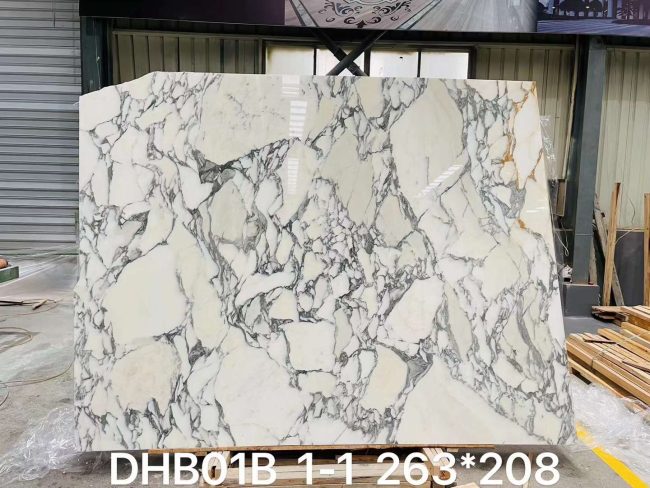

Quick Answer: Genuine tiger eye tiles are typically made from natural tiger eye stone or high-quality composite slabs. These materials preserve the characteristic golden-brown chatoyancy (cat’s-eye effect) and layered fibrous structure of the mineral, as well as its quartz-based hardness. Genuine products exhibit natural colour variation, unique patterns and optical depth, which are difficult to replicate using printed ceramics or synthetic decorative panels.
According to the Gemological Institute of America (GIA), Mindat.org and the Mineralogical Record, Tiger Eye is a quartz pseudomorph formed by the replacement of crocidolite fibres with silica, while retaining its fibrous structure. This produces the distinctive silky lustre and chatoyant effect. These geological characteristics are important indicators for distinguishing genuine tiger eye materials from imitations.
Introduction
Luxury natural stone is becoming increasingly popular in residential, hospitality and commercial architecture, and tiger eye tile has emerged as one of the most distinctive decorative materials available. With its dramatic golden reflections, flowing fibrous texture and gemstone-like appearance, tiger’s eye tile can transform ordinary surfaces into striking architectural features. It is increasingly specified by designers for feature walls, reception areas, luxury bathrooms, hotel interiors, boutique retail spaces, and high-end residential projects where visual impact is a priority.
However, as demand has grown, the market has also seen an increase in imitation products. Some tiles use printed ceramic surfaces or resin composites that resemble tiger’s eye, but lack the natural optical properties of the mineral. Others combine crushed stone with pigments or artificial veneers that may appear convincing at first, yet differ significantly in terms of durability, value and appearance.
Understanding how genuine tiger eye stone forms and recognising its unique physical characteristics enables buyers, architects and project managers to make informed purchasing decisions. This guide explains the key differences between authentic and imitation tiger-eye tiles, outlines professional identification methods and provides practical advice for selecting high-quality materials for commercial and residential applications.
What Is Tiger Eye Tile?
A tiger eye tile is a decorative architectural surface made from natural tiger eye stone or engineered stone panels that incorporate tiger eye material. Unlike ordinary ceramic or porcelain tiles, which rely on printed graphics for their appearance, genuine tiger-eye tiles derive their beauty from the natural mineral itself. This produces a depth, movement and colour variation that cannot be perfectly duplicated.
Tiger’s eye is a type of macrocrystalline quartz recognised for its golden-yellow to reddish-brown colouring and distinctive chatoyny, commonly referred to as the ‘cat’s-eye effect’. As light moves across the surface, the stone produces shimmering bands that appear to shift and flow, giving each tile a dynamic visual character.
Due to its luxurious appearance, tiger eye tiles are frequently used for:
- Feature walls
- Hotel lobbies
- Luxury retail stores
- Reception counters
- Bathroom accent walls
- Decorative columns
- Furniture cladding
- Interior art installations
Each natural slab possesses a unique mineral pattern, meaning no two genuine tiger eye tiles are exactly alike.

How Does Natural Tiger Eye Form?
The geological origin of tiger’s eye is one of the reasons why it is so visually distinctive. Millions of years ago, blue crocidolite fibres were gradually replaced by silica-rich quartz in a process known as pseudomorphic replacement. During this transformation, the original fibrous structure remained largely intact, but the material changed chemically to become quartz.
These preserved parallel fibres interact with incoming light to create the famous silky reflection known as chatoyancy. This optical phenomenon causes the bright bands to shift as the viewing angle changes, producing an effect that synthetic materials often find difficult to reproduce convincingly.
Natural tiger’s eye is primarily composed of quartz, giving it a Mohs hardness of approximately 7. This makes it significantly harder than many decorative stones, making it well suited to interior architectural applications where durability and scratch resistance are important.
Natural Tiger Eye Tile vs. Artificial Imitation
Not every product marketed as tiger eye tile contains genuine tiger eye stone. Some decorative panels simply imitate the appearance through digital printing, pigmented resin, or composite materials. While these alternatives may offer lower costs or lighter weight, they differ considerably in mineral composition, optical behavior, and long-term performance.
The table below highlights several important distinctions.
| Characteristic | Genuine Tiger Eye Tile | Artificial Imitation Tile |
| Material | Natural tiger eye stone or genuine composite slabs | Printed ceramic, resin, or synthetic decorative panels |
| Pattern | Naturally irregular and unique | Often repetitive or digitally repeated |
| Optical Effect | True chatoyancy with moving light bands | Surface gloss only, limited depth |
| Color Variation | Natural mineral transitions | Uniform printed coloration |
| Hardness | Quartz-based (approximately Mohs 7) | Varies depending on substrate |
| Long-Term Value | Higher decorative and material value | Primarily aesthetic appearance |
Although some engineered products achieve impressive visual realism, only genuine tiger eye retains the mineralogical properties responsible for its distinctive optical performance.
How to Identify a Real Tiger Eye Tile?
Professionals evaluate multiple characteristics rather than relying on appearance alone. The following methods provide a more reliable assessment of authenticity.
- Observe the Chatoyant Effect
The defining feature of genuine tiger eye is its moving band of reflected light. Slowly rotate the tile under a strong light source. On authentic material, the bright golden band appears to glide across the surface rather than remaining fixed.
Printed ceramic surfaces generally display consistent reflections that do not change dynamically with viewing angle.
- Examine Pattern Randomness
Nature rarely produces identical mineral patterns. Real tiger eye slabs contain irregular fiber structures, subtle color transitions, and naturally varying mineral bands.
If multiple tiles display nearly identical veining, repeated streaks, or perfectly matching color zones, they are more likely to be digitally printed reproductions.
- Inspect the Surface Depth
Natural tiger eye exhibits remarkable visual depth because light penetrates the quartz before reflecting from internal fibrous structures.
Artificial decorative surfaces often appear comparatively flat, even when polished to a high gloss.
- Evaluate Edge Construction
Viewing the edge of a tile often reveals valuable information. Genuine stone usually displays continuous mineral structures extending from the surface through the body of the material.
Printed ceramic products frequently reveal a decorative surface layer bonded to a different substrate beneath.
- Compare Color Transitions
Authentic tiger eye contains gradual transitions between golden yellow, bronze, brown, and occasionally reddish tones. These variations occur naturally during mineral formation and rarely follow predictable patterns.
Uniform coloration with abrupt printed boundaries may indicate an imitation product.
- Consider Weight and Density
Quartz-based stone is relatively dense. Genuine tiger eye tiles generally feel heavier than decorative resin panels or lightweight printed alternatives of comparable dimensions.
Although weight alone cannot confirm authenticity, it provides another useful indicator when combined with visual inspection.
- Request Material Documentation
For architectural projects, reputable suppliers should be able to provide documentation regarding material origin, processing methods, and product specifications. Depending on the project, buyers may also request laboratory reports or technical data sheets covering density, water absorption, hardness, or other physical properties.
Comprehensive documentation increases confidence in material quality and supports specification decisions for commercial developments.
Professional Inspection Checklist
| Inspection Method | What to Look For | Reliability |
| Chatoyancy | Moving light band under changing angles | Very High |
| Pattern Variation | Natural, non-repeating fiber structure | High |
| Surface Depth | Three-dimensional optical appearance | High |
| Edge Inspection | Continuous stone structure | High |
| Color Transition | Gradual mineral color changes | Medium–High |
| Weight Comparison | Dense quartz feel | Medium |
| Technical Documentation | Material origin and specifications | Very High |
Common Fake Tiger Eye Tile Materials
As tiger eye tile has become more popular in luxury architectural design, manufacturers have introduced numerous alternative products that imitate its appearance but are produced at lower cost. While some of these engineered materials are practical and attractive, they should not be confused with genuine tiger eye stone. Understanding these alternatives helps buyers to evaluate product value more accurately.
The most common imitation materials are digitally printed porcelain and ceramic tiles with high-gloss glazing, resin composite panels, engineered quartz containing decorative pigments and PVC decorative sheets. While these products can reproduce the colour palette of tiger’s eye, they generally cannot duplicate the stone’s natural chatoyancy or internal mineral structure.
While some premium composite panels incorporate small amounts of natural stone powder to improve texture, the optical performance remains noticeably different from authentic tiger eye under directional lighting. Therefore, buyers should evaluate products based on both appearance and material composition rather than surface colour alone.

Where Is Real Tiger Eye Tile Commonly Used?
Due to its luxurious appearance and distinctive optical effect, genuine tiger-eye tile is primarily used for decorative purposes rather than for structural applications. Designers often use it to create focal points that combine natural elegance with dramatic lighting effects.
Typical architectural applications include:
- Luxury hotel reception walls
- High-end residential feature walls
- Bathroom accent walls
- Boutique retail interiors
- Restaurant and hospitality decoration
- Executive office lobbies
- Decorative columns and wall panels
- Furniture cladding and custom cabinetry
- Exhibition spaces and art installations
In many projects, tiger eye tile is combined with materials such as marble, stainless steel, brass, wood veneer or glass to create layered, contemporary interiors. Proper lighting design can further enhance the stone’s natural chatoyant effect, causing the surface to display different visual characteristics throughout the day.
How to Choose High-Quality Tiger Eye Tile?
Selecting the right tiger eye tile requires balancing aesthetics, material quality, durability, and project requirements. Rather than relying solely on photographs or online descriptions, buyers should request physical samples whenever possible to evaluate the stone under different lighting conditions.
Several factors deserve careful attention during the selection process.
- Verify Material Authenticity
Request detailed product specifications that clearly identify whether the tile is manufactured from natural tiger eye stone, engineered composite material, or decorative printed ceramic. Transparent documentation helps prevent misunderstandings during procurement.
- Evaluate Surface Finish
Polished surfaces typically maximize the chatoyant effect and highlight the natural depth of the mineral. Examine the finish under both natural and artificial lighting to ensure the reflection remains smooth and continuous.
- Review Dimensional Accuracy
For large-scale commercial installations, dimensional consistency is essential to achieve uniform joint spacing and efficient installation. Precision cutting and edge finishing also contribute to the final visual quality.
- Consider Project Environment
Although tiger eye stone possesses good hardness due to its quartz composition, it is generally best suited for interior decorative applications where its appearance can be appreciated while minimizing exposure to harsh weathering conditions.
- Purchase from Reputable Suppliers
Experienced natural stone suppliers are more likely to provide reliable technical documentation, consistent product quality, and professional installation recommendations. Their familiarity with stone processing and quality control also reduces the likelihood of receiving inferior imitation products.
Care and Maintenance Tips
Proper maintenance preserves both the appearance and long-term performance of tiger eye tile. Fortunately, natural quartz-based materials require relatively straightforward care when installed in suitable environments.
Recommended maintenance practices include:
- Clean surfaces with a soft microfiber cloth.
- Use pH-neutral stone cleaners rather than acidic or alkaline chemicals.
- Remove spills promptly to prevent staining from colored liquids.
- Avoid abrasive cleaning pads that may dull polished finishes.
- Periodically inspect grout joints in wet areas.
- Protect decorative surfaces during renovation or heavy construction work.
Routine maintenance helps preserve the stone’s natural luster and allows its characteristic optical effect to remain vibrant for many years.

Comparison of Real and Imitation Tiger Eye Tile
| Feature | Genuine Tiger Eye Tile | Imitation Tiger Eye Tile |
| Raw Material | Natural quartz-based tiger eye stone | Ceramic, porcelain, resin, PVC, or printed composite |
| Optical Effect | True chatoyancy with shifting reflections | Decorative gloss only |
| Pattern | Naturally unique | Often repetitive or digitally reproduced |
| Durability | Excellent for interior decorative use | Depends on substrate material |
| Material Value | Higher long-term decorative value | Primarily aesthetic alternative |
| Identification | Mineral structure visible throughout | Decorative surface layer only |
Frequently Asked Questions (FAQ)
- What is tiger eye tile made of?
Genuine tiger eye tile is manufactured from natural tiger eye stone or premium engineered slabs incorporating real tiger eye material. The stone consists primarily of quartz that preserves the original fibrous mineral structure responsible for its distinctive chatoyant appearance.
- How can I tell whether tiger eye tile is natural?
Observe the moving band of reflected light, examine natural pattern variation, inspect the tile edges, evaluate surface depth, compare color transitions, and request technical documentation from the supplier. Genuine materials display characteristics that printed imitations cannot fully reproduce.
- Is tiger eye tile durable?
Yes. Because tiger eye is primarily composed of quartz with a Mohs hardness of approximately 7, it offers excellent scratch resistance and durability for interior architectural applications when properly installed and maintained.
- Can tiger eye tile be used in bathrooms?
Yes. Tiger eye tile is commonly used for bathroom feature walls, vanity backgrounds, and decorative panels. Appropriate sealing, proper installation, and routine maintenance help preserve its appearance in humid environments.
- Why do some tiger eye tiles cost much less than others?
Lower-priced products are often manufactured using printed ceramic, porcelain, resin composites, or other decorative materials rather than genuine natural tiger eye stone. Differences in raw materials, processing methods, thickness, and craftsmanship significantly influence pricing.
- Is every tiger eye tile unique?
Authentic natural tiger eye stone exhibits unique mineral formations created over millions of years. Consequently, every genuine slab differs slightly in color distribution, fiber orientation, and chatoyant pattern, making each installation visually distinctive.
Conclusion
Identifying a genuine tiger-eye tile requires more than simply comparing colours or polished finishes. Genuine tiger eye possesses a unique combination of mineral composition, fibrous internal structure, natural pattern variation and the remarkable chatoyant effect that has made it one of the most recognisable decorative stones in architecture. These characteristics are formed through natural geological processes and cannot be perfectly replicated by printed ceramics or synthetic decorative panels.
It is essential for architects, designers, contractors and homeowners to verify authenticity before purchase in order to achieve the desired aesthetic quality and long-term value. By carefully examining optical performance, surface depth, edge construction, material documentation and supplier credibility, buyers can distinguish genuine tiger-eye tiles from imitation products with confidence. A thoughtful selection process ensures a more impressive finished project and maximises the enduring beauty and uniqueness that only natural tiger-eye stone can provide.