



Quick Summary: Before ordering Soft Beige Marble for a Feature Wall, procurement teams should confirm the exact numbered slabs, acceptable cream-to-beige color range, vein and fossil characteristics, natural fissures and repairs, slab dimensions, gross material quantity, proposed wall-panel layout, visible joints, bookmatch or vein-flow strategy, openings, edge details, installation-system interfaces, factory capability, staged quality-control requirements, reinforced packaging, site access, and final delivery responsibility. Materials such as Crema Marfil, Daino Reale, Botticino, Perlato Sicilia, and other commercially traded beige stones can vary significantly in tone, mineral movement, fossil content, and fabrication behavior. The safest purchase decision is therefore based on the actual slabs and the complete fabricated wall package rather than a small sample, commercial stone name, or square-meter price alone.
Why Buyers Misjudge Suppliers Before Ordering Soft Beige Marble
Soft Beige Marble is often perceived as an easy material to source because its visual character is calmer than strongly veined white marble or highly dramatic multicolor stone. A designer may approve a warm beige sample, and procurement teams may assume that any supplier offering a similar commercial name can provide a comparable result.
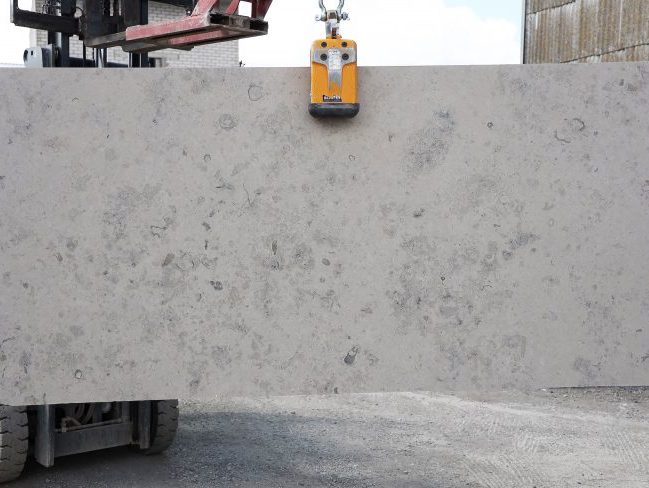
The problem becomes visible when several full slabs are placed side by side. Beige stone can shift from ivory and cream to sand, taupe, honey, pale grey-beige, or slightly pink-beige. Fossils, calcite lines, cloudy movement, fine veins, resin-filled areas, and natural fissures can also change from one slab to another.
On a large feature wall, these variations are seen simultaneously. One panel with a noticeably warmer tone or stronger fossil concentration can interrupt an otherwise calm architectural composition.
A Small Sample Cannot Represent the Wall
A hand sample confirms only a small portion of the stone. It does not show the full vein scale, slab-to-slab color range, repaired areas, edge condition, usable dimensions, or how multiple panels will work together.
Before a deposit or fabrication payment is released, buyers should review current full-slab photographs and videos of the exact material proposed for the project.
Commercial Beige Marble Names Are Not Complete Specifications
Names such as Crema Marfil, Daino Reale, Botticino, and Perlato Sicilia are useful commercial references, but they do not guarantee identical visual or technical characteristics between suppliers.
Procurement teams should also recognize that stones traded commercially within the beige-marble category may not always share the same geological classification. Project decisions should therefore be based on the actual material, relevant technical information, finish, and intended application rather than the trade name alone.

Design Logic: Confirm the Feature Wall Composition First
Before the stone quantity is finalized, the complete feature-wall elevation should be established. The supplier should receive finished wall dimensions together with all relevant architectural interfaces.
These may include ceiling height, flooring, skirting, reception desks, television openings, fireplaces, artwork recesses, electrical outlets, switches, wall lights, concealed doors, shelves, metal trims, side returns, adjacent timber panels, and other finishes.
Confirm the Main Visual Focal Area
The most attractive slab sections should normally be allocated to the most visible portion of the wall. In a hotel lobby this may be the central panel group behind the reception desk. In a villa living room it may be the area surrounding the television or artwork.
Secondary returns, upper areas, or lower sections can often use quieter material from the same slab group, improving yield without compromising the main design.
Confirm the Layout Strategy
Soft Beige Marble can work with several layout approaches. Some slabs are suited to natural continuous movement, while others can support mirrored or bookmatched arrangements.
Bookmatching should not be specified automatically. It can increase gross material consumption and may not be visually necessary for quieter beige stones.
Design teams developing the visual concept can review CENTURY STAR’s Soft Beige Marble ideas for custom Feature Wall projects before the final procurement layout is approved.
Material Logic: Confirm the Actual Beige Marble Slabs
1. Confirm the Acceptable Beige Range
The specification should define whether the project requires creamy ivory, warm beige, pale taupe, beige-grey, or another specific direction.
It is equally important to identify unacceptable extremes. A project designed around light neutral beige may reject slabs containing strong yellow, dark brown, pink, or highly contrasting areas.
2. Confirm Veins, Fossils, and Mineral Movement
Some beige materials are relatively uniform, while others contain visible fossil structures, linear veins, cloudy bands, or directional movement.
Procurement teams should decide how much natural movement is acceptable and where stronger areas should appear in the final wall.
3. Confirm Fissures, Repairs, Resin, and Mesh
Natural marble can contain geological fissures, filled areas, resin treatment, localized repairs, and mesh reinforcement. These conditions are not automatically unacceptable, but their position matters.
A repaired zone that is acceptable in the middle of a broad wall panel may be less suitable beside a narrow return, exposed edge, large cutout, or mechanical fixing preparation.
4. Confirm Slab Dimensions and Usable Area
The supplier should provide the actual dimensions of each proposed slab. Buyers should distinguish nominal slab area from usable fabrication area.
Damaged edges, visual defects, fissures, pattern orientation, panel size, and layout requirements can reduce usable yield and increase the number of slabs needed.
5. Confirm Surface Finish
Polished beige marble generally appears deeper and more reflective, while honed surfaces can create a softer and more architectural look.
The approved finish should be tested on representative material because finishing can change the perceived warmth and depth of the beige tone.

Supplier Logic: Confirm the Supplier Before Placing the Order
Confirm Current Inventory
Request current numbered slab photographs and videos. Every slab proposed for the project should have an identification reference together with dimensions, thickness, finish, and quantity information.
Catalog images and previous project photographs can demonstrate experience but should not replace current inventory evidence.
Confirm Slab Reservation
The supplier should explain when approved slabs become reserved for the project. Once the buyer approves specific slab numbers, substitutions should require a new approval.
Confirm Fabrication Responsibility
Procurement teams should know whether the supplier operates the fabrication factory directly or transfers production to another facility.
The responsible factory, inspection location, drawing responsibility, QC responsibility, and packaging responsibility should all be clear before production begins.
Confirm Shop-Drawing Capability
The supplier should be able to prepare controlled wall elevations showing finished panel dimensions, joints, orientation, openings, external returns, edge treatments, attachment-related fabrication where specified, and individual panel numbers.
Confirm Commercial Scope
The quotation should clearly define material, cutting, surface finishing, openings, edge processing, special vein-layout work, reinforcement where required, dry laying, packing, freight, insurance, and delivery responsibility.
For broader supplier due diligence, procurement teams can also review CENTURY STAR’s guide on how to evaluate a reliable natural stone supplier and factory.
Factory Logic: Confirm the Factory Can Produce the Wall
Large-Panel Cutting Capability
The factory should be able to produce the required panel sizes accurately and handle them without unnecessary flexing or edge impact.
Relevant production may involve bridge saw cutting, CNC machining, waterjet processing, drilling, edge finishing, mitering, reinforcement, and dry laying.
Vein and Panel-Sequence Capability
For visually controlled walls, the factory should understand how the selected slabs will be divided into panels and how adjoining pieces will relate.
A digital slab layout or physical dry layout should be available for review before packing.
Opening Fabrication Capability
Feature walls may require television openings, electrical boxes, fireplace interfaces, ventilation openings, wall lights, access panels, or concealed mounting details.
The factory should review these before cutting because openings can create narrow marble sections and affect panel division.
Visible Edge and Return Capability
External corners, recesses, concealed doors, shelves, and wall ends may require finished edges, mitered returns, or compatible trim systems.
The selected detail should appear on the approved shop drawing before fabrication.
Quality Control Logic: Confirm Inspection Requirements Before Production
1. Slab Inspection
Confirm slab numbers, dimensions, thickness, finish, beige range, veins, fossils, natural fissures, resin, repairs, mesh backing where applicable, surface condition, and existing edge damage.
2. Slab-to-Panel Layout Approval
Before cutting, confirm which portion of each slab will become each wall panel. The layout should identify focal areas, panel numbers, orientation, joints, openings, returns, and spare pieces.
3. Dimensional Inspection
Finished panels should be measured for length, width, thickness, squareness, opening size, opening location, edge geometry, and interface dimensions.
4. Surface and Edge Inspection
Check scratches, chips, inconsistent polish or honing, unexpected repairs, resin appearance, edge defects, damaged corners, and surface contamination.
5. Dry-Lay Confirmation
For a premium feature wall, the full panel sequence should be reviewed before packing wherever practical.
This stage allows buyers to confirm overall beige-tone consistency, vein relationships, fossil distribution, bookmatching where required, joint positions, openings, and panel numbering.
6. Packing Inspection
Before crates are closed, confirm that every panel is correctly numbered, properly separated, securely fixed, protected at the edges, and matched with the final packing list.

Engineering Reality Before Production
Confirm the Installation System
The marble is only the visible finish of the feature wall. The complete assembly may include structural framing, substrate, anchors, brackets, adhesive where appropriate, movement joints, and interfaces with other materials.
The responsible engineer, contractor, and stone installer should determine the installation method for the actual project.
Confirm Whether Mechanical Attachment Is Required
Large or heavy wall panels may require mechanical attachment or a combined system depending on panel size, thickness, wall height, substrate, local requirements, and project specification.
For mechanically attached wall systems, CENTURY STAR’s stone wall dry-hanging installation guide provides additional project context.
Confirm Thickness Against Panel Size and Fixing Method
Thickness should not be reduced simply to lower cost or shipping weight. It must be compatible with the stone condition, panel size, edge details, attachment system, and engineering design.
Coordinate Attachment Zones with Natural Features
Fixing preparation, kerfs, holes, brackets, openings, and narrow panel areas should be coordinated with visible fissures or repaired stone zones.
Confirm Final Site Dimensions
Large-format fabrication should not be released from preliminary architectural dimensions where accurate field measurements are required.
Wall flatness, finished floor levels, ceiling interfaces, adjacent millwork, fireplaces, door openings, and metal details should be checked before final panel dimensions are locked.
Confirm Installation Access
The largest slab size available should not determine the largest panel produced.
Procurement teams should check elevators, stairs, doorways, corridors, ceiling height, lifting equipment, scaffolding, installation manpower, and temporary storage before approving final panel sizes.
Packaging, Shipping, and Delivery Risk
Confirm the Packaging Design
Custom marble wall panels should be packed according to their actual dimensions and vulnerable areas. Suitable protection may include separators, foam, edge guards, waterproof materials, rigid internal fixing, and reinforced fumigated wooden crates.
Protect Narrow Returns and Openings
Narrow components and panels containing large openings may require additional temporary reinforcement during transportation.
Protect Finished Faces
Polished and honed marble surfaces should be separated to reduce scratches and friction during handling.
Use Traceable Panel Numbers
Every panel should correspond to the approved elevation, dry-lay record, and packing list. Installers should be able to identify its correct wall position without moving multiple heavy panels.
Confirm Crate Dimensions and Handling
Before shipment, procurement teams should know approximate crate dimensions, weight, unloading method, forklift or crane requirements, temporary storage conditions, and site access.
Confirm Claim Evidence
Final QC photographs, dry-lay photographs, internal packing images, closed-crate images, packing lists, and freight records should be retained.
At destination, visible crate damage should be documented before unpacking.
Procurement Logic: Confirm the Complete Commercial Package
Confirm Gross Slab Consumption
The finished wall area is not the same as the purchased slab area. Material consumption can increase because of slab dimensions, vein direction, bookmatching, natural defects, openings, returns, panel layout, and spare material.
A preliminary slab-to-panel layout should be reviewed before final quantity approval.
Confirm Fabrication Inclusions
The purchase order should define straight cutting, CNC or waterjet openings where required, edge finishing, mitering, reinforcement, special layout work, dry laying, numbering, and packing.
Confirm Spare Material
Beige stone purchased later may not match the original batch. Luxury villas, hotels, retail projects, and branded residences should consider keeping compatible spare material for future replacement.
Confirm Lead Time by Stage
Procurement teams should understand the expected timing for slab reservation, drawing approval, cutting, finishing, dry laying, QC, packing, and shipment rather than relying on one general production date.
Confirm Delivery Responsibility
Commercial terms such as FOB, CIF, or DDP should be supported by a clear description of the actual scope. The order should identify freight responsibility, customs responsibility where applicable, destination, unloading requirements, and important exclusions.
Global and Market Insight
International feature-wall procurement increasingly relies on digital visual control. Numbered slab photographs, full-slab video, CAD layouts, digital elevations, remote inspections, dry-lay photographs, dimensional records, and packing documentation allow procurement teams to manage a large portion of the project before shipment.
This is especially valuable for Soft Beige Marble because subtle differences in warm tone can be difficult to communicate through written descriptions.
Another design direction is the use of larger panels with fewer visible joints. While this produces a cleaner architectural appearance, it increases the importance of slab size, panel weight, attachment design, handling, site access, and replacement planning.
Professional procurement teams are therefore moving away from evaluating beige marble by price and commercial name alone. The complete slab group, usable yield, wall layout, fabrication capability, engineering coordination, QC, and logistics now carry greater purchasing value.

Soft Beige Marble Feature Wall Pre-Order Confirmation Table
| Confirmation Area | What to Confirm | Evidence Required | Main Risk if Missed |
|---|---|---|---|
| Actual material | Slab numbers, beige range, veins, fossils, finish, thickness, and dimensions | Current full-slab photos and videos | Delivered stone does not match the approved design |
| Natural features | Fissures, resin, repairs, mesh, fossil concentration, and damaged areas | Detailed close-up photographs | Weak or visually unsuitable areas enter important panels |
| Wall layout | Panel sequence, vein direction, bookmatch strategy, joints, openings, and returns | Approved CAD elevation and slab-to-panel layout | Poor visual continuity or excessive material waste |
| Factory | Large-panel cutting, openings, edges, dry lay, and handling | Relevant fabrication examples and production evidence | Approved slabs are inaccurately fabricated or damaged |
| Engineering | Attachment method, thickness, substrate, fixing zones, and site access | Final project drawings and installer coordination | Finished panels cannot be installed as designed |
| QC | Dimensions, surface, edges, dry lay, numbering, and packing | Stage-by-stage QC photographs and records | Problems are discovered only after arrival |
| Commercial scope | Material, fabrication, packing, freight, spare material, and delivery responsibility | Detailed quotation and purchase order | Unexpected costs or responsibility disputes |
Common Procurement Mistakes
Ordering from the Sample Alone
A small sample cannot confirm the overall beige range, fossil distribution, slab dimensions, repairs, or compatibility between several slabs.
Approving One Attractive Slab Instead of the Full Group
Multi-slab walls should be evaluated as one visual composition.
Ignoring Gross Material Yield
Bookmatching, slab dimensions, visual selection, openings, returns, and natural features can significantly increase material consumption.
Starting Fabrication Before Openings Are Final
Late changes to televisions, electrical boxes, fireplaces, concealed doors, lighting, or millwork can make finished panels unusable.
Choosing Maximum Panel Size Without Checking Access
The largest possible panel may not fit through the building or be practical for the installer to handle.
Leaving Attachment Engineering Until After Cutting
Fixing requirements, thickness, panel size, and natural stone conditions should be coordinated before specialized fabrication begins.
Treating Packaging as Standard Tile Packing
Large polished panels, miters, returns, and openings require packaging designed around their actual geometry.
FAQ
1. What should I ask a Soft Beige Marble supplier before ordering?
Ask for current numbered slab photographs and videos, exact slab dimensions, thickness, finish, available quantity, beige color range, veins and fossils, natural fissures and repairs, fabrication location, CAD support, QC procedures, packaging method, lead time, and complete commercial scope.
2. Should all Soft Beige Marble slabs be approved before production?
Yes. When several slabs are required, the complete proposed slab group should be reviewed together and reserved before cutting. Any replacement slab should require new buyer approval.
3. What QC should be completed before Feature Wall panels are shipped?
Procurement teams should confirm slab identity, cutting layout, finished dimensions, openings, surface and edge quality, dry-lay appearance, panel sequence, piece numbering, protective materials, and the final packing list.
4. How should Soft Beige Marble Feature Wall panels be packed?
Packaging should be designed around the finished panel sizes and geometry. Suitable protection may include foam, separators, edge guards, waterproof materials, rigid internal fixing, additional support around openings, and reinforced fumigated wooden crates.
5. Which Soft Beige Marble works best for a Feature Wall?
There is no universal best option. Crema Marfil can provide a classic warm cream appearance, Daino Reale can introduce more directional movement, Botticino may offer a quieter cream-beige surface with fossil detail, and Perlato Sicilia can provide another warm neutral direction. The final choice should depend on the actual slabs, wall scale, visual concept, availability, fabrication requirements, and budget.
6. What is the most important approval before placing the order?
The most valuable combined checkpoint is approving the actual slab group together with a preliminary wall-panel layout. This confirms whether the selected stone, available quantity, visual relationship, usable yield, and intended panelization can realistically produce the approved Feature Wall.
Final Note / Practical Takeaway: Before ordering Soft Beige Marble for a Feature Wall, procurement teams should eliminate as many unresolved variables as possible. The actual slabs should be approved and reserved, the acceptable beige range and natural features should be understood, the slab-to-panel layout should be reviewed, the fabrication factory should be verified, openings and attachment interfaces should be finalized, staged QC should be defined, and export packaging should be approved before shipment. The best purchase order is therefore not simply the quotation with the lowest marble price. It is the order in which the material, engineering, fabrication, inspection, packing, and delivery responsibilities are sufficiently clear before the first slab is cut.
References
- Natural Stone Institute. Dimension Stone Design Manual, current applicable edition.
- ASTM International. ASTM C503/C503M, Standard Specification for Marble Dimension Stone, where applicable to the selected material classification.
- ASTM International. ASTM C1528/C1528M, Standard Guide for Selection of Dimension Stone.
- ASTM International. ASTM C1242, Standard Guide for Selection, Design, and Installation of Dimension Stone Attachment Systems.