


Overview:
The intersection of wall stone and wood veneer is a common construction technology in interior decoration. Wall stone and wood veneer are different materials. Due to differences in physical and mechanical properties, the spatial environment, and climate change, cracks, deformations, and self-defects are often exposed at the intersection. For this reason, combined with the actual construction, we have sorted out the intersection technology of wall stone and wood veneer for your reference (this is a draft for discussion, and everyone is welcome to make revisions or suggestions).
Order of construction:
Combined with the actual construction, wood veneer should generally be installed after the wall stone is installed. Because the wall is generally made of dry-hung stone, it has a large weight and a complex process. Following the wall stone’s installation, the wood veneer can be freely connected and cut to fit the needs of the project, and controlling the closing is not too difficult.
Building procedure:
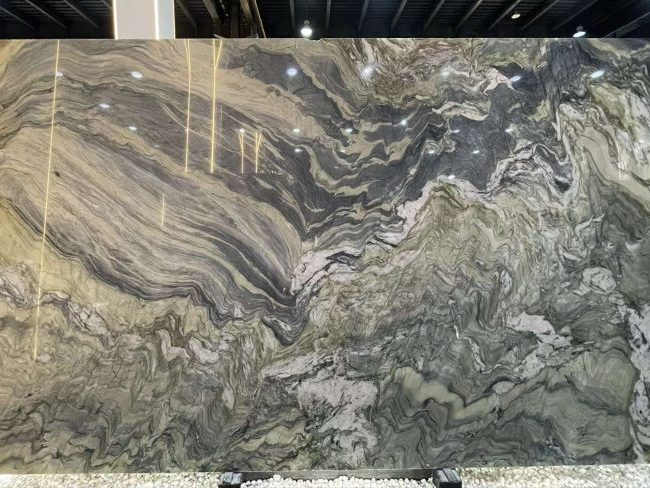
Stone: In general, wall stone should not come into direct contact with wood veneer. When deepening the design, grooves, tongues, and chamfers can be set at the stone interface. The main purpose is to overcome various quality defects caused by different physical and mechanical properties of different interfaces, which are specifically manifested as follows:
- Stone grooves, tongues, and chamfers can effectively avoid the gap between stone and wood veneer, stone edge burst, cross contamination, and other closing problems.
- Stone grooves, tongues, or chamfers can beautify the process and increase the decorative effect.
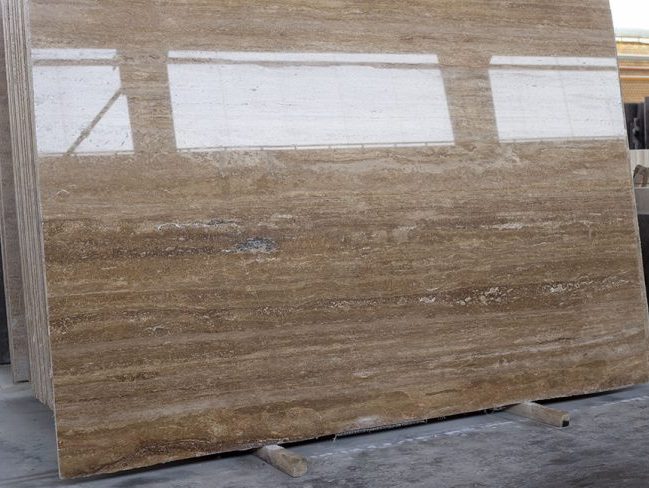
wood veneer: when deepening the design, grooves, tongues, or chamfers can be set at the edge of the wood veneer at the interface.
Schematic diagram of the main closing nodes:
Setting process grooves:


- Stone process grooves: that is, a cut of 5*5 or more and 10*10 is set at the junction of the wall stone edge and the wood veneer. After the installation of the wood veneer is completed, a stone groove is formed between the stone surface and the stone surface.


- Wood veneer process groove: that is, the wood veneer at the junction is cut with a size of more than 5*5 and less than 10*10. After the stone is installed, a wood veneer groove is formed between the stone and the wood veneer.
Set chamfers:


- It refers to setting stone chamfers at the interface. Generally, a 45° chamfer of 1mm*1mm is used, and then the wood veneer is directly connected with it. After completion, a vertical edge seam is naturally formed between the stone surface and the wood veneer, and defects such as stone edge bursting and cracking at the junction are effectively avoided.

- It refers to setting chamfers on the stone surface and wood veneer at the interface at the same time. Generally, a 45° chamfer of 5mm*5mm is used, and then the two sides are directly connected. After completion, a “V” seam is naturally formed between the junction surfaces, and defects such as stone edge bursting and cracking at the junction are effectively avoided.
Set up stepped shapes:


- After the stone is installed, the stone surface is covered with a wood veneer about 80 mm wide, forming a step between the two.
- After the stone step-down modeling is installed, the wood veneer and the stone surface form a layered level between them.
Setting the tongue and groove (a more complicated process):


- After the stone is installed, the wood veneer is set with an L-shaped tongue and groove to cover the stone interface.
- After the wood veneer is installed, the stone surface is set with an L-shaped tongue and groove to cover the wood veneer, and the stone edge of the interface is chamfered with 1*1.
- Both the wood veneer and the stone are set with an L-shaped tongue and groove, and a 10mm distance is reserved at the intersection of the two sides, forming a 10*10 stone groove.Stone Research Society (IDstone5A)
Construction requirements:
- After the stone is grooved, there will be no damage or cracking. The groove shall be polished to a 45° chamfer, and the groove shall be dry, smooth, and clean.
- The quality of stone construction and wood product construction shall comply with the enterprise quality standard requirements of Gold Mantis Decoration Company and the provisions of relevant national industry mandatory standards, specifications, and regulations.
Notes:
- When grooving the stone surface, the groove depth should not exceed 1/2 of the stone thickness. For example, for a 20-mm-thick stone, the groove depth should not exceed 10 mm, and 8 mm is appropriate.
- After the stone and wood veneer are installed, the finished product should be protected in time (to avoid cross-contamination, damage, etc.). The above numerical dimensions for setting process grooves, chamfers, etc. are for construction reference only and can be determined according to the design and actual conditions on site.
