


Quick Summary
Sintered stone countertops and quartz countertops are both popular engineered surface options for modern kitchens, bathroom vanities, islands, and commercial interiors. The right choice depends on the project application, visual design, slab size, fabrication details, edge requirements, installation conditions, and long-term maintenance expectations.
Sintered Stone Countertops vs Quartz Countertops: Which Should You Choose?
For kitchen designers, contractors, stone importers, and project buyers, the comparison between sintered stone countertops and quartz countertops is not only about appearance. Both materials can be used for modern interiors, but they behave differently in slab format, heat exposure, edge processing, cutouts, installation planning, and project supply.
If the project requires a large kitchen island, waterfall side panels, matching backsplash, bathroom vanity tops, or commercial counters, buyers should evaluate the material as a complete surface system rather than a single countertop board. This guide explains the comparison from a B2B project perspective.

What Are Sintered Stone Countertops?
Sintered stone countertops are made from large-format engineered slabs designed for kitchen worktops, islands, backsplashes, waterfall side panels, vanity tops, and commercial counters. They are selected by many designers because they can create broad continuous surfaces with fewer visible joints and a strong architectural appearance.
Century Star supplies Sintered Stone Kitchen Countertops for residential kitchens, villa projects, apartment renovations, and custom interior projects. For buyers, the key value is not only the slab surface, but also the ability to confirm drawings, edge details, sink cutouts, cooktop openings, backsplash panels, and export packing before production.


What Are Quartz Countertops?
Quartz countertops are engineered stone surfaces commonly used in kitchens, vanities, commercial counters, and residential renovations. They are known for consistent patterns, familiar fabrication workflows, and a wide range of color options. In many markets, quartz has been a mainstream countertop material for years, especially for kitchen companies and residential builders.
However, quartz countertops are usually evaluated differently from sintered stone. Buyers often compare quartz for cost, pattern consistency, edge fabrication familiarity, and local availability. Sintered stone countertop is often compared for large-format design, thinner or larger slab options, surface style, heat resistance expectations, and vertical application flexibility.
For a broader material comparison, buyers can also review HRST’s article on Sintered Stone vs Quartz as a related knowledge reference.
Key Difference 1: Visual Design and Slab Format
The first difference is visual expression. Quartz countertops often provide consistent patterns and controlled color options, which can be useful for multi-unit residential projects or standardized kitchen programs. Sintered stone, on the other hand, is often chosen when the designer wants a large-format architectural surface, dramatic marble-look pattern, black stone effect, Calacatta style, or bookmatched visual direction.
For large islands and open-plan kitchens, slab size can be an important design factor. A larger sintered stone countertop slab may reduce visible seams and create a cleaner surface. This is especially valuable when the countertop connects with waterfall sides, backsplash panels, or matching vertical surfaces.


Key Difference 2: Heat Resistance and Daily Kitchen Use
Kitchen countertops are exposed to hot cookware, steam, water, oil, cleaning products, and frequent movement. Both quartz and sintered stone countertop can be used in kitchens, but buyers should understand that performance depends on the exact product, surface finish, installation, and usage habits.
Sintered stone is often selected for kitchen surfaces because it is designed as a dense, heat-resistant engineered material. Quartz countertops are also practical for everyday residential kitchens, but many fabricators still recommend using trivets and avoiding direct heat exposure to protect the surface and resin content. For international projects, the safest approach is to follow the supplier’s use and maintenance recommendations for the selected product.
For buyers planning a kitchen island or worktop package, the material decision should also include edge profile, cutout locations, cabinet support, backsplash height, and installation site conditions.
Key Difference 3: Scratch, Stain, and Maintenance Expectations
Quartz countertops are known for easy cleaning and consistent daily maintenance. Sintered stone countertops are also selected for low-maintenance modern kitchens because the surface is dense and suitable for many daily-use environments. Still, no countertop material should be presented as completely maintenance-free in all conditions.
Project buyers should confirm the surface finish and usage environment. Polished, matte, honed, textured, and special finishes may behave differently in cleaning, fingerprint visibility, abrasion perception, and stain resistance. A black matte surface, for example, may show dust or fingerprints more obviously than a lighter stone-look surface, even when the material itself is suitable for the application.
For residential kitchens, the buyer should ask how the surface should be cleaned, whether acidic or abrasive cleaners should be avoided, and whether the finish is suitable for the expected daily use.
Key Difference 4: Thickness, Edges, and Countertop Structure
Thickness selection affects not only appearance, but also structure, edge design, fabrication method, packing, and installation. Quartz countertops are often fabricated in familiar countertop thicknesses, while sintered stone can be selected in different thickness systems depending on the slab series and application.
For a modern island, the designer may want a thicker visual edge. With sintered stone, this is often achieved by mitered edge processing or laminated edge details. For waterfall side panels, the slab layout and visible edges should be confirmed before cutting. For long spans or unsupported areas, the cabinet structure and support system must be reviewed.
| Countertop Detail | Why It Matters | What Buyers Should Confirm |
| Thickness | Affects strength, edge appearance, weight, and installation support. | Available slab thickness, cabinet structure, and finished edge design. |
| Mitered Edge | Creates a thicker visual edge for islands and luxury kitchens. | Edge height, visible side, corner detail, and fabrication tolerance. |
| Sink Cutout | Requires accurate opening position and safe edge processing. | Sink model, installation type, faucet holes, and reinforcement needs. |
| Cooktop Opening | Needs careful coordination with appliance size and heat-zone planning. | Appliance cutout drawing, support, clearance, and edge finish. |
Key Difference 5: Fabrication Difficulty
Fabrication is one of the most important differences for real projects. Quartz countertops are familiar to many local countertop fabricators. Sintered stone requires experienced cutting, handling, edge processing, opening preparation, and packaging because large-format slabs and thin formats may require more careful processing.
Century Star’s Sintered Stone Countertop Fabrication Guide explains how slab selection, drawing review, precision cutting, edge processing, packing, and installation coordination affect the final countertop result.

Why Drawing Confirmation Matters Before Production
For sintered stone countertops, drawings help confirm finished dimensions, seam locations, visible faces, edge profiles, sink cutouts, cooktop openings, faucet holes, backsplash panels, and waterfall side panels. This reduces the risk of production mistakes and helps the supplier pack each piece according to the installation sequence.
For quartz countertops, drawings are also important, but sintered stone often requires stricter handling and edge planning when the project uses large slab formats, mitered edge details, or long panel pieces.
Which Material Is Better for Kitchen Islands?
For kitchen islands, sintered stone has a strong advantage when the design requires large surfaces, waterfall side panels, dramatic veining, or a clean architectural effect. The island is often the central visual object in a kitchen, so slab size and pattern direction can have a major influence on the finished design.
Quartz is still a practical choice for many kitchens, especially when the buyer wants familiar fabrication, consistent appearance, and local countertop supply. But for high-end villas, designer kitchens, luxury apartments, and commercial-style residential projects, sintered stone can create a stronger visual impact when the slab layout is well planned.
For more application details, buyers can review Century Star’s White Marble Look Sintered Stone Countertops page when planning bright kitchen islands, backsplashes, and marble-look countertop designs.
Which Material Is Better for Bathroom Vanity Tops?
Quartz is commonly used for bathroom vanity tops because it is familiar, consistent, and easy for many fabricators to process. Sintered stone is also suitable for bathroom vanities, especially when the project requires matching shower walls, large wall panels, or coordinated bathroom surfaces.
For hotel bathrooms and villa projects, sintered stone can be used to create vanity tops, backsplash panels, side panels, shower walls, and bathtub surrounds with a unified material language. Century Star supplies Sintered Stone Bathroom Vanity Tops for residential bathrooms, hotels, apartments, serviced apartments, and designer-led bathroom renovations.


Can Sintered Stone Do More Than Countertops?
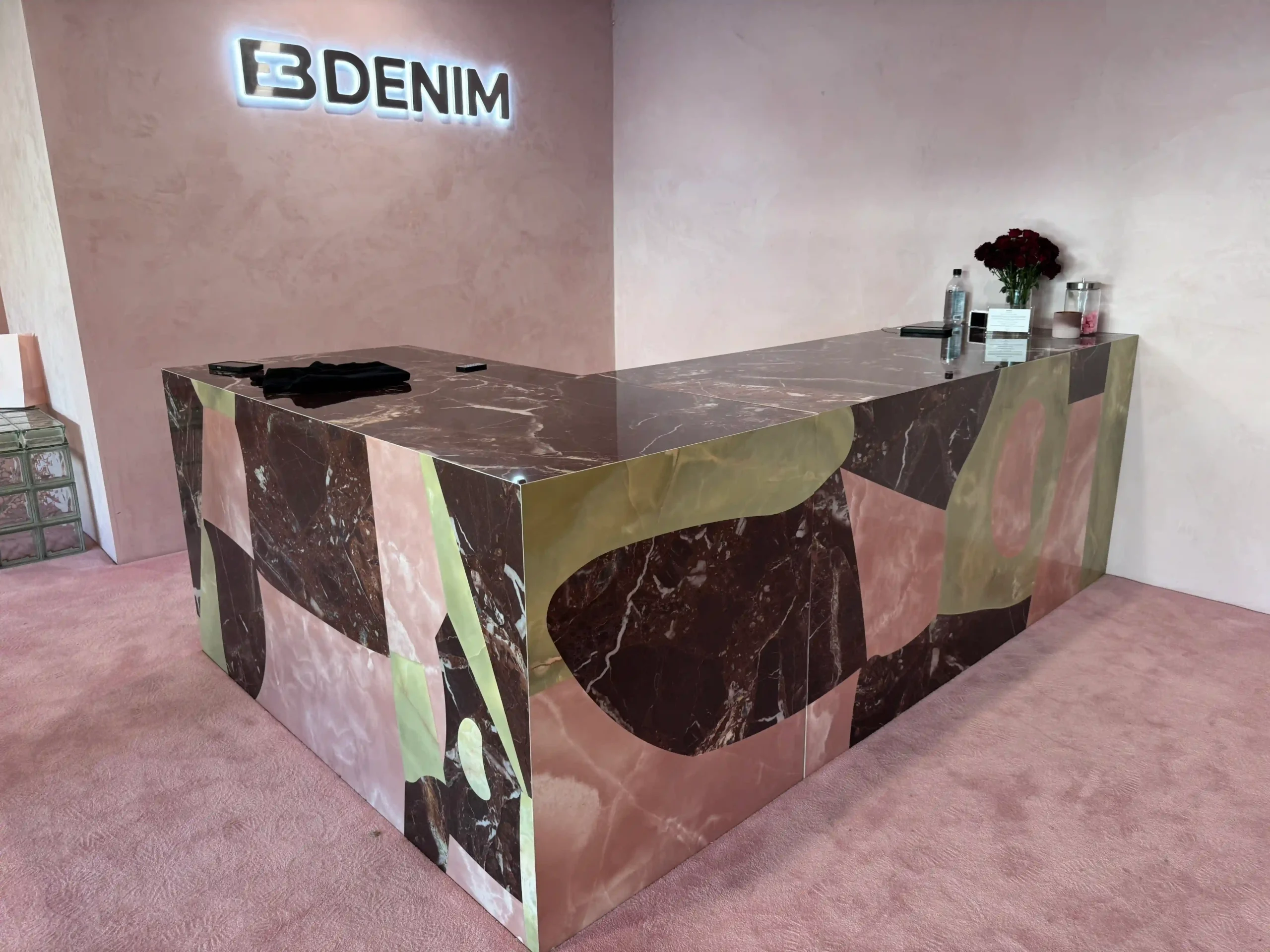
One of the major advantages of sintered stone Countertop is application flexibility. While quartz is mainly associated with countertops and vanity tops, sintered stone can extend into wall panels, shower panels, TV walls, floors, steps, reception counters, cashier counters, decorative planters, fireplace surrounds, and custom furniture-style products.
This makes sintered stone useful for projects where the designer wants one surface language across multiple areas. For example, a hotel or villa project may use sintered stone for bathroom vanity tops, shower wall panels, lobby wall cladding, reception counters, and feature walls. For wet-area applications, Century Star also supplies Sintered Stone Shower Wall Panels with large-format panel options, niche details, bench panels, and cut-to-size support.


Flooring, Steps, and Commercial Interior Use
Quartz is usually not selected as a general flooring or step material. Sintered stone Countertop, depending on finish, thickness, and installation system, may be used for selected floor and step applications. Buyers should confirm slip resistance expectations, foot traffic level, substrate preparation, piece size, edge finishing, and maintenance requirements before ordering.
For commercial wall systems, large-format sintered stone can also be coordinated with countertops, bathroom surfaces, reception desks, and other interior finishes. Century Star’s Large Format Sintered Stone Wall Cladding page explains how large panels can be used for hotel lobbies, office reception walls, retail interiors, and villa feature walls.


Cost Logic: Why the Cheaper Material Is Not Always the Better Choice
Many buyers ask whether sintered stone Countertop is more expensive than quartz. The answer depends on slab type, thickness, size, design, fabrication complexity, packing, and local installation cost. A simple quartz countertop may be more economical in some residential projects, while a large-format sintered stone island with waterfall sides, mitered edges, and matching wall panels may provide stronger design value for luxury projects.
Instead of comparing only square-meter slab price, project buyers should compare the total package: material cost, cutting cost, edge processing, cutouts, backing or support, packing, shipping, local installation, and replacement risk if the material is not suitable for the design.
| Project Factor | Why It Affects Cost | Buyer Action |
| Slab Size | Large slabs may reduce seams but affect handling, cutting, and packing. | Send finished dimensions and layout drawings. |
| Edge Detail | Mitered edges, laminated edges, and waterfall sides require more fabrication work. | Confirm edge profile and visible side height. |
| Openings | Sink, faucet, cooktop, and socket cutouts require accuracy and inspection. | Provide appliance drawings and cutout templates. |
| Packing | Finished edges and fragile openings require stronger protection for export. | Confirm shipping method and destination requirements. |
Production Process and Quality Control
Countertop quality control should follow the real production process rather than simply relying on a final inspection. For both sintered stone and quartz projects, buyers should confirm drawings, material selection, cutting accuracy, edge finish, openings, surface condition, piece numbers, and packing protection.
| QC Stage | Inspection Focus |
| Material Inspection | Check slab design, color tone, surface condition, finish, and suitability for the intended application. |
| Drawing Review | Confirm finished sizes, cutout positions, edge requirements, backsplash panels, and visible faces. |
| Cutting Inspection | Verify dimensions, layout direction, piece numbers, seam positions, and opening accuracy. |
| Surface and Edge Check | Review surface quality, polished or matte finish, corners, mitered edges, and visible edge details. |
| Final QC | Confirm all pieces match the project list before packing and shipment. |
| Packing Inspection | Check protective materials, crate fixing, piece labels, and packing stability for export delivery. |
Packaging and Delivery Considerations
Finished countertops, vanity tops, island panels, wall panels, sinks, and commercial counters require protective packing before export shipment. Polished surfaces, finished edges, corners, long pieces, cutouts, and special-shaped components should be separated and fixed securely to reduce movement during transportation.
For most custom sintered stone countertop and panel projects, reinforced fumigated wooden crates are commonly used. Depending on the product type, reinforced wooden pallets or custom crate structures may also be selected. Complex orders can be packed by piece number or installation group to help contractors identify parts on site.
Why Choose Century Star for Countertop and Project Surface Supply?
Project-Based Material Selection
Century Star helps buyers select sintered stone according to application, slab size, thickness, surface finish, edge detail, and design requirements.
Custom Fabrication Support
Support can include cut-to-size countertops, sink cutouts, cooktop openings, mitered edges, backsplash panels, waterfall sides, and drawing review.
17+ Years of Stone Industry Experience
Century Star understands the concerns of designers, contractors, importers, and project buyers working with international stone and engineered surface supply.
QC and Export Packing
Production inspection, final QC, protective packaging, piece labeling, and export coordination help buyers manage international project orders more clearly.
Final Note
Sintered stone countertops and quartz countertops can both be useful for modern interiors, but they serve different project priorities. Quartz is familiar and widely used for standard countertop programs, while sintered stone is often selected for large-format islands, waterfall designs, matching wall panels, bathroom systems, commercial counters, and stronger architectural continuity.
FAQ
1. Is sintered stone better than quartz for kitchen countertops?
Sintered stone can be a better choice when the project needs large-format slabs, waterfall islands, stronger heat resistance expectations, dramatic marble-look patterns, or matching wall panels. Quartz remains a practical option for many standard kitchen countertops. The better choice depends on slab size, thickness, edge detail, local installation ability, and overall project design.
2. Is quartz cheaper than sintered stone Countertop?
Quartz may be more economical in some standard residential countertop projects, especially when local fabrication is simple and the design is not complex. However, total project cost should include material, fabrication, edge processing, cutouts, packing, shipping, and installation. For luxury islands or large-format designs, sintered stone may provide stronger design value even if the surface cost is higher.
3. Can sintered stone Countertop be used for waterfall kitchen islands?
Yes, sintered stone is widely used for waterfall kitchen islands. Buyers should confirm slab size, vein direction, side panel dimensions, mitered edge details, cabinet support, and installation sequence before production. Waterfall designs require careful layout planning because the top and vertical sides are both highly visible.
4. Can quartz countertops handle heat?
Quartz countertops are suitable for normal kitchen use, but direct heat exposure should generally be avoided because many quartz products include resin content. Using trivets is a safe practice. Buyers should follow the specific supplier’s care instructions because heat resistance can vary by brand, formulation, and surface finish.
5. Is sintered stone Countertop difficult to fabricate?
Sintered stone requires experienced fabrication, especially for large slabs, thin formats, mitered edges, sink cutouts, cooktop openings, and long pieces. The material can perform well when handled correctly, but it should not be processed casually. Drawings, cutting plans, edge requirements, and packing methods should be confirmed before production.
6. Which material is better for bathroom vanity tops?
Both quartz and sintered stone Countertop can be used for bathroom vanity tops. Quartz is familiar and consistent, while sintered stone Countertop is useful when the bathroom design also needs matching shower wall panels, backsplashes, side panels, or a large-format marble-look surface. For hotel and villa bathrooms, sintered stone Countertop can create a more unified material system.
7. Can sintered stone be used for floors, walls, and steps?
Sintered stone can be used for selected wall, floor, and step applications when the correct product, thickness, surface finish, substrate, and installation method are selected. Buyers should confirm traffic level, anti-slip expectations, panel size, support, edge detail, and installation conditions before ordering.
8. Which material has more design flexibility?
Sintered stone Countertop often provides wider application flexibility because it can be used not only for countertops, but also for wall panels, shower panels, floors, fireplace surrounds, feature walls, sinks, counters, and custom decorative pieces. Quartz is strong in countertop applications but is usually less flexible for full-surface architectural systems.
9. What information should I provide for a countertop quotation?
Buyers should provide countertop dimensions, island size, thickness, color preference, surface finish, edge profile, sink and cooktop cutout details, backsplash requirement, drawings if available, quantity, destination port or delivery address, and packing expectations. For complex kitchens, CAD drawings help reduce mistakes before fabrication.
10. How does Century Star support sintered stone countertop projects?
Century Star supports material selection, slab recommendation, drawing review, cut-to-size fabrication, edge processing, sink and cooktop cutouts, waterfall side panels, quality control, export packing, and international project coordination. Early communication about drawings and application details helps prepare a more accurate quotation and production plan.