


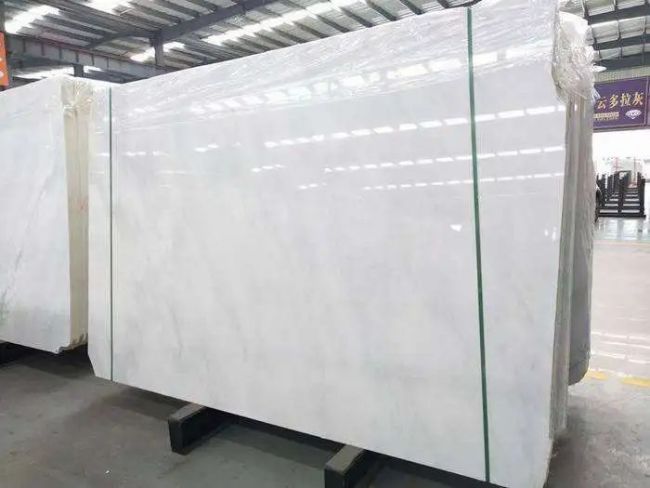
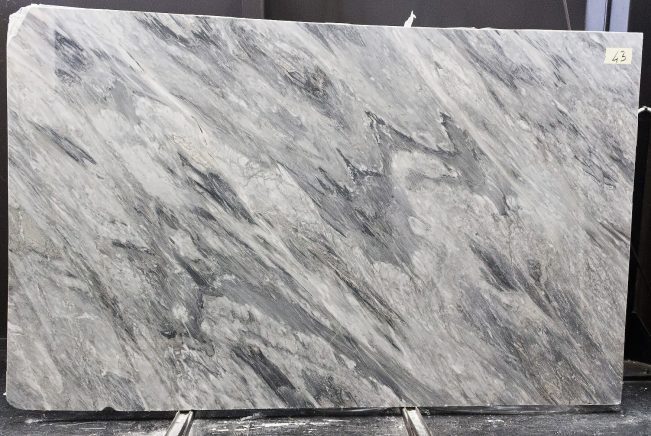

Which Natural Stones Work Best for Luxury Dining Tables?
For most custom luxury dining-table projects, Marble, Quartzite, Travertine and selected Granites are the main natural-stone families worth considering. There is no single best choice for every table.
Choose Marble when vein composition and sculptural character are the priority. Consider Quartzite when the design calls for strong natural movement or crystalline character together with a different material profile. Use Travertine for warm, architectural furniture with quieter movement and monolithic forms. Consider Granite when the project benefits from a visually substantial stone and the selected variety fits the interior concept.
The important furniture-design question is not simply “Which stone is best?” It is which stone works with the table’s dimensions, visual composition, base structure, fabrication method and delivery strategy.
Design Brief
Select the dining table as one complete object: Stone + Slab Composition + Tabletop Proportion + Edge + Base + Connection + Assembly + Logistics. A spectacular slab can still become a poor piece of furniture if the most important vein is cut away, the base does not suit the top, or the finished object cannot be handled safely at the destination.
1. Marble — Best for Expressive, Sculptural Luxury
Marble is one of the strongest choices when the dining table is intended to act as a visual centerpiece. White, green, red, grey and strongly veined marbles offer very different furniture identities, from restrained contemporary tables to dramatic statement pieces.
For dining furniture, slab composition matters as much as the commercial stone name. A rectangular top may benefit from long directional movement, while a round tabletop can capture a completely different mineral composition depending on where the circle is positioned on the slab.
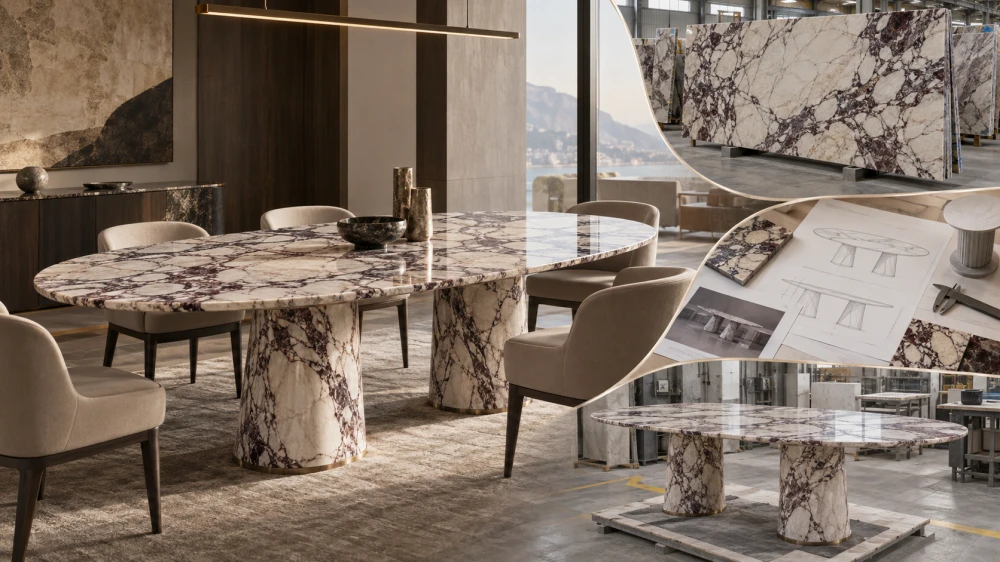
This makes actual slab review particularly important for materials with strong veining. CENTURY STAR’s Languedoc Marble page demonstrates this furniture-specific issue: the top, visible edge and pedestal need to be considered together, and round tops require deliberate slab-section planning rather than simply cutting a circle from any available area.
Marble does, however, require realistic use expectations. Dining surfaces can encounter acidic foods, drinks, oils and abrasion. Finish, care expectations and the desired aging character should therefore be discussed before choosing Marble only for its appearance.
2. Quartzite — Best for Dramatic Natural Composition
Quartzite can be particularly effective when designers want the tabletop to behave almost like a natural artwork. Depending on the selected stone, the slab may contain linear movement, broad cloudy fields, brecciated structures, crystalline zones or strong color transitions.
A luxury Quartzite dining table therefore benefits from slab-first design: choose the actual slab, identify the strongest visual area, then position the tabletop geometry over that composition.
For example, CENTURY STAR’s Shangrila Quartzite presentation includes dining-table applications, showing how a strongly colored Quartzite can function as furniture rather than only as an architectural surface.
Quartzite should still be evaluated stone by stone. Commercial names do not guarantee identical mineral structure, fissuring, resin treatment or fabrication behavior. Buyers should review the actual slab and proposed fabrication rather than assuming every Quartzite performs identically.
3. Travertine — Best for Warm Architectural Furniture
Travertine creates a different kind of luxury. Instead of relying primarily on dramatic veins, it can bring layered texture, warm tonal movement and an architectural character that works particularly well with pedestal tables, cylindrical bases and monolithic furniture concepts.
The important design decision is how the natural void structure, fill treatment and finish will be handled across the top and base. A honed-looking architectural table and a more refined filled-and-finished table can create very different visual results even when made from the same stone family.
Travertine is especially useful when the designer wants the dining table to feel integrated with limestone, plaster, timber and other warm interior finishes rather than dominate the room through high-contrast veining.
4. Granite — Best When Visual Solidity Is Part of the Design
Selected Granites can work well for dining furniture when the desired appearance is dense, grounded and substantial. Depending on the variety, Granite may provide relatively consistent mineral structure or highly expressive large-scale patterning.
For furniture design, however, Granite should not be selected only because of a generalized reputation for strength. The tabletop still has to be evaluated for overall weight, edge geometry, support locations, base connection and transport.
A structurally inappropriate base can make even a robust stone table a poor furniture solution.
How Should Designers Compare the Options?
| Design Factor | Engineering Consideration | Buyer Decision |
| Material Family | Different stones require different fabrication and care assumptions. | Choose by both appearance and intended use. |
| Slab Composition | Table geometry determines which area of the slab remains visible. | Approve the actual slab and proposed cut position. |
| Table Size | Increasing span and mass can change support and handling requirements. | Provide final dimensions before structural detailing. |
| Base Design | Support distribution, stability and connection must suit the top. | Approve base geometry and connection concept together. |
| Edge / Joint | Solid edges, built-up profiles and assembled forms create different fabrication risks. | Confirm the edge and visible joints before production. |
| Delivery | Large stone furniture may require detachable components and specialized handling. | Confirm access and assembly strategy before fabrication is finalized. |
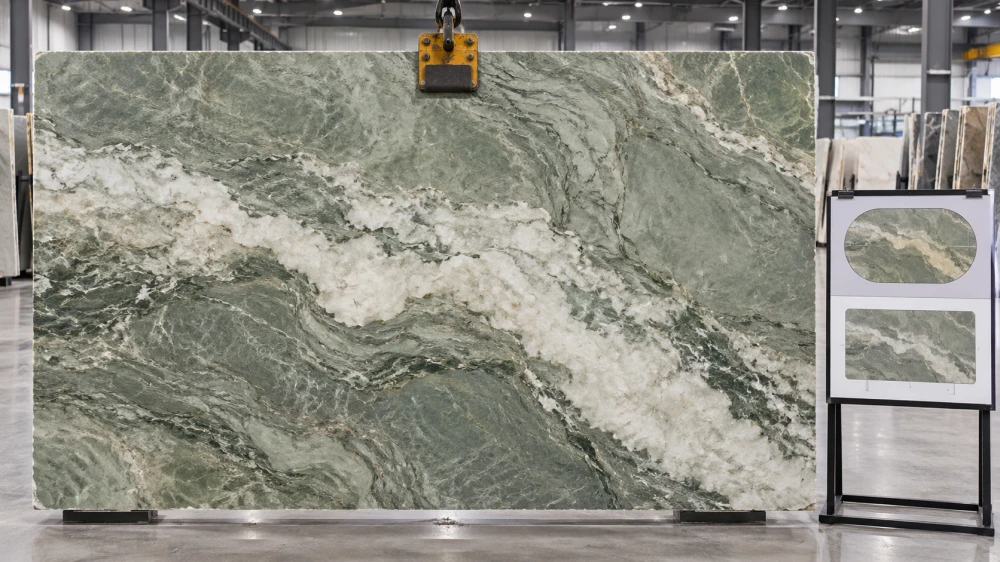
The Actual Slab Should Shape the Furniture Design
A dining table presents natural stone differently from a countertop. It is viewed from multiple directions, its edge is usually exposed, and its base may itself be part of the stone composition.
For a strongly patterned slab, designers should decide which mineral feature becomes the visual center of the tabletop. On an oval or round table, rotating or repositioning the cutting outline can dramatically change the finished appearance. For a rectangular table, vein direction may reinforce or fight against the long axis.
If the table includes a stone pedestal, matching the top and base does not necessarily mean forcing continuous veining. The more important question is whether the pieces form a coherent composition when viewed as a three-dimensional object.
Dimensions, Weight and Proportion Must Be Developed Together
Stone dining tables can become heavy quickly, especially when the design uses a large top, thick visual profile or stone-clad pedestal. That affects much more than shipping cost.
The design team needs to consider how the table will be moved, how loads transfer into the base, whether the floor and destination conditions are suitable, and whether the final object can physically pass through doors, elevators, corridors and stairways.
A thicker visual appearance also does not always require one massive solid piece of stone. Depending on the design and engineering solution, fabricated edge assemblies or other construction strategies may create the intended proportion while controlling unnecessary mass. The appropriate method should be developed for the actual design rather than assumed in advance.
The Base Is Part of the Engineering, Not an Accessory
A luxury tabletop and an attractive base cannot be designed independently and simply joined at the end.
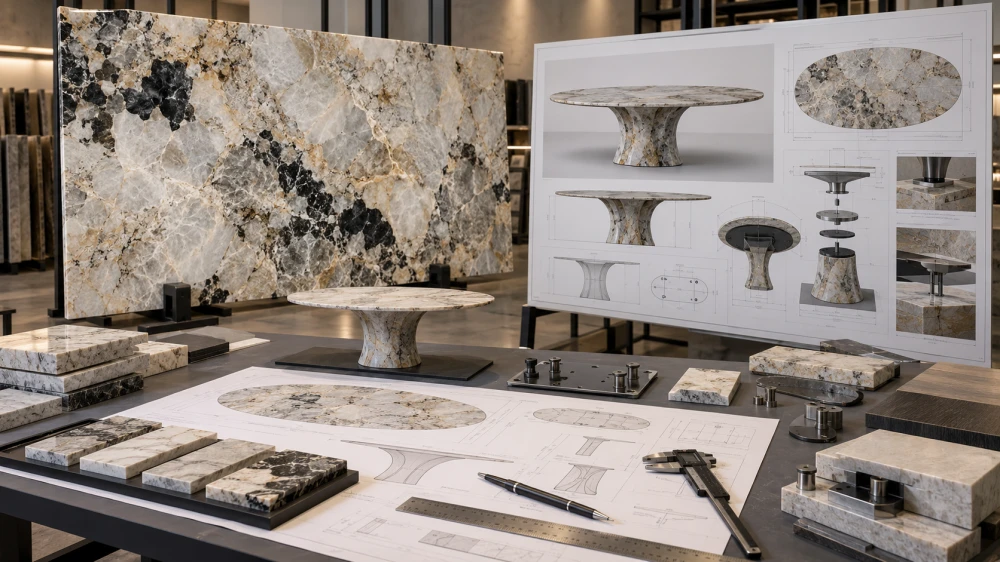
The base must provide appropriate support while also resisting instability during normal use. A long rectangular table, large oval table and round pedestal table create different support conditions.
The design should consider base footprint, support distribution, attachment points, hidden reinforcement where required, leg clearance and how the table behaves when force is applied near the perimeter.
If the base is also fabricated from stone, its internal construction, joints and assembly sequence become part of the engineering discussion. If the base is metal or timber, the interface between stone and base still needs a defined connection strategy.
Edge Design Changes Both Appearance and Fabrication
Dining-table edges are continuously visible, so they deserve more attention than a simple finish notation.
A slim straight edge can make the table appear lighter. A thicker built-up or mitered profile can create a more monolithic appearance. Rounded or shaped edges may soften the furniture visually but require different fabrication work.
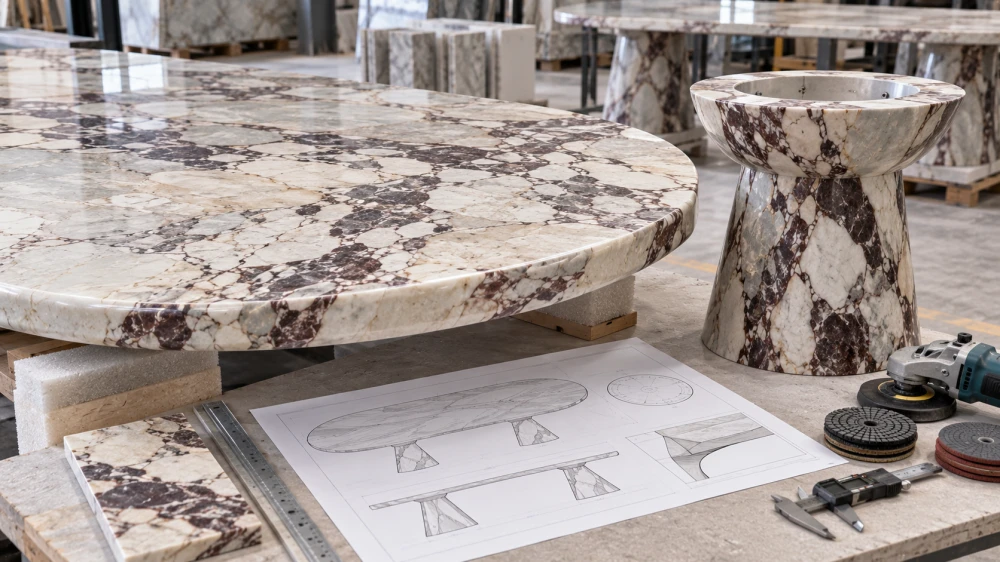
For heavily veined stone, the edge also affects how the slab’s natural pattern terminates. Buyers should therefore approve not only the edge profile but also how visible joints and pattern transitions are expected to look.
Large or Sculptural Tables May Need Removable Components
For export furniture, a completely assembled table is not always the safest or most practical shipping configuration.
A removable top, detachable pedestal section or knock-down base may simplify packing, reduce handling risk and make final access easier. But this strategy must be designed before production. It should not be improvised after the table is finished.
Connection points should be accessible for assembly while remaining visually controlled in the completed piece. The factory and buyer should also agree on what arrives preassembled and what must be assembled at the destination.
Trial Assembly Is a Critical QC Stage
Custom stone furniture should be checked as furniture before it is packed as cargo.
Where the design permits, trial assembly allows the factory to review how the tabletop sits on the base, whether connection points align, whether the table is visually balanced, and whether visible joints behave as intended.
A useful pre-packing QC review can include:
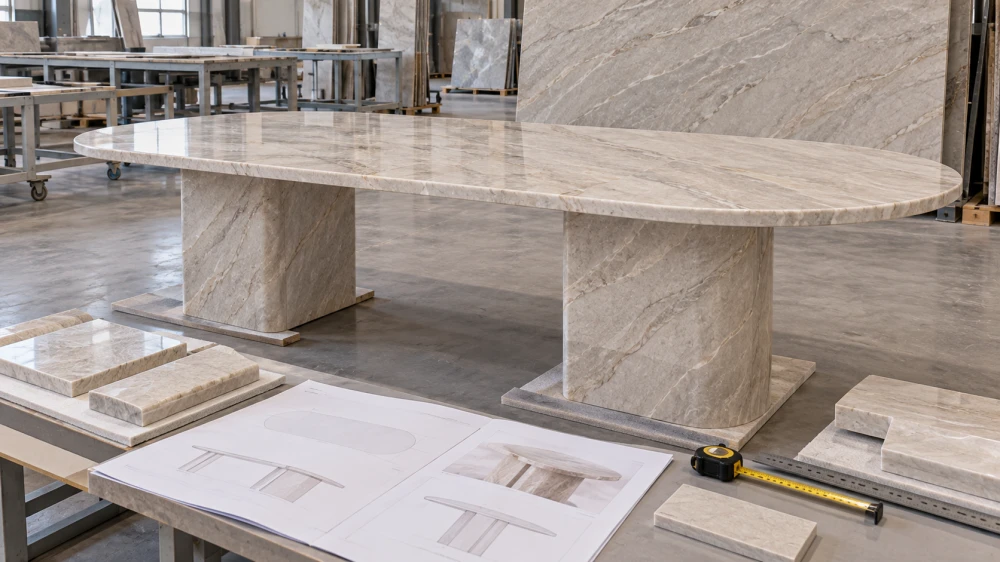
- Tabletop dimensions and overall geometry
- Surface finish and visible natural variation
- Edge profile and corner quality
- Top-to-base alignment
- Connection points and removable components
- Visible joint relationships
- Stability of the assembled design
- Component identification for reassembly
Photographs or video of the trial assembly can also give remote designers and procurement teams useful approval evidence before export packing begins.
Export Packing Must Follow the Furniture Geometry
A dining tabletop, pedestal and sculptural base should not automatically receive the same packing method.
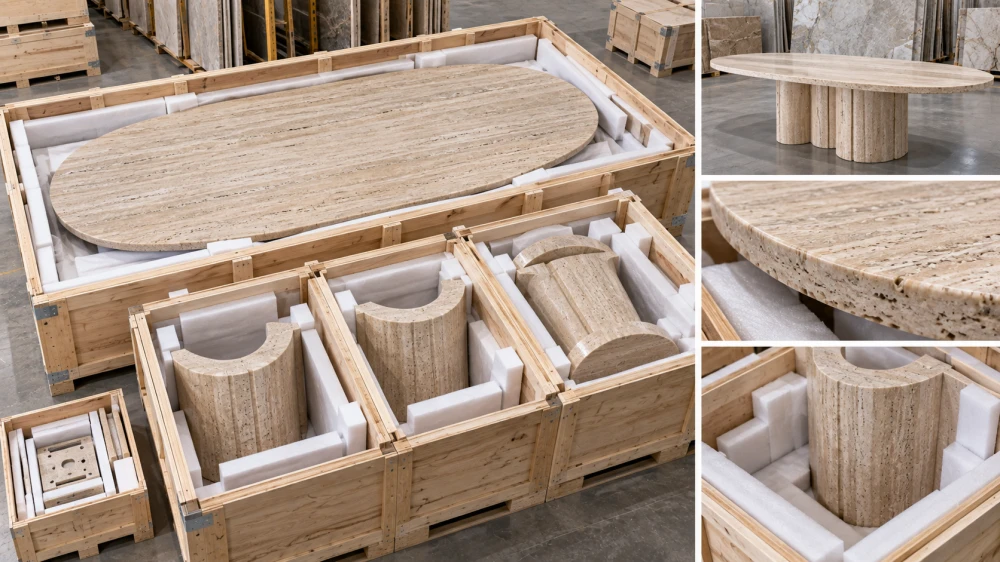
Large flat stone tops are vulnerable to bending and impact during handling. Narrow projections, curved components, mitered assemblies and sculptural bases create different fracture points. Heavy components also need to be secured so they cannot shift inside the package.
For this reason, the packing design should respond to the actual component geometry, mass distribution, surface finish and transport method. Protective surface materials, edge and corner protection, internal restraint and reinforced export crates can all be considered as part of the final packing strategy.
Buyer Specification Checklist for a Custom Stone Dining Table
- Furniture type: dining table, conference-style dining table or other custom table format
- Final dimensions: length, width or diameter, and finished height
- Shape: rectangular, oval, round, racetrack, irregular or custom geometry
- Material direction: Marble, Quartzite, Travertine, Granite or named stone if already selected
- Actual slab approval: required when natural pattern placement is important
- Surface finish: confirm the intended visual and tactile finish
- Edge concept: slim, built-up, mitered, rounded or custom
- Base material: stone, metal, timber or mixed construction
- Structural concept: support locations, hidden support and connection method as required by the design
- Assembly: fully assembled, removable top or knock-down components
- Destination access: door, corridor, elevator and installation constraints where relevant
- QC evidence: finished dimensions, surface, joints, trial assembly and packing review
- Packing: protection designed for the actual top and base geometry
Frequently Asked Questions
1. What is the best natural stone for a luxury dining table?
There is no single best stone for every dining table. Marble is especially strong for expressive veining and sculptural design, Quartzite can create dramatic natural compositions, Travertine suits warm architectural furniture, and selected Granites can create visually substantial tables. The best choice depends on the design, use conditions and engineering concept.
2. Is Marble or Quartzite better for a dining table?
It depends on the project. Marble may be preferred when its particular veining, color and aging character fit the design. Quartzite may be preferred when a specific Quartzite provides the desired visual composition and use profile. Buyers should compare actual slabs rather than selecting only by material-family reputation.
3. How should I select a slab for a stone dining table?
Review the complete slab and consider where the tabletop outline will be positioned. Look at vein direction, mineral concentration, major natural features and how the composition changes when cut into the final round, oval or rectangular geometry.
4. Does a large stone dining table need special structural support?
Large stone tops require the support and connection system to be developed for their actual dimensions, weight, geometry and base design. The appropriate solution should be determined for the specific furniture rather than assumed from a generic table type.
5. Can a stone dining table be made with a removable top?
Yes, a removable top or knock-down construction can be useful for transport and installation when it is designed into the furniture from the beginning. The connection method, assembly access and finished appearance should be coordinated before fabrication.
6. Why is trial assembly important for custom stone furniture?
Trial assembly allows the factory to check top-to-base alignment, connection points, visible joints, overall proportion and stability before packing. It can also provide useful visual approval evidence for designers and procurement teams working remotely.
7. How should a stone dining table be packed for export?
Packing should be designed around the actual furniture geometry. A large flat top, cylindrical pedestal and irregular sculptural base have different handling and fracture risks. Protection, internal restraint and crate construction should therefore be adapted to each component rather than using one universal packing arrangement.
8. What information should I send before requesting a custom stone dining table?
Provide the table shape and dimensions, material or visual direction, surface finish, edge concept, base design, assembly preference, quantity and any destination-access constraints that may affect component size. Drawings or design references are especially useful for sculptural or structurally complex furniture.
References
No external technical standard is required to support the comparative design decisions in this article. Material-specific engineering, support and connection decisions should be confirmed for the actual furniture design rather than inferred from generic values.