


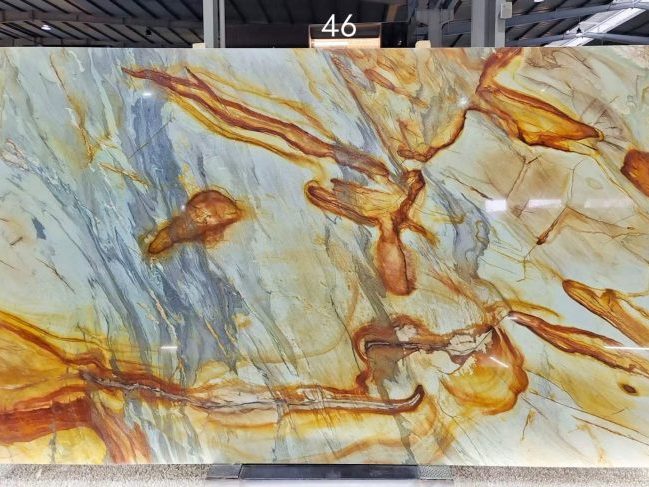

Does Quartzite Need Sealing?
Sometimes, but not automatically. Natural Quartzite can vary in porosity, mineral structure, surface finish and previous treatment. Some slabs may benefit from an impregnating sealer, especially in kitchens, bathrooms or other areas exposed to oils, water and colored liquids. Other dense Quartzites may absorb very little and may not require the same treatment.
The correct question is therefore not simply, “Is Quartzite a stone that needs sealing?” It is: Does this actual Quartzite, in this finish and application, benefit from an impregnating treatment?
Do not assume that every Quartzite must be sealed on the same schedule. Confirm the actual slab, finish, intended use, any factory-applied treatment and the recommendations of the stone supplier, fabricator or sealer manufacturer. If a sealer is used, it should be appropriate for natural stone and the intended application.
Why Does the Answer Change From One Quartzite to Another?
Quartzite is a natural metamorphic stone, not a standardized manufactured surface. Different commercial Quartzites can have different geological structures, mineral transitions, fissures, resin treatment and surface characteristics.
Even slabs sold under the same commercial name may not behave identically. A polished slab, honed slab and textured slab can also interact with liquids differently because surface processing changes how the exposed surface behaves.
This is why the CENTURY STAR Quartzite collection should be understood as a natural-stone category containing many visually and physically different materials rather than one uniform product.
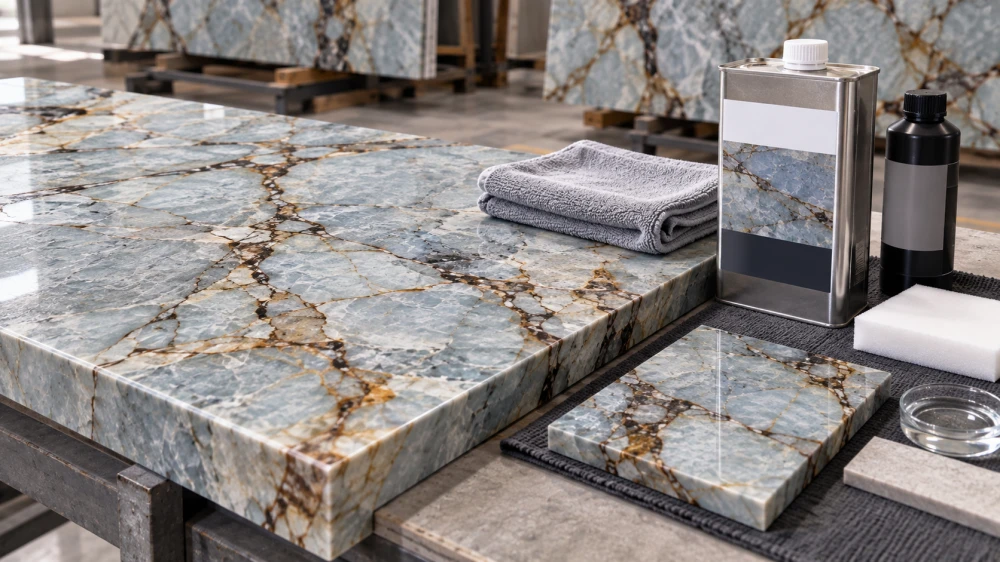
What Does a Stone Sealer Actually Do?
For natural stone, the term “sealer” often refers to a penetrating or impregnating product. Rather than forming a completely impermeable barrier over the surface, an impregnator is designed to reduce the movement of certain liquids into the stone.
The practical benefit is increased stain resistance. It gives the owner more time to clean spills before they penetrate deeply.
It does not make Quartzite completely stain-proof. Oils, colored liquids and other contaminants should still be cleaned promptly, and the surface still needs appropriate routine care.
What Factors Determine Whether Quartzite Should Be Sealed?
| Question Factor | Practical Answer | Buyer Check |
| Actual Stone | Different Quartzites can absorb liquids differently. | Confirm recommendations for the actual slabs being supplied. |
| Surface Finish | Polished, honed and textured surfaces may behave differently. | Evaluate the specified finish rather than another sample finish. |
| Application | Kitchen counters face different exposure from decorative wall panels. | Consider water, oil, food, cosmetics and cleaning exposure. |
| Existing Treatment | Some slabs may already contain resin or other factory treatment. | Ask what treatment has already been applied. |
| Sealer Compatibility | Not every product is suitable for every stone and finish. | Follow the product manufacturer’s instructions and test appropriately. |
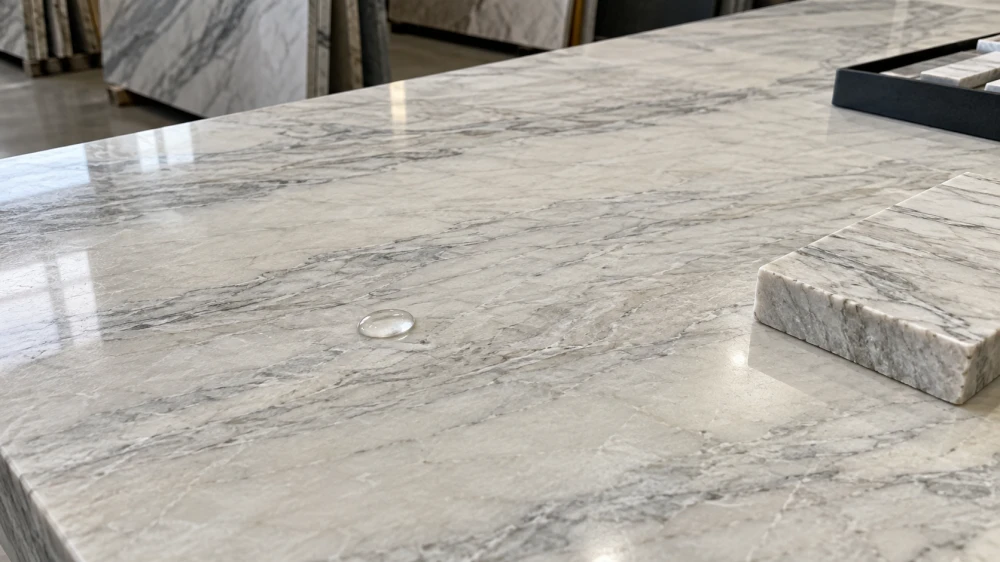
Kitchen Countertops Are More Likely to Benefit From Stain Protection
A Quartzite kitchen countertop is exposed to cooking oil, coffee, wine, sauces, water and other liquids. For this reason, evaluating whether an impregnating sealer is appropriate makes practical sense during fabrication or installation.
However, buyers should still avoid assuming that every kitchen Quartzite needs exactly the same product or maintenance interval.
CENTURY STAR’s recent guide to White Quartzites for luxury kitchen countertops follows the same principle: natural Quartzite should not be sold as maintenance-free, while sealing decisions should be based on the actual stone and installation rather than a universal schedule.
What About Bathroom Vanities and Wet Areas?
Bathroom surfaces experience repeated moisture, cosmetics, soaps and cleaning products. Depending on the actual Quartzite and finish, an impregnating treatment may provide useful stain resistance.
But sealing is not a substitute for correct installation, drainage, appropriate joints or regular cleaning. A sealer cannot correct poor waterproofing or installation detailing.
Do Decorative Quartzite Walls Need the Same Treatment?
Not necessarily. A vertical feature wall in a relatively dry interior normally experiences much less staining exposure than a kitchen worktop.
If the wall is mainly decorative and rarely contacts liquids or oils, the value of sealing may be different. Highly handled surfaces, wet walls or installations exposed to staining agents may justify a different approach.
This is why application context should be included in the sealing decision rather than applying one rule to every Quartzite installation.
How Often Should Quartzite Be Resealed?
There is no universal calendar that applies to every Quartzite.
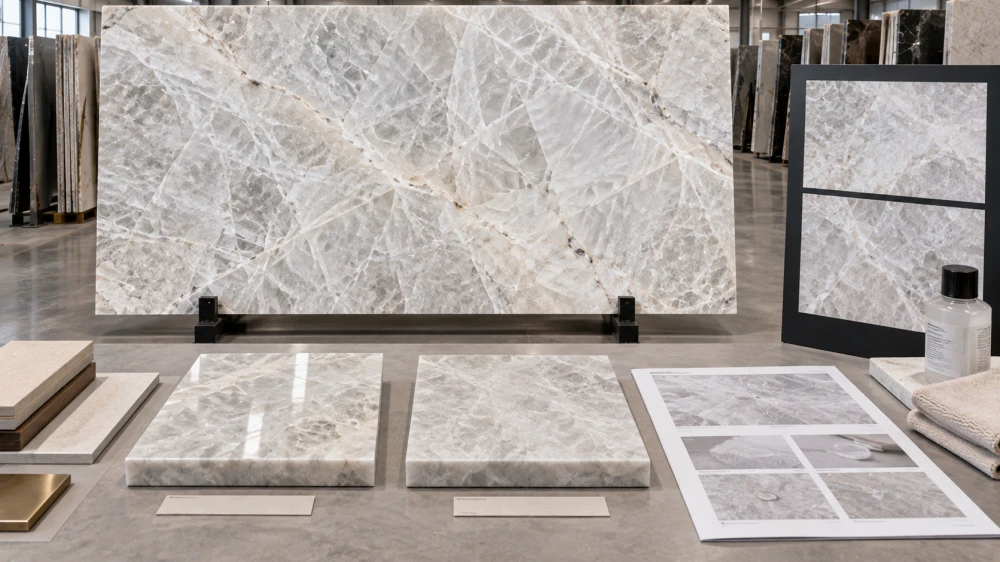
Statements such as “reseal Quartzite every year” or “every two years” are too broad unless they refer to a specific stone, product, installation and usage condition.
The appropriate interval depends on the stone, surface exposure, cleaning practices, sealer chemistry and manufacturer’s instructions. Rather than automatically applying another coat because a fixed number of months has passed, owners should follow the recommendations associated with the actual stone and treatment system.
Common Wrong Assumptions About Quartzite Sealing
“Quartzite Is Hard, So It Cannot Stain”
Hardness and liquid absorption are different properties. A hard stone can still contain pores, fissures or treated areas that influence staining behavior.
“Once Sealed, Quartzite Is Stain-Proof”
No. An impregnating treatment can improve stain resistance, but spills should still be cleaned promptly.
“Every Quartzite Needs the Same Sealer”
Stone composition, finish and application vary. Product compatibility should be confirmed rather than assumed.
“Sealing Fixes Every Maintenance Problem”
It does not replace good fabrication, correct installation or appropriate cleaning. Sealing is one possible part of a complete care strategy.
What Should Buyers Confirm Before Installation?
- Confirm that the material is natural Quartzite rather than engineered quartz or another stone sold under a similar commercial name.
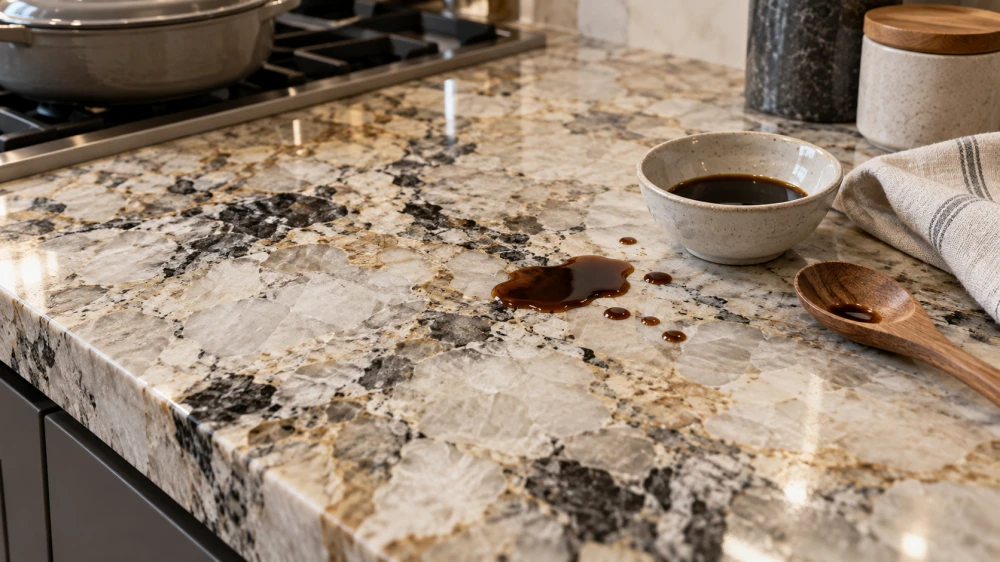
patagonia quartzite kitchen spill stain risk - Confirm the actual finish being supplied.
- Ask whether the slabs received factory resin or another treatment.
- Ask whether an impregnating treatment is recommended for this specific material and application.
- If a product is proposed, confirm compatibility with the surface and intended use.
- Understand what the sealer protects against and what it does not.
- Request maintenance instructions appropriate to the completed installation.
Buyers who need a broader overview of the material can also review 5 Things You Need to Know About Quartzite, while keeping in mind that sealing recommendations should ultimately be made for the actual project material rather than Quartzite as one uniform category.
Frequently Asked Questions
1. Does all Quartzite need to be sealed?
No. Some Quartzite benefits from an impregnating treatment, while other dense stones may require little or no additional sealing. The decision should be based on the actual stone, finish and intended use.
2. Does Quartzite need sealing before it is used as a kitchen countertop?
It may. Kitchen countertops are regularly exposed to water, oils and colored liquids, so evaluating stain protection before use is sensible. The fabricator, supplier or sealer manufacturer should advise based on the specific Quartzite and finish.
3. Does sealing make Quartzite stain-proof?
No. A suitable impregnating product can improve resistance to liquid penetration and staining, but it does not make natural stone completely stain-proof. Spills should still be cleaned promptly.
4. How often should Quartzite be resealed?
There is no universal resealing interval for every Quartzite. Frequency depends on the stone, finish, usage, cleaning practices, sealer product and manufacturer recommendations.
5. Can Quartzite be sealed too often?
Applying additional product when it is not needed may not improve performance and can create surface or application problems depending on the product. Follow the sealer manufacturer’s instructions rather than applying repeated coats automatically.
6. Does polished Quartzite need less sealing than honed Quartzite?
The finish can influence surface behavior, but it is not enough by itself to determine whether sealing is necessary. The actual stone and proposed treatment should be evaluated together.
7. Is Quartzite the same as engineered quartz when it comes to sealing?
No. Natural Quartzite is a natural stone, while engineered quartz is manufactured using mineral particles and binders. Their maintenance requirements should not be treated as interchangeable.
References
- Natural Stone Institute — Care & Cleaning of Natural Stone. Guidance on natural-stone care, cleaning and impregnating sealers.
- Natural Stone Institute — Stone Care: What You Should Know. Industry education covering when sealing may or may not be appropriate and how stone composition affects care decisions.