


How Do You Approve Natural Stone Slabs Remotely Before Fabrication?
To approve natural stone slabs remotely, require the supplier to present the exact project slabs as an identifiable set, using numbered full-slab photographs, controlled video, close-up images of important natural features, and enough dimensional and drawing information to understand how those slabs will be used.
The approval is complete only when the buyer can answer five questions: Which exact slabs are being approved? Do they fall within the accepted visual range? Are important fissures, repairs or mineral features visible? Can the required pieces realistically be cut from them? And is the supplier authorized in writing to fabricate from those specific slabs?
Direct Technical Answer
Use this sequence: Slab Identity → Full-Slab Evidence → Consistent Lighting → Close-Up Evidence → Multi-Slab Comparison → Drawing / Cutting Relationship → Written Approval → Slab Reservation → Fabrication Release. A beautiful single photograph is not a complete slab approval record.
Why Remote Slab Approval Matters
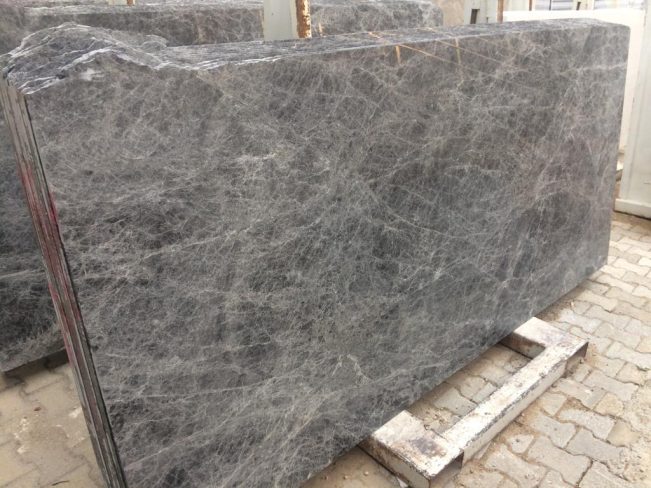
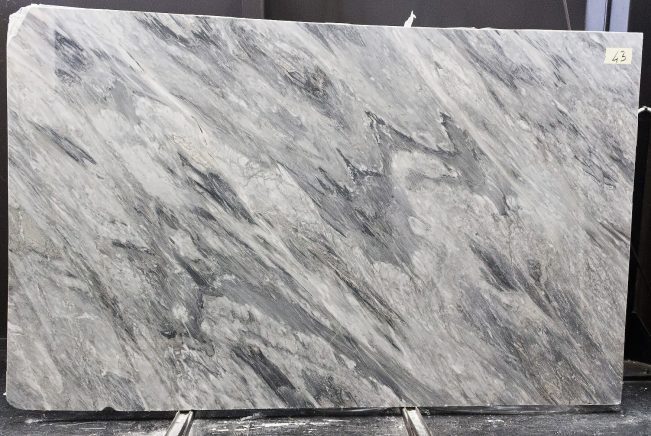
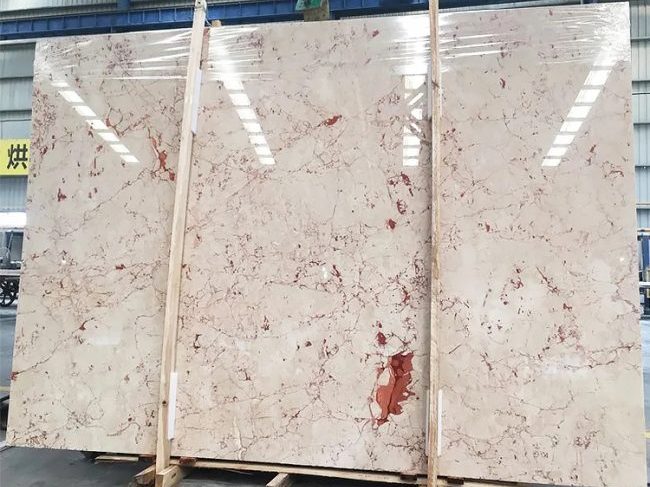
Natural stone is not visually identical from slab to slab. Background tone, vein density, crystal areas, fossils, pores, brecciation, natural fissures, resin treatment, mesh backing, repaired zones and usable cutting areas can vary within the same commercial stone name.
This means a sample, catalogue photograph or previous-project image cannot prove what the buyer will actually receive. CENTURY STAR’s current supplier-evaluation guidance similarly recommends reviewing full-slab images and identifying or reserving approved slabs before fabrication because small samples cannot represent complete natural variation. Supplier and factory verification should therefore include evidence of the actual project material, not only marketing imagery.
Remote approval becomes even more important when the selected stone has strong direction, large crystal fields, dramatic brecciation, contrasting mineral zones or other features that strongly influence finished appearance.
What Evidence Should the Supplier Prepare?
A reliable remote approval package should allow the buyer to move from overall visual judgment to detailed technical review.
| Technical Risk | Cause | Recommended Control | QC Evidence |
| Wrong slab is fabricated | Photos are not tied to unique slab identity | Use clear slab IDs throughout approval | Numbered full-slab images and approval record |
| Color is misjudged | Different lighting, filters or camera exposure | Photograph the slab group under comparable neutral conditions | Consistent full-slab photo set and video |
| Important natural features are missed | Only distant overall photos are provided | Request close-ups of fissures, repairs, resin and critical mineral zones | Mapped close-up photographs |
| Approved slab cannot fit the layout | Visual approval occurs before drawing review | Compare actual slabs with required component geometry | Slab allocation or cutting-layout review |
| Different slab is substituted later | Approval and reservation are not linked | Reserve approved slabs and require new approval for substitution | Written reservation / substitution control |
| Buyer and factory understand approval differently | Approval is only verbal or through informal chat | Define exactly what is approved in writing | Approval message linked to slab IDs and drawings |
Step 1: Confirm Slab Identity Before Judging Appearance
The first task is not deciding whether the slabs are attractive. It is verifying that every image and video refers to an identifiable piece of material.
Each slab in the proposed group should have a clear reference that remains consistent across the full-slab photograph, close-up details, video, proposed cutting layout and production records. The exact marking system can vary by supplier, but the buyer should be able to trace one slab through the complete approval process.
If the supplier later proposes another slab, that material should be treated as a new approval item rather than assumed to be equivalent because it carries the same commercial name.
Step 2: Review Complete Slabs, Not Cropped Beauty Shots
The buyer should see the full geometry of the material whenever practical. A tightly cropped photograph can hide variation, edge damage, resin areas, large fissures or strong changes in vein density.
Full-slab views are particularly important for feature walls, islands, reception counters, vanity groups and other applications where large visible surfaces are cut from individual geological compositions.
For projects that later require accurate fabrication drawings, the same principle applies: material evidence and geometry need to remain connected. CENTURY STAR’s guide on what drawings to send a stone fabricator explains why design drawings, shop drawings and cutting information serve different stages of the project.
Step 3: Control Lighting and Camera Conditions
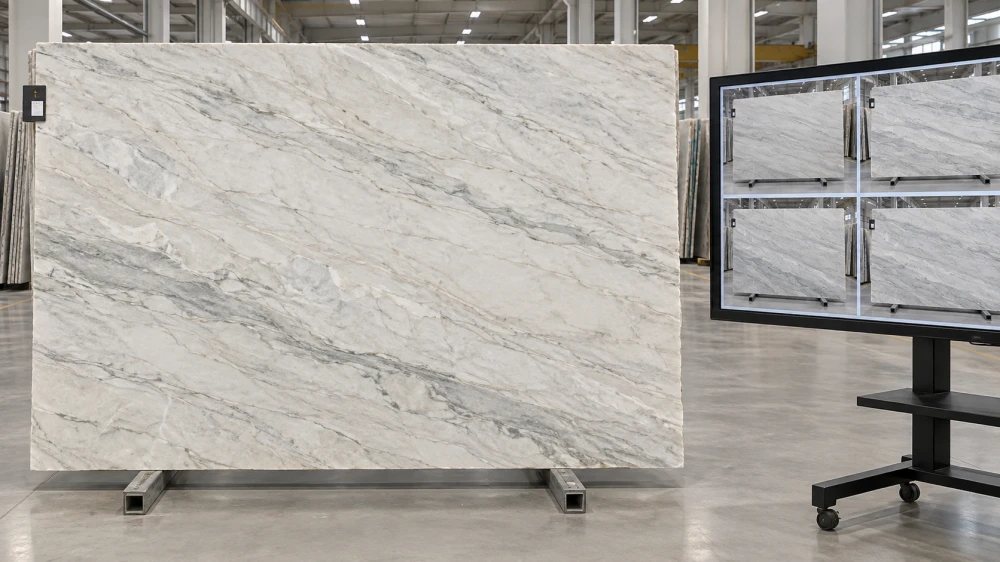
Remote approval can fail when slabs are photographed under dramatically different conditions. Warm warehouse lighting can make a cool stone appear beige. Strong exposure can make grey veins disappear. Wetting a slab can deepen color. Heavy phone processing can increase contrast beyond what the eye sees.
The objective is not laboratory color calibration. It is practical consistency.
- Photograph related slabs in the same area where practical.
- Use similar camera position and exposure for the group.
- Avoid decorative filters and excessive image enhancement.
- State if the surface is wet, dusty, unfinished or temporarily covered.
- Use video to supplement, not replace, clear still photographs.
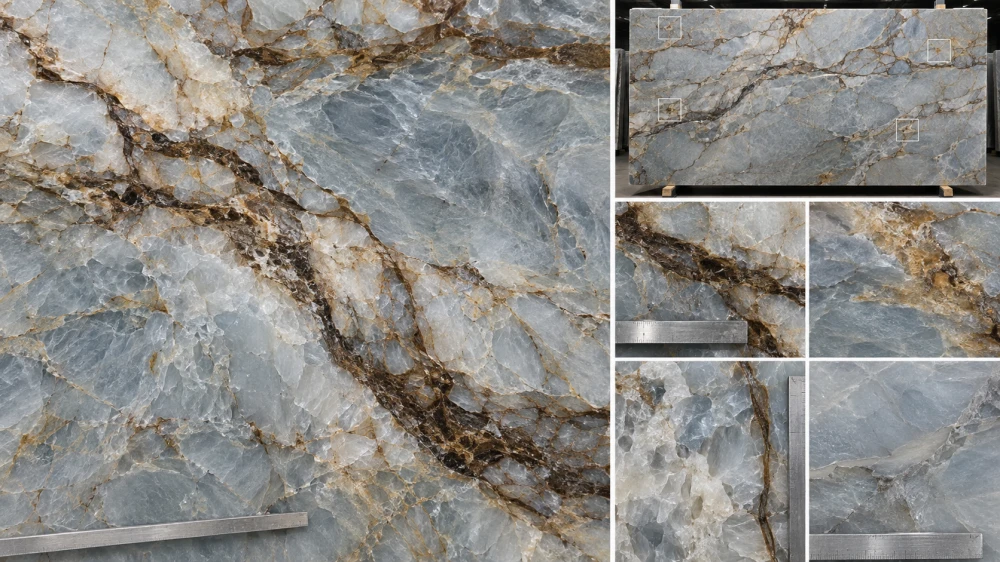
Step 4: Request Close-Ups of Natural Features
After reviewing overall composition, move closer.
Natural fissures, mineral lines, filled areas, resin, mesh backing, localized pores, crystal transitions, edge damage or repairs may be normal or acceptable depending on the material and application. The objective is not to demand a completely featureless natural slab. The objective is to make relevant conditions visible before cutting.
Close-up evidence is especially valuable where an important feature is near a proposed sink opening, miter edge, panel corner, narrow strip or other fabrication-sensitive area.
Step 5: Compare All Project Slabs Together
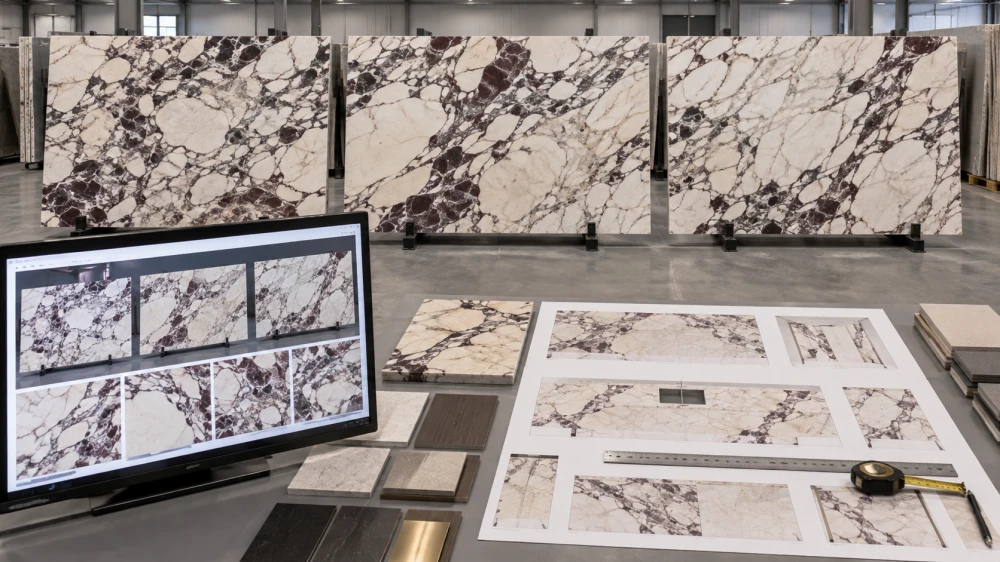
One individually beautiful slab does not prove that a group of slabs works together.
When the project requires multiple slabs, compare their background tone, vein density, pattern scale, crystal concentration and overall visual contrast as one set. This is particularly important for multi-panel walls, paired islands, large floors and repeated vanity tops.
The objective is controlled natural variation—not artificial uniformity.
For example, a multi-slab White Marble vanity project should move from small sample approval to numbered actual-slab approval because complete slabs can differ in tone, vein distribution and usable areas. CENTURY STAR’s current White Marble bathroom vanity sourcing guide applies this exact procurement principle.
Step 6: Connect Visual Approval to the Fabrication Drawing
This is where remote slab approval becomes a fabrication-control process rather than a material-selection exercise.
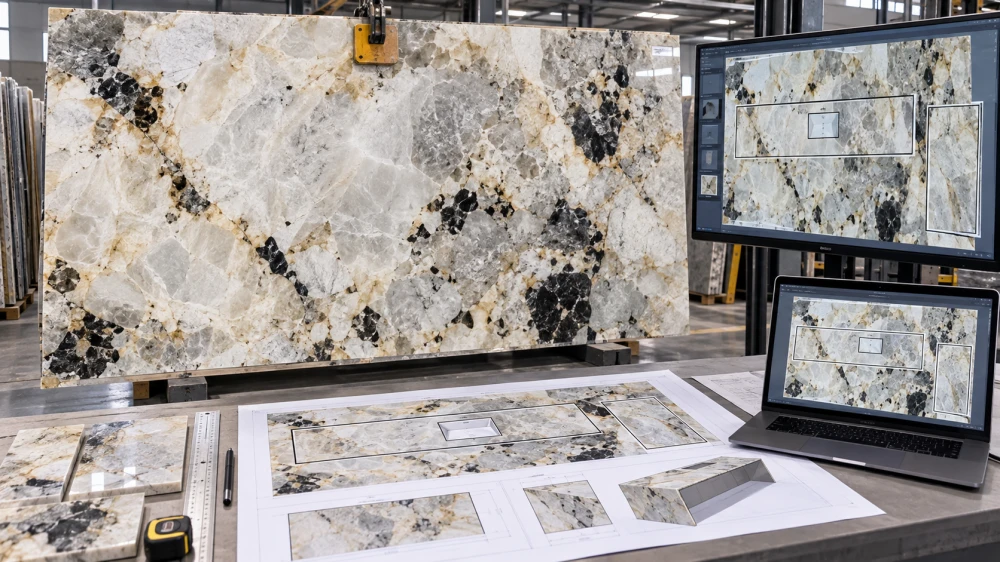
A slab may look excellent in isolation but still be unsuitable for the intended cutting arrangement. Important veins may disappear into sink openings. A dramatic crystal area may fall on a narrow rail. A feature-wall slab may not allow the intended panel sequence. A waterfall design may require a different allocation to preserve visual continuity.
The buyer should therefore review the selected slabs against the current project geometry before fabrication release.
For complex work, the supplier may prepare a digital slab layout showing major components over the actual slab image. The purpose is to confirm cutting position, orientation and visible natural features—not simply to maximize yield.
Step 7: Separate Slab Approval From Cutting-Layout Approval
These are related but different decisions.
Slab approval means the buyer accepts the proposed natural material and its visible variation.
Cutting-layout approval means the buyer accepts where project components will be positioned within that material.
A project can pass the first stage and fail the second. For example, a strongly patterned slab may be visually acceptable but produce a poor island composition if the largest vein is cut away or the waterfall panel is allocated to an unrelated area.
CENTURY STAR’s Quartzite Kitchen Island procurement workflow likewise treats actual slab approval, CAD layout, openings, waterfall relationships, QC and packing as connected but separate approval stages.
Step 8: Record the Approval Boundary in Writing
A message such as “looks good” is weak project control.
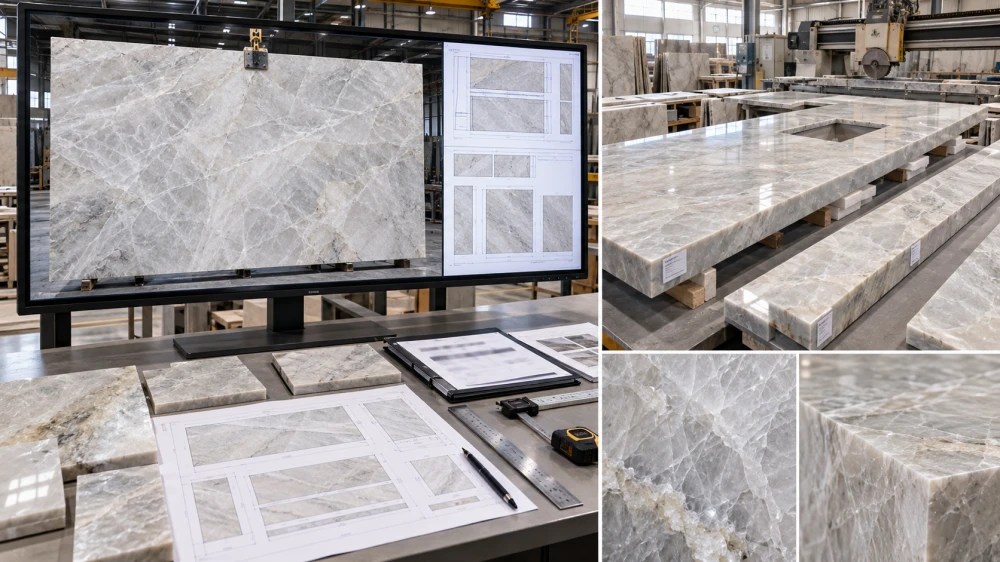
A better approval record identifies the slabs and states what the approval covers. For example, material appearance may be approved while final cutting positions remain subject to drawing approval. Or the slab group and cutting layout may both be approved for fabrication.
Where relevant, the written approval should identify:
- Approved slab references
- Approved photo / video set
- Surface finish condition shown
- Accepted natural variation
- Known visible natural features
- Related cutting-layout or drawing revision
- Any remaining pending item
- Requirement for re-approval if material is substituted
What Can a Live Video Inspection Add?
A live video call can reduce ambiguity because the buyer can ask the supplier to move closer to a fissure, show the edge, compare two slabs side by side or change the viewing angle.
However, video should not become the only permanent approval record. Compression, movement and screen differences can make detailed comparison difficult.
A practical workflow is to use live video for interactive inspection and then retain the final numbered photographs, close-ups and written approval as the project record.
What Should Be Checked Before Fabrication Is Released?
- Exact slabs are clearly identified.
- Full-slab photographs have been reviewed.
- Slabs are shown under reasonably comparable conditions.
- Close-ups of relevant natural features have been reviewed.
- The complete slab group falls within the approved visual range.
- Finish and visible surface condition are understood.
- Required project pieces can be allocated to usable slab areas.
- Pattern or vein orientation is approved where important.
- Current drawings and major openings are coordinated.
- Approved slabs are reserved or otherwise controlled for the order.
- Any replacement or substitution requires new approval.
- Fabrication release is given in writing.
Common Remote Approval Failure Modes
Approving Only a Sample
A hand sample can confirm approximate material character but cannot show complete vein scale, slab-to-slab variation, large repairs, major fissures or usable cutting areas.
Seeing Only the Best Slab
A supplier may present one attractive slab even though the project requires several. Approve the complete proposed group when multiple slabs are required.
Using Photos Without Slab Numbers
Unidentified images cannot reliably prove which material was approved or later fabricated.
Approving Before Final Geometry Is Understood
Material approval alone does not prove that large islands, panels or other pieces fit into visually acceptable slab areas.
Ignoring Natural Features Until Cutting Starts
Features that could have been repositioned during layout become much harder to manage after the first cut.
Allowing Silent Substitution
Another slab under the same commercial name is still another natural slab. If appearance matters, substitution should trigger new review.
Buyer / Architect Remote Approval Checklist
- Are these the exact slabs proposed for my order?
calacatta viola marble remote multi slab approval - Can I identify each slab in every photo and video?
- Have I seen the complete slab, not only selected areas?
- Were related slabs photographed under comparable conditions?
- Have important fissures, repairs and mineral features been shown clearly?
- Have I compared the full slab group rather than approving slabs one by one?
- Is the intended finish clear?
- Have project drawings and major cutouts been coordinated?
- Do I need a slab cutting layout before fabrication?
- Are the approved slabs reserved for this project?
- Will any proposed replacement require re-approval?
- Is my final approval clearly documented in writing?
Frequently Asked Questions
1. Can natural stone slabs be approved reliably from photos?
Yes, remote approval can be effective when photographs are current, clearly linked to specific slabs, show complete slabs under reasonably consistent conditions and are supported by close-ups, video and project drawings. A few unnumbered phone photos are not an adequate approval system.
2. Should I approve natural stone from a small sample?
A sample can help confirm general color, mineral character and finish, but it cannot represent full-slab variation, vein scale, large natural features or usable cutting areas. Important projects should move from sample approval to actual slab approval before cutting.
3. What photos should I request for remote slab approval?
Request full-slab views, clear slab identification, group-comparison images and close-ups of important fissures, repairs, resin areas, crystal zones or other natural features relevant to the project. Additional edge or back views may be useful when those conditions affect fabrication.
4. Are videos better than slab photographs?
They serve different purposes. Video provides context and lets the buyer inspect changing angles or compare slabs interactively, while high-quality still photographs are usually easier to review carefully and retain as an approval record. Using both is more effective than relying on either alone.
5. Should all slabs be photographed in the same lighting?
Comparable lighting is strongly preferred because inconsistent color temperature, exposure and reflections can distort visual comparison. Exact laboratory conditions are unnecessary, but the supplier should avoid photographing each slab under dramatically different conditions.
6. What natural features should be disclosed before slab approval?
Relevant visible fissures, repairs, resin treatment, mesh backing, pores, mineral transitions, crystalline zones, edge damage or other features that may affect appearance or cutting should be shown clearly. What is acceptable depends on the material and intended application.
7. Does approving the slabs also approve the cutting layout?
No. Slab approval confirms the material; cutting-layout approval confirms how project pieces will be positioned within that material. Projects with strong veining, waterfalls, bookmatching or large panels may require both approvals.
8. What happens if the supplier needs to replace an approved slab?
If appearance is important, the replacement should be presented as a new slab for approval. The same commercial stone name does not guarantee the same tone, pattern or natural features.
9. When should fabrication begin after remote slab approval?
Fabrication should begin only after the required material approval, applicable drawing or cutting-layout approval and any other project-specific pre-production conditions are complete. The final release should identify the approved material and current project information clearly.
References
- Natural Stone Institute — Dimension Stone Design Manual and natural-stone industry guidance relating to material selection, fabrication and installation considerations.