


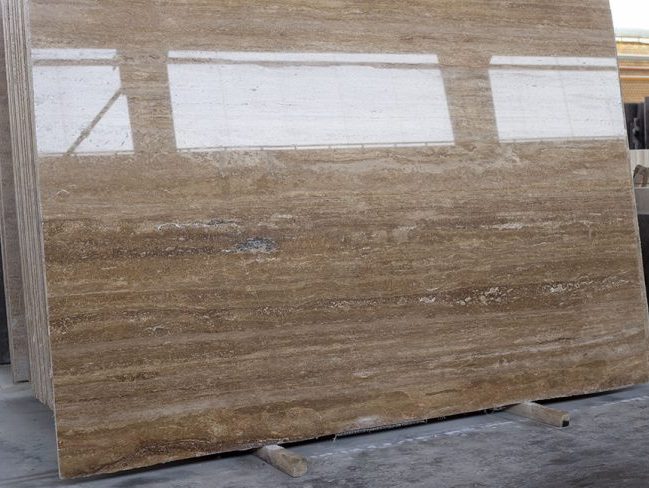


Stone skirting for stairs is a decorative element used especially along stair skirt edges in the building sector. This element mostly serves to preserve the edge of the steps from wear and impact and adds to the general aesthetic attractiveness of the staircase. Usually made from premium stone, such as marble or another strong stone variety, this skirting is both long-lasting and aesthetically beautiful. Stone skirting for stairs is one of the most significant features and applications since it protects the edge of the steps and extends the lifetime of the stairs, therefore reducing the damage done to their edge. The presence of skirting is particularly important in relation to staircases since they are often used sites. Stone skirting reflects the beauty of the stone by virtue of its elegance and coordination with the general design of the stair skirt. Because of its natural texture and color, which lend stairways a high-end, natural beauty that evokes sophistication, stone is among the highlights of interior décor. Stone skirting is a great option for sites with lots of foot activity, including stairs since stone is a material with great compressive strength as well as wear resistance. Usually fastened on the edge of the staircase, stone skirting for the stair skirt is done with adhesives or another kind of attaching. The usual installation technique is this one. Making sure the skirting is flatly connected to the surface of the steps during the installation procedure will help to preserve their stability and safety. This helps to avoid any gaps or inequality. One of the reasons stone skirting is the material of choice for a huge number of homes and businesses is its relative simplicity in maintenance; usually, only regular cleaning and polishing will keep its shine and attractiveness. To fit a range of interior decoration styles and produce a great range of visual effects, stone skirting can be manufactured using a variety of processing techniques, including flat plate edge grinding, line grinding, or tiny platform right angle, among others, and designed in a variety of styles. Stair stone skirting is essentially a decorative element that adds to the general visual appeal of the staircase, not merely a utilitarian protective element. Modern architecture and interior design depend on it since it combines artistry and practicality to the stairs, therefore turning them into a breathtaking scene inside the interior space. Modern building and interior design depend on it absolutely.


Step 1: Wall Clean
The first phase in installing stone skirtings for stair skirts is wall preparation, and its significance cannot be underlined. First of all, the wall close to the steps has to be thoroughly leveled by the builders. This stage serves to guarantee that the wall is water-free, oil-free, and dust-free, therefore laying a strong basis for the next skirt installation. The adherence of the adhesive depends directly on the cleanliness and dryness of the wall, thereby influencing the installation quality and skirting service life.
Usually using specialized cleaning products and tools to completely remove dust, oil stains, and moisture from the wall, construction workers clean the wall. This covers not just the wall’s surface but also wall repair of minor cracks and unevenness. Another important connection in this stage is determining whether the base is sturdy and flat. The general effect and stability of the skirting following installation depend on the flatness and solidity of the base. Should the base be uneven or unstable, the building workers must level using suitable materials and techniques, including cement mortar or another expert wall leveling tool.

Apart from guaranteeing the flatness of the wall, leveling treatment helps to improve the bearing capacity of the wall and guarantees the firmness of the skirting following installation. Construction personnel must precisely measure the verticality and horizontality of the wall during leveling treatment to guarantee that the wall following leveling satisfies building standards. To guarantee the quality of wall treatment, this stage calls for both deep experience and competent building technologies.
Furthermore included in wall preparation is pre-treatment of the wall, including marking it and popping up the skirting installation place on it. This prevents re-construction resulting from location deviation and helps to guarantee accuracy during the installation procedure. By carefully preparing the wall, construction workers can guarantee the flat installation of the skirting, so establishing a strong basis for the next building activities. This stage is absolutely essential in the whole building process since the exactness of the wall preparation work immediately relates to the installation effect and general appearance of the skirting.


Step 2: The Choice Of Ingredients
Usually made of the same stone as the stair skirt itself, such as marble, the stone skirting for the stair skirt helps to maintain the general elegance of the stair skirt. With solid and long-lasting stone skirting, one can sufficiently protect the corners.
Step 3: Mark the installation location of the skirting board on the wall
Mark it in line with the design criteria. This guarantees accuracy right during installation.
Step 4: Stone Cutting And Edging
Cutting and edging the stone are two of the most crucial steps in the stair skirt stone skirtings’ manufacturing. This phase guarantees the results that will be attained by the last installation by making sure the skirtings are of the right size and feature smooth edges. The building workers should start by precisely cutting the stone skirtings using professional stone-cutting equipment. This is done in line with the previously popped-up locations shown on the wall. This method requires a very great degree of accuracy since any variation in size could lead to mismatches during installation. This can affect the general appearance and usefulness of the good as well.

Making sure the cutting machine is correct during the cutting process and that the stone is stable falls on construction workers. This is done to prevent the cutting line from straying from its planned route or to harm the stone. Should the stone skirtings have uneven edges following their cutting, trimming would be necessary to correct them. Edging not only adds visual appeal but also guarantees the installation’s safety. Edging is a necessary step in the process of making sure skirtings are used in a safe way since uneven edges could cause safety issues including tripping or scratching.

Edging usually involves sanding the edges of the stone using an edge grinder or other abrasives until the desired effect is obtained, therefore obtaining a smooth and uniform surface. That the edge grinding effect is both beautiful and safe demands construction workers to have competent operating abilities and a thorough awareness of the characteristics of the stone. This is essential to ensure that the effect is safe as well as beautiful. The stone skirting should have a smooth, burr-free edge with lines that are continuous and a seamless transition with the surface that has been cut once the edge grinding procedure is finished.
Part of the edge grinding process allows one to polish the surface of the stone to enhance its shine and texture. The polished stone skirting could help the staircase’s entire design to be better integrated, thereby improving the visual impression overall. By precisely cutting and carefully grinding the edges of the stone skirting, construction experts can confirm that every stone skirting meets design criteria and safety rules. This provides a strong basis for the later installation activities. This approach not only shows the knowledge of the construction technology but also the ultimate quest for details, which assures the stone skirting of the stair skirt is of great quality and meets high standards.
Step 5: Preparation Of Adhesive
Use the adhesive according to directions; mix it uniformly and get the necessary sand ready. Light-colored stones should utilize white cement slurry or a stone-specific adhesive.


Step 6: Stone Installation
Using a specialist trowel, one layer of glue should be scraped onto the rear of the stone; then, once the initial layer has dried, another layer of glue should be scraped on. Another approach is using simple cement slurry as an adhesive on the job site. The first layer simple slurry with a water-cement ratio of 0.5 over the bonding layer of dry-hard cement mortar during the stone placement procedure. After that, place the stone on the rear of the dry-hard cement mortar using either simple cement slurry or special adhesive. First, let all four sides fall down simultaneously; secondly, tap the stone with a rubber hammer; lastly, level it in line with the horizontal line using a level ruler.
Step 7: Cleaning The Caulking
One to two days following the stone’s laying should be grouting and cleaning days. Choose mineral colors and cement (or white cement) of the same hue based on the color of the stone; mix them uniformly and create a 1:1 slurry. Pour it gradually between the slabs, then scrape the flowing cement slurry into the gaps with a long scraper until it fills them completely.

Step 8: Details Processing
The ground on a flat plate lies on one side of the skirting. The processing technique consists of grinding one side of the skirting at the upper end of the step; the skirting is around 60–100 millimeters higher than the outside bevel of the step.
Grounding the skirting lines The method of processing entails grinding a line between 40 and 70 millimeters at the top end of the contouring; the height of the skirting is also roughly 60–100 millimeters higher than the outer bevel of the step.
A little platform at the right angle: The skirting’s height runs from 30 to 100 millimeters above the step’s outside bevel. The processing technique consists in having a platform surface roughly 30–80 millimeters against the wall, then converting it to a right angle and closing it with the steps.
Frequently Asked Questions
1. What is a stone stair skirt and why is it necessary?
A stone stair skirt, also known as a stringer or skirting board, is the protective stone trim installed along the side of the stairs where they meet the wall. It serves two main purposes: functionally, it protects the wall from scuffs and moisture during cleaning; aesthetically, it provides a finished, high-end look that bridges the gap between the stair treads and the wall surface.
2. What are the most common design styles for stair skirting?
There are two primary styles: Integral Skirting, where the stone follows the jagged “step” profile of the treads and risers for a classic look, and Straight/Sloped Skirting, where a single continuous diagonal strip of stone runs parallel to the angle of the staircase. At Century Star, we find that modern minimalist projects often prefer the sleek, unbroken lines of sloped skirting.
3. How do I ensure the color of the skirting matches the stairs?
To achieve perfect harmony, the skirting should always be fabricated from the same batch or block of stone as the treads and risers. Natural stone has inherent color variations; by using the same material, you ensure that the veining and background tones transition seamlessly from the horizontal steps to the vertical wall trim.
4. What is the recommended height and thickness for a stone skirt?
Typically, the height of a stair skirt ranges from 80mm to 120mm above the tread. For thickness, 15mm to 20mm is standard. For a more “built-in” and luxurious appearance, Century Star recommends recessing the skirt slightly into the wall so that the stone sits flush with the plaster, creating a smooth, high-architectural finish.
5. How do you handle the joints and corners of the skirting?
Precision is critical at the joints. For integral skirting, each piece must be cut at a perfect 45-degree miter at the corners to ensure a tight, seamless fit. High-quality stone adhesive mixed with color-matched pigments should be used to fill any micro-gaps, which are then hand-polished to make the joints virtually invisible to the naked eye.