


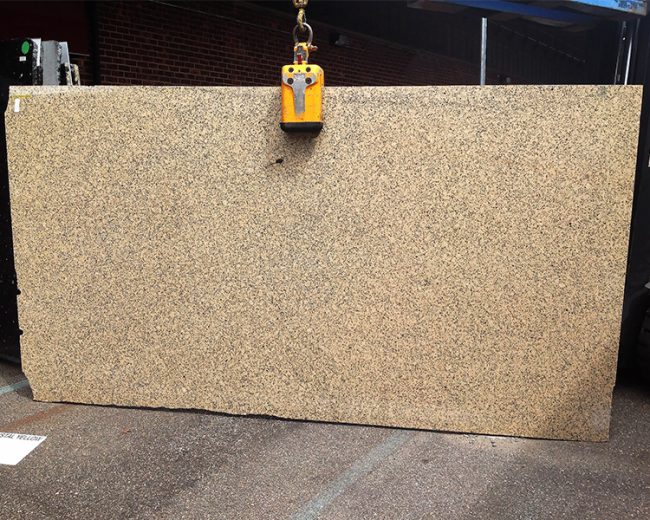
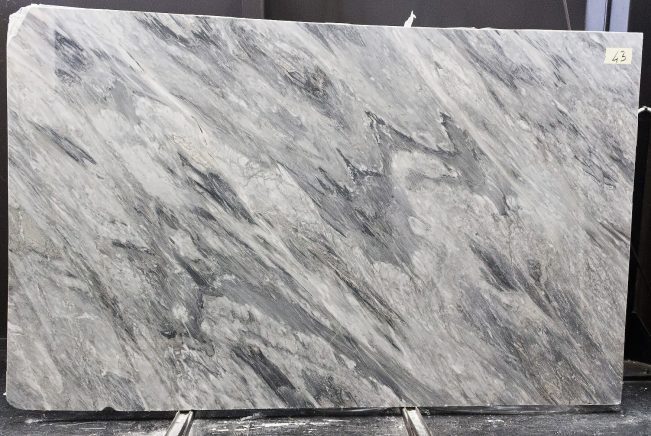
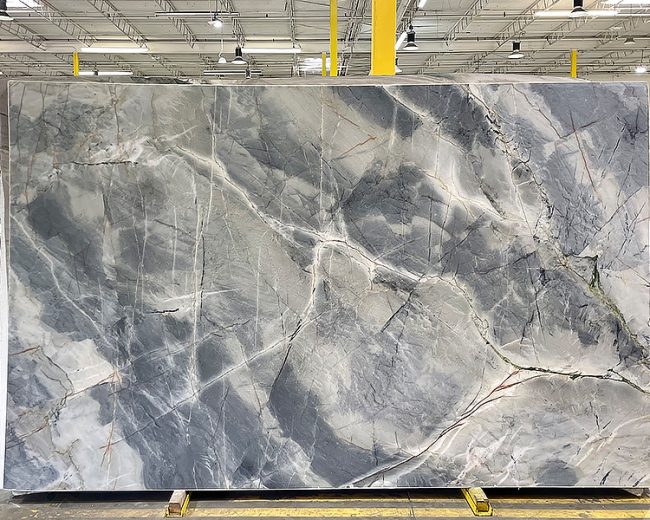
Because of its unique texture, visual appeal, and amazing physical properties, Stone Countertop is a naturally occurring building material utilized extensively in architectural projects, interior and outside decorating, and home furnishings. Considered among the most flexible building materials available is stone. Apart from its usage in the building sector, stone finds application in many other spheres. Because they are both long-lasting and aesthetically pleasing, stone worktops are especially sought after in kitchens and bathrooms. This is in addition to the great range of uses for stone counters. Still, stress concentration is a regular occurrence on stone countertops, especially during the operating processes of hole-cutting and edge- Cutting. This is so as these surgeries cut edges and holes. The possible cracks or even fractures produced by this event will affect the durability and safety of the product. Both of these will change. Within the parameters of this work, we will investigate the problem of stress concentration in the manufacturing of stone countertops and provide efficient and not just useful solutions.


A Descriptive Study of the Idea and Guideline Supporting Stress Management Strategies


Stress concentration is the phenomena wherein a stress value in a certain point of the surface or interior of an object is much higher than that of the surrounding regions. The term “stress concentration” suggests this phenomena. This could be the outcome of several different elements, including geometric features, load variances, or item form. Certain locations of a component are more prone than others to cause stress concentration. Among these are notches, acute angles, holes, and corners. Another area that can be a possible stress accumulation center are acute angles. Moreover, other elements influence the degree of stress concentration existing inside the material: load distribution, load amount, and direction of the load. The concentration of stress can cause notable increases in stress in specific areas, which would make those places more likely to fracture or undergo fatigue failure. This then affects not only the lifetime of the component but also its general performance.

The concentration of stress in stone products is influenced by geometric shape, internal material tensions, and processing techniques all around. These components taken together define the stress concentration. A rapid change in form—that instance, from a flat surface to a hole or from a straight edge to a corner—can upset the stress distribution of an object. This leads to tension manifested in the areas of geometric discontinuity, that is, those in which the form changes suddenly. For example, the stress in other sections of a flat plate is much less than the tension at the edge of a circular hole in the plate. Stone is another topic of interest since it naturally exhibits internal stresses by means of the interaction of geological processes with high temperatures. During the processing methods, including cutting and hole-drilling, which aggravates the already existing stress concentration, these pressures are transmitted. Apart from the cutting speeds and depths, the tools used throughout the processing process have the potential to create additional stresses into the surface or internal of the stone should the techniques be not optimal. This sharpens the process of stress concentration even more. We consider the cutting depths and speeds as well.
Stress Concentration in Stone Countertop Processing


Hole-Drilling and Stress Concentration
Mostly for installing electrical fixtures, piping, sinks, and other components, hole-drilling is a standard procedure in stone countertop fabrication. Still, drilling holes concentrates stress within the stone. This is particularly true in cases when the holes have a square or rectangular form since stress distribution is most complicated and stress peaks are found at the corners of these holes. By comparison, circular holes show more homogeneous stress distribution and somewhat less stress concentration.
Edge-Cutting and Stress Concentration
Apart from hole-drilling, another frequent technique in stone countertop construction is edge-cutting, usually used to produce sink edges or L-shaped counters. Sharp angle cutting, though, might cause stress concentration at the corners. This is so because the sudden change in geometry at the corners distorts the stress distribution equally. Stress concentrates at these corners when the stone is under external influences, increasing its fragility or breaking tendency.
Case Study Analysis
Figures 3 through 8 illustrate a variety of stone countertop products with drilled holes; all of them show stress concentration. Particularly Figures 7, which shows a circular hole and Figure 8, which displays a bathtub stone countertop with small rounded corners, illustrate that circular holes have somewhat lower stress concentration and more homogeneous stress distribution. This suggests that by means of design, optimizing the form of holes and corners can significantly reduce stress concentration.
Methods to Reduce Stress Concentration

Regarding stone countertop production, improving product durability and avoiding fractures depend on resolving stress concentration. Design optimization—which comprises multiple fundamental techniques—is one successful approach. Adopting rounded corners is first absolutely vital. Sharp edges concentrate tension and are prone to fracture under drilling and cutting operations. Rounded corners, however, help to distribute tension so it does not build up at these areas. Figure 9, for example, shows a bathtub countertop with an R50 radius at the hole’s corner, a design that greatly reduces the stress concentration-induced danger of fractures. In keeping with this, Figure 10 shows a beige stone countertop with an R20 radius at the sink hole, hence lowering the stress concentration. Round corners allow designers to produce stronger, less prone to cracking under stress stone countertops.
Optimizing hole forms is yet another crucial component of design. Although square or rectangular holes are sometimes utilized for decorative or practical purposes, they typically produce stress peaks at the corners. On the other hand, round or elliptical holes more evenly transmit tension, therefore lowering the stress concentration. This is so because the curvature of these forms lets stress pass more naturally, therefore preventing the sudden geometric shifts that induce stress buildup. Manufacturers can greatly improve the structural integrity of stone counters by using round or elliptical rather than square holes, hence increasing their resistance to fractures and cracks.
Another good architectural tactic is extending transition zones. Stress concentration can result from sudden geometric changes as those seen in L-shaped apertures. Incorporating transitional arcs or fillets at these locations helps designers to smooth out the change between several stone countertop portions. This slow shift in geometry helps to more fairly distribute tension, therefore lowering the possibility of stress peaks developing at the corners. Adding a transitional arc at an L-shaped opening, for instance, can help to efficiently reduce stress concentration, therefore producing a more durable and dependable product.
Reducing the stress concentration also depends much on process optimization. First of importance is the choice of suitable processing instruments. Minimizing stress introduction during processing depends on using premium cutting tools including diamond saw blades. These instruments are meant to cut precisely and cleanly, therefore lowering the possibility of stressing the stone. Choosing ideal cutting depths and speeds is also absolutely vital. Excessive cutting pressures might cause stress concentration; thus, it is crucial to precisely control these factors to guarantee a smooth and under control cutting operation. Manufacturers can greatly lower the likelihood of stress-related problems in stone countertops by selecting appropriate tools and maximizing cutting conditions.
Particularly for stones that have been high-temperature fired, including microcrystalline stone and ceramics, heat treatment is another useful process improvement tool. Many times, these materials include residual internal tensions that might be aggravuated during processing. Heat treatment before processing helps manufacturers release some of these internal stresses, therefore stabilizing the stone and reducing its susceptibility to stress concentration. This stage can greatly improve the general stone countertop performance and durability, therefore lowering the possibility of fractures and other flaws.
At last, reinforcement techniques can be used to solve stress concentration in places where design optimization by itself is inadequate. Sometimes adding artificial stone or another material to the backside of stress-concentrated places will give extra strength and stability. Figure 19, for instance, depicts a countertop design with an R5 radius at the corner supported on the rearside by artificial stone. This reinforcement offers an extra layer of protection against fractures and so helps to significantly lower the stress concentration. Manufacturers may produce aesthetically beautiful and structurally sound stone counters by combining design optimization with process improvement and reinforcing techniques, therefore guaranteeing a long-lasting and dependable product for clients.
Regarding the manufacture of stone countertops, one particularly important problem that cannot be ignored is stress concentration. Furthermore possible are cracks, fractures, and other quality issues resulting from it, all of which would affect the durability of the product as well as its safety performance. The results of the provided research clearly show that the most often encountered sites in which stress concentration occurs are the ones where hole-drilling and edge-cutting are conducted. Design optimization and process improvement strategies help one to significantly reduce the stress concentration by means of their application. Among the activities included in this category are the application of heat treatment, the selection of suitable processing techniques, the strengthening measures, the optimization of hole forms, the enlargement of transition zones, and the adoption of rounded corners. Moreover, the results of real case studies show that these treatments have the ability to significantly lower the likelihood of stress concentration, thereby improving the quality of stone counters and extending the lifetime of these surfaces. Regarding the future processing of stones, it is rather important to pay more attention to the analysis and solutions of challenges concerning stress concentration. Applying scientific design and rational processing procedures will help to make stone products more competitive in the market and improve their performance appropriately. One can accomplish this by improving the quality of stone items.