


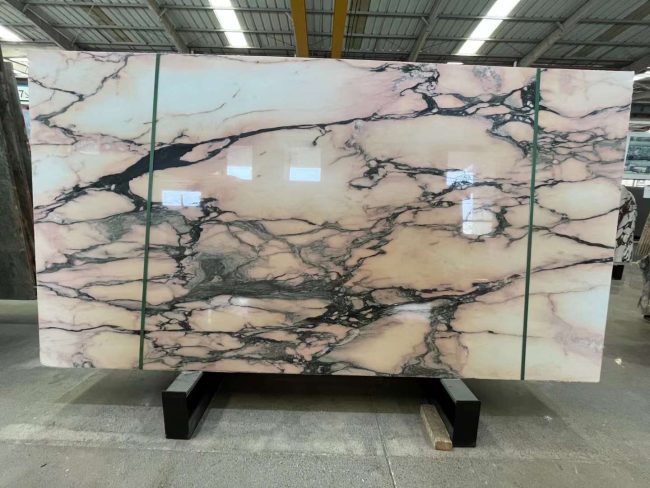


Because of its unique texture, visual appeal, and amazing physical properties, Stone Countertop is a naturally occurring building material utilized extensively in architectural projects, interior and outside decorating, and home furnishings. Considered among the most flexible building materials available is stone. Apart from its usage in the building sector, stone finds application in many other spheres. Because they are both long-lasting and aesthetically pleasing, stone worktops are especially sought after in kitchens and bathrooms. This is in addition to the great range of uses for stone counters. Still, stress concentration is a regular occurrence on stone countertops, especially during the operating processes of hole-cutting and edge- Cutting. This is so as these surgeries cut edges and holes. The possible cracks or even fractures produced by this event will affect the durability and safety of the product. Both of these will change. Within the parameters of this work, we will investigate the problem of stress concentration in the manufacturing of stone countertops and provide efficient and not just useful solutions.


A Descriptive Study of the Idea and Guideline Supporting Stress Management Strategies


Stress concentration is the phenomena wherein a stress value in a certain point of the surface or interior of an object is much higher than that of the surrounding regions. The term “stress concentration” suggests this phenomena. This could be the outcome of several different elements, including geometric features, load variances, or item form. Certain locations of a component are more prone than others to cause stress concentration. Among these are notches, acute angles, holes, and corners. Another area that can be a possible stress accumulation center are acute angles. Moreover, other elements influence the degree of stress concentration existing inside the material: load distribution, load amount, and direction of the load. The concentration of stress can cause notable increases in stress in specific areas, which would make those places more likely to fracture or undergo fatigue failure. This then affects not only the lifetime of the component but also its general performance.

The concentration of stress in stone products is influenced by geometric shape, internal material tensions, and processing techniques all around. These components taken together define the stress concentration. A rapid change in form—that instance, from a flat surface to a hole or from a straight edge to a corner—can upset the stress distribution of an object. This leads to tension manifested in the areas of geometric discontinuity, that is, those in which the form changes suddenly. For example, the stress in other sections of a flat plate is much less than the tension at the edge of a circular hole in the plate. Stone is another topic of interest since it naturally exhibits internal stresses by means of the interaction of geological processes with high temperatures. During the processing methods, including cutting and hole-drilling, which aggravates the already existing stress concentration, these pressures are transmitted. Apart from the cutting speeds and depths, the tools used throughout the processing process have the potential to create additional stresses into the surface or internal of the stone should the techniques be not optimal. This sharpens the process of stress concentration even more. We consider the cutting depths and speeds as well.
Stress Concentration in Stone Countertop Processing


Hole-Drilling and Stress Concentration
Mostly for installing electrical fixtures, piping, sinks, and other components, hole-drilling is a standard procedure in stone countertop fabrication. Still, drilling holes concentrates stress within the stone. This is particularly true in cases when the holes have a square or rectangular form since stress distribution is most complicated and stress peaks are found at the corners of these holes. By comparison, circular holes show more homogeneous stress distribution and somewhat less stress concentration.
Edge-Cutting and Stress Concentration
Apart from hole-drilling, another frequent technique in stone countertop construction is edge-cutting, usually used to produce sink edges or L-shaped counters. Sharp angle cutting, though, might cause stress concentration at the corners. This is so because the sudden change in geometry at the corners distorts the stress distribution equally. Stress concentrates at these corners when the stone is under external influences, increasing its fragility or breaking tendency.
Case Study Analysis
Figures 3 through 8 illustrate a variety of stone countertop products with drilled holes; all of them show stress concentration. Particularly Figures 7, which shows a circular hole and Figure 8, which displays a bathtub stone countertop with small rounded corners, illustrate that circular holes have somewhat lower stress concentration and more homogeneous stress distribution. This suggests that by means of design, optimizing the form of holes and corners can significantly reduce stress concentration.
Methods to Reduce Stress Concentration

Regarding stone countertop production, improving product durability and avoiding fractures depend on resolving stress concentration. Design optimization—which comprises multiple fundamental techniques—is one successful approach. Adopting rounded corners is first absolutely vital. Sharp edges concentrate tension and are prone to fracture under drilling and cutting operations. Rounded corners, however, help to distribute tension so it does not build up at these areas. Figure 9, for example, shows a bathtub countertop with an R50 radius at the hole’s corner, a design that greatly reduces the stress concentration-induced danger of fractures. In keeping with this, Figure 10 shows a beige stone countertop with an R20 radius at the sink hole, hence lowering the stress concentration. Round corners allow designers to produce stronger, less prone to cracking under stress stone countertops.
Optimizing hole forms is yet another crucial component of design. Although square or rectangular holes are sometimes utilized for decorative or practical purposes, they typically produce stress peaks at the corners. On the other hand, round or elliptical holes more evenly transmit tension, therefore lowering the stress concentration. This is so because the curvature of these forms lets stress pass more naturally, therefore preventing the sudden geometric shifts that induce stress buildup. Manufacturers can greatly improve the structural integrity of stone counters by using round or elliptical rather than square holes, hence increasing their resistance to fractures and cracks.
Another good architectural tactic is extending transition zones. Stress concentration can result from sudden geometric changes as those seen in L-shaped apertures. Incorporating transitional arcs or fillets at these locations helps designers to smooth out the change between several stone countertop portions. This slow shift in geometry helps to more fairly distribute tension, therefore lowering the possibility of stress peaks developing at the corners. Adding a transitional arc at an L-shaped opening, for instance, can help to efficiently reduce stress concentration, therefore producing a more durable and dependable product.
Reducir la concentración de tensiones también depende en gran medida de la optimización del proceso. En primer lugar, es fundamental elegir instrumentos de procesamiento adecuados. Minimizar la introducción de tensiones durante el procesamiento depende del uso de herramientas de corte de alta calidad, incluyendo hojas de sierra de diamante. Estas herramientas están diseñadas para cortar con precisión y limpieza, reduciendo así la posibilidad de generar tensiones en la piedra. También es absolutamente vital seleccionar profundidades y velocidades de corte ideales. Presiones excesivas de corte podrían provocar una concentración de tensiones; por lo tanto, es crucial controlar con precisión estos factores para garantizar una operación de corte suave y bajo control. Los fabricantes pueden disminuir considerablemente la probabilidad de problemas relacionados con las tensiones en encimeras de piedra al seleccionar herramientas adecuadas y optimizar al máximo las condiciones de corte.
En particular, para piedras que han sido cocidas a altas temperaturas, incluyendo piedra microcristalina y cerámica, el tratamiento térmico es otra herramienta útil para mejorar el proceso. Muchas veces, estos materiales presentan tensiones internas residuales que podrían agravarse durante el procesamiento. El tratamiento térmico previo al procesamiento ayuda a los fabricantes a liberar parte de estas tensiones internas, estabilizando así la piedra y reduciendo su susceptibilidad a la concentración de tensiones. Esta etapa puede mejorar significativamente el rendimiento general y la durabilidad de las encimeras de piedra, disminuyendo así la posibilidad de fracturas y otros defectos.
Por último, se pueden utilizar técnicas de refuerzo para solucionar la concentración de tensiones en lugares donde la optimización del diseño por sí sola resulta insuficiente. A veces, añadir piedra artificial u otro material en la parte trasera de los puntos con concentración de tensiones proporcionará mayor resistencia y estabilidad. Por ejemplo, la Figura 19 muestra un diseño de encimera con un radio R5 en la esquina, soportado en la parte trasera por piedra artificial. Este refuerzo ofrece una capa adicional de protección contra fracturas y contribuye así a reducir significativamente la concentración de tensiones. Los fabricantes pueden producir encimeras de piedra estéticamente hermosas y estructuralmente sólidas combinando la optimización del diseño con mejoras en el proceso y técnicas de refuerzo, garantizando así un producto duradero y confiable para los clientes.
En cuanto a la fabricación de encimeras de piedra, un problema especialmente importante que no puede ignorarse es la concentración de tensiones. Además, pueden surgir grietas, fracturas y otros problemas de calidad derivados de esta concentración, todos los cuales afectarían tanto la durabilidad como el desempeño de seguridad del producto. Los resultados de la investigación presentada muestran claramente que los sitios más frecuentes donde ocurre la concentración de tensiones son aquellos en los que se realizan perforaciones y cortes de bordes. Las estrategias de optimización del diseño y mejora del proceso ayudan a reducir significativamente la concentración de tensiones mediante su aplicación. Entre las actividades incluidas en esta categoría se encuentran el tratamiento térmico, la selección de técnicas de procesamiento adecuadas, las medidas de refuerzo, la optimización de las formas de los orificios, la ampliación de las zonas de transición y la adopción de esquinas redondeadas. Además, los resultados de estudios de casos reales demuestran que estos tratamientos tienen la capacidad de disminuir notablemente la probabilidad de concentración de tensiones, mejorando así la calidad de las encimeras de piedra y prolongando la vida útil de estas superficies. En cuanto al procesamiento futuro de las piedras, es bastante importante prestar mayor atención al análisis y a las soluciones de los desafíos relacionados con la concentración de tensiones. Aplicar diseños científicos y procedimientos de procesamiento racionales ayudará a hacer que los productos de piedra sean más competitivos en el mercado y a mejorar adecuadamente su desempeño. Esto se puede lograr mejorando la calidad de los artículos de piedra.