



Quick Summary
Soft beige marble can be an excellent choice for shower wall projects in North America because it creates warmth, softness, and a more residential luxury effect than stark white or darker stone directions. The best results usually come from selecting slabs with balanced undertones, controlled movement, suitable finish, and clean panel layout logic. A successful beige marble shower wall should feel calm, premium, and integrated with the full bathroom palette rather than simply warm in color.

Shower walls now play a major role in premium bathroom design across North America. In many luxury homes, boutique hospitality spaces, and design-led residential projects, the shower is no longer treated as a purely functional wet zone. It often becomes one of the most visible architectural surfaces in the room. That shift changes the way buyers should approach material selection. A shower wall needs to do more than survive moisture exposure. It needs to create atmosphere, support the room’s palette, and still feel visually composed at close range and at room distance.
Soft beige marble is especially attractive in this context because it creates a quieter and more welcoming kind of luxury. Compared with bright white marble, it often feels softer and more lived-in. Compared with dark stone, it usually keeps the shower feeling more open and more relaxed. In North American interiors, where wood tones, brushed brass, warm neutrals, and layered natural materials are common, soft beige marble can make the bathroom feel more settled and more refined without becoming too decorative.
Still, a proper soft beige marble design guide for shower wall projects in North America has to go beyond the idea that beige automatically means elegant. Beige marble varies widely in undertone, brightness, movement style, and panel behavior. Some slabs feel calm and premium once installed. Others become too yellow, too flat, or too visually broken around niches and fixtures. The strongest results come from evaluating beige marble as a full shower wall system rather than as a beautiful slab alone.
Why Soft Beige Marble Works Well for Shower Walls
Soft beige marble works especially well for shower walls because it can create warmth without visual heaviness. In many North American bathrooms, especially primary bathrooms, buyers want the shower to feel spa-like and quiet rather than cold or theatrical. Beige marble supports that goal by softening the room’s overall tone while still providing natural stone depth and visible material quality.
Another advantage is palette flexibility. Soft beige marble often works naturally with oak, walnut, off-white paint, warm porcelain floors, brushed brass, bronze, and muted black accents. That makes it especially useful in residential bathrooms where several finishes need to work together in a calm, layered way. A well-chosen beige marble shower wall can act as a bridge between warmer and cooler elements in the room, which is often more useful than a stone that creates too much contrast.
Soft beige marble also aligns well with the current preference for understated luxury. Many buyers no longer want bathrooms that feel overly glossy or aggressively decorative. They want spaces that feel natural, relaxing, and expensive in a quieter way. Beige marble can create exactly that effect when its undertone and movement are selected with discipline.
What North American Buyers Usually Need from a Beige Marble Shower Wall
Most buyers in this market want a shower wall that feels premium, warm, and easy to integrate into the wider bathroom design. In primary bathrooms, the goal is often calm luxury. In powder rooms or smaller statement showers, buyers may allow slightly more visual expression. In hospitality projects, the wall may need to balance broad guest appeal with a stronger premium identity. In all of these situations, the shower wall has to read as one composed architectural surface.
That creates several important decision factors. One is undertone. Another is pattern density. Another is finish. Another is panel size and joint frequency. Another is how the marble behaves around niches, benches, plumbing penetrations, corners, and shower glass. Buyers should also consider how the slab will perform under real lighting, because beige stone is especially sensitive to changes in light temperature.
The strongest decisions come from asking the right question. Instead of only asking whether the slab looks beautiful, buyers should ask whether it will still feel elegant once it is cut into panels, installed vertically, and viewed under the actual conditions of the finished bathroom. That difference in mindset usually leads to much better material choices.

How to Evaluate Soft Beige Marble for Shower Wall Use
Undertone and Warmth Balance
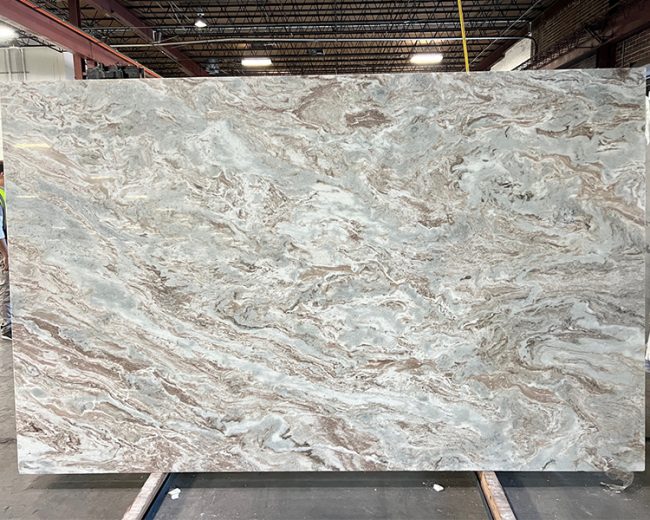
Soft beige marble can lean creamy, sandy, taupe, greige, or slightly honey-toned. In North American bathrooms, the most successful beige marbles are often the ones that feel warm without becoming yellow. A slab that is too golden may make the room feel dated or over-colored once installed. A slab with more greige or taupe balance usually feels more mature and easier to coordinate with contemporary cabinetry, metals, and flooring.
Movement Scale
Shower walls are large surfaces, so movement should be judged at panel scale rather than in close-up slab photography. Gentle linear movement, broad cloudy drift, or soft directional veining often works especially well because it gives the wall natural richness without dividing it into too many active zones. Highly busy beige marble may look valuable in a slab yard but can lose elegance once niches, valves, and corners interrupt the pattern.
Finish Selection
Polished beige marble can feel luminous and more formal, especially in luxury hotel-inspired bathrooms or larger suites with layered lighting. Honed finishes often feel softer and more contemporary, which may be especially effective in warm modern residential spaces. The right finish depends on the mood of the room, the level of natural light, and how much reflection the designer wants from the wall surface. The most expensive-looking finish is not always the glossiest one.
Panel Size and Joint Strategy
Large panels usually create the strongest shower wall because they reduce visual interruption and allow the marble to read more architecturally. This is especially important for beige marble, which often relies on tonal calm rather than strong graphic contrast. Too many joints can weaken the stone’s best quality. The best soft beige marble for shower wall use is often the slab that supports broad, continuous panel logic rather than the slab with the most striking isolated section.
Relationship to the Full Bathroom Palette
A beige marble shower wall never succeeds in isolation. It needs to work with the vanity, floor, wall paint, fixtures, and cabinetry if present. Soft beige marble often performs especially well with oak, walnut, warm whites, bronze, and brass, but it can become too warm if surrounding surfaces already carry too much yellow or red. A premium bathroom usually depends on balanced warmth rather than cumulative warmth.

Popular Soft Beige Marble Profiles for Shower Wall Projects
| Soft Beige Marble Profile | Best For | Advantages | Main Watchpoints |
|---|---|---|---|
| Creamy Beige Marble | Warm residential bathrooms and softer luxury interiors | Inviting tone, comfortable atmosphere, broad appeal | Needs careful review to avoid yellow shift |
| Greige Beige Marble | Modern and transitional bathrooms | Balanced tone, easy coordination with wood and black accents | Can feel too quiet if the room lacks contrast |
| Soft Vein Beige Marble | Large-format shower panels and calmer spa-like interiors | Elegant movement, premium full-wall reading | Layout must preserve vein flow through interruptions |
| Taupe-Inflected Beige Marble | Hospitality-inspired bathrooms and mature residential palettes | More sophisticated warmth, less yellow risk | Needs correct lighting to avoid flatness |
| Statement Beige Marble | Feature showers and stronger focal-point bathroom designs | High identity, memorable luxury effect | Can become too active in heavily interrupted layouts |
Best Applications by Bathroom Type
In primary bathrooms, soft beige marble usually works best when the design direction is calm and layered. These spaces benefit from shower walls that feel luminous and relaxing rather than highly graphic. Large panels, softer movement, and balanced undertones usually produce the most convincing long-term result.
In powder rooms or more design-forward secondary bathrooms, buyers can often choose a slightly stronger beige marble because the shower plays more of a feature role. Here, a more directional or character-rich slab can work well if the rest of the room remains restrained. Even then, the wall should still be judged at installation scale rather than only in slab form.
In hospitality and developer-led projects, repeatability matters alongside beauty. A beige marble family that feels premium while remaining visually stable across multiple rooms can be especially valuable. In those cases, the best choice is often not the most dramatic slab, but the one that balances warmth, composure, and layout reliability.
Common Mistakes Buyers Make
The first mistake is assuming that any beige marble will create a luxury effect. Small undertone differences can shift the room from elegant to overly yellow or from warm to dull. The second mistake is choosing from close-up photography alone. Shower walls must be judged at full wall scale, and many beige marbles become either much stronger or much weaker once installed.
Another common issue is underestimating panel layout. Beige marble often relies on continuity and balance more than on dramatic contrast, so poor joint planning can weaken its main value quickly. Buyers also sometimes assume that warmer automatically means more welcoming. In reality, a bathroom with too many warm undertones can feel heavy. The strongest result usually comes from controlled warmth.
A final mistake is separating the shower wall from the rest of the bathroom. The best soft beige marble for shower wall use is not only attractive on its own. It improves the room’s overall atmosphere, lighting response, and material balance.
What Buyers Should Review Before Approval
Before approving soft beige marble for a shower wall project, buyers should review the full slab or a large panel layout simulation. They should confirm undertone, movement density, likely panel breakdown, finish, niche and bench conditions, and how the marble will terminate at corners, ceilings, floors, and glass. If the shower is visually connected to a vanity top, threshold, or wall return, those relationships should also be reviewed together.
It is also wise to assess the marble under lighting conditions that resemble the actual bathroom. Beige marble is particularly sensitive to warm versus cool lighting, and the wrong assumption at approval stage can change the whole room mood. The more the stone is reviewed in full context, the more reliable the finished result becomes.
How Supplier Support Improves Shower Wall Decisions
For buyers sourcing from China, supplier support matters because selecting soft beige marble for shower wall use is not simply about finding a warm slab. It also involves confirming whether the slab works at wall scale, whether its movement can be laid out cleanly, and whether its undertone supports the intended palette and lighting conditions. A capable supplier helps structure these questions before production begins.
In practical terms, this may include comparing multiple beige marble options, identifying which slabs are better suited to calm spa-like showers versus stronger feature walls, and helping buyers avoid materials that appear attractive in isolated imagery but become too yellow, too flat, or too fragmented once installed. For premium residential and hospitality projects, this review process can significantly improve the final result.

FAQ
1. Is soft beige marble a good material for shower walls?
Yes. Soft beige marble can be an excellent shower wall material because it creates warmth, natural luxury, and a calmer residential atmosphere than many sharper or darker stone surfaces.
2. What kind of beige marble works best for shower walls in North America?
Muted creamy beige, greige beige, and taupe-inflected beige marbles often work best because they feel warm without becoming overly yellow and integrate well with common North American bathroom palettes.
3. Should beige marble shower walls be polished or honed?
Both can work. Polished finishes usually feel more luminous and formal, while honed finishes often feel softer and more contemporary. The best choice depends on the bathroom style and lighting.
4. Is beige marble too warm for modern bathrooms?
No. Beige marble can work very well in modern bathrooms when the undertone is controlled and the surrounding palette is balanced. In many cases, it makes the room feel more welcoming and less severe.
5. What matters more for a shower wall: tone or panel layout?
Both matter, but panel layout is often underestimated. Even a beautiful beige marble can lose much of its elegance if joints, niches, and directional flow are not handled properly.
6. Can soft beige marble create a luxury shower wall look?
Yes. When chosen carefully, soft beige marble can create an extremely refined and upscale shower wall, especially in warm modern, transitional, and hospitality-inspired bathrooms.
Final Note / Practical Takeaway
The best soft beige marble shower wall in North America is the one that balances undertone, movement, panel continuity, and full-room coordination. Buyers who evaluate beige marble at wall scale and under real lighting conditions usually achieve more elegant and more durable premium results.