


Quick Summary
Granite slabs can be an excellent choice for luxury bathroom vanity projects in North America when buyers want a vanity surface with stronger material presence, deeper natural character, and long-term design stability. The best results usually come from choosing granite with the right undertone, mineral activity, finish, and fabrication suitability for close-range bathroom use. A successful granite vanity should feel premium and composed under mirror lighting, not too dark, too busy, or disconnected from the room’s overall palette.

Luxury bathroom design in North America increasingly depends on atmosphere, material authenticity, and long-term visual value rather than decoration alone. In this context, the vanity is no longer treated as a secondary countertop. It often becomes one of the most important design elements in the room, positioned directly under mirror lighting and surrounded by cabinetry, hardware, wall finishes, and flooring that all influence how the stone is perceived. That is why choosing granite slabs for luxury bathroom vanity use requires more than selecting a durable surface. It requires understanding how granite will behave as a finished vanity composition.
Granite brings a different kind of luxury compared with marble or quartzite. Instead of relying mainly on long flowing veining, granite often creates value through mineral density, tonal layering, and a more grounded visual character. In many North American bathrooms, especially those that aim for architectural calm, stronger contrast, or a more substantial material presence, granite can be a highly effective vanity choice. It can feel more anchored, more tactile, and more permanent than many lighter and more expected vanity materials.
Still, not every granite slab is equally suitable for vanity use. Some slabs become too visually active once sink cutouts and faucet holes interrupt the surface. Some darker stones feel elegant in the slab yard but too heavy in smaller bathrooms. Others that look refined in full slab photography can lose balance once fabricated into backsplashs, side returns, and edge details. The best vanity outcomes come from choosing granite at vanity scale, not only at slab scale.
Why Granite Works Well for Luxury Bathroom Vanities
Granite works especially well for luxury bathroom vanity projects because it gives the vanity stronger visual authority. In many premium bathrooms, buyers want the vanity to feel substantial and materially confident, not only elegant. Granite can support that goal because it carries natural depth and mineral richness that often read as more grounded and architectural than softer-patterned surfaces.
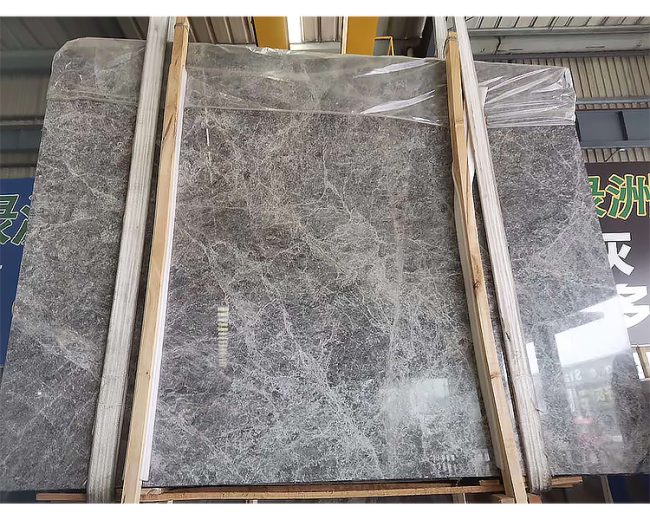
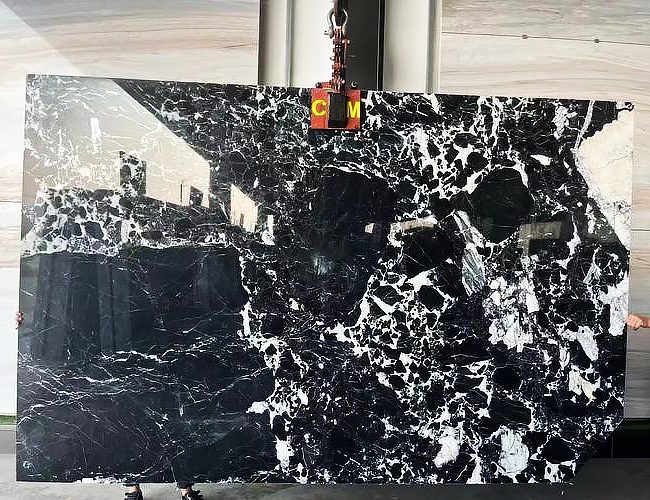
Another advantage is tonal flexibility. Granite slabs can range from pale gray and muted taupe to charcoal, black, brown-based, and more complex mineral fields. This makes them useful across multiple bathroom styles, from clean contemporary interiors to warmer residential palettes and hospitality-inspired spaces. A lighter granite may help the vanity feel balanced and quiet, while a darker or richer granite can turn it into a more dramatic focal element.
Granite also suits buyers who want a luxury vanity with a stronger sense of permanence. In North America, many clients are looking for materials that feel lasting and believable rather than overly trend-driven. Granite can deliver that effect very well, especially when paired with disciplined cabinetry, layered lighting, and controlled bathroom palettes. The key is choosing a slab whose natural activity remains elegant in close-range daily use.
What North American Buyers Usually Need from a Vanity Slab
Most buyers in this market want a vanity slab that feels premium, durable in perception, and visually stable under everyday bathroom lighting. In primary bathrooms, the aim is often quiet luxury and long-term satisfaction. In powder rooms, the vanity may take on a stronger focal role. In hospitality and developer-led projects, buyers may need the slab family to deliver both premium identity and enough consistency for specification across several rooms.
That creates several major decision factors. One is undertone. Another is mineral activity. Another is finish. Another is how the granite works with sink cutouts, edge profiles, backsplash conditions, and side returns. Buyers should also consider room scale. A granite that feels exceptional in a large master bathroom may feel too intense in a compact vanity zone if contrast and lighting are not balanced carefully.
The best decisions usually come from treating the vanity as a complete design object. A granite slab is only part of the result. The finished effect depends on how the stone interacts with cabinetry, metal finishes, wall color, floor material, mirror shape, and light direction. A beautiful slab that ignores these relationships can still produce a disappointing vanity.

How to Evaluate Granite Slabs for Bathroom Vanity Use
Background Tone and Undertone
Granite can lean warm, cool, or neutral in subtle ways that matter greatly in a bathroom. Light gray and greige granites often work especially well in North American luxury bathrooms because they integrate more easily with layered residential palettes. Dark charcoal or black granite can also be highly successful, particularly in larger rooms or hospitality-style schemes, but they should be reviewed carefully so the vanity does not feel too heavy under direct mirror lighting.
Mineral Activity and Pattern Density
Granite usually expresses itself through mineral texture and denser visual fields rather than long open veining. This can be a major advantage in vanity use, but only when the slab remains visually balanced after fabrication. Highly active granite may feel rich and dramatic in a slab yard yet become too restless once sink cutouts and hardware holes interrupt the top. A calmer or more stable mineral field often creates a more luxurious result because the vanity reads as one composed object.
Finish Selection
Polished granite often feels richer and more formal, especially in bathrooms where the goal is a luxury hotel or statement-suite atmosphere. Honed granite can feel softer and more architectural, which may better suit calm contemporary residential interiors. Textured finishes can occasionally work, but they should be reviewed carefully in vanity applications because light and close viewing exaggerate surface texture more than many buyers expect. The best finish is the one that supports both the room mood and the real lighting conditions.
Fabrication Suitability
A vanity slab has to survive design interruption elegantly. Sink cutouts, faucet drilling, edge transitions, backsplash strips, and side returns all change how the granite is perceived. Buyers should ask whether the mineral movement remains balanced once these elements are introduced. The best granite slabs for luxury bathroom vanity projects are usually the ones that still look intentional after fabrication rather than only before it.
Relationship to Cabinetry and Fixtures
Granite should always be evaluated against what surrounds it. Warmer granite may work beautifully with walnut, oak, beige tile, brass, and bronze. Cooler granite may perform better with pale cabinetry, black accents, polished nickel, or more architectural lighting schemes. The vanity becomes premium when the slab strengthens the rest of the bathroom rather than competing with it. This is especially important for darker or more active granite families.

Popular Granite Profiles for Luxury Bathroom Vanity Projects
| Granite Profile | Best For | Advantages | Main Watchpoints |
|---|---|---|---|
| Light Gray Granite | Primary bathrooms and calm contemporary interiors | Balanced, modern, easier to coordinate with layered palettes | Can feel too quiet if the room lacks contrast |
| Warm Taupe or Greige Granite | Residential luxury bathrooms with wood and warm metals | Comfortable tone, strong palette compatibility | Needs good lighting to avoid dullness |
| Soft Movement Granite | Double vanities and quieter hospitality-inspired spaces | Stable close-range reading, less visual noise | Needs careful slab selection to keep the field balanced |
| Charcoal or Black Granite | Large luxury bathrooms and statement vanity designs | Depth, authority, strong premium mood | May feel too heavy in compact or low-light rooms |
| Statement Mineral Granite | Powder rooms and custom focal vanities | Distinctive natural identity, memorable luxury effect | Can become too busy once fabricated |
Best Applications by Bathroom Type
In primary bathrooms, the strongest granite choices are often the calmer ones. These rooms benefit from surfaces that feel settled and high-value under daily use. Light gray, greige, and more controlled granites often perform well because they keep the vanity premium without making the space feel heavy or visually crowded.
In powder rooms, buyers can often use a stronger or darker granite because the vanity takes on more of a focal role. Here, deeper contrast and richer mineral character may be highly effective, especially if the room is intended to feel dramatic or hospitality-inspired. Even so, the slab should still be judged around the actual sink and edge layout to make sure the finished vanity remains clear rather than fragmented.
In hospitality and developer-led projects, repeatability matters alongside design presence. A granite family that feels premium while offering enough visual consistency across multiple vanities can be especially valuable. In these settings, the most successful granite often balances material richness with layout discipline and practical specification logic.
Common Mistakes Buyers Make
The first mistake is choosing granite only because it feels durable. Durability matters, but luxury bathroom vanities are visual applications first. A slab that is technically strong can still be the wrong aesthetic choice if it becomes too dark, too noisy, or too disconnected from the room palette. The second mistake is relying only on small samples. Granite mineral fields behave very differently at full slab scale than they do in a chip or crop.
Another common issue is underestimating fabrication. A slab that looks powerful in full form can become much less elegant once sink cutouts, faucet holes, and splash details are added. Buyers also sometimes assume that darker granite automatically means more luxurious granite. In reality, many premium vanities look stronger with better-balanced and more context-appropriate slabs rather than simply darker ones.
A final mistake is ignoring the relationship between granite and lighting. Mirror lighting, natural daylight, and adjacent glossy materials can all change how a vanity reads. If the slab is not reviewed in relation to the finished bathroom conditions, the result may feel harder or heavier than expected.
What Buyers Should Review Before Approval
Before approving granite slabs for luxury bathroom vanity projects, buyers should review the full slab or a large layout representation. They should confirm undertone, mineral activity density, likely sink position, edge condition, finish, and whether the slab still feels composed once fabricated. If the vanity includes backsplashs, side returns, double-basin spacing, or coordinated stone accessories, these should be reviewed as part of the same design decision.
It is also wise to compare the slab directly against cabinetry finish, floor material, wall tone, mirror style, and hardware metal. Granite is highly sensitive to environmental context, and even a premium slab can feel unresolved if the palette around it is wrong. Strong approvals happen when the slab is assessed as part of the complete bathroom, not as a separate luxury object.

How Supplier Support Improves Vanity Decisions
For buyers sourcing from China, supplier support matters because choosing granite slabs for luxury bathroom vanity use is not simply about finding a beautiful piece of stone. It also involves confirming whether the slab works at vanity scale, whether its mineral activity remains balanced after fabrication, and whether the chosen finish and undertone support the intended bathroom palette. A capable supplier helps structure those decisions before production begins.
In practical terms, this may include comparing several granite options, identifying which slabs are better suited to calm primary bathrooms versus stronger focal vanity concepts, and helping buyers avoid stones that appear attractive in isolated images but become too dark, too busy, or too fragmented once installed. For premium residential and hospitality projects, this review process can materially improve the final outcome.
FAQ
1. Are granite slabs a good choice for luxury bathroom vanities?
Yes. Granite slabs can be an excellent choice because they offer natural depth, strong material presence, and a grounded premium character for luxury bathroom settings.
2. What granite color works best for luxury bathroom vanities in North America?
Light gray, warm greige, controlled charcoal, and calmer mineral-rich granite slabs are often the most versatile because they support broad North American luxury palettes without excessive visual noise.
3. Should granite vanity tops be polished or honed?
Both can work. Polished granite usually feels richer and more formal, while honed granite often feels softer and more architectural. The best choice depends on the room’s lighting and design direction.
4. Is dark granite always better for a luxury vanity?
No. Dark granite can be highly effective, but in smaller or lower-light bathrooms it may feel too heavy. Many luxury vanities look stronger with balanced undertones and calmer mineral activity rather than maximum darkness.
5. What matters more for a vanity slab: undertone or mineral movement?
Both matter, but undertone often shapes the room mood first. Mineral movement then determines whether the vanity feels stable, premium, and visually balanced at close range.
6. Can granite create a high-end hotel-style vanity look?
Yes. When chosen carefully, granite can create a very upscale hospitality-inspired vanity effect, especially in bathrooms that value material depth, permanence, and architectural calm.
Final Note / Practical Takeaway
The best granite slabs for luxury bathroom vanity projects in North America are the slabs that balance undertone, mineral activity, fabrication logic, and full-room coordination. Buyers who evaluate granite as part of the whole bathroom rather than as a raw slab alone usually achieve more elegant and more durable premium results.