


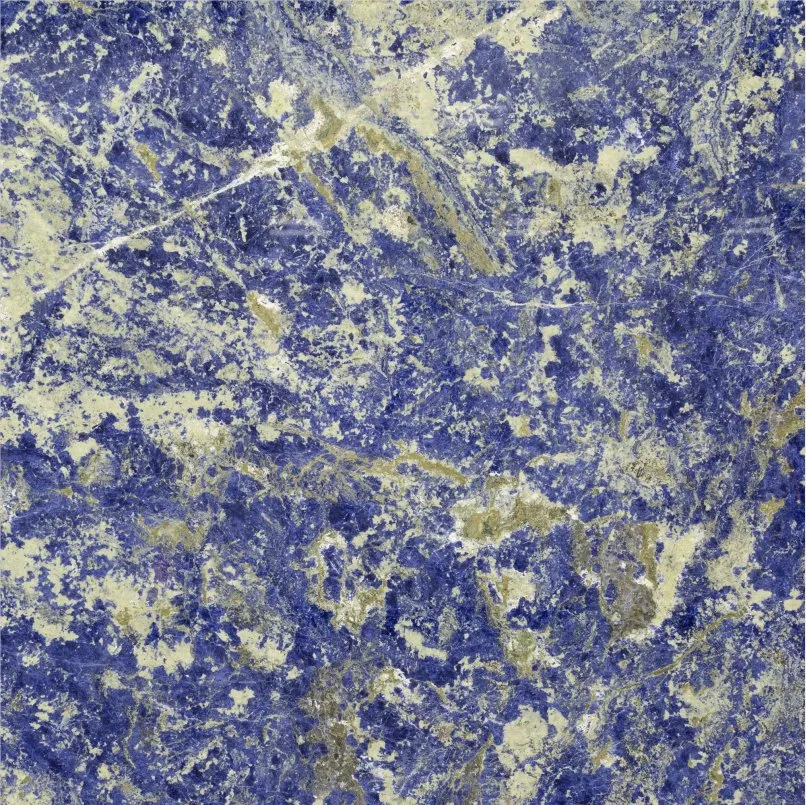
What’s the difference between quartzite and granite?Our clients frequently ask us this question. especially when they want to choose the right stone for their own kitchen.The range of possibilities for materials used on kitchen countertops or other renovation projects might be daunting. Among the most often chosen are quartz, granite, and quartzite. Granite and quartzite are both natural stones. They have significant and important variations. Our HRST Stone will explore 5 key differences between these two granites and quartzite, so you might decide with this stone knowledge.

1 Quartzite and Granite: Different Formation Process
Quartzito
Quartzite is a sedimentary rock that forms from the sedimentation of quartz particles, feldspar, and other minerals. Usually, ecosystems like rivers, lakes, and oceans shape sandstone. Long-term sedimentation and compaction transform it finally into a solid rock layer.
The movement of the earth’s crust drives the sandstone layer deeper and deeper into the crust, where it finds a high-temperature and high-pressure environment. Under this process, the sandstone’s quartz particles start to recrystallize. Originally, free quartz particles melted and fused with each other gradually at high temperatures and high pressure. The quartz particles in the sandstone recrystallise at high temperatures and pressures. The process of recrystallization produces a solid structure, fewer gaps between the quartz particles, and increased density for the particles. Furthermore, it is considerably raised, and the internal structure of quartzite becomes more homogeneous with this recrystallisation process. Sandstone finally becomes quartzite over a protracted period of great temperature and pressure.
Usually, more than 90% of the quartz mineral composition in quartzite makes it quite strong and tough. Furthermore, changing in this process are the colour and texture of quartzite, which produces an original look. Quartzite layers may be pushed to the surface or near the surface as time passes and geological formations evolve.
Natural processes like weathering, erosion, and exfoliation expose quartzite in this process, turning it into a resource that humans can use. Among the several colours available in quartzite are green, grey, yellow, brown, orange-red, white, blue, purple, red, etc.


Granito
Deep underground hot magma that rises to a specific area of the earth’s crust (typically below 3 km) and condenses, resulting in the formation of natural granite.
In this process, the volume shrinks, and cracks are generated in the granite body. After geological movements such as collision, deformation, and fracture of the earth, granite eventually emerges on the surface with the rise of mountains and hills.
As the granite body gets closer to the surface, groundwater action speeds up. This changes the feldspar minerals into clay minerals, especially along the edges and corners cut by primary joints. This creates spherical weathering and “stone egg” landforms.
Rock properties have a significant impact on the development of granite landforms. Its hard and dense characteristics often form steep and high mountains. At the same time, due to the rich joints, spherical weathering occurs, forming dense valleys and river valleys.
When a volcano erupts, the melt containing dust-like volcanic rocks solidifies on the surface, which promotes the formation of quartz, which may also be a way of forming granite. The material deep in the crust melts under high-temperature conditions to form melts, and these melts form granite during cooling and solidification.


2: Quartzite and Granite: Different Appearance and Texture
There is a big difference in colour between quartzite and granite.Renowned for its striking, marble-like look, quartzite comes in white to grey and spans red, green, black, pink, blue, and other colours. Even the same colour has different types, such as white quartzite like Bianco Superiore Quartzite, white pearl quartzite, Perla Venata Quartzite, Patagonia Quartzite, and quartzite cristallo, which has a special transparent characteristic that makes it especially interesting under light. Quartzite’s inherent veining patterns are typically exquisite and can provide any area with a sophisticated touch.


One of the biggest differences between quartzite and granite is that granite has a special black spot texture.Rich in colours and patterns, granite ranges from dark black to bright white and red .Even the same white granite colours have different . like Moon white granite, Salinas white granite, Viscon white granite, Delicatus white granite, Pitaya white granite, and Viscont white granite.The several minerals that make it up produce speckled, veined, or solid patterns that define its unusual look. Granite’s polished finish accentuates its inherent shine, which makes it a common option for both classic and contemporary design philosophies.
3: Quartzite and Granite: Different Durability and Maintenance
Quartzite is among the hardest naturally occurring stones, having a Mohs hardness score of 7. This hardness is perfect for high-traffic areas because it is resistant to abrasion and scratching. Moreover, its non-porous nature reduces liquid absorption, thereby avoiding stains and simplifying quartzite care.


Moulin Rouge Quartzite Tile for restroom sink
Granite also shows outstanding durability; its Mohs hardness range runs from 6 to 7. Though it is much less brittle than quartzite, it is nonetheless very scratchable and chip-resistant. Granite’s heat tolerance—which helps it sustain high temperatures without breaking—is another main advantage. Granite’s porous nature, however, lets it absorb liquids and stains; consequently, frequent sealing is required to maintain its sanitary attractiveness.
Granite and quartzite have a slight difference in hardness, but there is not much difference in maintenance. The maintenance methods for natural stone are the same.
4: Quartzite and Granite: Differently Suitable Applications
In daily life, the similarities between quartzite and granite are reflected in the kitchen, kitchen countertops, and bathroom vanities, and the differences are mainly on the wall.
Quartzite is used in home decoration in living room and kitchen due to its excellent elasticity and beautiful appearance, such as in the living room floor and wall cladding. In interior decoration design, there are bar countertops, tabletops, coffee tables, and sofa tables. Side tables. Stone crafts. Stone furniture. Stone base, except for kitchen countertops; other uses are the same as marble,Exterior and interior wall and floor applications, monuments, countertops, mosaic, fountains, pool and wall capping, stairs, and window sills can be covered with crystal-containing quartzite with LED light strips and can make backlit quartzite, which greatly enhances the pursuit of luxury by villa customers. Additionally, designers and architects favour quartzite for its natural beauty and vibrant colours when creating exquisite and timeless environments.


Kitchen countertops, floors, exterior wall cladding, and monuments are just a few uses of granite. In recent decades, granite has been used as exterior wall decoration, landscape stone, outdoor square fire-burned surface paving stone, waterfall and fountain, granite table, and bench. Fence and guardrail construction in parks, gardens, and other outdoor places. Public area steps. Carved granite. Water jet granite. Outdoor monuments, grovestones, sculptures, and other stone art works, from classic to modern, are used in a wide range of applications. In most cases, they are used outdoors.
5: Quartzite and Granite: Differently in cost
There are different ‘grades’ of each marble, each with slightly different characteristics. The same is true for quartzite and granite, which are two different types of natural stone. Quartzite is usually more expensive due to the difficulty of mining and processing. The same type of stone slab also has different prices due to different grades. Unless the quality is ordinary, the price of regular quartzite is usually between $50 and $100 per square foot.


The price range of granite is quite wide, from less than $10 per square foot to more than $200 per square foot. Low unit prices are commonly used in engineering construction projects. Due to budget control and the pursuit of stone stability, granite is usually selected. In general, granite is cheaper than quartzite, but higher-end and high-quality granite is still somewhat expensive. So it cannot be generalised, so in the quotation link for quartzite and granite, we need to confirm the board surface, thickness, specifications, and edge treatment method required by the customer before we can make a comprehensive quotation. We must be responsible for every stone price we quote, and all prices are accurately calculated.
HRST Stone wants to say more about Quartzite and Granite
Between quartzite and granite, each stone has special uses and advantages. The extreme hardness and non-porous nature of quartzite make it ideal for high-use environments where low maintenance and durability are a priority. Its lovely, marble-like appearance adds a touch of elegance to any area. Conversely, the wide range of tones and patterns of granite, coupled with its durability and heat resistance, makes it a flexible and popular material that can be used for a variety of purposes.
Both quartzite and granite can enhance the functional and decorative value of your home. Understanding their main variations will enable you to make an informed decision based on your design tastes, budget, and requirements. Whether you choose the exquisite durability of quartzite or the adaptable beauty of granite, either decision will bring special benefits to your area.
I hope that the 5 differences between quartzite and granite described in this article by HRST Stone can help you, and in the future or now, you can be flexible in choosing the right stone for your home and choose a suitable and cost-effective customised stone.

Perguntas Frequentes
1. Qual é a diferença geológica fundamental entre o quartzito e o granito?
Embora ambos sejam pedras naturais, eles se formam por processos diferentes. Granito é uma rocha ígnea formada pelo resfriamento de magma fundido nas profundezas da Terra. Quartzito é uma rocha metamórfica que começou como arenito e foi transformada por calor e pressão intensos. Essa diferença na origem confere a cada pedra sua composição mineral distinta e um caráter estético único.
2. Como essas duas pedras se comparam em termos de dureza e durabilidade?
Ambos os materiais são incrivelmente duráveis, mas o quartzito é geralmente mais duro. Na escala de dureza mineral de Mohs, o granito normalmente fica em torno de 6 ou 7, enquanto o quartzito costuma ficar em torno de 7 ou 8. Isso torna o quartzito ligeiramente mais resistente a riscos, embora ambos sejam considerados opções superiores para ambientes de cozinha com alto tráfego em comparação com o mármore.
3. Qual pedra oferece mais variedade de cores e padrões?
O granito é conhecido por seu aspecto “marmoreado” ou “sal-e-pimenta”, com uma vasta gama de cores, incluindo pretos, cinzas e rosas. Já o quartzito frequentemente imita as veias elegantes e fluidas do mármore, oferecendo um visual mais sofisticado e artístico. Se você deseja a beleza do mármore, mas precisa da resistência de uma pedra dura, Estrela do Século recomenda-se frequentemente o quartzito por sua estética pinturística.
4. Existe uma diferença significativa na manutenção e vedação?
Ambas as pedras requerem relativamente pouca manutenção, mas são naturalmente porosas em graus variados. O granito normalmente precisa ser selado uma vez a cada um ou dois anos, dependendo do uso. Como o quartzito costuma ser mais denso, ele pode ser ainda mais resistente à umidade, mas algumas variedades ainda podem exigir selagem periódica. Para ambos, é essencial utilizar um limpador de pedra neutro em pH para preservar seu brilho natural.
5. Como o quartzito e o granito se comparam em termos de custo e investimento?
Geralmente, o quartzito é mais caro que o granito. Isso se deve à sua raridade e ao fato de ser um material mais difícil de extração e fabricação, exigindo ferramentas diamantadas especializadas. Enquanto o granito oferece um excelente equilíbrio entre valor e durabilidade, o quartzito é considerado um investimento de luxo de alto padrão que adiciona um caráter exclusivo significativo e valor de revenda a uma propriedade.