


Panda Marble in Stone: A Visual Anchor of Black and White
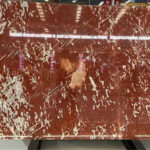
When a block of marble from Ya’an, Sichuan, named “Panda White” for its panda-like black veins, is cut into a 2.2-meter-long bench, the entire space seems frozen in time. Against the milky white background, ink lines converge and diverge, some resembling naive profiles, others like mountains looming through the mist. This natural contrast allows the bench to become a striking “white space” in a hallway, living room, or courtyard, without the need for additional decoration. The mining area is located in the Longmenshan Fault Zone, where the rock strata have undergone repeated tectonic compression. The calcite veins have been compressed and dissolved into fine “ink lines,” while the pure white of the surrounding rock has been preserved, creating a “mountain-shaped cloud shadow” with a distinct oriental ink painting aesthetic. Due to the thin veins and scarce reserves, less than 3,000 tons can be mined annually, making each piece of Panda White inherently numbered and limited.
From Block to Seat: How to Tame an “Ink Painting”
Stone seating is most vulnerable to being “brittle” and “heavy.” The designers kept the seat thickness to 20mm, then bonded 5mm honeycomb aluminum to the back, reducing weight by 35% while still being able to withstand a uniformly distributed load of 1.5kN/m². The bottom is framed with a 30x30mm black stainless steel flat steel frame in the shape of a “Hui” character, which not only echoes the ink pattern in color but also conceals the adjustable feet. The 2cm “floating” effect gives the bench the illusion of floating rice paper. Before processing, the rough material undergoes X-ray crack scanning, and the ink line direction and mechanically weak surfaces are simultaneously input into the CAM system to ensure that each “ridge” avoids critical load-bearing areas, thereby increasing the utilization rate from the conventional 45% to 72%. After cutting, the rough block is first vacuum-vibrated and reinforced, and then a five-axis water jet is used to mill the honeycomb grid on the back, reducing weight while maintaining a bending-resistant cross-section.

Form Strategy: Three Lengths, Three Narratives
The 0.9m “Single Seater” is suitable for entryways or elevator lobbies, with a 1:1 ratio of white space to ink patterns, resembling a vertical scroll. The 1.5m “Double Seater” is placed near floor-to-ceiling windows, allowing for both sitting and lying, with the black and white patterns flowing smoothly into a “long scroll.” The 2.2m “Triple Seater” is suitable for hotel lobbies or public corridors, with enough length to allow the ink patterns to complete their “rise, development, transition, and closure,” creating the illusion of a mountain ridge stretching across the clouds from a distance. The seat width is a uniform 34cm, slightly smaller than a typical bench, creating a slimmer effect and preventing the black and white contrast from overwhelming the space. The thickness is slightly curved at 3mm. When seated, the contact surface between the buttocks and the stone changes from a “line” to a “surface,” reducing pressure and preventing prolonged sitting from feeling stiff or cold.
Light and Shadow: Making “White Space” Perceptible
The polished surface boasts a gloss of ≥85GU, amplifying black lines and shadows in sunlight, creating a dynamic ink-wash effect. The flamed and sandblasted finish reduces the gloss to 15GU, creating a rough, wet-looking surface like rice paper, perfect for outdoor gardens. Rain brings the ink color deeper, while the white background becomes more translucent. The seat features a subtle 3mm curve and a 20mm thermal conductivity thickness, ensuring it remains warm in summer and icy in winter, making it suitable for seating in all seasons. Even more refined is the thermal conductivity of the stone: its thermal conductivity is 2.7W/(m·K), higher than wood but lower than metal. With a thickness of 20mm, it reaches thermal equilibrium with room temperature within 10 minutes, ensuring comfortable seating, whether in midsummer or deep winter.

Scene Script: A Bench’s “Directorship of Space”
Home Entryway: Juxtaposed with walnut grilles, the triple material palette of black, white, wood, and stone creates an oriental atmosphere upon entering; Gallery Corridor: A 2.2-meter bench is centered, allowing visitors to sit and admire paintings, becoming a “three-dimensional exhibit” in its own right; Roof Garden: A flamed surface version is combined with black gravel and white sand to create a “mountain and water bonsai.” At night, floor lights project ink patterns onto the walls, doubling the spatial depth; Commercial Exhibition Hall: Three staggered lengths guide movement, guiding visitors along the “ridge” to the next exhibition area. On the City Balcony near Chengdu’s Tianfu Greenway, a 4,000-square-meter flamed surface, Panda White, rotated 45 degrees through a “wave direction,” creates two visual “streams.” After three years of an average of 30,000 daily footfalls, only 0.1mm of superficial wear has been observed, demonstrating its suitability for use in high-traffic public areas.


Craftsmanship and Maintenance: Daily Protection for “National Treasure” Stone
Water-based fluorocarbon protection on all six sides eliminates residue from soy sauce and coffee within 24 hours. A 2mm EPDM cushion is placed between the stainless steel frame and the stone surface to eliminate hard impact noise and stress concentration. Nano-crystal polishing is performed every 12 months to restore the gloss to factory-quality levels. If scratches occur, wet sanding with 800#-1200# sandpaper followed by spot polishing achieves a seamless repair. In extremely cold regions, it is recommended to add a 10mm permeable underlayment behind the dry masonry and use a flexible, crack-resistant mortar to prevent interlayer delamination caused by freeze-thaw cycles. For coastal projects, all metal components are upgraded to A4-80 super stainless steel to resist chloride ion corrosion.
Sustainability and the Future: The “Second Lifecycle” of Limited Mineral Resources
Panda White’s mineral veins are thin and reserves are limited. The brand has pledged a “One Stone, One Tree” initiative: for every bench sold, a spruce tree is planted in the mining area and 10kg of carbon sink forest is donated. Ten years later, consumers can return the bench to the factory for free refurbishment and conversion into a coffee table or art installation, completing its “second life.” From mountains to the living room, and back again, this white panda bench truly integrates the white space of oriental landscapes into the story of contemporary life. In the future, the brand will incorporate blockchain traceability, allowing users to scan a QR code to view “ink line map, mining date, and tree planting number,” making every seat a tribute to nature’s limited gift.