


The first time I walked into a century-old Bund villa, the white stair tread spiraled upwards, like a silent yet striking ribbon. The cool, delicate feel of the stair tread brushing against my fingertips was a texture that wood and tile could never replicate. Natural marble is used repeatedly in high-end residences, star-rated hotels, and art galleries for more than just its aesthetic appeal. Its Mohs hardness of 3–4 is enough to withstand the impact of high heels for ten thousand years. Its fine structure resists deformation even when exposed to moisture. A single 30mm thick piece of fish-belly white marble can achieve a glossy finish exceeding 85°. With the lights on, the stair tread naturally becomes a “sculpture” in the space.


However, those who truly want to install marble treads in their homes are often deterred by three factors:
Price uncertainty—what’s the difference between “600 yuan and 1,800 yuan per tread”?
Slight deviations in size—the tragedy of “a 2mm difference and it won’t fit” happens year after year.
Later-term cracking and alkali reaction—the shocking “failure” photos posted on social media. In today’s article, we’ll break down the marble stair tread into a standardized production line: from mine to your home, from budgeting, measurement, paving, maintenance, and renovation. Each step will include the latest construction methods, market prices, and pitfall avoidance tips for 2025. After reading this, you’ll feel like a director, personally controlling the light and shadow of every shot.
Stone Selection and Pricing—Calculate the Cost First

Decide on the Style, Then Select the Variety
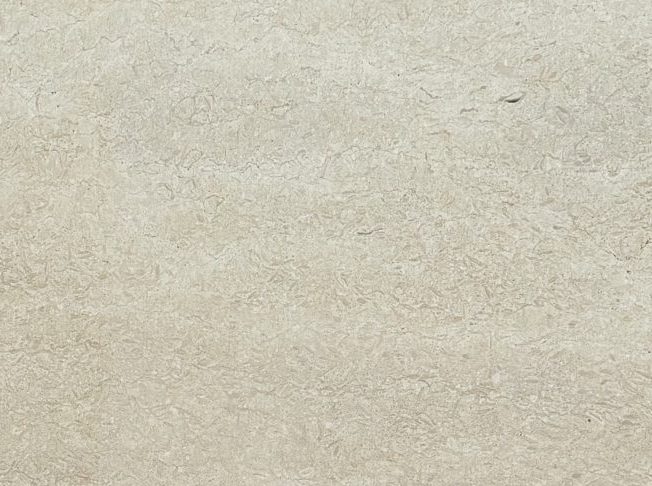
• Minimalist Cream: Choose Fish Belly White, Snowflake White, or Elegant White;
• Light Luxury Italian: Choose Italian Gray, Hermès Gray, or Castle Gray;
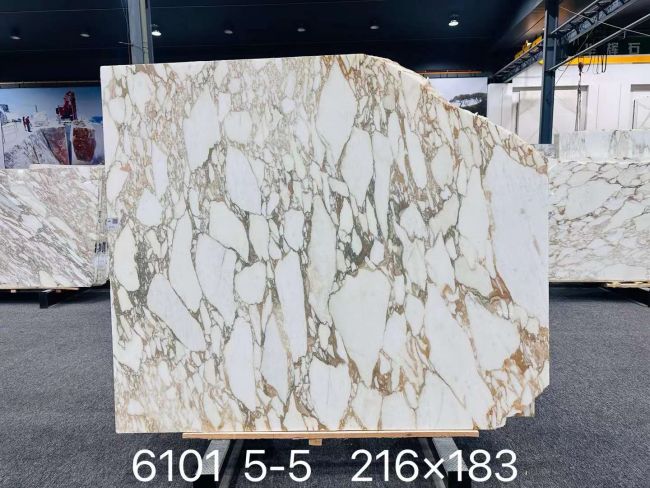
• Dark Industrial: Choose Black and White Roots or Lauren Black Gold.
Physical Specifications Must Be Included in the Contract
• Flexural Strength ≥12 MPa (values below this will cause the tread to break under concentrated load);
• Anti-Slip Pendulum Value ≥36 (required for homes with elderly and children);
• Water Absorption ≤0.25% (no water spots during rainy seasons in the South). 2025 East China Stone Market Price (Including Tax) (30mm Thick, with Double Chamfers and Anti-Slip Grooves)
• Snow White 680–780 RMB/step
• Fish Belly White 1200–1600 RMB/step (Scarce Minerals, 45-Day Order Waiting Time)
• Hermès Gray 750–850 RMB/step
• Italian Wood Grain 900–1050 RMB/step
• Black and White Roots 580–680 RMB/step
Choose from three pricing options:

• Per-step pricing: The most transparent option, suitable for straight stair tread;
• Per-component pricing: Railings, handrails, and capitals are listed separately, suitable for European-style luxury stair tread;
• Complete Stair tread Package: Design and installation included at a fixed price from the manufacturer, perfect for those who prefer a more relaxed approach. For example, a 15-step straight stair tread with 30mm white slabs costs 10,200 yuan. For full-length L-shaped treads (including curved risers), the unit price increases by 25%. Ask the manufacturer to provide a “six-sided protection report” before ordering to avoid the risk of alkali reversion later.
Measure and lay out—a 2mm error means installation won’t work.
Measurement is the lifeblood of marble treads. We break it down into a “three-pronged formula” and “three laser guns.” Three-pronged Formula
① Tread Width W = (Total Horizontal Projection Length + 20 mm Facade Thickness + 10 mm Mortar) ÷ Number of Steps
② Facade Height H = (Story Height – 30 mm Slab Thickness) ÷ Number of Steps
③ Total Tread Length = Original Structure + 40 mm (20 mm overhang at each end to facilitate skirting edge finishing)
Three Laser Guns
• Laser Level: Marks the finished floor surface to avoid “treads that overlap” or “risers that are too high”;
• Laser Rangefinder: Verifies each tread, using an electric pick to level any deviations >3 mm;
• Laser Marker: Creates a “double line” on the wall—the tread finish + the riser finish—for workers to clearly identify during installation.


High-Tech Spiral Stair Tread
Use the 2025 version of the “Shi Pai Tong” plug-in to automatically generate a CNC path by inputting the radius, starting angle, and ending angle. Each slab is laser-numbered, allowing for on-site “blind installation” with zero rework. 3 Must-Dos on-site
• Check the flatness of each step with a 1-meter level;
• Verify the clear height from the last step to the finished floor to prevent “half-step height” errors;
• Take photos and videos for record to prevent later disputes.


Factory Processing – Cutting the Mine into “Lego”
Large Slab Cutting: Infrared bridge saw cuts a 3-meter-long slab in one pass, with a diagonal error of ≤0.5 mm;
Shaping: The L-shaped step is formed in one piece using a five-axis water jet, with smooth R3 external corners to prevent dust from accumulating;
Anti-Slip: Two 3 mm x 3 mm anti-slip grooves are provided on the leading edge, with R2 rounded corners to prevent scratching even with bare feet;

Protection: Six-sided oil-based penetrant and surface nano-fouling agent for 72-hour curing;
Packaging: Pearl cotton + corner protectors + fumigated wooden crates to ensure zero damage during long-distance transportation. Tiling—A 10-step process, suitable for winter applications.
Base: Sweep, degrease, and chisel any pits. Use repair mortar for bumps >5 mm.
Marking: Use a laser marker to create a double line.
Trial assembly: Arrange 15 treads and 15 risers according to numbering, placing those with large color differences under the bed.
Apply primer: Apply primer to walls, floors, and facades to improve adhesion.
Apply glue: Apply the most popular epoxy marble glue of 2025, which cures even at -5°C and has a shear resistance of 1.5 MPa.
Sequence: Apply to the facade first, then the flat surfaces, from bottom to top to avoid missing steps.
Tapping: Gently tap the four corners with a rubber hammer. A 2-meter ruler should measure ≤0.3 mm.
Joint cleaning: After 24 hours, remove any remaining glue with a joint knife and fill with epoxy colored sand.
Protection: After 72 hours, apply 5 mm PVC board throughout the entire installation. Elevator handling ensures no bumps or collisions.

Completion: Crystallized throughout, with a glossiness ≥85 GU. Maintenance and Renovation – Make Stairs Shinier with Use
Daily: Microfiber dust mop + pH7 neutral detergent, once daily;
Frequency: Stair tread crystallizer + nano-silicon crystal agent, once every quarter;
Deepening: Renovation discs 50#-3000#, step-by-step sanding + super-hard crystal paste, once every 3-5 years;
New Products for 2025:
• “Three-in-one Anti-slip and Brightening Agent” – Increases anti-slip coefficient by 15% and gloss by 20% in one application;
• Invisible Nano-Coating – Penetrates 5 mm and repels oil, red wine, and iodine for 72 hours;
Renovation Quote (East China):
• Seam filling and gluing: 15 yuan/linear meter
• Rough grinding for leveling: 45 yuan/m²
• Fine grinding to 3000#: 35 yuan/m²
• Crystal hardening: 30 yuan/m²
• Anti-slip coating: 25 yuan/m²
Based on 1 meter width Take a 15-step stair tread, for example. Each side covers 22 square meters, with a total cost of 2,900–3,400 yuan.
A stair tread, measuring the ritual of life.
When the final layer of crystallizer dries, light slowly flows along the marble veins. The stair tread becomes more than just a passage connecting floors; it gently captures the first light of each morning and the sound of every returning footstep.
From the mine to your home, marble completes a fusion of millions of years of geological evolution and human ingenuity. From stone selection, measurement, laying, to maintenance, you’ve broken down the complex process into standardized steps, allowing this expensive material to truly serve life.
The next time a guest looks up at that quietly spiraling white ribbon, they’ll see not only the stone itself, but also your uncompromising refinement in life. Every step can truly shine. It turns out it can be so simple.