



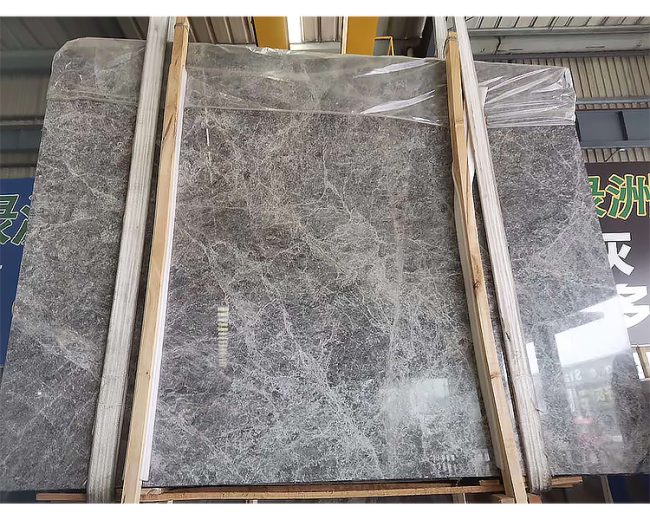
Quick Summary: Procurement teams sourcing grey marble for a kitchen island should treat the order as a complete fabricated project package rather than a simple slab purchase. The process should cover actual slab approval, acceptable color range, vein and fissure review, cutting yield, supplier verification, factory capability, CAD layout, sink and cooktop openings, mitered edges, waterfall panels, overhang support, staged quality control, reinforced export packing, and delivery documentation. Tundra Grey, Pietra Grey, Bardiglio, Grigio Carnico, and other grey marbles can produce very different visual and technical results. The safest purchasing decision is based on current slab evidence, realistic fabrication planning, transparent cost breakdowns, and controlled approvals from material reservation through shipment.
Why Buyers Misjudge Grey Marble Suppliers
Grey marble can appear straightforward to source because buyers often begin with a commercial stone name and a target price per square meter. In reality, a custom kitchen island may require several slabs, selective cutting, structural reinforcement, mitered edge work, waterfall panels, large sink or cooktop openings, dry laying, reinforced crates, and coordination with cabinetry and appliances.
Two suppliers quoting the same material name may therefore be offering very different packages. One may quote attractive slab material but exclude complex fabrication. Another may include cutting but not dry-lay inspection, packing reinforcement, or spare pieces. A third may offer a lower material rate from slabs that have less usable area because of fissures, repairs, unsuitable vein zones, or dimensions that do not match the island efficiently.
The lowest initial rate is not necessarily the lowest project cost. Procurement teams need to compare material yield, fabrication complexity, quality-control scope, packaging, freight, and replacement risk together.
Commercial Name Does Not Equal Approved Material
Names such as Tundra Grey Marble, Pietra Grey Marble, Bardiglio Marble, or Grigio Carnico Marble help define the design direction, but they do not guarantee identical appearance between suppliers or batches. Background tone, vein density, mineral movement, repairs, slab dimensions, finish, and usable yield can vary.
A supplier should therefore show the actual slabs available for the order. Catalog photographs, website images, and old project photos are useful for reference but should not be treated as material approval.
A Good Sample Can Hide a Difficult Slab
A small sample may show an attractive grey tone while the full slab contains strong color shifts, wide white veins, natural fissures, resin-filled sections, or darker areas. These characteristics may be acceptable, but they can change how the island must be cut.
Procurement teams should approve complete slabs and understand how the visible sections will be allocated before production begins.

Design Logic: Translate the Island Concept into Buying Criteria
Before requesting quotations, the procurement team should convert the design into measurable requirements. This reduces the risk of receiving visually attractive material that cannot support the intended island.
The brief should define overall island length and width, finished thickness, seating direction, visible elevations, waterfall panels, sink or cooktop position, faucet holes, edge profile, seam expectations, cabinet color, surrounding countertops, and preferred finish.
For example, a long light-oak island may suit Tundra Grey Marble with relatively calm movement. A dark architectural kitchen may use Pietra Grey Marble to create stronger contrast. Bardiglio can support cooler blue-grey interiors, while Grigio Carnico may be selected for a more dramatic statement island.
Procurement teams developing the visual brief can compare these approaches with CENTURY STAR’s Grey Marble Design Guide for Kitchen Island Projects before final slab selection.
Material Logic: Source the Actual Grey Marble, Not the Name
Confirm the Current Slab Batch
The supplier should provide current full-slab photographs and videos under balanced lighting. Each slab should be identified by number and dimension. The buyer should know how many slabs are available and whether additional material from the same or a compatible batch can be obtained if the cutting plan changes.
For large islands, adjacent slabs should be reviewed together. A single attractive slab is not enough when the project requires a top, two waterfall ends, edge strips, and spare material.
Review Background Color
Grey marble may range from pale silver and warm greige to blue-grey and deep charcoal. Procurement teams should define an acceptable range rather than approve only one close-up image.
Color is especially important when several slabs must join. A pale Tundra Grey panel beside a darker piece from another batch may create an obvious transition even when both are commercially sold under the same name.
Review Veins, Fissures, and Natural Features
Natural veins are part of marble’s value, but some veins may coincide with fissures or weaker zones. The fabricator should assess these areas before positioning sink openings, long narrow rails, mitered edges, or unsupported sections.
The best-looking vein position is not always the safest cutting position. Material selection and engineering should be reviewed together.
Confirm Surface Treatment
Grey marble may be polished or honed, and some slabs may have resin treatment or mesh reinforcement. Buyers should understand what treatment has been applied and whether the appearance remains consistent across all required slabs.
Dark polished marble can show changes in sheen, water marks, fingerprints, or etching more clearly. Honed surfaces may create a softer architectural effect but still require appropriate maintenance.

Supplier Logic: Verify the Company Before Material Reservation
A procurement team should verify that the supplier can manage both the stone and the project workflow. Selling slabs is not the same as delivering a completed custom island.
Check Current Inventory Evidence
The supplier should be able to provide slab numbers, current photographs, dimensions, quantities, thickness, finish, and close-ups of natural features. When possible, a live video review can help confirm that the slabs shown are physically available.
Check Drawing and Project Coordination Capability
The supplier should convert the buyer’s dimensions into controlled shop drawings. These drawings should show the island top, waterfall panels, edge details, sink or cooktop openings, seams, seating overhangs, reinforcement zones, and piece numbers.
Production should not rely on measurements distributed across emails, screenshots, and informal messages.
Review Commercial Transparency
Material, fabrication, packaging, and logistics should be identifiable in the quotation. Procurement teams need to understand what is included rather than compare only one total price.
Buyers carrying out supplier due diligence can also use CENTURY STAR’s marble supplier verification guide before deposit payment.
Factory Logic: Verify Where and How the Island Will Be Fabricated
The procurement team should confirm the actual fabrication route. A trading supplier may work with a capable specialist factory, while a factory-direct supplier may process the order internally. The commercial model matters less than whether production responsibility is clear and controllable.
Required Fabrication Capability
A custom grey marble island may require bridge-saw cutting, CNC machining, waterjet work, edge polishing, drilling, reinforcement, miter fabrication, bonding, surface finishing, and full dry laying.
The factory should have suitable equipment and operators experienced in natural marble. Machinery alone does not guarantee good work. The team should understand stone fissures, vein direction, fragile rails, dark-marble edge finishing, and large-component handling.
Mitered Edge Experience
Mitered edges are common when the designer wants a visually thicker island. The quality depends on accurate cutting, joint alignment, adhesive control, reinforcement, and final polishing.
Dark grey marble such as Pietra Grey may reveal light adhesive lines or small chips more clearly than pale marble. Procurement teams should review close-up examples rather than only wide photographs of completed projects.
Waterfall Panel Capability
A waterfall end is both a visual and logistical challenge. The top and vertical panel should be mapped from actual slabs so the vein transition appears intentional. The joint also needs accurate fabrication and strong protection during packing and transport.
Quality Control Logic: Inspect from Slab Selection to Packing
A structured quality-control process reduces the gap between the approved sample and mass production. Each stage should be checked before the next stage removes the opportunity for correction.
1. Material Inspection
Verify slab number, dimensions, thickness, color range, finish, fissures, resin treatment, mesh backing, chips, and repairs. Confirm that the slabs match the buyer’s approved batch.
2. Cutting-Layout Inspection
Review the CAD nesting before cutting. Confirm the position of dominant veins, seams, openings, waterfall panels, edge strips, reinforcement areas, and spare pieces.
The layout should also explain slab yield. This helps procurement teams understand why the gross material requirement may be substantially larger than the finished island area.
3. Dimensional Inspection
After fabrication, check length, width, thickness, squareness, cutout dimensions, faucet-hole positions, edge profile, seam interfaces, and miter dimensions against the approved drawings.
4. Surface and Edge Inspection
Check scratches, chips, dull spots, visible resin, adhesive lines, miter alignment, edge polish, corner quality, and any repaired areas. Lighting should be sufficient to reveal surface defects rather than conceal them.
5. Dry-Lay Inspection
The finished components should be arranged according to the intended island geometry where practical. Overall and close-up photographs should show the relationship among the top, waterfall ends, front edges, seams, sink opening, and visible veins.
6. Packing Inspection
Before crates are closed, verify all piece numbers, protection materials, support around openings, packing sequence, crate condition, and correspondence with the final packing list.
Engineering Reality Before Production
Confirm Cabinet Dimensions Before Cutting
The stone package depends on the final cabinet dimensions and level condition. Changes to panel thickness, filler strips, appliance cabinets, seating structures, or service zones can affect finished stone sizes.
Procurement teams should obtain written confirmation that the cabinetry and stone drawings are coordinated before production release.
Coordinate Sink and Cooktop Templates
Model numbers alone may not be sufficient. The factory should receive final manufacturer templates or approved cutout information for sinks, cooktops, pop-up outlets, faucets, soap dispensers, and other accessories.
Large openings create narrow stone rails that can become vulnerable during fabrication and transport. Their width and support should be assessed before cutting.
Review Overhang Support
Seating overhangs require appropriate structural support. The acceptable span depends on marble thickness, stone condition, overhang depth, loading, and support design.
Concealed steel frames, brackets, or cabinet reinforcement may be required. Stone should not be used as a substitute for structural engineering.
Understand Marble Maintenance Risk
Grey marble can etch when exposed to acidic foods and cleaners. It can also stain or scratch depending on use, finish, maintenance, and sealing. Dark grey marble may make some changes in sheen more visible.
The buyer should confirm that the end client understands these characteristics before committing to production.

Packaging, Shipping, and Delivery Risk
Kitchen island pieces are often larger and more vulnerable than standard countertop sections. A sink opening, mitered front strip, or waterfall panel can be damaged even when the main slab surface remains intact.
Use Packaging Designed for the Actual Pieces
Finished components should be secured in reinforced fumigated wooden crates with foam protection, edge guards, separators, waterproof protection, and rigid internal fixing.
Fragile areas around sink and cooktop openings may require temporary support bars or protective backing. Mitered edges should be isolated from heavier components.
Pack According to Installation Logic
Piece numbers should correspond with the approved drawings and dry-lay photographs. The crate arrangement should help installers locate pieces without repeatedly moving heavy marble unnecessarily.
Confirm Crate Size and Site Access
Procurement teams should review crate dimensions, component weights, unloading equipment, doorway sizes, lifts, staircases, corridors, and installation manpower before shipment.
A three-meter waterfall panel may leave the factory safely but still become impossible to move into the kitchen if site access was not checked.
Prepare Evidence for Claims
Keep pre-shipment photographs, QC reports, crate photographs, packing lists, commercial documents, and freight records. Cargo insurance and claim responsibilities should be clarified before dispatch.
If damage occurs, the receiving team should document external crate condition and internal damage before removing or disposing of the packaging.
Procurement Logic: Compare Complete Project Cost
Separate Material and Fabrication Costs
A professional quotation should distinguish slab material from cutting, CNC work, sink and cooktop openings, mitered edges, reinforcement, polishing, dry layout, packaging, and logistics.
This structure helps buyers understand why two suppliers offering similar marble can have substantially different totals.
Calculate Gross Slab Requirement
Procurement teams should not calculate budget only from the island’s finished square meters. Natural slab dimensions, vein orientation, fissures, waterfall continuity, seams, edge strips, and spare pieces all influence actual material consumption.
Evaluate Replacement Risk
Replacing one damaged component later may be difficult because a new grey marble batch can have a different tone or vein pattern. Critical projects should consider spare material from the original approved slabs.
Review Price in the Context of Grade and Yield
Marble prices can change according to quarry source, visual grade, block quality, slab dimensions, treatment, scarcity, finish, and market availability. Procurement teams looking at broader budget logic can refer to CENTURY STAR’s marble pricing structure guide.
Global and Market Insight
International stone procurement is becoming increasingly visual and document-driven. Full-slab videos, digital slab numbering, CAD nesting, remote inspections, dry-lay photography, dimensional records, and packing photographs allow buyers to control projects without being physically present at every production stage.
Another shift is away from selecting marble purely by prestigious commercial names. Professional buyers increasingly compare usable slab size, visual range, fabrication risk, availability, replacement potential, and delivered cost.
For grey marble kitchen islands, this often means that a well-selected Tundra Grey or Bardiglio batch may provide better project value than a more expensive material that has difficult dimensions or excessive waste. Procurement quality comes from matching the right slabs with the right project rather than automatically choosing the most expensive option.
Grey Marble Kitchen Island Supplier Evaluation Table
| Evaluation Area | Evidence to Request | Warning Sign | Procurement Action |
|---|---|---|---|
| Slab availability | Current numbered slab photos, videos, sizes, and quantities | Only catalog images or samples are available | Do not release deposit for material reservation until actual slabs are confirmed |
| Batch consistency | Several slabs photographed under comparable lighting | Only the best individual slab is shown | Approve an acceptable color and vein range |
| Factory capability | Miter details, large cutouts, waterfall work, equipment, and similar projects | Supplier cannot show the fabrication location or process | Arrange video verification or factory inspection |
| Engineering | Approved CAD drawings, cutouts, overhang supports, seams, and edge profiles | Production starts from approximate dimensions | Release cutting only after final drawing approval |
| Quality control | Slab checks, dimensional records, surface inspection, dry lay, and packing photos | Only completed-crate photographs are supplied | Create staged QC approval points |
| Quotation | Separate material, fabrication, packing, and logistics scope | One low price with unclear inclusions | Compare total delivered project scope |

Common Procurement Mistakes
Buying by Stone Name Alone
The name does not control color range, slab dimensions, natural features, or usable yield. Procurement should be based on actual numbered slabs.
Approving Only One Attractive Slab
A multi-slab island package requires compatible materials. All required slabs should be reviewed together before reservation.
Ignoring Fissures During Vein Layout
A dramatic vein can be visually attractive but unsuitable for a narrow sink rail or mitered edge. Engineering review should override purely decorative placement when necessary.
Comparing Only Material Price
Low slab prices can be offset by low yield, additional fabrication, weak packaging, or replacement risk. Procurement teams should compare complete delivered packages.
Starting Production Before Appliance Confirmation
Changing sink, cooktop, faucet, or cabinet specifications after cutting can make finished components unusable.
Treating Packaging as a Minor Cost
Waterfall ends, large openings, polished surfaces, and mitered edges require engineered protection. Poor packing can destroy value created during fabrication.
FAQ
1. How should procurement teams verify a grey marble supplier?
They should verify current slab inventory, company information, fabrication location, similar kitchen island experience, CAD capability, quality-control procedures, dry-lay space, packaging methods, export records, and communication discipline before production.
2. Is a small grey marble sample enough to approve the order?
No. A sample cannot show full-slab color variation, vein scale, fissures, repairs, usable area, or compatibility between several slabs. Numbered full slabs should be approved before cutting.
3. What QC photographs should buyers request before shipment?
Buyers should request actual slab photographs, cutting-layout confirmation, dimensional inspection images, close-ups of edges and cutouts, full dry-lay photographs, piece numbers, temporary reinforcement, packing protection, and closed-crate photographs.
4. How should grey marble kitchen island components be packed?
They should be secured with foam, separators, edge guards, waterproof protection, rigid support around vulnerable openings, and reinforced fumigated wooden crates. Piece labels should correspond with shop drawings and the packing list.
5. Which grey marble is best for a custom kitchen island?
There is no universal best option. Tundra Grey may suit calm contemporary kitchens, Pietra Grey works well for dark architectural designs, Bardiglio offers cooler silver-blue movement, and Grigio Carnico provides stronger drama. The final choice should depend on actual slab quality, dimensions, pattern, budget, and maintenance expectations.
6. What should procurement teams compare before placing an order?
They should compare actual approved slabs, gross material quantity, fabrication scope, cutting yield, finish, edges, cutouts, reinforcement, seams, waterfall panels, QC process, packing, lead time, freight scope, spare material, and replacement procedures rather than comparing slab price alone.
Final Note / Practical Takeaway: Procurement teams source grey marble for kitchen island projects successfully when they control the complete sequence from design brief to delivery. Actual slabs should be approved and reserved, visual variation should be defined, the fabrication factory should be verified, CAD layouts should be finalized before cutting, structural and appliance details should be coordinated, quality should be inspected in stages, and packing should be designed around the real components. The strongest purchasing decision is not simply the lowest grey marble price; it is the package that delivers the approved material, accurate fabrication, documented quality, and manageable installation risk.
References
- Natural Stone Institute. Dimension Stone Design Manual, current applicable edition.
- Natural Stone Institute. Natural Stone Care and Maintenance Guidance, current applicable guidance.
- ASTM International. ASTM C503/C503M, Standard Specification for Marble Dimension Stone.
- ASTM International. ASTM C1528/C1528M, Standard Guide for Selection of Dimension Stone.