


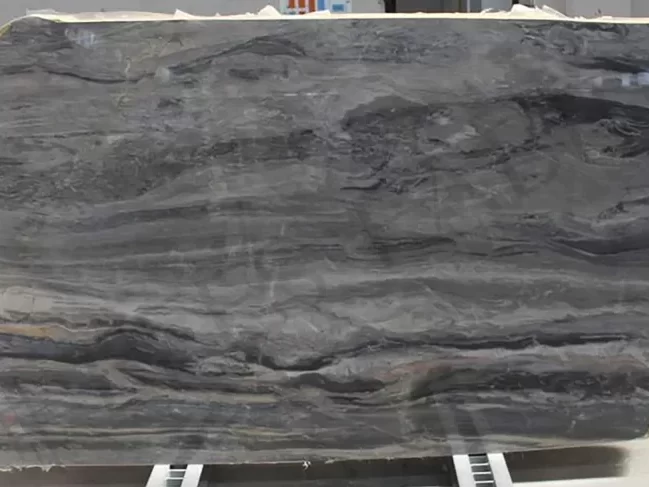


In the world of luxury architecture, high-end natural stone remains the undisputed king. This article explores why architects and developers consistently prioritise natural materials over synthetic alternatives. We delve into the critical aspects of design specification, the unparalleled material longevity of stone, and how high-end projects leverage these assets to ensure long-term value retention and aesthetic superiority.
2. The Timeless Allure of the Earth
Picture a grand hotel lobby in Mayfair or a sprawling villa in the Hamptons. You walk across a floor of book-matched Calacatta marble, the veins flowing like a frozen river. There is a coolness to the touch, a weight to the atmosphere, and a visual depth that no porcelain tile can truly replicate.
A developer once joked, “You can fake the look, but you can’t fake the soul.” That “soul” is exactly why high-end natural stone continues to dominate the premium market. It isn’t just a surface; it’s a statement of permanence.
3. User Pain Points in Premium Stone Selection
-
The “Replica” Temptation: With high-quality porcelain and sintered stone improving, many stakeholders wonder if the maintenance of natural stone justifies the cost.
-
Specification Errors: Choosing the wrong stone for the wrong environment (e.g., porous marble in a high-traffic commercial bar) leads to staining and premature wear.
-
Sustainability Scrutiny: International buyers are increasingly concerned with the carbon footprint and ethical sourcing of quarried materials.
4. Why High-End Projects Demand Natural Stone
4.1 Unmatched Tactile Quality & Uniqueness
Every slab of high-end natural stone is a limited edition of one. In high-end projects, the goal is often to create a “wow” factor that cannot be duplicated. Whether it is a feature wall in a penthouse or a bespoke fireplace, the organic variations in tone and texture provide an artistic edge.

-
Design Tip: Use “book-matching” (placing two mirror-image slabs side-by-side) to create a focal point that serves as functional art.
4.2 Material Longevity and Restoration
Unlike synthetic materials that must be replaced if chipped or scratched, material longevity is a core characteristic of stone. Natural stone can be ground down, re-polished, and restored to its original glory decades after installation. This makes the design specification of stone a more sustainable choice in the long run.
-
Operational Perspective: High-end hotels prefer stone because a “refresh” only requires a professional polishing crew, not a full demolition and reconstruction.
4.3 Value Retention and Resale
Real estate data consistently shows that properties featuring high-end natural stone command higher resale prices. It is perceived as a “hard asset” that adds intrinsic value to the building’s equity.
5. Comparative Analysis: Villas vs. Hotels vs. Clubs
| Project Type | Priority | Recommended Stone | Design Specification Focus |
| Luxury Villas | Personal Expression | Rare Marble, Onyx | Aesthetics, Book-matching, Vein Flow |
| Luxury Hotels | Durability & Impact | Granite, Hard Limestone | Slip Resistance, Traffic Loads, Stain Resistance |
| Private Clubs | Ambience & Texture | Travertine, Basalt | Tactile Feel, Lighting Interaction, Acoustic Softness |
6. Technical Design Specification: Getting it Right
To ensure material longevity, the design specification phase must be rigorous.

Key Technical Indicators:
-
Water Absorption: For outdoor or wet areas (SPAs, pools), a low absorption rate is vital to prevent frost damage or mould.
-
Compressive Strength: Crucial for flooring in high-end projects with high footfall.
-
Slip Resistance (PTV): In the UK and EU, stones must meet specific Pendulum Test Values to ensure safety in public spaces.
Expert Insight: Always request a “range sample” or a full-slab viewing. Natural stone varies; a 10cm x 10cm sample cannot represent the movement of a 3-metre slab.
7. Market Trends: Sustainability and The Circular Economy
The stone industry is evolving. Modern high-end projects now demand transparency in the supply chain. Material longevity is being rebranded as “Ultimate Sustainability”—the idea that a floor that lasts 100 years is far better for the planet than a floor replaced every 15 years.
Furthermore, the rise of ultra-thin compound slabs is allowing designers to use high-end natural stone in weight-sensitive areas like yacht interiors and lift cabins, merging traditional beauty with aerospace technology.
8. Style and Application Recommendations
-
The “Seamless” Transition: Use the same stone for indoor flooring and outdoor terraces. Specify a “Honed” finish for indoors and a “Textured/Flamed” finish for outdoors to maintain visual continuity while ensuring safety.
-
Kitchen Masterpieces: For kitchen islands, specify a 30mm thickness. It provides a sense of luxury and allows for intricate edge detailing that 12mm synthetics simply cannot offer.
-
The Wellness Retreat: In SPA environments, natural stones like Travertine provide a thermal mass that holds heat, enhancing the sensory experience of the user.
9. Conclusion: The Luxury Choice is a Smart Choice
Choosing high-end natural stone is an investment in both beauty and time. By focusing on correct design specification and understanding the factors that contribute to material longevity, developers can create high-end projects that transcend fleeting trends. Natural stone isn’t just about how a building looks today—it’s about how it will be admired a century from now.
Ready to specify stone for your next landmark project?
View our curated Stone Collection or Request a Full-Slab Sample from our project consultants today.

10. FAQ
Q1: Is natural stone harder to maintain than porcelain?
While it requires sealing, the trade-off is repairability. Porcelain is “maintenance-free” until it cracks—then it is unfixable. Stone can be restored indefinitely.
Q2: What is the most important part of a design specification for stone?
The “Finish” (Polished, Honed, Leathered). The finish dictates both the look and the slip resistance, which is a legal requirement in commercial high-end projects.
Q3: Can natural stone contribute to LEED or BREEAM points?
Yes, particularly through its durability (longevity) and the fact that it is a 100% natural, recyclable material.
Q4: Why is my stone sample different from the delivered slab?
This is the “uniqueness” factor. Stone is a product of nature. We recommend “dry-laying” the slabs at the factory before shipping to ensure the grain flow meets the architect’s vision.
Q5: Which stone is best for high-traffic commercial areas?
High-density granites and certain hard limestones or quartzites are preferred for their resistance to abrasion and acidic cleaners.
Q6: Does stone help with property value?
Indisputably. In the luxury residential sector, natural stone is often listed as a primary feature in real estate marketing to justify premium pricing.