


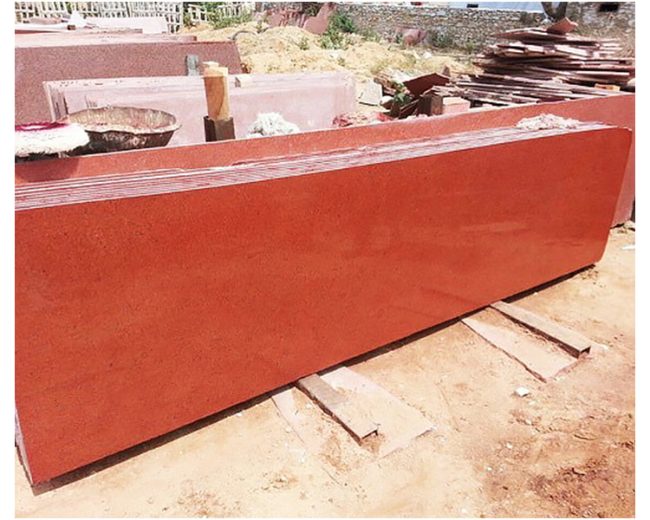
Quick SummaryYes, natural Quartzite can stain, but it should not be assumed that every Quartzite stains easily. The risk depends on the actual stone, finish, existing resin or treatment, exposure to oils and colored liquids, how long a spill remains on the surface and whether a compatible impregnating treatment is appropriate. Sealing can improve stain resistance, but it does not make Quartzite stain-proof.
Does Quartzite Stain Easily?
Quartzite can stain, but the answer is not simply “yes, easily” or “no, never.” Natural Quartzite varies from stone to stone and even between slabs sold under the same commercial name.
A dense finished surface may show relatively little liquid absorption, while another slab or finish may respond differently. Oils, coffee, wine, sauces and other colored liquids can also behave differently from plain water.
For a countertop buyer, the useful question is therefore: How stain-resistant is this actual Quartzite, in this finish and treatment, under the way the countertop will really be used?
Direct Answer
Do not buy Quartzite on the promise that it is “stain-proof.” Confirm the actual stone and finish, ask what factory or fabrication treatment has already been applied, evaluate whether an impregnating sealer is appropriate, and establish a practical spill-cleaning routine before daily use.
What Changes the Staining Risk?
| Question Factor | Practical Answer | Buyer Check |
| Actual Quartzite | Different natural Quartzites can interact with liquids differently. | Base care decisions on the actual material being supplied. |
| Surface Finish | Polished, honed and textured surfaces may not behave identically. | Evaluate the specified finished surface, not another sample finish. |
| Existing Treatment | Resin or previous treatment may influence the finished surface. | Ask what treatment has already been applied. |
| Sealer | A compatible impregnator can improve stain resistance where appropriate. | Confirm compatibility with the actual Quartzite and finish. |
| Spill Type | Oil and strongly colored liquids can create different risks from water. | Consider the real substances used around the countertop. |
| Exposure Time | Leaving a contaminant on the surface generally increases the opportunity for discoloration. | Clean spills promptly rather than relying on the stone or sealer alone. |
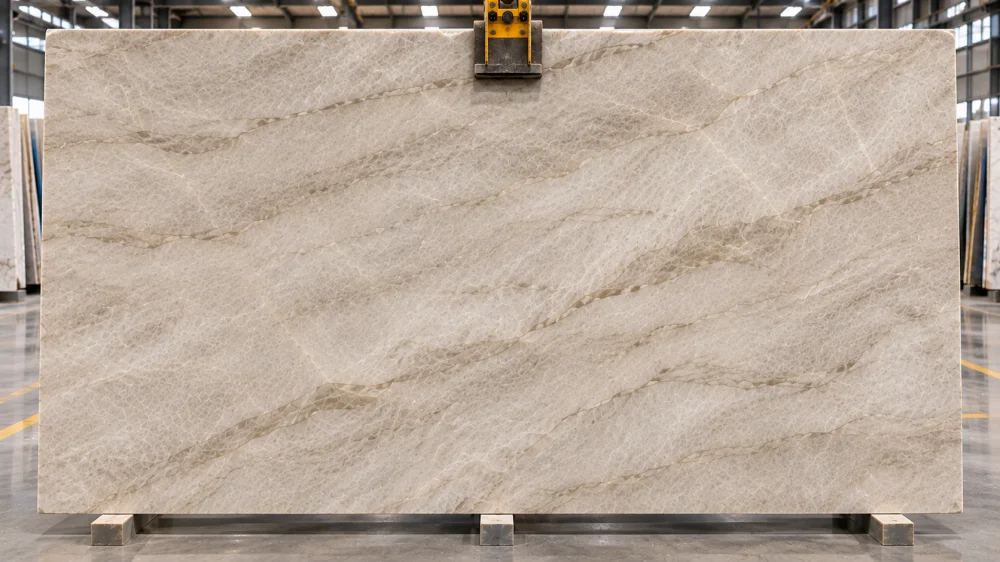
Why Can Quartzite Still Stain If It Is a Durable Stone?
Durability and stain resistance are not the same property.
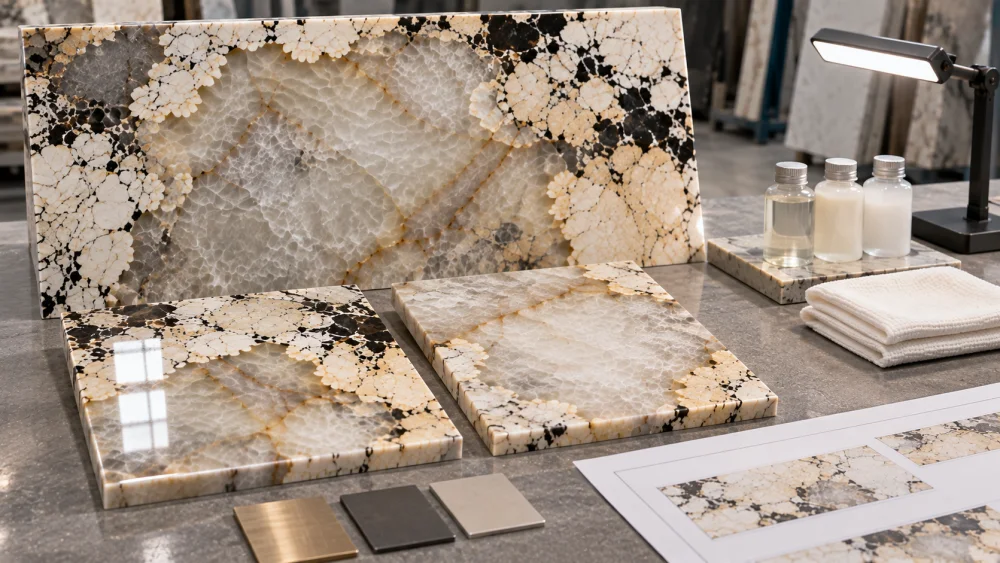
Quartzite is a natural metamorphic stone, and different commercial varieties contain different mineral structures, fissures, treatments and surface characteristics. A stone can perform well as a countertop and still allow certain contaminants to leave discoloration under unfavorable conditions.
This is one reason the broader CENTURY STAR Quartzite collection should be understood as a material category rather than one standardized surface with identical maintenance behavior.
Not Every Dark Mark Is a Permanent Stain
A countertop may temporarily look darker after contact with water or another liquid. Surface residue, moisture, oil, fabrication compounds and a true absorbed stain can produce different visual symptoms.
That distinction matters because the correct response depends on what caused the mark.
If an unexplained discoloration remains after normal cleaning and drying, first identify the likely contaminant before applying stronger chemicals. Randomly combining cleaners can damage the surface, treatment or surrounding materials and can make the original problem more difficult to diagnose.
Common Misunderstanding
Stain resistance does not mean stain-proof. A suitable natural stone, good fabrication and an appropriate impregnating treatment can reduce risk, but none of them should be marketed as permission to leave oil, wine, coffee or colored food residue on the countertop indefinitely.
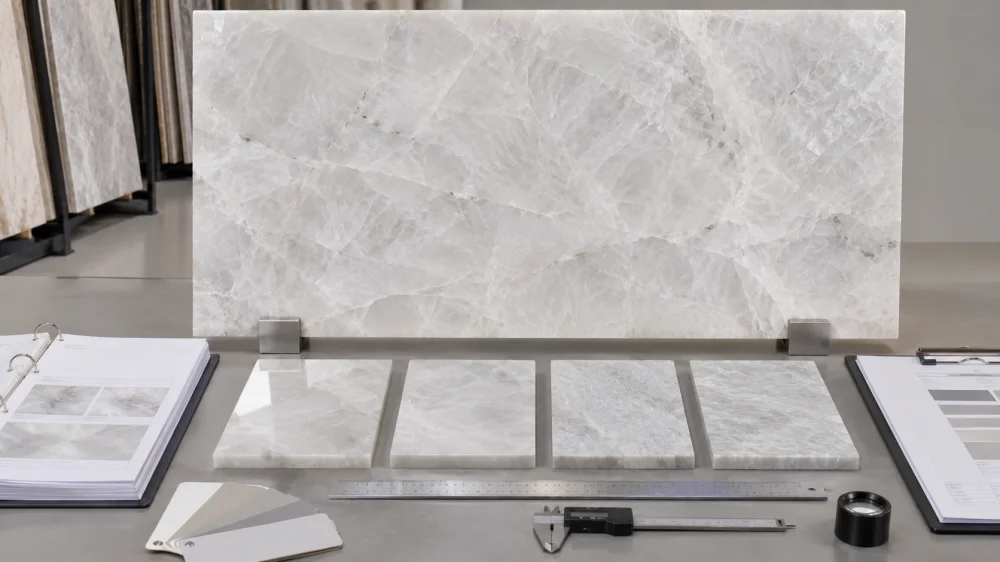
Does Sealing Stop Quartzite from Staining?
No. Sealing can reduce staining risk, but it cannot guarantee that Quartzite will never stain.
Natural-stone “sealers” are commonly penetrating or impregnating products intended to make the surface more resistant to liquid penetration. They should not be treated as a completely impermeable coating.
Whether a Quartzite countertop benefits from sealing depends on the actual stone, finish, previous treatment and proposed product. CENTURY STAR’s Quartzite sealing guide explains why there is no responsible universal sealing or resealing schedule for every Quartzite.
Practical Countertop Scenarios
Busy Kitchen Island
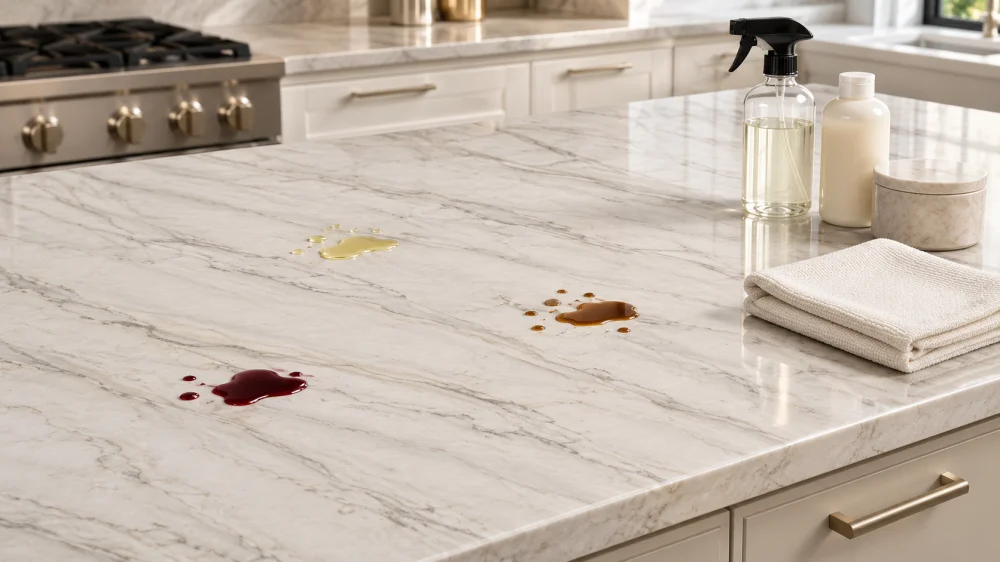
A frequently used island encounters oils, coffee, sauces, wine and repeated cleaning. This is a situation where the buyer should pay particular attention to actual surface behavior, proposed treatment and daily care instructions.
Light-Colored Quartzite
Visible discoloration may attract more attention on a pale surface, but color alone does not determine absorption. Buyers should not assume that every white Quartzite behaves the same way.
Honed Quartzite
A honed finish changes the appearance and surface character, but finish alone is not enough to predict whether a stone needs sealing or how easily it will stain. Evaluate the actual finished material.
Stone with Factory Resin or Repairs
Some natural slabs may contain resin treatment or repaired natural features. Ask what treatment is already present before adding another product or assuming the surface is untreated.
What Should Buyers Check Before Installation?
- Confirm that the material is natural Quartzite rather than engineered quartz or another material sold under a similar name.
- Review the actual slab or slab group for the project.
- Confirm the finished surface being supplied.
- Ask whether resin or another factory treatment is already present.
- Ask whether an impregnating treatment is recommended for the specific countertop.
- Confirm that any proposed treatment is compatible with the stone, finish and intended use.
- Request routine care instructions for the completed surface.
- Clean spills promptly rather than assuming a sealer will prevent every stain.
For a specific example of why commercial stone name alone does not determine staining behavior, see CENTURY STAR’s Taj Mahal Quartzite staining guide, which applies the same decision framework to one named Quartzite.
Practical Takeaway
Does Quartzite stain easily? Sometimes it can stain, but staining risk is not identical across every Quartzite countertop. The answer changes with the actual stone, finish, treatment, contaminant and exposure time. Evaluate the real surface, use a compatible impregnating treatment when appropriate, clean spills promptly and avoid any claim that natural Quartzite is completely stain-proof.
Frequently Asked Questions
1. Can Quartzite countertops stain?
Yes. Natural Quartzite can stain under some conditions. The risk depends on the actual stone, finish, treatments, contaminant, exposure time and maintenance.
2. Is Quartzite stain-proof after sealing?
No. A compatible impregnating sealer can improve stain resistance, but it does not make Quartzite completely stain-proof.
3. Does every Quartzite countertop need sealing?
No universal rule applies to every Quartzite. The decision should be based on the actual stone, finish, existing treatment, application and recommendations for the proposed sealing product.
4. Are oil stains a risk on Quartzite?
Oil-based substances can cause discoloration on receptive natural-stone surfaces. Prompt cleanup and an appropriate stain-resistance strategy can reduce risk.
5. Does a dark wet mark always mean the Quartzite is permanently stained?
No. Temporary moisture darkening, surface residue and true staining can look similar initially. Allow the area to dry and identify the likely cause before choosing a treatment.
6. Is polished Quartzite more stain-resistant than honed Quartzite?
Finish can influence surface behavior, but it is not enough by itself to predict staining. The actual stone, treatment and intended use should be evaluated together.
7. What should I do if a Quartzite countertop develops a persistent stain?
Identify the likely staining substance first and use a treatment appropriate to that contaminant and the natural-stone surface. For difficult or uncertain stains, consult a qualified stone professional rather than experimenting with aggressive chemicals.