


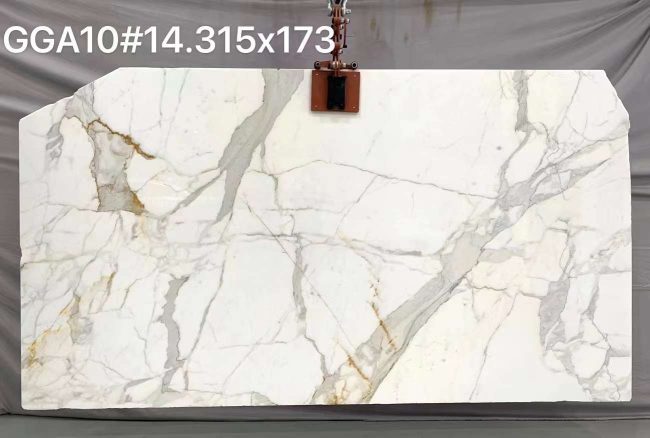

Abstract: Silver Dragon marble (also known as Silver Dragon stone or Lepidolite-bearing marble, and scientifically classified as silver-veined crystalline limestone) is a naturally occurring metamorphic stone prized for its white or light grey base and distinctive metallic silver veining. It is widely used in high-end architecture and decorative surfacing worldwide.
According to the Marble Institute of America’s (MIA) 6th edition of the Design Manual, natural marble with a fine crystalline structure and low porosity — both of which are hallmarks of Silver Dragon marble — consistently ranks among the top performers in terms of dimensional stability and aesthetic longevity. The Natural Stone Institute’s Technical Bulletin also identifies silver-veined marbles as materials with high clarity and low absorption, which are particularly suited to interior cladding, flooring, and countertop applications where visual impact and structural integrity are equally important.
What Is Silver Dragon Marble? A Material Definition
Silver Dragon Marble is a premium grade of natural marble, primarily quarried in the southern Chinese provinces of Guangxi and Yunnan, where the geological conditions produce its uniquely fine crystalline matrix. This metamorphic carbonate rock was originally limestone that was subjected to intense heat and pressure over millions of years, transforming it into a dense, interlocking crystalline structure of calcite and dolomite. Silver Dragon’s signature network of fine silver-grey veining distinguishes it from ordinary white marble: thin, branching lines of graphite, mica, or feldspar inclusions that create an almost metallic shimmer across the surface.
Silver Dragon Marble has an instantly recognisable visual identity: a luminous white or soft pearl-grey background crossed by flowing, irregular veins of silver, charcoal, or dark grey. When polished to a mirror finish, the contrast between the crystalline background and the metallic veining creates dramatic three-dimensional depth, a quality that few other stones can replicate. This optical quality makes it a popular choice for luxury hospitality projects, high-end residential interiors, and monumental public architecture, where the stone must command immediate visual attention.
Petrologically, Silver Dragon marble typically registers a Mohs hardness of 3–4, a water absorption rate below 0.3% (according to ASTM C97), and a compressive strength ranging from 80 to 130 MPa, depending on the quarry lot. These physical parameters firmly place it within the category of dense, durable decorative stones — it is not as hard as granite, but is significantly more resilient than the softer calcite marbles commonly found in Mediterranean quarries.

Geological Origin and Global Quarry Sources
The geological history of Silver Dragon Marble starts with the sedimentary sequences of the Tethys Sea that underlie much of the karst terrain in southern China. During the Permian and Triassic periods, thick carbonate reef platforms formed on the shallow seafloor. Subsequent orogenic events, particularly the Yanshanian tectonic movement, subjected these sediments to regional metamorphism, producing the dense, crystalline marble we quarry today. It is the specific combination of moderate pressure, temperature, and fluid activity during metamorphism that generates the stone’s characteristic fine grain size and trapped mineral inclusions, which become its silver veining.
Similar silver-veined marbles have been identified beyond China, in quarries across Turkey (particularly in the provinces of Afyon and Burdur), Greece (in the Kavala region), and northern India (in Rajasthan). However, Silver Dragon marble from certified quarries in Guangxi, China, remains the industry benchmark for consistent colouration and vein patterning. This is largely because the regional geological formation is unusually homogeneous across large quarry blocks, enabling the production of matching slab sets for large-format wall cladding or continuous floor installations.
Reputable Guangxi quarries operate with block production yields of 15–30% of the raw rock extracted (according to standard industry metrics tracked by the China Stone Industry Association, CSIA), meaning that the majority of the material quarried is either rejected or processed into tiles. The highest-grade Silver Dragon slabs — those with uninterrupted background clarity, no microcracks, and symmetrical veining — represent 8–12% of the yield from the best quarry faces. This natural scarcity is one factor that drives the material’s premium pricing in the international market.
Key Characteristics: How to Identify Authentic Silver Dragon Marble
Evaluating Silver Dragon Marble for architectural or decorative use requires assessment across five primary characteristic dimensions: ① visual pattern, ② surface texture, ③ physical density, ④ translucency, and ⑤ vein continuity. Understanding each dimension provides a systematic framework for distinguishing genuine high-grade Silver Dragon from imitations or inferior substitutes.
① Visual Pattern: Authentic Silver Dragon exhibits silver to charcoal veining that flows organically across the slab surface in branching, non-repeating patterns. Machine-manufactured substitutes (such as engineered stone or sintered ceramic) typically show repeating digital prints or overly regular vein spacing — a clear indicator of artificial origin. In genuine marble, no two slabs are identical.
② Surface Texture: When polished, Silver Dragon achieves a reflectivity index of 85 to 95 gloss units (GU) as measured by a standard 60° gloss meter, according to testing protocols in EN 14617-5. This mirror-bright finish is characteristic of stones with tightly interlocked calcite crystals and low microporosity. Honed finishes (satin matte) reveal the stone’s crystal structure more directly and are increasingly popular for flooring and shower wall applications.
③ Physical Density: High-quality Silver Dragon Marble should have a bulk density between 2.65 and 2.75 g/cm³ (ASTM C97 standard measurement). Slabs that feel noticeably light or show uneven weight distribution may contain hidden voids or be of composite construction.
④ Translucency: Holding a thin slab section (20 mm or less) up to a strong light source reveals a warm, diffuse glow in genuine Silver Dragon — a characteristic of its fine calcite crystalline matrix that transmits and scatters light internally. This property is exploited in backlit panel applications, where Silver Dragon produces a soft, luminous effect impossible to replicate with ceramic or engineered stone.
⑤ Vein Continuity: In bookmatched slab pairs, the veining should mirror correctly across the cut axis. Misaligned veining in matched pairs is a sign of inconsistent quarrying practice, uneven slab thickness, or post-processing surface manipulation.
Quality Grading Standards for Silver Dragon Marble
The international stone trade recognizes a four-tier quality grading system for natural marble, applied to Silver Dragon by reputable suppliers and importing authorities alike. The following table summarizes the most widely adopted grading criteria:
| Grade 1 (Premium) | Zero visible defects, mirror polish ≥90 GU | Consistent, low-contrast | ±0.5 mm | Luxury hotel lobbies, high-end residential |
| Grade 2 (Commercial) | Minor surface irregularities allowed | Moderate variation accepted | ±1.0 mm | Office interiors, commercial retail |
| Grade 3 (Industrial) | Visible pits, minor cracks repaired with filler | Significant pattern variation | ±1.5 mm | Exterior cladding, secondary areas |
| Offcut / Remnant | Sub-specification pieces | Variable | Non-standard | Mosaic, border tile, cut-to-size projects |
(Grading criteria adapted from Natural Stone Institute Technical Bulletin No. 17 and CSIA Q/CSI standards.)
Premium-grade Silver Dragon slabs intended for bookmatching must additionally satisfy the color deviation standard (ΔE ≤ 1.5 using CIE L*a*b* color space measurement, per EN 14617-3), ensuring that paired slabs from the same block produce visually seamless mirror patterns when installed. Suppliers who cannot provide color deviation testing data should be treated with caution for high-specification interior projects.

Common Applications in Architecture and Interior Design
Silver Dragon Marble’s balanced combination of luminosity, structural density, and dramatic veining makes it one of the most versatile premium stones in contemporary architectural specification. Its applications span six primary categories:
① Large-Format Wall Cladding: Bookmatched Silver Dragon panels, cut to 3200 × 1600 mm or larger from quarry blocks, are a signature element in hotel lobbies, corporate reception areas, and luxury residential feature walls. The visual rhythm of mirrored veining creates a gallery-quality effect at architectural scale.
② Flooring: Polished Silver Dragon floor tiles (typically 600 × 600 mm or 800 × 800 mm) are specified for high-traffic luxury environments. Despite marble’s general reputation for sensitivity to acidic cleaning agents, Silver Dragon’s low porosity reduces the rate of surface etch development compared to softer calcite marbles, extending maintenance intervals.
③ Countertops and Vanities: Kitchen and bathroom countertop applications benefit from Silver Dragon’s neutral color palette, which integrates readily with both warm wood tones and cool metallic or dark cabinetry systems. Standard countertop thickness is 20 mm or 30 mm with eased or beveled edge profiles.
④ Stair Treads and Risers: The stone’s compressive strength (minimum 80 MPa) and surface hardness support stair tread applications with anti-slip profiling or honed finish treatments. Stair nosing profiles are typically cut with a radius of 12 to 18 mm per safety code requirements.
⑤ Backlit Panels: Thin-cut Silver Dragon (10 to 15 mm) mounted on aluminum composite honeycomb backing transmits artificial light to create illuminated feature walls or reception desks. LED strip lighting positioned behind the panel exploits the marble’s translucency for dramatic architectural effect.
⑥ Exterior Cladding (limited applications): While calcite marbles are generally cautioned against outdoor use due to acid rain vulnerability, Silver Dragon’s low water absorption rate (typically ≤0.25% by weight, ASTM C97) supports exterior cladding use in sheltered or low-pollution environments when sealed with appropriate penetrating stone impregnators.
Buying Guide: Evaluation Criteria Before Purchase
Purchasing Silver Dragon Marble for a significant architectural or interior project requires due diligence across both material and supplier dimensions. The following table consolidates the critical evaluation criteria for professional buyers and project managers:
| Slab thickness | Measure at 4 corners and center | ≤±1.0 mm variation (Grade 1) |
| Surface porosity | Water droplet absorption test on raw surface | Absorption ≤0.3% by weight (ASTM C97) |
| Gloss level | 60° gloss meter reading after polishing | ≥85 GU for polished finish |
| Color deviation (bookmatched pairs) | CIE L*a*b* measurement | ΔE ≤1.5 per EN 14617-3 |
| Crack/fissure inspection | Wet the slab surface under raking light | No structural fissures; surface hairlines resin-filled only |
| Block origin documentation | Request quarry certificate and block number | Traceable to a named Guangxi quarry or certified quarry |
| Test report availability | Ask for ASTM C97/C99/C170 test data | Full physical property test report required |
| Packaging standard | Sea crate, foam interleaving, edge protection | Per ISPM 15 phytosanitary standard for export |
Beyond physical criteria, buyers should verify whether the supplier holds ISO 9001:2015 quality management certification for stone processing operations, and whether their export documentation is compliant with the destination country’s import requirements for natural stone (including CITES compliance for certain restricted stone species, where applicable).
Price benchmarks (CIF basis, polished slab, 20 mm thickness) for Grade 1 Silver Dragon Marble from certified Guangxi quarries typically range from USD 55 to USD 120 per square meter depending on slab size, bookmatching requirement, and lot consistency. Unusually low pricing — below USD 40/m² — is a reliable indicator of Grade 3 material, surface-repaired lots, or substituted stone species.
Care, Maintenance, and Long-Term Performance
Like all calcite-based natural stones, Silver Dragon Marble requires a structured maintenance protocol to preserve its surface finish and structural integrity in the long term. Its primary vulnerability is to acidic substances — citrus juice, vinegar, wine, and many household cleaners have a pH level low enough to etch polished calcite surfaces within minutes of contact. This results in a dulled appearance along the vein lines and background areas, creating a matte patch that is visible under raking light.
The recommended care protocols follow the guidelines issued by the Natural Stone Institute (NSI) in the Care & Cleaning Technical Bulletin.
Sealing: Apply a penetrating, pH-neutral impregnating sealer (silane or siloxane chemistry) at installation, and reapply annually for countertop applications or every two to three years for vertical surfaces. This reduces effective porosity without altering the surface’s appearance.
Daily cleaning: Use pH-neutral stone cleaners only. Avoid multi-surface cleaners containing ammonia, bleach, or derivatives of citric acid.
Stain response: Address liquid spills immediately by blotting (rather than wiping) with a clean cloth. Wiping spreads the liquid across a larger surface area, increasing the risk of absorption.
Re-polishing: Professional re-polishing using diamond abrasive pads (grit sequence from 50 to 3000) will restore the original gloss level and remove shallow surface etches. Full restoration cycles are typically required every 5 to 10 years in commercial environments with high footfall.
FAQ: Silver Dragon Marble — Frequently Asked Questions
Q1: What is Silver Dragon Marble made of?
Silver Dragon Marble is a metamorphic carbonate rock composed primarily of recrystallized calcite and dolomite, with inclusions of graphite, mica, or feldspar that form its characteristic silver veining. It originates from limestone subjected to geological heat and pressure over millions of years.
Q2: Is Silver Dragon Marble suitable for kitchen countertops?
Yes, but with caveats — its low porosity (≤0.3% water absorption) makes it more resistant to staining than softer marbles, yet its calcite composition remains vulnerable to acid etching from common kitchen substances. Sealing at installation and regular reapplication of penetrating impregnators significantly extends its practical lifespan in kitchen environments.
Q3: How does Silver Dragon Marble compare to Calacatta or Carrara marble?
Silver Dragon features a cooler, more metallic vein color (silver-grey to charcoal) versus Calacatta’s gold-warm veining or Carrara’s feathery grey. Its Chinese quarry origin typically produces larger, more consistent slab blocks than many Italian quarries today, making it advantageous for large-format bookmatched installations.
Q4: What is the typical price range for Silver Dragon Marble?
Grade 1 polished slabs (20 mm, CIF basis) range from approximately USD 55 to USD 120 per square meter depending on slab size, lot consistency, and bookmatching requirements. Prices below USD 40/m² typically indicate Grade 3 material or non-authentic stone.
Q5: Can Silver Dragon Marble be used outdoors?
Limited outdoor use is possible in sheltered environments with low acid pollution exposure, given the stone’s low water absorption rate. However, full outdoor exposure — particularly in urban environments with acid rain — is not recommended without specialized surface treatment, as calcite is chemically reactive to atmospheric sulfuric and nitric acids.
Q6: How do I verify the authenticity of Silver Dragon Marble before buying?
Request the quarry block certificate and ASTM C97/C99/C170 physical property test reports from your supplier. Perform a visual inspection under raking light for surface repairs, verify slab thickness consistency at multiple points, and check for the characteristic non-repeating vein pattern that distinguishes genuine natural marble from engineered stone or digital-print ceramic imitations.
Conclusion
Silver Dragon Marble occupies a unique position in the global premium stone market, offering a combination of geological rarity, visual impact, and measurable physical performance. This makes it a popular choice among serious architects, interior designers, and project specifiers for landmark projects.
Understanding its origin, grading standards, physical characteristics, and maintenance requirements is not just academic — it directly affects whether a purchased lot will perform as specified over decades of use. This guide describes a reliable framework for making confident, defensible purchasing decisions in a market where imitation products and misrepresented grades are persistent risks, combining supplier documentation, third-party physical testing, and systematic visual inspection.
References:
① Marble Institute of America (MIA), Design Manual 6th Edition.
② Natural Stone Institute (NSI), Technical Bulletin No. 17 — Grading Natural Stone.
③ ASTM International, Standard Test Methods C97, C99, C170 for Dimension Stone.
④ China Stone Industry Association (CSIA), Quality Classification Standard Q/CSI.
⑤ EN 14617-3, Agglomerated Stone — Determination of Colour Variation; EN 14617-5, Determination of Flexural Strength.
⑥ NSI Care & Cleaning Technical Bulletin, Natural Stone Institute, 2022 Edition.