



Quick Summary: Granite ideas for custom feature wall projects are especially valuable when a space needs a strong, durable, architectural, and naturally textured stone surface. Granite works well for hotel lobbies, villa entrances, fireplace walls, staircase walls, commercial reception areas, exterior façades, elevator lobbies, and high-traffic interiors where the wall must feel premium but also practical. Compared with marble or quartzite, granite usually gives a more solid, stable, and structural design language. The best granite feature wall result depends on color selection, slab movement, surface finish, panel layout, joint control, fixing method, lighting, packaging, and installation planning.

Design Logic: Why Granite Works for Custom Feature Walls
A custom feature wall is not only a background surface. In luxury residential and commercial projects, it often becomes the first visual anchor of the space. It may define a hotel lobby, strengthen a villa entrance, frame a fireplace, support a staircase composition, or create a durable architectural backdrop behind a reception counter. Granite is useful in these applications because it gives the wall a sense of weight, permanence, and material confidence.
Unlike softer and more delicate-looking stones, granite usually creates a stronger architectural mood. It can look calm and minimal in grey, black, or white tones. It can feel warm and classic in brown, gold, beige, or rust colors. It can also become dramatic when blue, green, red, or exotic granite varieties are selected. This makes granite flexible for both modern interiors and more traditional luxury spaces.
Granite is especially effective when the design goal is not just beauty, but also durability and long-term project value. A hotel lobby wall, commercial corridor, elevator hall, or exterior entrance wall may receive more contact, cleaning, temperature change, or long-term wear than a private bedroom wall. In these situations, granite can be a strong choice because it combines natural stone appearance with a practical project reputation.
Granite Is Best When the Wall Should Feel Strong and Architectural
Granite feature walls usually work best when the space needs a grounded and confident design language. A black granite fireplace wall can create a bold modern focal point. A grey granite staircase wall can make a villa entrance feel calm and structured. A blue granite lobby wall can create a memorable luxury statement. A flamed or leathered granite exterior wall can support a more natural architectural façade.
The key is to match the granite style with the project’s emotional direction. If the space needs softness, marble or beige quartzite may be better. If the space needs strength, stability, and texture, granite can be an excellent design choice.
Material Logic: Choosing the Right Granite for Feature Wall Projects
Granite should be selected according to color, pattern scale, finish, panel size, lighting condition, and application environment. A granite slab that looks attractive in a warehouse may not always work on a large wall if the grain is too small, the color is too dark, or the finish reflects too much light.
Black and Dark Granite for Modern Statement Walls
Black, charcoal, and dark grey granite are suitable for modern interiors, fireplace walls, reception backdrops, and commercial feature walls. These colors can make a space feel elegant, serious, and high-end. When paired with warm lighting, bronze metal, wood veneer, or leather furniture, dark granite can create a sophisticated luxury atmosphere.
However, dark granite needs careful lighting planning. Strong direct light may create reflections on polished surfaces, while poor lighting can make the wall look too heavy. Honed, leathered, or flamed finishes may help reduce glare and add surface depth.
Grey Granite for Calm Architectural Walls
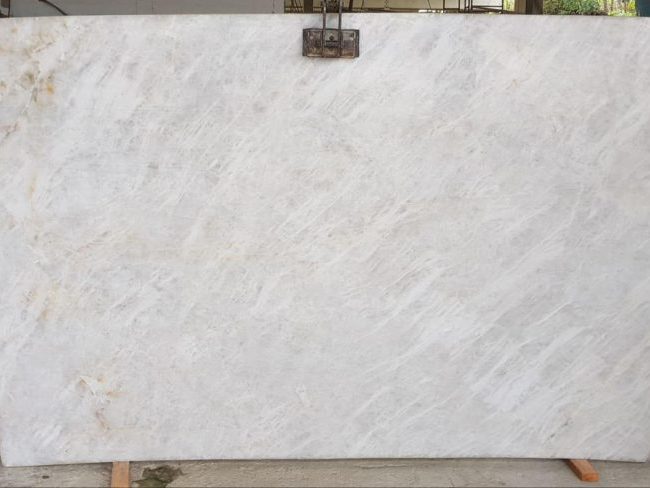
Grey granite is one of the most versatile choices for custom feature walls. It works well in villa entrances, staircase walls, elevator lobbies, office buildings, commercial corridors, and exterior cladding. Grey granite can feel modern, neutral, and durable without becoming visually aggressive.
For large walls, designers should decide whether the project needs a fine-grain grey granite, a linear grey granite, or a stronger wave-pattern granite. The pattern scale should match the wall size. A very small grain may look flat from a distance, while a larger movement may create a stronger design identity.
Blue, Green, and Exotic Granite for Luxury Focal Points
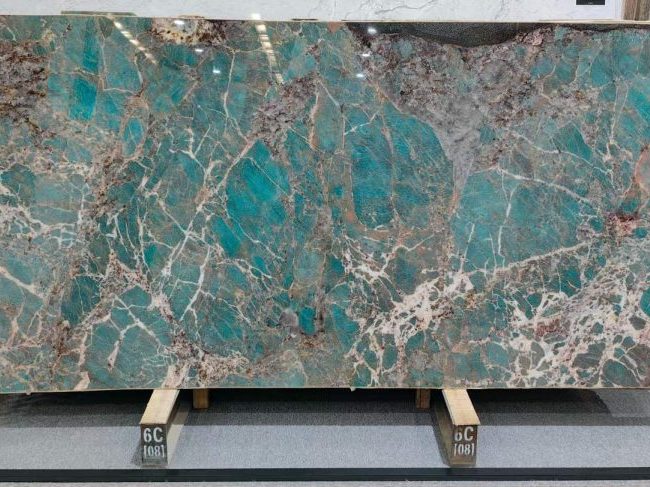
Blue, green, red, and multicolor granite can be used when the feature wall needs to become a memorable statement. These materials are suitable for hotel lobbies, private clubs, luxury reception spaces, entertainment rooms, and high-end villas. Exotic granite can create a more distinctive effect than ordinary neutral stone.
Because exotic granite often has strong movement and higher material value, slab selection and layout confirmation are important. Buyers can review CENTURY STAR’s granite material options to compare colors, patterns, and project directions before confirming a feature wall design.

Spatial Application: Granite Feature Wall Ideas by Project Type
1. Granite Fireplace Feature Wall
A granite fireplace wall is one of the strongest residential applications. Granite can visually frame the fire zone and create a durable focal point in a living room, lounge, hotel suite, or villa entertainment space. Black granite, dark grey granite, leathered granite, or dramatic exotic granite can all work well depending on the interior style.
For fireplace walls, the project team should confirm fireplace type, heat exposure, opening size, local installation requirements, edge return, and fixing method before production. The stone should not be selected only by appearance. Safety, thermal conditions, and installation details must be reviewed early.
2. Granite Hotel Lobby Wall
Granite can create a strong hospitality entrance impression. In a hotel lobby, the feature wall may sit behind the reception desk, near the elevator hall, or along the main entrance corridor. A polished exotic granite can create a luxury focal point, while honed or leathered grey granite can make the lobby feel modern and architectural.
For hospitality projects, durability and maintenance are important. The selected granite should fit the lighting environment, guest traffic, cleaning routine, and brand positioning. A dramatic granite wall can help the hotel feel memorable, but the layout should be carefully controlled so the wall does not look random or visually heavy.
3. Villa Entrance or Staircase Wall
A granite wall can make a villa entrance feel solid and refined. It works especially well in double-height entrance halls, staircase areas, and transitional spaces where the wall is viewed from multiple angles. Grey, beige, brown, and black granite are common choices for this application.
For staircase walls, panel size and installation sequence are important. The stone may need to be installed around steps, railings, lighting slots, and corners. If the wall is tall, mechanical fixing or a combined installation system may be required depending on the design and local conditions.
4. Commercial Reception Backdrop
Granite can be used behind reception desks in office buildings, showrooms, clinics, clubs, and commercial service spaces. Compared with softer stones, granite gives the reception area a more stable and professional mood. It is especially suitable when the brand image needs to feel reliable, premium, and long-lasting.
For reception walls, the design should coordinate the granite with logo placement, counter material, wall lighting, metal trim, and flooring. If readable signage or branding will be mounted on the wall, the stone pattern should not be too busy behind the logo area.
5. Exterior Granite Feature Wall
Granite is also suitable for exterior feature walls, façades, entrance walls, garden walls, and commercial building cladding when the correct material, finish, and fixing method are selected. Flamed, bush-hammered, split-face, or leathered finishes can create a more textured exterior appearance. Polished surfaces are usually more common indoors and should be evaluated carefully for exterior conditions.
Exterior granite walls require serious technical planning. Panel thickness, fixing system, water drainage, expansion joints, wind load, building code requirements, and installation team capability should be reviewed before production.
Material Matching Strategy
A granite feature wall should be selected together with surrounding materials. Granite often has a stronger and more structural visual language than marble, so the rest of the interior should support that character instead of fighting it.
Granite with Wood
Wood can soften granite and make the wall feel more comfortable. Dark granite with walnut creates a luxury modern mood. Grey granite with oak can feel calm and architectural. Brown or gold granite with warm wood can create a more traditional or hospitality-inspired atmosphere.
Granite with Metal
Bronze, black metal, brushed stainless steel, and champagne metal can all work with granite. Black granite with bronze trim feels luxurious. Grey granite with black metal feels modern. Blue or green granite with brushed metal can create a refined commercial effect. Metal should be used as a supporting frame or detail, not as excessive lines that break the stone continuity.
Granite with Lighting
Lighting is critical for granite feature walls. Polished granite can reflect light strongly, while honed, leathered, flamed, or brushed finishes create softer reflection and more texture. Grazing light can reveal texture and panel flatness, so the finish and wall installation quality should be considered before choosing the lighting strategy.
Engineering Logic: What Must Be Confirmed Before Fabrication
Granite feature walls require technical coordination because the material is heavy, hard, and often used in highly visible areas. A successful wall depends on panel layout, thickness, finish, fixing method, opening details, packaging, and installation planning.
Panel Size and Layout
Large granite panels can create a more premium and continuous wall surface, but the final panel size must be practical. The project team should consider slab availability, wall dimensions, transportation, elevator access, doorway clearance, installation handling, and site lifting conditions.
For custom feature walls, shop drawings should show every panel size, joint location, edge detail, opening, and installation sequence. If the granite has directional movement, the layout should be reviewed before cutting. For more design-focused planning, buyers can refer to CENTURY STAR’s granite feature wall design guide when comparing layout ideas and project decision points.
Surface Finish Selection
Granite can be polished, honed, leathered, flamed, brushed, bush-hammered, or split-face depending on the material and application. Polished granite is suitable for luxury interiors where color depth and reflection are desired. Honed granite creates a softer and more architectural look. Leathered granite adds tactile texture. Flamed or bush-hammered granite is often more suitable for exterior or textured wall applications.
Fixing Method and Wall Structure
The fixing method depends on panel size, wall height, thickness, substrate condition, interior or exterior use, and local project requirements. Smaller interior panels may use adhesive systems with proper backing preparation, while larger or exterior panels may require mechanical fixing or dry-hanging systems. The wall structure should be confirmed before production, not after the stone arrives on site.
Joints, Corners, and Openings
Granite feature walls often include corners, lighting slots, fireplace openings, TV brackets, switch holes, logo mounting, door frames, or elevator surrounds. These details should be confirmed in CAD drawings. Poor joint planning can make a strong material look ordinary. For technical wall details, CENTURY STAR’s guide on stone wall cladding joint techniques can support better planning for joint width, transitions, and panel division.

Procurement Logic: How Buyers Should Control Risk
Granite feature wall procurement should be handled as a project package, not simply as material purchasing. Buyers should confirm granite type, slab availability, thickness, finish, panel layout, fixing requirements, fabrication drawings, packaging, lead time, and installation coordination.
What Buyers Should Request from the Supplier
Before confirming an order, buyers should request full slab photos, close-up texture images, finish samples, layout drawings, panel size schedule, edge detail confirmation, packaging method, and production lead time. If the project is exterior or high-height interior, the buyer should also confirm whether the supplier can support mechanical fixing details and panel numbering.
Why Extra Material Matters
Granite is more consistent than many dramatic marbles or quartzites, but natural variation still exists. For large feature walls, buyers should consider extra material for replacement, future repair, or unexpected site adjustment. This is especially important when the granite has a distinctive color, strong pattern, or imported material supply risk.
When Granite Is the Right Procurement Choice
Granite is a strong procurement choice when the project needs durability, architectural strength, exterior potential, high-traffic performance, and a long-term natural stone appearance. It is especially useful for hotels, villas, commercial buildings, public interiors, and feature walls where practical performance matters as much as design.
Global Design Trend Insight
Feature wall design is moving toward larger panels, stronger material identity, cleaner joints, and better integration with lighting and architecture. Granite fits this trend when designers want a wall that feels solid, permanent, and less delicate than marble. In commercial and hospitality interiors, granite can also support a more durable luxury image.
Another trend is the use of textured stone surfaces. Instead of relying only on polished stone, designers are using leathered, flamed, brushed, and split-face granite to create depth and tactile interest. This is especially important for exterior walls, entrance walls, garden walls, and modern architectural interiors.
Comparison and Design Decision Table
| Granite Feature Wall Idea | Best Project Fit | Recommended Granite Look | Key Technical Concern | Buyer Decision Note |
|---|---|---|---|---|
| Fireplace feature wall | Villas, lounges, hotel suites | Black, dark grey, leathered, or exotic granite | Heat zone, opening detail, edge return | Coordinate fireplace drawings before cutting. |
| Hotel lobby backdrop | Hotels, clubs, reception areas | Blue, green, black, or premium polished granite | Panel layout, lighting reflection, joint control | Select slabs as a complete wall set. |
| Staircase wall | Villas, duplex homes, commercial atriums | Grey, beige, brown, or linear granite | Height, access, fixing system, installation sequence | Confirm panel handling route before shipment. |
| Commercial reception wall | Office lobbies, showrooms, clinics, clubs | Polished grey, black, brown, or subtle exotic granite | Logo mounting, lighting, wall flatness | Keep logo area visually readable. |
| Exterior entrance wall | Villas, commercial buildings, landscape entrances | Flamed, bush-hammered, split-face, or leathered granite | Fixing system, drainage, expansion joints, weather exposure | Exterior installation details must be reviewed early. |
Common Design Mistakes
Choosing Granite Only for Durability
Granite is durable, but feature wall design still needs visual control. Color, finish, lighting, and panel layout must match the project style. A durable material can still look ordinary if the design direction is weak.
Using the Wrong Finish for the Space
Polished granite may look luxurious indoors, but it can create strong reflection under certain lighting. Flamed or textured granite may work well outdoors but may feel too rough for some refined interiors. Finish selection should follow both design mood and application environment.
Ignoring Panel Weight and Installation Access
Granite panels are heavy. Large panels may be difficult to move through elevators, corridors, staircases, or narrow site entrances. Panel size should be planned with installation access in mind.
Cutting Before Drawings Are Confirmed
Feature walls often include openings, corners, lighting, fireplaces, logos, or cabinets. Cutting before final shop drawing approval can create costly mistakes. Slab layout, panel numbering, cutouts, and joint positions should be confirmed before production.

FAQ
1. Is granite good for feature wall projects?
Yes. Granite is good for feature wall projects when the design needs a durable, architectural, and long-lasting natural stone surface. It works well for lobbies, fireplaces, staircases, reception areas, exterior walls, and high-traffic interiors.
2. Where should granite be used as a feature wall?
Granite is suitable for fireplace walls, hotel lobby backdrops, villa entrance walls, staircase walls, elevator lobbies, commercial reception walls, and exterior entrance walls. The best application depends on the selected color, finish, thickness, and fixing method.
3. Is granite better than marble for feature walls?
Granite is better when durability, exterior potential, texture, and architectural strength are important. Marble may be better when the project needs softer veining, classic luxury, and a more elegant decorative mood.
4. What finish works best for granite feature walls?
Polished granite works well for luxury interiors, honed granite gives a softer architectural look, leathered granite adds tactile depth, and flamed or bush-hammered granite is often suitable for exterior or textured wall applications.
5. What is the main risk in custom granite wall projects?
The main risk is poor coordination between panel size, wall structure, fixing method, finish, openings, and installation access. Granite feature walls should be confirmed with shop drawings, panel schedules, and installation planning before fabrication.
6. How should buyers order granite for a custom feature wall?
Buyers should provide wall drawings, dimensions, application environment, finish preference, opening details, and installation requirements. They should request slab photos, layout drawings, panel sizes, edge details, packaging information, and lead time before production.
Final Note / Practical Takeaway: Granite is the right feature wall material when the project needs strength, durability, texture, and architectural presence. It works especially well for fireplaces, hotel lobbies, villa entrances, staircase walls, commercial reception areas, elevator lobbies, and exterior entrance walls. To achieve a premium result, buyers should confirm granite color, finish, panel size, fixing method, joint design, drawings, packaging, and installation access before production. When practical performance and long-term stone value matter as much as design impact, granite can be an excellent choice for custom feature wall projects.
References
- Natural Stone Institute. Dimension Stone Design Manual, latest available edition.
- ASTM International. ASTM C615/C615M, Standard Specification for Granite Dimension Stone.
- ASTM International. ASTM C1528/C1528M, Standard Guide for Selection of Dimension Stone.
- ASTM International. ASTM C1242, Standard Guide for Selection, Design, and Installation of Dimension Stone Attachment Systems.