


Quick Summary
Granite can be an excellent material for feature wall projects in North America when it is selected as an architectural surface rather than only as a decorative slab. The best results usually come from balancing tone, mineral movement, panel scale, finish, and room coordination. A successful granite feature wall should feel grounded, premium, and visually stable rather than overly dark, fragmented, or heavy.

Feature walls are now a central design tool in North American interiors. In residential spaces, they often define fireplace surrounds, media walls, entry statements, and focal living-room compositions. In hospitality and commercial settings, they help create spatial hierarchy and reinforce brand atmosphere. Because they occupy large vertical areas and are often viewed from both close range and across the room, material choice has an unusually strong effect on the finished interior.
Granite is less commonly discussed for feature walls than marble or quartzite, but that is exactly why it deserves a more careful look. When selected properly, granite can offer a more grounded and substantial character than many lighter or more obviously decorative materials. It can introduce mineral depth, natural authenticity, and a stronger sense of permanence. In some interiors, especially those that want warmth, depth, or more tactile visual weight, granite can be a better choice than a brighter and more expected stone direction.
At the same time, a true granite design guide for feature wall projects in North America has to go beyond the idea that “granite is durable.” For vertical applications, the key questions are different. Buyers need to ask how the slab reads at wall scale, whether its mineral activity becomes too busy, whether its undertone supports the full palette, and whether the wall will still feel composed once divided into real panels around corners, built-ins, lighting details, or fireplace openings. The strongest decisions come from treating granite as part of the architecture, not just as a strong material sample.
Why Granite Works Well for Feature Walls
Granite works well for feature walls because it can create a sense of depth without relying on high-contrast veining. In many premium interiors, buyers want a focal wall that feels natural and substantial but not theatrical. Granite often delivers that effect through mineral density, tonal layering, and a more grounded visual language than some more expressive stones. This can be especially attractive in rooms that depend on restraint, texture, and long-term relevance rather than fashion-driven statement surfaces.
Another advantage is variety. Granite can range from quiet light-gray and warm taupe surfaces to deep charcoal, black, and more textural mineral-rich slabs. This makes it suitable for different North American design directions, including warm modern, contemporary, hospitality-inspired, and more masculine architectural interiors. Some granite slabs are calm enough for subtle feature walls, while others are strong enough to act as the room’s primary focal point.
Granite is also useful for buyers who want a feature wall with more visual authority. In many interiors, especially those with wood, muted metals, plaster-like walls, or layered upholstery, granite can bring a weight and seriousness that feels mature rather than flashy. However, this same strength means it must be selected carefully. The best granite for a feature wall is often the slab that looks composed at distance, not the one with the most dramatic close-up activity.
What North American Buyers Usually Need from a Granite Feature Wall
Most buyers in this market want a feature wall that feels premium, integrated, and visually durable over time. In living rooms, that usually means a wall that can support furniture, lighting, fireplaces, and media elements without becoming visually unstable. In entry spaces, the wall often needs to create first impression while still fitting the wider home palette. In hospitality settings, granite may need to balance atmosphere with broad commercial elegance.
That creates several major decision factors. One is background tone. Another is mineral activity and movement scale. Another is finish. Another is panel size and joint frequency. Another is how the wall terminates at ceilings, floors, corners, shelving, or built-in cabinetry. Buyers should also consider whether the room needs a lighter architectural background or a darker anchoring surface. Granite can do either, but the slab choice needs to match the design goal.
The strongest results come from reviewing granite at full interior scale. A slab that feels modest in the yard may become highly refined once it covers a full wall. A slab that looks richly detailed in close-up may become visually noisy when repeated across several vertical panels. The best feature wall is the one that organizes the room, not the one that competes with everything in it.

How to Evaluate Granite for Feature Wall Use
Background Tone
Granite can lean light gray, taupe, charcoal, black, green-based, or mixed warm-cool mineral. In North American interiors, lighter and mid-tone granites often work especially well when the goal is architectural calm. Darker granites can also be excellent, particularly in larger rooms, fireplace settings, or hospitality-style walls, but they should be reviewed carefully because too much vertical darkness can compress the space if the room is not large enough or well lit enough.
Mineral Activity and Pattern Scale
Granite does not usually behave like marble. Its character often comes from grain, crystalline structure, and denser mineral fields rather than long, open veining. That can be a strength on feature walls, but only when the movement stays controlled. Highly active granite may feel rich in a slab yard yet become restless at wall scale. Buyers should look for slabs whose mineral density feels visually stable from a distance, especially if the wall is large or panelized.
Finish and Light Response
Polished granite can create a more formal and dramatic effect, especially when the wall is meant to anchor a fireplace, lobby, or statement entry. Honed granite often feels softer and more architectural, which can be especially useful in residential interiors that prioritize calm. Textured finishes can sometimes work, but they should be reviewed carefully because wall lighting can exaggerate surface irregularity. The best finish is the one that supports the room’s light conditions and emotional tone.
Panel Size and Joint Logic
Feature walls usually look stronger when joint frequency is reduced. Larger granite panels allow the wall to read as one surface rather than as a collection of pieces. This matters especially for granite because the stone often relies on overall mineral field balance rather than directional vein drama. If too many joints are introduced, the wall can lose its visual coherence. The best granite for a feature wall is often the slab that supports cleaner, broader paneling.
Relationship to the Full Interior
A granite feature wall should strengthen the whole room. Light and mid-tone granite may work well with oak, warm whites, brushed brass, and soft fabrics. Darker granite may perform better with walnut, muted black metals, architectural lighting, and more formal spaces. The wall becomes successful when it gives the room structure and balance rather than acting as an isolated luxury gesture.

Popular Granite Profiles for Feature Wall Projects
| Granite Profile | Best For | Advantages | Main Watchpoints |
|---|---|---|---|
| Light Gray Granite | Contemporary living rooms and calm architectural interiors | Balanced, modern, easy to integrate with layered palettes | Can feel too quiet if the room lacks enough contrast |
| Warm Taupe or Beige Granite | Warm modern interiors and residential feature walls | Comfortable tone, strong with wood and brass | Needs good lighting to avoid dullness |
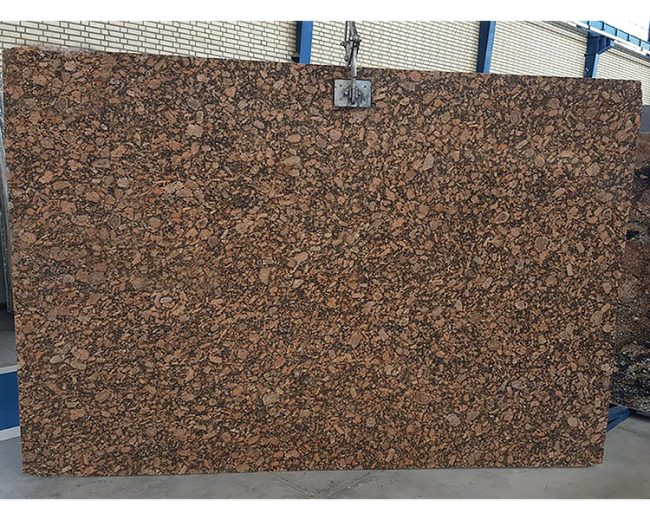
| Soft Movement Granite | Subtle statement walls and fireplace surrounds | Less visual noise, strong wall-scale stability | Needs large panels to show full value |
| Dark Charcoal or Black Granite | Large rooms, dramatic focal walls, hospitality-inspired spaces | Depth, authority, premium mood | May feel too heavy in compact or low-light rooms |
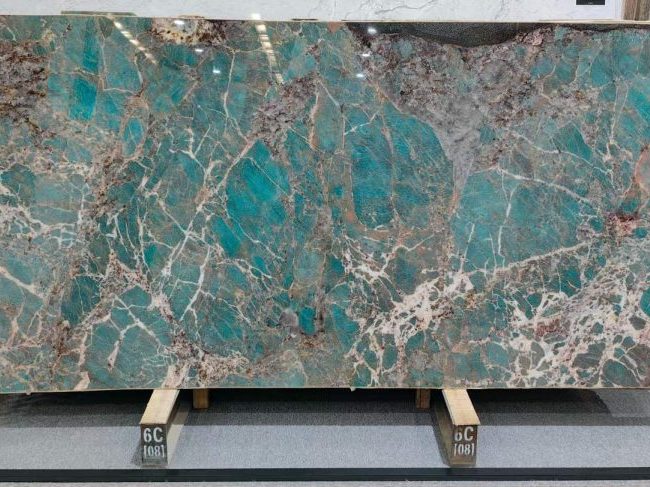
| Statement Mineral Granite | Custom luxury walls and strong architectural entries | Distinctive natural identity, memorable impact | Can become visually busy if the room already has many strong elements |
Best Applications by Space Type
In living rooms, granite often works best when the wall supports a fireplace, media zone, or main seating axis. These spaces benefit from a wall that feels grounded and premium without overwhelming furniture and lighting. Soft movement granite, light gray granite, and controlled darker granite can all work well depending on room size and light level.
In entry spaces, buyers can often use a slightly stronger granite because the wall is meant to create first impression. Here, darker or more mineral-rich slabs can work effectively if the surrounding architecture is disciplined. In bedrooms, however, granite usually performs better when it is quieter, because the wall should contribute to calm rather than intensity.
In hospitality and commercial interiors, granite can be especially useful when a project needs a stronger material identity without becoming overly decorative. A well-chosen granite wall can feel authoritative, durable, and premium to a wide audience. In these settings, the best slab is often the one that balances visual impact with specification discipline and repeatability.
Common Mistakes Buyers Make
The first mistake is judging granite only by close-up richness. Feature walls are large surfaces, and many granite slabs behave very differently at room scale than they do in slab photography. The second mistake is ignoring panel layout. Even strong granite can lose much of its effect if joints, edges, and built-in interruptions are not handled with discipline.
Another common issue is choosing a slab that is too dark or too active for the room size. A granite that feels premium in a large showroom may feel oppressive in a smaller living area if lighting and contrast are not balanced carefully. Buyers also sometimes assume that the most dramatic granite creates the most luxurious wall. In practice, many premium interiors rely on control and full-room coordination rather than maximum material intensity.
A final mistake is separating the wall from the rest of the palette. The best granite feature wall is not only beautiful by itself. It improves the furniture, lighting, flooring, and architecture around it.
What Buyers Should Review Before Approval
Before approving granite for a feature wall project, buyers should review the full slab or a large wall-scale simulation. They should confirm undertone, mineral activity density, likely panel breakdown, finish, and how the wall will terminate at ceilings, corners, fireplaces, shelving, or cabinetry. If the wall is visually linked to flooring, stairs, or other stone elements, those relationships should also be considered part of the decision.
It is also wise to compare the granite directly against wood tones, upholstery, metal finishes, and actual lighting conditions. Granite can shift noticeably depending on its environment. A slab that feels balanced outdoors or in a warehouse may behave quite differently in the finished room. The more the stone is reviewed in design context, the more reliable the final result becomes.

How Supplier Support Improves Feature Wall Decisions
For buyers sourcing from China, supplier support matters because selecting granite for feature wall use is not simply about finding a durable and attractive slab. It also involves checking whether the slab reads well at wall scale, whether its mineral field remains balanced through paneling, and whether the intended layout can be fabricated and installed cleanly. A capable supplier helps make those questions clearer before production begins.
In practical terms, this may include comparing multiple granite options, identifying which slabs are better suited to subtle architectural walls versus stronger focal walls, and helping buyers avoid materials that seem appealing in isolated imagery but become too dark, too busy, or too fragmented once installed. For premium residential and hospitality projects, this review process can significantly improve the final outcome.
FAQ
1. Is granite a good material for feature walls?
Yes. Granite can be an excellent feature wall material because it offers natural depth, strong architectural presence, and a grounded premium character that works well in residential and hospitality interiors.
2. What granite color works best for feature walls in North America?
Light gray, warm taupe, controlled charcoal, and more stable mineral-rich granites are often the most versatile because they support broad North American interior palettes without excessive visual noise.
3. Should granite feature walls be polished or honed?
Both can work. Polished finishes usually feel richer and more formal, while honed finishes often feel softer and more architectural. The best choice depends on the room’s lighting and style direction.
4. Is dark granite too heavy for a feature wall?
Not always. Dark granite can be highly effective in large and well-lit spaces, but in smaller or dimmer rooms it may feel too visually heavy if not balanced carefully.
5. What matters more for a feature wall: granite pattern or panel layout?
Both matter, but panel layout is often underestimated. Even a strong slab can lose much of its elegance if joints and transitions are not planned properly.
6. Can granite create a luxury feature wall look without feeling dated?
Yes. The right granite, especially one with controlled movement and a well-chosen finish, can create a very refined and timeless feature wall that feels architectural rather than old-fashioned.
Final Note / Practical Takeaway
The best granite feature wall in North America is the one that balances tone, mineral activity, panel continuity, and full-room coordination. Buyers who evaluate granite at wall scale and in real design context usually achieve more elegant and more durable premium results.