


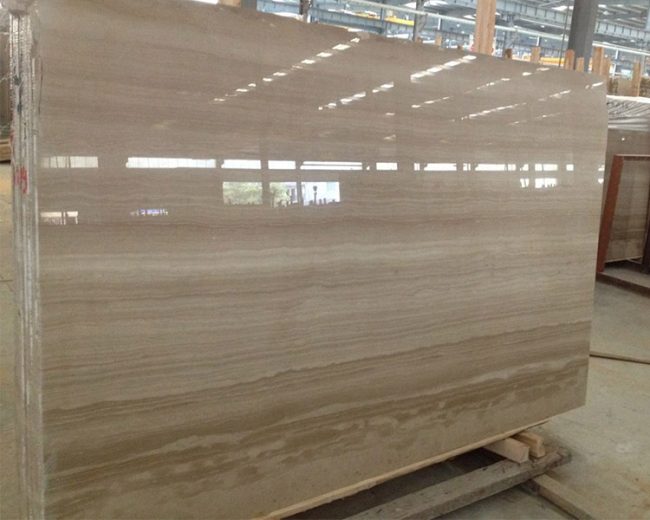


Ever since the dawn of human civilisation, granite tile —a stone both ancient and strong—has been a vital part of architectural construction. Beginning with the great and beautiful pyramids of ancient Egypt and extending on to the enigmatic and solemn temples of ancient India and the great and solid Colosseum of old Rome, Granite has seen the historic march of human civilisation. Granite is the perfect material for these buildings since of its extraordinary performance and unique charm. There is much of magic in nature in the process by which this rock developed. Part of the magma condenses in the deep rock layer as it rises to the lesser area of the earth’s crust.

High-pressure forging this mixture produces granite, which is quite hard and highly resistant to corrosion. Granite tile most commonly finds expression in orogenic belts. The crust movement becomes visible and shows its unique look as it travels through the process of weathering and erasing the rocks covering it. China boasts public access to more than 800,000 square km of granite. Among the few well-known mountains made of granite tile are Mount Tai, Mount Huang, and Mount Hua. Standing on the ground of China, their elegant forms let them to be witnesses to both history and nature. Granite is a material that not only reflects the power of nature but also the relentless search of architectural beauty by people. Its application in building not only fully uses the gift that nature has given us but also perfectly embodies the union of human wisdom with the beauty of nature with perfection. Thanks to continuous architectural technology and design concept development, Granite is always changing in terms of both its application range and expression. Thanks to the general acceptance of modern stone processing tools, granite tile processing has become more precise and efficient. Using CNC processing technology, for example, allows one to do complex cutting and modelling, therefore providing more design possibilities for granite. In the same line, the creation of new stone composite materials has also opened fresh opportunities for granite tile production. These composite materials have great machining capacity and durability in addition to their natural stone beauty. Regarding its application, granite’s design is progressively emphasising on how it could be combined with modern architectural forms. Apart from the conventional European style and the classical style, granite is also being used increasingly in the building of modern minimalist and industrial styles of construction. If Granite is cleverly planned and coordinated, it may be used to offer modern environments a one-of- a-kind texture and a little historical appeal. Granite tile processing and application are also receiving more attention as people grow more environmental concerned. This is related to sustainability. Using environmentally friendly materials and tools in the process of stone processing, for example, helps to lower the quantity of resources squandered and the degree of pollution produced into the surroundings. Waste stone recycling has become a major focus for the stone business throughout this same period. Granite is a classic construction embellishment material, hence in essence it will always be a major contributor to the disciplines of architecture and interior design. Thanks to continuous technical development and design research, Granite tile will show more possibilities and attractiveness; simultaneously, it will help to contribute to the aesthetic value and unique beauty of our living environment. Granite is a component whose unique texture and colour allow human building ingenuity to have eternal power. This is true whether it serves as the finishing touch for interior décor or the main framework of the construction.


Granite’s colour pallet even exceeds that of marble; it has a surprisingly wide spectrum of colours, including almost all the often used hues. Granite tile comes in a range of colours, including red, bluish-white, yellow, and other tints as well as the more usual black, white, and grey. In terms of the material selection, this colour combination not only provides a significant degree of simplicity; moreover, it gives the granite itself a strong pattern texture, which qualifies for a broad spectrum of interior and outdoor design styles. Whether Granite is being used for complex elaboration and ornamentation or for large-scale simple paving projects, it is easy handled and shows a unique visual impact. For example, modern structures’ architects and designers often use the several colours and patterns of granite to create a unique visual focal point and to give the construction artistic sense.

In the rock world, Granite has been known as “king of rocks”. Strong and dense, the material has a high strength, resistance to corrosion and weathering, wear resistance, minimal water absorption, and the capacity to retain its beautiful colour for almost a hundred years. These features make granite tile a perfect material for usage in the building sector. Whether Granite is used often inside or outside, it can maintain its beauty and stability without requiring a lot of maintenance. Granite flooring in outdoor squares and parks, for example, can withstand both the erosion of the natural surroundings and a lot of footfall as well as maintain their original degree of brightness and perfect cleanliness. Granite can withstand daily wear and stains as well as be used indoors for wall panels and counters. This helps it to retain throughout time both beauty and utility.

Granite has been a necessary element in building and landscape architecture from the dawn of humanity. Granite characteristics have always mostly been found on the flooring put outside and the outer walls of buildings. Particularly in business districts, walkways, parks and other spaces, granite tile is a material used often in urban settings. Its resistance to both wear and weather makes it a great choice for use in outside building. Granite is usually employed in large-scale paving projects including parks and squares, and it takes on a solid colour or splicing colour scheme. Furthermore rather common in these surroundings are mixed paving techniques with different degrees of sophistication. This idea not only is simple and easy to implement but also has the ability to generate aesthetically pleasing and pleasant impression. For instance, the effect of the granite tile paving at Shanghai Vanke Jade Park is a quite nice picture of a successful scenario. Granite flooring is a perfect surface for pedestrians to walk on since it not only looks great but also has great anti-slip qualities. The innovative floor design makes this feasible. Furthermore, granite can be laid in a range of designs akin to mosaic, which would provide the outdoor space artistic value. Granite is a very common material used in the building of outside walls for all kinds of buildings worldwide. Granite tile can be painstakingly displayed in a range of forms, from a sophisticated interpretation of carved and column motifs to a large-scale dry hanging of panels in a basic manner and all points in between. Furthermore rather popular for utilisation in international design situations is granite’s rough texture. For example, a residential block in Melbourne’s outside walls are granite, which shows a somewhat modern appearance. This design not only reflects the natural grain of granite tile but also revitalises the material with modern design ideas.


Regarding interior design, granite’s worth is mostly reflected in two ways: its material beauty and its practicality. Because of its great physical and chemical characteristics, natural granite tile is a perfect material for use in functional areas including counters, parapets, stair treads, and handrails. Conversely, Granite’s symmetric pattern impact and complete surface contact make it an unparalleled attractiveness as a design element. Over the past few years, a lot of well-known interior design projects have effectively used granite elements. Designed by Brazilian architect Leo Shehtman, the “FAUNO HOUSE” project is one successful initiative. This project shows the great beauty of granite in the field of interior design. Granite improves the creative ambiance existing inside the interior as well as its usefulness by virtue of its intelligent organisation and design. With the modern concave and convex surface design, Granite is a very appropriate material; it can also be utilised to create lovely wall designs. Granite tile is definitely a great option for people weary of the monotonous pure hues and marble patterns typical of the minimalist design. Its vivid colours and unique patterns might provide the interior space a specific design element, therefore enhancing the overall aesthetic value of the area. For example, in some upscale homes and businesses, designers use granite’s texture and colour to create unique wall decorations, thus imbues the interior space with the artistic energy.


Thanks to continuous architectural technology and design concept development, Granite tile is always changing in terms of both its application breadth and expression. Thanks to the general acceptance of modern stone processing tools, granite processing has become more precise and efficient. Using CNC processing technology, for example, allows one to do complex cutting and modelling, therefore providing more design possibilities for granite. In the same line, the creation of new stone composite materials has also opened fresh opportunities for granite production. These composite materials not only look great like natural stone but also have better durability and processing capabilities than others. Regarding its application, granite’s design is progressively emphasising on how it may be combined with modern architectural designs. Apart from the conventional European style and the classical style, granite is also being used increasingly in the building of modern minimalist and industrial styles of construction. If Granite tile is cleverly planned and coordinated, it may be used to offer modern environments a one-of- a-kind texture and a little historical appeal. Granite tile processing and application are also receiving more attention as people grow more environmental concerned. This is related to sustainability. For example, the way stone is processed makes use of ecologically friendly processing tools and materials to help to reduce the quantity of resources squandered and the pollution produced into the surroundings. Waste stone recycling has become a major focus for the stone business throughout this same period. Granite is a classic construction embellishment material, hence in essence it will always be a major contributor to the disciplines of architecture and interior design. Thanks to continuous technical development and design research, Granite will show more possibilities and attractiveness; simultaneously, it will help to contribute to the aesthetic value and unique beauty of our living environment. Granite tile, with its unique texture and colour, adds an indispensible amount of power to the art of human construction whether it is used as the main building framework or as the finishing touch of interior decorating.