


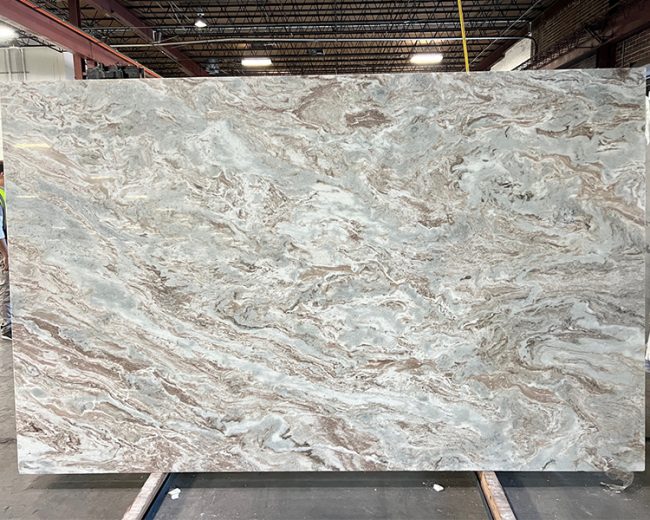
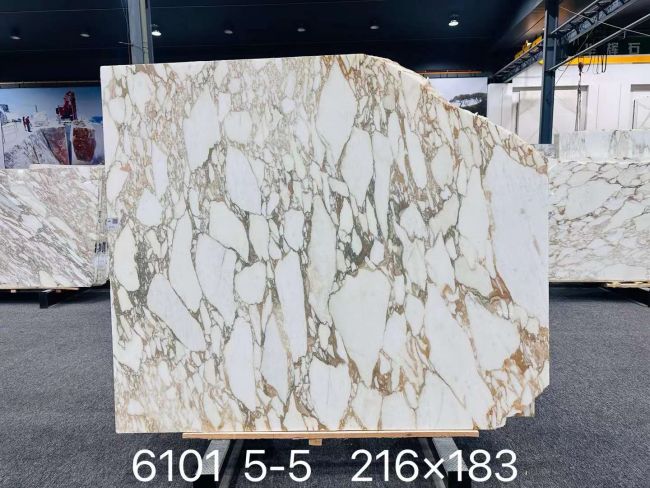
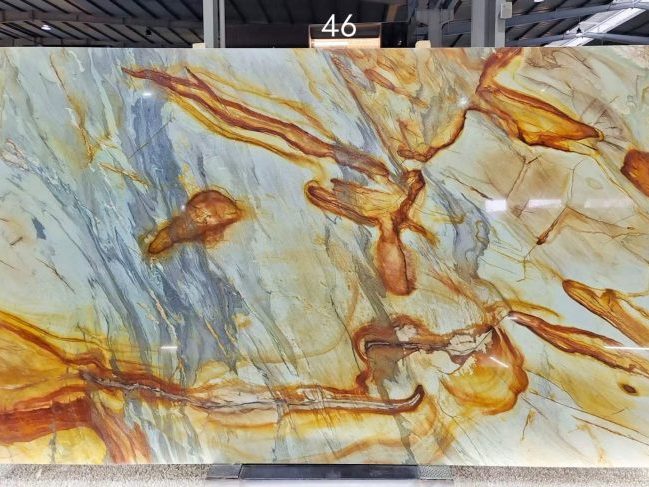
What is “Limestone”? And the Application for the Limestone.
In the context of contemporary architecture and interior design, natural stone, with its unique texture, gentle touch, and timeless aesthetic, has always held a prestigious position among the material world’s elite. Among the many stone types, there exists a familiar yet unfamiliar grayish-white or beige sedimentary rock. It once paved the base of the Louvre in Paris and was chosen by I.M. Pei as the medium for his “Light as Design” project. It whispers oriental charm on the facade of the Chinese Embassy in the United States and exudes a warm and rustic holiday feel in the background walls of countless private residences. This is limestone. The domestic industry is more accustomed to using the Hong Kong translation of “limestone” rather than the textbook “limestone.” This article attempts to answer two seemingly simple yet often misunderstood questions, drawing on four threads: geology, cultural history, design aesthetics, and engineering practice: What is limestone? And how can limestone be optimally and sustainably applied? Limestone is essentially a biochemical sedimentary rock, primarily composed of calcium carbonate (typically ≥50% CaCO₃).

Its formation can be traced back to shallow marine environments millions of years ago: the death of marine organisms such as shells, corals, foraminifera, and calcareous algae, along with saturated calcium carbonate solutions in seawater, was deposited layer by layer under the influence of tides and ocean currents. Over geological time, the Earth’s crust rose and fell, compacted during burial, and cemented and recrystallized, ultimately forming a rock aggregate with vastly varying density, hardness, and porosity—limestone. Due to varying sedimentary microenvironments, limestone exhibits a rich spectrum of colors: beige and ochre due to iron oxides; gray-black due to organic matter; and pure calcium carbonate, a pure white. Shallow seas were once widespread across the European continent during the Jurassic and Cretaceous periods, resulting in abundant production of high-quality limestone in France, Portugal, Italy, Croatia, and even the United Kingdom. French “Chamesson” and Portuguese “Moca Cream” are particularly prized in the architectural world for their uniform color and fine texture. The term “limestone” first appeared in Chinese in the 1990s within the stone trade circles of Hong Kong and Taiwan. While the literal translation of limestone, “limestone,” is easily confused with the traditional Chinese terms “bluestone” and “limestone,” the phonetic translation of “lime” retains its exotic appeal while also hinting at its “green” properties, such as breathability and carbon sequestration, making it popular in the high-end market. It’s important to clarify that limestone is not marble (metamorphic recrystallization), sandstone (siliceous particles), or travertine (larger pores often containing tree root holes). Its Mohs hardness is only 3-4, placing it in the category of soft stone. It’s this softness that allows it to develop soft, rounded corners and a patina through the passage of time, creating a “time filter” in architecture.

Archaeologists at the Giza Pyramids have discovered that as early as 2600 BC, Egyptians had already cut limestone from Tura, on the east bank of the Nile, into an outer layer, using its white surface to reflect sunlight and symbolize divine authority. With the rise of Christianity in Europe during the Middle Ages, limestone, easily carved and readily available, became the backbone of Gothic cathedrals. The flying buttresses of Reims Cathedral in France and the tracery of York Minster in England are both constructed of limestone. During the Renaissance, the alternating mosaics of Florence’s gray limestone, Pietra Serena, and yellow limestone, Pietraforte, shaped the classical facade of Santa Maria del Fiore. In the 20th century, modernist icon Le Corbusier used French limestone, Dalle de Bourgogne, for paving the Villa Savoye, using irregular patterns to break the austere aesthetic of machine-like construction. I.M. Pei also used French beige limestone, Chamesson, for the base of the Louvre’s pyramid and the walls of the underground lobby, creating a dialogue between light and stone, creating a dialogue between the classic and the contemporary. It can be said that limestone’s cultural narrative has long transcended its materiality, becoming a dual symbol of both timelessness and locality in Western architectural history. Despite its low hardness, limestone’s microstructure forms a porous network that rapidly absorbs and releases moisture, regulating building humidity. It’s known as “breathing stone.” European and American green building material rating systems (BREEAM and LEED) consider it a “low-carbon finish”: the carbon emissions from mining, processing, and transportation of one ton of limestone are approximately 55% of those of granite. Furthermore, over its lifecycle, limestone passively absorbs CO₂ from the air, gradually bicarbonating into calcified limestone and “self-healing” its microcracks. However, this porosity also presents drawbacks such as increased susceptibility to stains and acid rain. To address this, the industry has developed a “six-sided vacuum composite protection + surface fluorosilicone modification” process: In a vacuum chamber, air is extracted from the stone’s pores, and then a modified fluorosilicone resin is injected to form a hydrophobic membrane with a diameter of 2-3 nm. This maintains breathability while maintaining a surface contact angle of ≥120°, resulting in an anti-fouling effect lasting over 10 years. For exterior facade dry-hanging systems, the European standard EN 1469 stipulates that limestone must have a bending strength of 12 MPa or greater. However, high-end domestic projects often require 15 MPa or greater, with additional backing mesh reinforcement to cope with negative wind pressure in typhoon areas.
The limestone color palette includes the white Portuguese “Branco Real,” with a whiteness of 85 or greater, which creates a minimalist facade when combined with anodized aluminum and ultra-clear glass. The warm and soft beige French “Chamesson” and the domestic Henan “Louis Beige” offer large panels for seamless tiling, creating a “creamy” residential aesthetic.

The gray Croatian “Avorio,” with its shell-spotted gray, creates an industrial symbiosis of old and new when combined with rusted steel and charred wood. The brown Iranian “Moca Cream,” with its chocolate grain, can be paired with brass grilles in hotel lobbies for a retro and luxurious feel. In terms of texture language, the matte surface has a glossiness of ≤15GU and feels like skin, suitable for background walls and book walls, with a “marshmallow” diffuse reflection under light; the lychee surface is impacted with 30-50 mesh alloy chisels to form uniform bumps and depressions, with an anti-slip coefficient of R11, and is often used for landscape steps and swimming pool perimeters; the brushed surface is broached back and forth with a 60# steel brush to highlight the texture of biological debris, like “annual rings of time”, suitable for long strip grille curtain walls; the polished surface is polished with an Italian Levibreton KG3000 continuous polishing machine, with a glossiness of ≥80GU and a reflection like a gold mirror, but due to its limited hardness, it is prone to scratches and should be used with caution in hotel elevator halls with low traffic. Traditional European “Rubble Wall” slabs are constructed by interlocking 50-150mm thick schist and limestone fragments, then using white lime mortar to create “butterfly joints” that create a sense of order within their roughness. Contemporary architects prefer 600×300×30mm “bricked” limestone, combined with 3mm Japanese Torye matte epoxy adhesive, to achieve a minimalist facade with “close joints and butt joints.” For curved surfaces, water jet cutting combined with CNC five-axis bridge cutting allows the panels to bend to a radius of R = 600mm. Dry hanging with aluminum alloy backing slots achieves the “soft stone” paradox. The Chinese Embassy in the United States chose domestically produced “Louis Beige” lime stone, which, combined with glass and copper tiles, creates a “Chinese folding fan” image. The stone texture takes on a subtle warm hue in the changing light and shadow of Washington’s four seasons. The new Suzhou Museum’s gray lime stone juxtaposes pink walls and black tiles, creating a modern interpretation of Jiangnan charm by replacing brick with stone. The beige lime stone at the end of the tunnel and suspension bridge of the Miho Art Museum serves as a prologue to the “Peach Blossom Spring,” complementing the mountain mist to create a “borrowed scene.” The exterior facade renovation of Shanghai’s Plaza 66 replaced the existing granite with 300×600×40mm lime stone louvers, reducing weight by 35%, alleviating existing structural loads, and improving thermal insulation through back-ventilated cavities.

The underground commercial ceiling of Chengdu SKP utilizes hollow lime stone honeycomb panels, with light filtering through 3mm diameter holes to simulate a “starry sky” effect, effectively “transforming” natural stone into a media-friendly material. Amanfayun’s beige lime stone alternates with rammed earth walls. The interior floors feature lychee-finish lime stone with underfloor heating, boasting a thermal conductivity of 2.2W/(m·K) and a soft feel. The Sanya Edition’s pool pergola is constructed from white lime stone, whose surface dissolves slightly after soaking in seawater, creating a time-honored look reminiscent of “ancient shipwood” that complements the light and shadow of the coconut grove. In the residences, ultra-thin 9mm lime stone composite aluminum panels weigh only 22kg/m² and can be directly bonded to a wood panel base, addressing elevator load limitations. The kitchen island features “Portuguese Dolomite” lime stone with a density of ≥2.4g/cm³. After fluorosilicone protection, it meets European Standard EN 14147 Class A resistance to vinegar, red wine, and lemon juice. The bathroom floors feature a brushed finish with anti-slip grooves, while the walls are matte. The ceiling is constructed from lime stone honeycomb panels. The calcium carbonate content neutralizes residual chlorine in tap water, inhibiting mold growth. Before leaving the factory, lime stone needs to be coated with two-component epoxy adhesive to seal the pores on the back and prevent the aging and falling off of traditional “marble glue”; the dry hanging system uses SUS316L stainless steel “T”-shaped back groove with a groove depth of ≥8mm and a vertical keel spacing of ≤800mm to prevent the board from bending; cleaning and renovation use a neutral pH=7 stone cleaner + microfiber cloth once a year. If scratches appear on the surface, wet grind with 800-1500 grit sandpaper and then lightly polish with a wool polishing wheel + 5% oxalic acid solution to restore the matte finish; after removal, the lime stone can be crushed into 0-5mm aggregate and used in permeable concrete or garden paths, realizing a closed loop “from stone back to stone”. With the advancement of the “dual carbon” strategy, the limestone industry is shifting from “resource mining” to “carbon sink operations.” A leading mine in Fujian has deployed 3D geological modeling and unmanned rope saw mining, increasing the yield rate from 28% to 46% and reducing unit energy consumption by 35%. At the same time, the European LithoCarbon project is attempting to inject industrial CO₂ into limestone waste piles to accelerate carbonization reactions. Each cubic meter of stone powder can seal 120kg of CO₂. In the future, it is expected to launch a “negative carbon limestone” certificate to provide architects with calculable carbon footprint data. On the digital design side, limestone textures are scanned at high resolution to generate a “digital twin.” Through Grasshopper parametric scripts, the surface light intensity distribution under different lighting angles can be simulated, helping designers predict “how deep the temperature will be after rain, how warm the sunset will be” during the planning stage. The stone maintenance schedule is embedded in the BIM model to remind the operator to re-apply protective agent in the fifth year, achieving “full life cycle management.” The beauty of limestone lies in its “unfinished” nature – its pores breathe, its texture weathers, and its color subtly changes with the seasons and the morning and evening. It folds the underwater world of billions of years ago into a thin sheet for us to continue writing new stories of time on it. From the Pyramids of Giza to the Louvre, from the Suzhou Museum to the TV background wall in your living room, limestone reminds us with its gentle yet firm presence: architecture is not the end, but the starting point of time. Choosing limestone means choosing to let space continue to dialogue with the earth, the ocean, light and shadow, and time.