


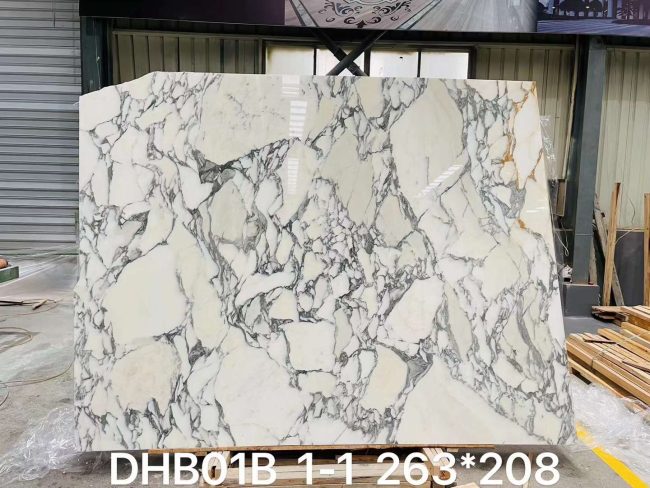
Though it is found in many parts of the world, natural stone known as travertine is mostly produced in Turkey and Italy.
Italy produces a considerable deal of travertine, especially in the western portion of the nation known as Tuscany. Tuscany is rich in travertine resources; the area is home to some of the most well-known varieties, notably Carrara marble. Due in large part to its outstanding texture and stunning beauty, Carrara marble enjoys a high degree of prestige. Applications of it are found in many different sectors, such as sculpture making and building decoration. To exacerbate the problem, other Italian areas, including Piedmont and Lombardy, are also somewhat involved in the manufacturing of travertine.

Turkey is one of the nations that produces travertine the most worldwide, and the Anatolian Peninsula is one of the primary regions for this mineral production. Among the countries that generates the most travertine is Turkey. Beige Travertine resources abound throughout the Anatolia region. Among these resources are stones of many hues and textures. Applications for beige travertine from Turkey are many and include floor paving, carving, and embellishment of architectural buildings. Its strong, vivid color and other stone texture characteristics make it popular in both domestic and foreign markets.
Travertine Origin Area: Italy And Turkey
Travertine from Turkey and travertine from Italy are distinguished from one another by a number of important characteristics, including the following distinctions:
The bulk of Italian travertine is produced in the Italian peninsula, notably in places like as Tuscany and other regions that are well-known for their distinctive geological geological formations and vast mineral deposits. The majority of the travertine that is produced in Italy comes from these regions.


There are a substantial number of regions in Turkey that are responsible for the production of travertine. These regions include the Anatolian Peninsula as well as other regions. Additionally, the travertine resources in Turkey are rather numerous.
Darker hues, like as dark grey, dark blue, or dark brown, are commonly employed in the production of Italian travertine. Additionally, it has a roughness that is more prominent. The majority of their textures are calm and serene, and at the same time, they have an appealing appearance that is reminiscent of the past.
The colours that are shown by Turkish travertine are more brilliant, such as light grey, light blue, or light brown. The texture of Turkish travertine is typically more active and shifting, which contributes to the stone’s more dynamic and energetic mood. In addition, Turkish travertine is known for its extraordinary beauty.
Price and the acceptance of the market: Italian travertine is often more expensive than other varieties of travertine due to the fact that the expenditures associated with its origin and processing are significantly higher than those of other forms of travertine. Additionally, there is a significant amount of market knowledge regarding Italian travertine material.
Turkish travertine has gradually become a popular ornamental material, in addition to being generally acknowledged and approved by the general public. In addition to gaining widespread recognition and acceptability, the price of Turkish travertine on the market is quite low. These two factors have contributed to its popularity.
Popular Travertine Slab Style
In spite of the fact that the names Italian Beige travertine and Turkish Beige travertine are very similar, there are some distinctions between the two in terms of colour, grain, and texture.
travertine in Italy is the colour. In general, the colour of Italian travertine Beige is warmer, with a pale yellow or beige hue that may be accompanied by specks and veining of light brown or grey. Beige is also known as “beige.”
Turkish Beige travertine: The colour of the Turkish Beige travertine may be slightly more grey or have some minor pinkish tones, which gives the impression that it is more neutral overall.
Texture: Italian Beige travertine: The texture of Italian Beige travertine is often finer and can exhibit either a grain-like texture or a uniform texture like a fine grain.
There is a possibility that the texture of Turkey Beige travertine is slightly rough, and there is also a possibility that there may be larger grain-like textures or patchy textures throughout the travertine.
texture: Italian Beige travertine: The texture of Italian Beige travertine is typically more abrasion resistant, has a higher density, and is more durable and resistant to wear.
The texture of Turkish Beige travertine may be slightly softer than that of Italian Beige travertine; nonetheless, in comparison to Italian Beige travertine, it is not quite as hard.
A natural marble recognised for its distinctive travertine-like structure and luxurious feel, Roman travertine is a type of marble that is found in Europe. The travertine-like elements that it possesses give it the appearance of a scenario that takes place in a deep travertine. It is available in a number of colours, typically ranging from light grey to dark grey.
Application scenario description: the interior designer of a modern-style villa employed Roman travertinerns as the primary material for the décor of the inside. The walls of the living room are constructed out of Roman travertine slabs, and the distinctive travertine texture of these slabs lends an air of mystique and profundity to the room. Under the illumination of light, the structure that resembles a travertine projects a one-of-a-kind light and shadow effect, which makes the entire living space appear more vibrant and endearing.


A type of red marble known as red travertine slab is characterised by vivid and vivid colours, and it frequently features a variety of textures and patches of varying shades. It gives people the impression that it is traces of flame blazing, which in turn gives them a sensation of passion and unrestrainedness.
Application scenario description: The designer of a trendy restaurant decided to use red holes as the material for the bar counter in the restaurant’s interior design. Customers are provided with a cosy dining environment thanks to the fact that the colour of the red hole is a pleasing compliment to the overall style of the restaurant. The surface of the bar has been adequately adorned with a variety of textures and spots with the intention of bringing an element of art and a sense of individuality to the entire area.
An introduction: Brown Travertine Slab is a type of brown marble that has a warm and full colour as well as a clear and rich texture, just as the wonderful patterns that nature’s brush has carved on the stone.
The designer of the lobby decoration for a luxury hotel decided to use Brown Travertine Slab as the ground paving material. This is an example of an application situation. The hotel’s atmosphere is complemented by the warm tones of the Brown travertine, which results in an experience that is both pleasant and welcoming for individuals staying there. The enormous brown slabs that are laid out in a tidy pattern on the floor of the lobby have a discernible texture, which gives the impression that the entire area is more refined and sophisticated.
Italian Silver Travertine Slab
An introduction to Italian Silver Travertine Slab Italian Silver Travertine Slab is a type of grey marble that has a brilliant and soft colour, a delicate texture, and a silky touch. It appears to be an aesthetic picture, similar to an ink painting.
A description of the application scene: The designer of a contemporary art gallery decided to use Italian Silver Travertine Slab as the material for the wall decorating in the exhibition hall of the gallery. The artwork is complemented by the texture and colour of the travertine wall, which can be described as silver-gray. This provides the spectator with a visual feast. As a result of the light’s ability to produce a variety of shadows on the wall, the entire exhibition hall is filled with an artistic mood.


Gold Travertine Slab
The Golden Cave is a type of golden marble that possesses a brilliant and dazzling colour, a metallic lustre, a rich and distinctive texture, and a gleaming appearance that is reminiscent of pure gold.
The designer of a high-end business club decided to use Golden Cave as the ornamental material for the reception desk. This decision was made in the context of the application scenario. It is the colour and texture of the golden cave that draws attention to the grandeur and majesty of the business club, so producing an atmosphere that is both luxurious and grand for the welcome of guests. desk for receiving guests.
Frequently Asked Questions
1. Why is Travertine such a popular material for exterior applications?
Travertine is highly favored for exterior design due to its natural durability and classic architectural appeal. Its unique porous structure provides excellent slip resistance and remains comfortably cool under direct sunlight, making it a premier choice for outdoor patios, pool decks, and building facades in various climates.
2. What is the difference between “Vein Cut” and “Cross Cut” Travertine slabs?
The aesthetic of travertine depends on the cutting direction. Vein Cut slabs are sliced along the natural bedding planes, revealing long, linear patterns. Cross Cut (or Fleuri Cut) slabs are sliced parallel to the bedding, resulting in a more clouded, circular, and variegated pattern. At Century Star, we offer both to match your specific design vision.
3. Should I choose “Filled” or “Unfilled” Travertine for my project?
This depends on the desired look and application. Unfilled travertine retains its natural, rustic holes for a more organic feel, often used in outdoor settings. Filled travertine has its voids professionally filled with a color-matched resin, creating a smoother, more sophisticated surface that is easier to clean and ideal for high-end interior flooring.
4. How does Travertine perform in wet environments like pool surrounds?
Travertine is exceptionally well-suited for wet areas. Its natural pits and textured surface provide a high level of grip, even when wet, which enhances safety. Additionally, its ability to stay cool to the touch makes it the most comfortable natural stone for barefoot walking around swimming pools and outdoor spa areas.
5. What maintenance is required for Travertine exterior surfaces?
To preserve its natural beauty, exterior travertine should be rinsed periodically with clean water. For deeper cleaning, use a pH-neutral stone cleaner. We recommend applying a high-quality penetrating sealer during installation to protect against water staining and organic growth, especially in humid environments.