



Volupia Quartzite: A Magnificent Scroll from the Heart of Brazil
Volupia Quartzite originates from an ancient fold belt in the eastern plateau of Minas Gerais, Brazil. This region, once the boundary between the ocean and land during the Precambrian era, saw quartz and feldspar-rich sediments flattened, folded, and recrystallized by temperatures exceeding 600°C and pressures exceeding 2.5 GPa during a mountain-building event 580 million years ago. This resulted in a dense, hard quartzite with a streamlined texture. Originally called “Rocha Sangue-de-boi” (“ox-blood red stone”) by local miners, it was later named Volupia by exporters at a Verona exhibition in Italy. (Derived from the Latin “voluptas,” meaning “delight of the senses”), this quartzite has since earned a captivating transliteration in the international market: Volupia Quartzite. Today, both the deep brown primary veins of Brazil’s Cachoeiro de Itapemirim mining district and the rose-burgundy secondary veins of the Paraná River basin are collectively marketed globally under the name Volupia, becoming the most exotic “South American red” in the high-end stone catalog.

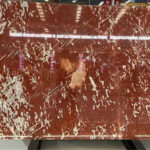
If you compare a cross-section of Volupia stone to a canvas, the base is a glass of aged Bordeaux—a deep red interwoven with dried rose, occasionally tinged with maroon. The white quartz veins, like windswept milk, stretch across the burgundy in varying widths, sometimes gathering into rivers, sometimes shattering into star-like specks. As the angle of the light source changes, the translucent structure within the quartz crystals reflects a soft, opalescent light, giving the stone a dual texture of semi-matte and slightly translucent. It’s this combination of restrained red and vibrant white that allows Volupia to complement modern minimalist black, white, and gray, while also complementing vintage walnut, brass, and genuine leather. Even more remarkable is that the mineralized belt in the Brazilian mining area is less than 40 meters wide, and the grain direction of each block is nearly uniform. Designers can create a continuous “lava river” by tracing the grain, or create a pixelated collage effect by staggering the grain, offering a high degree of freedom.

Laboratory data shows that Volupia has a hardness of 7 on the Mohs scale, a density of 2.68 g/cm³, a water absorption rate of 0.18%, a compressive strength of 135 MPa, and a flexural strength of 12 MPa. This means that a 30 mm thick slab can be safely hung from a 4 m high dry hanging system and withstand the daily rigor of chopping bones, hot pots, and spilled red wine on kitchen counters. Even more remarkable is that quartzite’s crystal structure is naturally resistant to acids, alkalis, and salts. Even in the high salt fog of coastal areas or the high freeze-thaw conditions of northern China, the surface remains weathered without any spots. Designers often incorporate it into designs alongside other more delicate marbles like Carrara White and Pandora: the former is used for high-load areas like countertops and floors, while the latter is relegated to background walls. Each performs its own function, complementing its strengths. Volupia’s processing chain is a high-precision “surgery”:
- Block Cutting: An Italian BM saw can cut 80 pieces at a time, with a thickness tolerance of ±1 mm;
- Backing Mesh Lamination: Sheets thinner than 20 mm require lamination with a 2 mm fiberglass mesh, with a bending radius of up to 1.2 m, suitable for curved staircases;
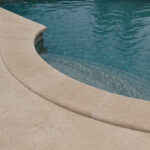
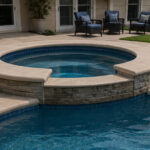
- Surface Treatment: Polishing up to 90 GU is suitable for kitchen countertops; after burning, the roughness is Ra 45 μm, and the anti-slip level is R11, making it suitable for outdoor pool decks; the leather surface is delicate and fingerprint-resistant, making it a favorite for bathroom cabinets;
- Light Transmitting Treatment: After vacuum infusion with epoxy resin, 12 mm sheets have a light transmittance of 15%. Backed by LEDs, they become illuminated wall panels;
- Waterjet Inlay: Combined with white quartz or brass strips, it can cut 0.2 mm sharp angles, creating complex logos. The entire process is carried out simultaneously across three major processing bases in Verona, Italy, São Paulo, Brazil, and Xiamen, China, ensuring global project delivery within 45 days.

Designer Li Ran’s home occupies the top floor of a 1936 Art-Deco apartment in Shanghai’s Old French Concession. Its mottled steel windows and gray-white brick walls evoke a bygone era, shrouded in the shadows of a sycamore tree. She connected the previously cramped kitchen with the adjacent small study, creating a 7-by-3.2-meter open-plan dining space. The sole focal point is an 8.2-meter-long Volupia Quartzite island—a lava river dormant deep in the Brazilian plateau, laser-cut, airlifted, and hand-polished, finally resting within this old house. A dark wine-red hue flows gently across the stone surface, while milky quartz veins resemble windswept milk. Translucent crystals capture the morning light, casting a soft-focus filter over the entire kitchen. To create a dialogue with the lines of the old building’s steel windows, Li Ran first laser-scanned the Art-Deco geometric patterns of the old window frames. She then had the stonework factory CNC-carve 3mm-deep grooves along the edge of the island. Brass strips are embedded in the grooves, creating a contrast between the patina and burgundy, as if time whispers between the two materials. Under the countertop, she eschewed conventional floor-standing cabinets in favor of black walnut drawers suspended above 24V light strips. The light filters through the wood grain and falls on the veins of the quartzite, resembling the shimmering evening breeze across a lake. While cooking, the spatula strikes the volcanic red, the sound absorbed by the old wood floor, then bounces back, transforming into a valley echo. Late at night, the linear lights are dimmed to 2700K, and the milky white veins in the quartzite ripple subtly under the light, as if folding an entire mountain range into every breath of the old house. She simply dusts the island once a week with a mild detergent. Three years later, the red remains as fresh as ever, like a lingering firework display and a gentle footnote she left to this city. Daily care requires only three steps: clean with a neutral detergent and a soft cloth every six months; wipe away any stains such as red wine or lemon juice within five minutes; and reapply with a penetrating protective agent every two years. Renovation cycle: Polished surfaces should be resurfaced every five to seven years, and leather surfaces should be reapplied with a fluorosilicone protective coating every three years. Looking ahead, Brazilian mining areas are experimenting with “translucent + photovoltaic integrated” technology: 12mm translucent panels are bonded to thin-film solar panels on the back, generating electricity during the day and emitting light at night. Volupia is poised to continue its legacy in zero-carbon architecture.