



The Epic of Golden Sandstone: A Transformation from Seabed to Plateau
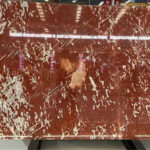
A thousand meters above sea level on the plateau of Minas Gerais, Brazil, reveals an ancient coastline dating back 600 million years. Layers of quartz sand and iron oxide from the shallow sea were then recrystallized in the intense heat and pressure of subsequent mountain building, ultimately forging the warm golden rock known today as Palomino Quartzite. Its name, derived from the Spanish word “palomino,” a horse with a silky golden coat, is both a direct allusion to its color and a hint of its future speed and grace on the global architectural stage. Cutting through the boulder along the vein reveals that the sedimentary rock’s bedding has been rewritten by high temperatures into a dense quartz network. Iron oxides smudge through the cracks like ink, creating a flowing, continuous brown-brown grain. Occasional flashes of gray-green streaks are “marginal notes” left by the seabed chlorite. When sunlight first penetrates the quarry, the rock surface resembles a haystack on fire, and the entire mountain seems to whisper the story of its long journey from the seabed to the plateau. A Whisper of Color and Light: A Radiant Soul Beneath a Gentle Exterior

What truly sets Palomino apart from other quartzites is its uniquely progressive color scheme. Its base, a shade between creamy beige and champagne gold, resembles hay gently curled by the afternoon sun. The dark to light brown veins evoke the ridges left by windswept sand dunes, or the growth rings of a tree cross-section, layered yet never repeating. Due to the exceptional purity of the quartz, its polished luster is somewhere between glass and silk. Light refracts repeatedly between the grains, creating a soft yet profound “inner glow.” This light is not glaring, but rather seems to slowly seep from within the rock, imbuing the entire slab with a subtle warmth. Designers favor juxtaposing it with wood, brass, linen, and even cool white metal: the former evokes a Southern European languor, while the latter imbues minimalist spaces with just the right amount of warmth. In any context, it creates a focal point for both visual and tactile pleasure.

Palomino Quartzite Performance and Form: Gentle Resilience within a Hard Shell
If Palomino’s appearance alone weren’t enough to warrant its frequent appearance in high-end projects around the world, its appearance wouldn’t be enough. Its Mohs hardness of 7 means it’s scratch-proof; its compressive strength of 105 MPa is sufficient for high-rise exterior wall installations; and its water absorption rate of 0.62% allows it to withstand freeze-thaw cycles at -30°C. A ten-year wear test simulated in a laboratory showed that gloss retention in high-traffic areas exceeded 85%. Even more remarkable, its resistance to acids and alkalis far surpasses that of traditional marble, making it impervious to scratches from lemon juice in the kitchen and detergent in the bathroom. Consequently, it can be cut into thin 20mm veneer panels or forged into substantial 30mm treads; polished to a brilliant gleaming elevator lobby backdrop or honed into outdoor steps with a 2.8 anti-slip coefficient. Like a knight in armor yet soft at heart, it effortlessly balances aesthetics and functionality. Craftsmanship and Handcraft: From Mining Blocks to Urban Skin

From the Brazilian plateau to construction sites around the world, Palomino undergoes four significant metamorphosises. The first occurs in the mine: diamond wire saws slice through the boulders along their fissures, while water jets cool the stone, reducing saw kerfs to just 5 mm, minimizing material loss. The second occurs in the processing plant: infrared bridge saws cut the rough boards into 2400 × 1200 mm slabs. CNC polishers use seven stages of grinding to achieve a gloss exceeding 90 GU. For a pebbled finish, alloy chisels strike the stone at 3000 times per second, instantly creating a velvety texture without sacrificing strength. The third occurs in the designer’s computer: through “book-cutting” layout, the textures of two adjacent slabs are mirrored, creating an unfolding golden butterfly, symmetrical yet not rigid. The fourth occurs on-site: dry hanging, wet lamination, universal supports, epoxy backing… each construction paves the way for its long-lasting beauty. Finally, when the final coat of fluorosilicone protective agent was evenly applied, the rock seamlessly blended with the city’s skin, allowing 600 million years of geological story to be revisited in daily human experience.
Palomino Quartzite Light and Shadow Theater: Three Narratives in Three Spaces
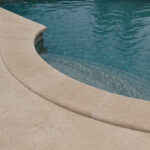
The Shanghai Suhewan No. 1 Penthouse Apartment incorporates a 2700 mm x 900 mm panel of leather-covered Palomino into the west kitchen island. The stone’s warm texture, accented by dark gray oak and brushed brass, resembles a golden river illuminated by the city lights. At night, linear light strips slowly seep from beneath the countertop, and the light within the rock seems to reawaken. Andaz Shenzhen Bay Hotel, on the other hand, opts for a 30 mm thick, dry-hanging lychee veneer exterior wall. Its densely-woven, vertical brown veins flow vertically across the 120-meter building, resembling a waterfall on sunny days, distant mountains on cloudy days, and roaring with the sky during heavy rain. The Chengdu Luxelakes Eco-City Exhibition Center has laid it across the bottom of a water feature pool. 400 x 400 mm sandblasted surfaces are laid with staggered joints. A thin layer of water, 0.8 mm thick, gently covers the stone surface. The golden wood grain is stretched, twisted, and folded in the ripples, like sand dunes drifting underwater. Children reach out to stir the water, and an entire geological history is instantly shattered into shimmering dust. Three scenes, three scales, Palomino uses the same face to interpret the luxury of the city, the majesty of the mountains, and the lightness of childhood.

Palomino Quartzite Time and People: A Dialogue of Life in Maintenance Ritual
Even the hardest stone cannot withstand the ravages of time. In the first three months after completion, calcium hydroxide precipitates from the water, leaving white tear marks like fleeting geological records. A gentle wipe with a 1% oxalic acid solution and a fluorosilicone protective coating allows the rock to breathe again. Thereafter, routine health checks are conducted every six months: gloss, color variation, and water absorption—each data point serves as a reminder of the symbiotic relationship between humans and rock. In the northern project, the water level is lowered to 5 cm below the top in winter to allow the stone to expand. In the southern project, ultraviolet light modules are used to inhibit algae and prevent green plaque from creeping into the stone’s texture. One spring day five years later, the owner noticed the first tiny scratches on the countertop, a record of family life like tree rings. They refused polishing and renovation, simply applying a layer of protective agent, allowing the scratches to continue telling the story of time. Brazilian mining areas are also simultaneously promoting a “zero wastewater” cycle: 100% of sawing cooling water is reused after flocculation and sedimentation, and tailings are made into manufactured sand for road base. The “afterlife” of rock continues to surge beneath the city. Technology and humanity, hardness and softness, the momentary and the eternal, are re-woven through this series of maintenance rituals. Future and Imagination: When Rocks Learn to Photosynthesize
Recent laboratory discoveries are propelling Palomino into the era of “photovoltaic quartz”: ion-implanted TiO₂ nanofilms can decompose 65% of organic pollutants under visible light catalysis, reducing chemical cleaning cycles from quarterly to annual. The film, less than 200 nm thick, has virtually no impact on the stone’s color. A more radical concept involves embedding flexible perovskite cells within the quartzite, collecting sunlight during the day and illuminating water features at night, giving the 600-million-year-old stone its first “self-luminous” ability. Designer sketches depict Palomino cut into ultra-thin, 8mm translucent panels embedded with optical fibers. Controlled by LEDs, their textures flow like clouds. Future apartment partitions will no longer be cold glass, but golden rock curtains that breathe, glow, and tell stories. From seafloor sand to urban skin, from passive bearing to active response, Palomino Quartzite, through a long geological arc, demonstrates that rock is not the end of time but the starting point for a renegotiation between humanity and nature.
