


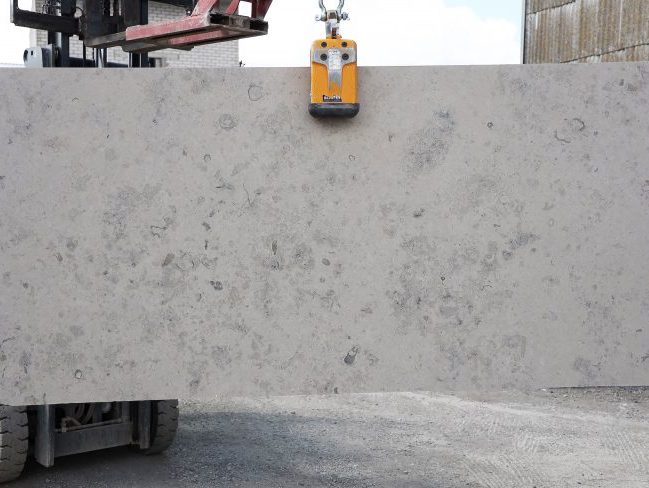


Amidst the winds and rains of the mountains, Black Mountain Stone stands like a silent elder, cloaked in a coat ranging from dark gray to inky black. Its surface is covered with a “plum blossom bark” etched by time and crisscrossed with white quartz veins, resembling a long, rain-stained ink painting. Born deep within the South China Fold Belt, it belongs to the dense quartz-sandstone transition layer. Its high specific gravity and hardness, with a compressive strength of up to 130 MPa, allows it to withstand the erosion of acid rain and freeze-thaw cycles at -20°C, remaining as solid as a rock. It is precisely this calmness and simplicity that has gradually lifted it from its rural roots, serving as a focal point for modern landscape designers, becoming a key player in new Chinese dry landscapes, minimalist courtyards, and even urban pocket parks. Its blackness is not a monotonous darkness, but a backdrop that absorbs light, plants, and water, giving a bamboo grove, a pool of water, or even a lamp a sense of stage presence. When designers first step into the material yard, faced with the various sizes of Black Mountain Stone, it’s like confronting an unedited library of material: Some weigh three to five tons, with perfectly rounded contours, resembling the backs of ancient beasts, perfect for solitary peaks. Others are cut into slices ranging from 50 to 200 millimeters thick, with widths ranging from 30 by 60 centimeters to 60 by 120 centimeters. Edges can be cut straight or rounded, making them ready-made slabs for feature walls, water features, and stepping Black Mountain stones. Even more, water jets and precision engraving machines create shaped pieces, hollowed out into water bowls, coffee tables, lamp holders, and even logo installations, transforming a single stone into a complex complex of both function and symbol. The designer’s challenge is to establish a narrative rhythm between these three forms: first defining the main peak, then paving the ground, and finally adding decorative elements. The spatial mood, like a mountain rain, progresses layer by layer, from far to near, from small to large.


Black Mountain Stone Design
It is the design grammar of “point, line, and surface” that truly brings Black Mountain Stone to life. Designers often place a central stone at an entrance or corner, weighing between half a ton and three tons, with a height-to-width ratio between 1:1.2 and 1:5, creating a sense of imposing presence without overwhelming pedestrians. A 30-centimeter cavity is discreetly left on the back of the Black Mountain stone, housing a 2700K warm-white LED strip. At night, light filters through the stone, casting its silhouette on the feature wall or water surface, resembling a moon rising from behind a mountain ridge. Next, designers arrange smaller stones, 300 to 500 millimeters, linearly along the path, creating undulations every three to five meters. Twenty millimeters are left between the grass to allow for ventilation and allow for easy passage of lawn mowers.

Finally, for areas requiring large paving, designers use 600 x 300 x 50 millimeters slices, closely stitched together with 8-millimeter gaps filled with white quartz sand. Within 30 square meters, the black and white create a minimalist dry landscape image: black represents the mountains, white represents the sea, and each step reveals a new scene, each scene a new realm. However, for the Black Mountain stone to truly understand the designer’s language, precise processing is essential. The slicing process begins with table saw cutting, with an error control of within plus or minus two millimeters. This is followed by trimming with a profiling machine, honing the sharp blade into a smooth arc. A water jet is then used to create holes, preparing for the later embedding of light strips or water outlets. To create a water bowl, a 30mm-thick cavity is hollowed out in the center of the block, with a 50mm-diameter stainless steel inlet and outlet embedded in the bottom. Only after a 24-hour leak-proof test can it be released. The lamp holder is even more meticulously crafted. A CNC engraving machine carves a 24V low-voltage lamp trough into the stone, and the IP67-rated light strip is seamlessly concealed within. At night, only the light is visible, not the lamp itself, making the stone seem to breathe. Secondary processing on-site is limited to portable water grinders and angle mills. Dry cutting is strictly prohibited to prevent edge cracking.

All cuts are chamfered by 0.5mm to prevent chipping and facilitate later cleaning. The real story begins when the Black Mountain stone arrives on site. The construction team first uses a total station to locate the center coordinates of the main stone, with an accuracy of no more than two centimeters. They then cast a 600 x 600 x 400 mm C25 reinforced concrete independent foundation for the isolated stone, 50 mm above the finished surface to prevent water accumulation and root rot. For hoisting, a truck crane with nylon slings is sufficient for stones weighing half a ton to two tons. A 20-ton truck crane is used for hoisting, with rubber gaskets placed under the stone and leveled after verification with a spirit level. The slices are laid using a 1:2 cement mortar, with matching stone powder applied to the surface to seal the joints, ensuring both durability and aesthetics. A 32 mm PE pipe is embedded behind the main water basin stone, threaded with wires and fitted with a removable inspection box, allowing maintenance personnel to replace light strips or water pipes without removing the stone. Finally, the hoisted area is covered with non-woven fabric, and mechanical impact is prohibited for seven days, allowing the stone to quietly complete its first “handshake” with the concrete.


What truly made Black Mountain Stone famous is its outstanding performance in three classic cases. The rooftop garden at Shenzhen Bay No. 1, a 120-square-meter space, features a 3.2-ton original stone standing firmly in the center. Eighteen 600 x 300 x 50 mm slices are laid out in a curved and linear arrangement. A 2700K LED is embedded in the base of the main stone. At night, light filters through the stone, casting a silhouette of a meter-high feature wall, creating the illusion of a miniature mountain forest suddenly rising above the city. In the 30-square-meter front yard of Luxelakes Villa in Chengdu, the designer fashioned black mountain stone slices into 400 x 200 x 50 mm steps, with 5 mm rounded corners and 5 mm gaps filled with white quartz sand. During the rainy season, the Black Mountain stone drains 15 liters per minute with no water accumulation. The contrast between black and white is even more striking after rain. The VIP passage at Beijing Daxing Airport features a 25-meter-long feature wall made of closely spaced 600 x 300 x 50 mm slices. A 50 x 50 mm slot at the top conceals a light strip. A 24V low-voltage light strip is embedded within the wall, creating a sense of light without the light itself. The entire stone wall appears to float within the gray and white space of the airport, becoming a “city gate” for passengers. However, even the hardest Black Mountain stone requires gentle care. Daily cleaning requires only a neutral detergent and a soft brush, every six months. When moss grows excessively, spray a 1:1,000 sodium hypochlorite solution, which sterilizes without damaging the stone surface. Cracks can be repaired with epoxy grouting and matching stone powder. Five-year inspections are sufficient to maintain the Black Mountain Stone’s pristine appearance. The detachable design of the hoisting system allows for single-piece replacement in less than two hours, without affecting the overall landscape. Thus, from the mountains to the courtyard, Black Mountain Stone, with its calm black, vibrant white, and malleable form, has transformed itself from stubborn stone to a star. Designers only need to master the complete script of these seven dimensions to allow a single piece of black Mountain stone to tell a story of mountains, moonlight, and time in a city of steel and concrete.