


How Professionals Maintain Elevator Lobby and Stone Floors
However, with scientific methods, professionals can maintain the “inherent beauty” of the stone. As a professional stone maintenance technician, mastering the following core skills is essential.

01. The Unique Challenges of Elevator Lobby Stone Floors Maintenance
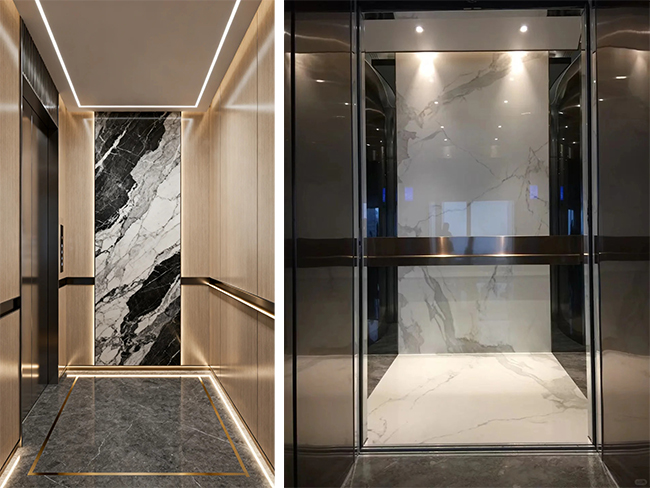
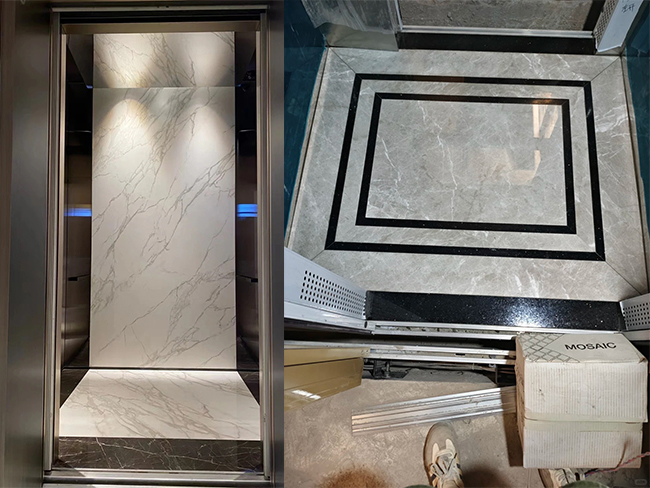
The reason elevator lobbies and cars are considered the “hardest to maintain” lies in the unique combination of massive traffic volume and specific human behavior.
In an office building housing 5,000 people, nearly that many individuals pass through the ground floor elevator lobbies and cars daily. This sheer volume puts immense strain on the stone.
Unlike regular walkways, elevator lobbies suffer from a distinct type of abrasion. While waiting (an average of 3-5 minutes), people rarely stand still. They shift their weight, shuffle their feet, and turn to check the elevator numbers. This constant “micro-abrasion” from shoe soles grinds against the stone surface, causing significantly more damage than simple linear walking.
02. Material Selection and Pre-Treatment
Prevention is the best medicine. During the design phase, professionals should advise selecting harder materials like granite or dense marble for high-wear areas, avoiding softer stones like limestone or travertine.
For existing floors, thorough surface preparation is non-negotiable:
- For Waxed Stone: Use a potent wax remover to strip all residues.
- For Unwaxed Stone: Clean with a neutral detergent to remove grime.
A crucial step often overlooked is the protective treatment. Evenly spraying a penetrating sealer allows it to bond deep within the stone. This creates a barrier against external stains and lays the foundation for durable maintenance.
03. The Dual Protection Strategy: Physical Polishing + Sealing
For high-abrasion zones, a single technique is rarely sufficient. The proven “Physical Polishing + Sealing” dual strategy offers the most effective defense.
1. Physical Polishing Technology
Physical polishing uses diamond grinding discs to directly refine the stone surface. This process alters the mineral structure, achieving a natural gloss level of 85-100 degrees.
Why it works: The luster comes from within the stone, ensuring true color vibrancy. More importantly, its wear resistance is derived from the stone’s own density, far surpassing artificial crystalline layers.
Procedure: Use a grinder with specialized pads (e.g., VD easy-grip pads) to grind up to M7 grit (approx. 3000#), achieving a gloss above 85 degrees.


2. Glazing (Sealing) Technology
Building upon the physical polish, glazing forms a protective layer of silica (SiO2) on the surface. This layer is incredibly dense and hard.
Procedure: Apply glazing material (e.g., VD stainless steel glaze) using a high-speed machine. For elevator lobbies, apply 4-5 coats to build a robust shield capable of withstanding extreme traffic.
04. Daily Care and Stain Prevention
Daily maintenance is the frontline defense:
- Dry Dusting: Use soft brushes or vacuums to remove abrasive sand before it scratches the surface.
- Wet Mopping: Use neutral detergents with warm water and a semi-dry mop. Crucially, minimize water usage to prevent moisture penetration.
- Stain Resistance: Regularly apply a stain repellent to enhance resistance to water, oil, and common spills.
For stubborn stains, use specialized removers, but always test in an inconspicuous area first to avoid etching or discoloration.
05. Maintenance Cycle and Evaluation Stone Floors
Maintenance should be scheduled dynamically based on gloss reduction, not fixed dates.
The 80-Degree Rule: Re-maintain when the gloss drops from 100 degrees to approximately 80 degrees. This ensures the sacrificial glaze layer bears the wear, protecting the underlying physical polish. Once the base polish is damaged, restoration becomes difficult.
Using the “Physical + Glaze” method, results typically last 15-60 days depending on traffic.
Effect Evaluation Standards:
| Criteria | Standard | Description |
|---|---|---|
| Gloss Level | ≥ 80 Degrees | Measured by a gloss meter. |
| Surface Uniformity | No Missed Spots | Harmonious visual effect across the entire area. |
| Protective Layer | Intact & Even | The glaze layer must uniformly cover the surface. |
06. Common Stone Floors Pitfalls and Professional Tips
Avoid these common mistakes:
- Incomplete Cleaning: Residues prevent chemical bonding.
- Improper Timing: Incorrect dwell time for chemicals ruins the reaction.
- Omitted Steps: For example, skipping the final “CR-2” step in a CR-2 > CR-3 > CR-2 crystallization sequence.
Professional Operation Checklist:
- Equipment: Use a single-disc heavy-duty grinder (50-60kg weight recommended) to ensure adequate pressure.
- Safety: Always wear protective gear (gloves, goggles) and set up warning signs to prevent chemical exposure or slips.
07. Frequently Asked Questions (FAQs)

