


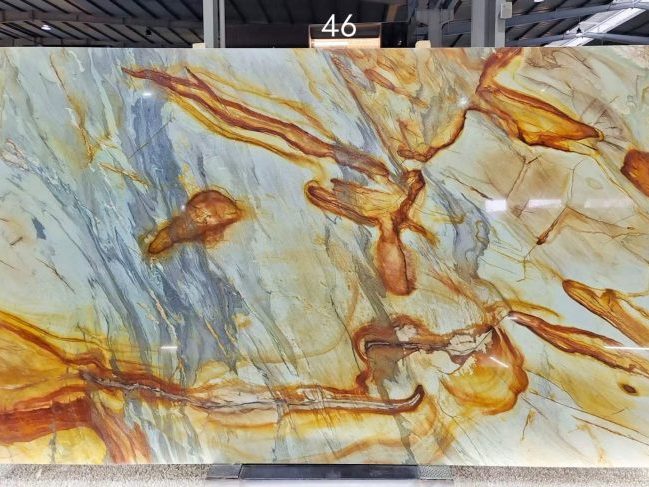


Quick Summary
The best granite for kitchen island projects in North America is usually the granite that balances durability, slab-scale visual control, and full-room design compatibility. Granite can be an excellent island material when buyers choose the right background tone, movement scale, finish, and fabrication strategy. A successful granite island should feel strong and premium without becoming visually heavy, overly busy, or disconnected from the rest of the kitchen.

Kitchen islands in North America are expected to do much more than provide extra prep space. In many homes, they act as the visual center of the room, the social hub of the kitchen, and the point where cooking, dining, working, and entertaining overlap. Because of that, the island surface has to perform on several levels at once. It needs to support daily use, hold up visually from multiple angles, and contribute to the overall architectural mood of the space.
Granite remains highly relevant in this setting because it combines natural stone authenticity with a reputation for strength, practicality, and long-term value. It can feel more grounded and substantial than many engineered surfaces, while still offering broad design range. In North American kitchens, that matters because buyers often want a material that feels durable and believable rather than overly stylized. Granite can deliver that result, but only when it is chosen with island scale, lighting, cabinetry, and fabrication details in mind.
That is why selecting the best granite for kitchen island in North America should not be approached as a simple color choice. Granite varies widely in undertone, mineral activity, background consistency, and how it reads across a large surface. A stone that looks attractive in a small sample may become too busy or too dark on an oversized island. The strongest decisions come from evaluating granite as a complete island system rather than as an isolated slab.
Why Granite Works So Well for Kitchen Islands
Granite works especially well for kitchen islands because it combines material strength with a naturally premium appearance. In open-plan North American homes, the island often becomes one of the most heavily used surfaces in the house. It may support food preparation, casual dining, serving, storage, and daily traffic all at once. Granite’s durability and visual stability make it well suited to that role.
Another advantage is that granite tends to communicate solidity. While some surfaces are chosen mainly for pattern or trend value, granite often gives the island a stronger sense of permanence. This is especially effective in kitchens where the design goal is timelessness rather than fast-moving fashion. In homes with warm woods, painted cabinetry, darker metals, or more natural architectural palettes, granite can help the island feel anchored and authentic.
Granite also offers a broad visual range. Some slabs are soft and quiet, with finer mineral character and more controlled movement. Others are dramatic, dark, or strongly patterned. This gives buyers a wide field of design options, but it also means discipline is necessary. The best granite island is usually not the most intense slab in the yard. It is the slab that remains balanced at full kitchen scale.
What North American Buyers Usually Need from a Granite Island
Most buyers in this market want an island that feels premium, functional, and visually stable over time. They usually want a granite surface that can handle daily use while still contributing to the room’s design identity. In luxury homes, the goal may be a strong centerpiece. In broader residential projects, the goal may be a more widely appealing island with durable long-term value. In both cases, granite selection should balance beauty with practical judgement.
This usually creates several main decision factors. One is background tone. Another is mineral activity and movement. Another is finish. Another is whether the slab will work with waterfall sides or thicker edge profiles. Another is how the granite coordinates with cabinetry, flooring, and lighting. Buyers should also consider whether the island is meant to feel calm and architectural or more dramatic and statement-driven.
These choices matter because granite behaves differently from more softly veined stone categories. Its character often comes from mineral pattern, grain, or more fragmented movement. That can be a major advantage when selected correctly, but it can also become too visually restless if the slab is not suited to large island geometry. Good selection comes from thinking about the finished island, not just the raw slab.

How to Evaluate Granite for Kitchen Island Use
Background Tone
Granite can range from pale gray and soft taupe to warmer beige, charcoal, black, and more complex mineral mixtures. In North American kitchens, lighter and mid-tone granites often perform especially well because they feel easier to integrate into broad residential palettes. Dark granite can also work beautifully, particularly in larger kitchens or more dramatic contemporary interiors, but it should be reviewed carefully because it can make an island feel heavier if the room lacks enough light or contrast.
Pattern Scale and Mineral Activity
One of the most important questions is how active the granite looks at island scale. A slab with intense movement or heavy contrast may feel exciting in the yard but can become visually noisy across a long island, especially once sinks, seams, waterfall sides, or mitered edges are introduced. More controlled granite with better background stability often performs more elegantly because the island reads as one composition rather than many competing surface zones.
Finish Selection
Polished granite remains a popular choice because it creates brightness, depth, and a more formal premium effect. Honed granite can feel softer and more architectural, especially in kitchens that lean modern or warm contemporary. Leathered or textured finishes may also be relevant in some projects, particularly where buyers want more tactile character and slightly lower visual glare. The right finish depends on the kitchen’s style, the surrounding reflectivity, and the buyer’s expectations for daily use.
Island Geometry and Layout Logic
Granite should always be evaluated with the actual island shape in mind. Buyers should consider slab length, likely sink location, edge profile, seating overhangs, and whether the project includes waterfall ends. A granite that works well on a simple rectangular top may feel less successful once wrapped vertically or interrupted by heavy fabrication details. The best granite for kitchen island use is often the slab that holds together visually through the whole assembly.
Coordination with Cabinetry and Flooring
A granite island is not successful on its own. It needs to support the room’s full material palette. A warm granite may pair very well with walnut, oak, brass, and softer neutrals. A cooler granite may align better with black metals, painted cabinetry, and more architectural color schemes. The island becomes convincing when the granite strengthens the entire room rather than standing apart as an unrelated luxury element.

Popular Granite Profiles for Kitchen Island Projects
| Granite Profile | Best For | Advantages | Main Watchpoints |
|---|---|---|---|
| Light Gray Granite | Contemporary kitchens and broadly appealing residential projects | Balanced, modern, easier to coordinate with multiple finishes | May feel too quiet if the kitchen lacks contrast |
| Warm Beige or Taupe Granite | Layered residential kitchens and warm modern interiors | Comfortable tone, strong pairing with wood and brass | Needs careful lighting review to avoid dullness |
| Black or Charcoal Granite | Large custom kitchens and dramatic focal islands | Depth, premium authority, strong visual anchor | Can feel too heavy in smaller or dimmer kitchens |
| Soft Movement Granite | Calm luxury kitchens and long island layouts | More stable wall-to-wall reading, less visual noise | Needs good slab continuity to stay refined |
| Statement Mineral Granite | Feature islands in high-end custom projects | Distinctive natural identity, memorable luxury effect | Can overwhelm the room if cabinetry is already busy |
Best Applications by Kitchen Style
In contemporary kitchens, the most successful granite islands are often the ones that feel restrained and architectural. Light gray, muted charcoal, or more controlled mineral granites can work especially well when cabinetry is clean-lined and the room relies on proportion rather than decoration. In these spaces, the best granite usually offers enough texture to feel natural without creating unnecessary visual noise.
In warm transitional kitchens, granite often performs best when it reinforces the room’s material depth. Warm taupe, beige, or more layered soft granite can work well with paneled cabinetry, oak or walnut floors, and brushed metals. Here, buyers usually benefit from choosing a slab with a stable background and calmer movement rather than sharp pattern contrast.
In larger custom kitchens, darker or more expressive granite may be appropriate when the island is intended to become the room’s visual anchor. This can be highly effective, but only if the kitchen has enough scale and enough supporting calm in the surrounding materials. A strong granite island should feel deliberate, not overpowering.

Common Mistakes Buyers Make
The first mistake is choosing granite as if every slab reads the same. Granite is a broad material family, and some slabs are much better suited to island use than others. The second mistake is evaluating only from small samples. Mineral activity, contrast, and background consistency behave very differently when expanded over a full island surface.
Another common issue is ignoring the relationship between granite and the overall room palette. A slab that feels rich and premium on its own may become too dark, too busy, or too warm depending on cabinetry and flooring. Buyers also sometimes assume that the most dramatic granite automatically creates the most luxurious island. In practice, many of the strongest granite islands rely on control, clarity, and proportion rather than intensity alone.
A final mistake is overlooking fabrication implications. Granite islands often include sinks, thicker edges, waterfall returns, or long uninterrupted runs. A slab that looks exciting as raw material can still underperform if it becomes disjointed after fabrication. The best choice should always be judged as a finished island, not just as a slab.
What Buyers Should Review Before Approval
Before approving granite for a kitchen island project, buyers should review the full slab or a large layout simulation. They should check the dominant undertone, the density of mineral activity, likely sink placement, cut direction, edge profile, and any waterfall or mitered details. If the granite is meant to coordinate with backsplash, fireplace, or adjacent stone features, those relationships should also be considered early.
It is also wise to compare the granite directly with cabinetry finish, flooring tone, hardware metal, and the actual light conditions of the kitchen. A granite that feels balanced in one context can feel too dark or too active in another. Strong approvals happen when the slab is reviewed as part of the whole kitchen, not as a separate luxury item.
How Supplier Support Improves Island Decisions
For buyers sourcing from China, supplier support matters because selecting granite for kitchen island use is not simply about finding a durable slab. It also involves confirming whether the slab character works at island scale, whether the movement remains balanced after fabrication, and whether the selected stone supports the project’s intended palette and edge strategy. A capable supplier helps make those decisions more structured before production begins.
In practical terms, this may include comparing multiple granite options, identifying which slabs are better suited to calm architectural kitchens versus stronger custom focal islands, and helping buyers avoid stones that look attractive in isolated slab photography but become too dark, too busy, or too fragmented once installed. For premium residential projects, that review process can materially improve the final result.

FAQ
1. Is granite a good choice for a kitchen island?
Yes. Granite can be an excellent kitchen island material because it combines durability, natural stone authenticity, and a strong sense of permanence in daily-use kitchens.
2. What type of granite works best for North American kitchen islands?
Light gray, warm taupe, muted beige, and more controlled mineral granites often work especially well because they balance design appeal with broad palette compatibility.
3. Should granite islands be polished or honed?
Both can work. Polished granite usually feels brighter and more formal, while honed granite often feels softer and more architectural. The best choice depends on the kitchen style and lighting.
4. Is dark granite too heavy for kitchen islands?
Not always. Dark granite can be very successful in larger, well-lit kitchens or dramatic custom spaces, but in smaller kitchens it may feel visually heavy if the surrounding palette does not support it.
5. What matters more for a granite island: color or pattern activity?
Both matter, but pattern activity is often underestimated. A strong color can still underperform if the mineral movement becomes too busy at full island scale.
6. Can granite create a luxury kitchen island look?
Yes. When selected carefully, granite can create a highly refined and premium island, especially in kitchens that value material authenticity, durability, and strong natural character.
Final Note / Practical Takeaway
The best granite for kitchen island projects in North America is the granite that balances durability, undertone control, slab continuity, and full-room coordination. Buyers who evaluate granite as a finished island system rather than as a raw slab alone usually achieve stronger and more lasting results.