


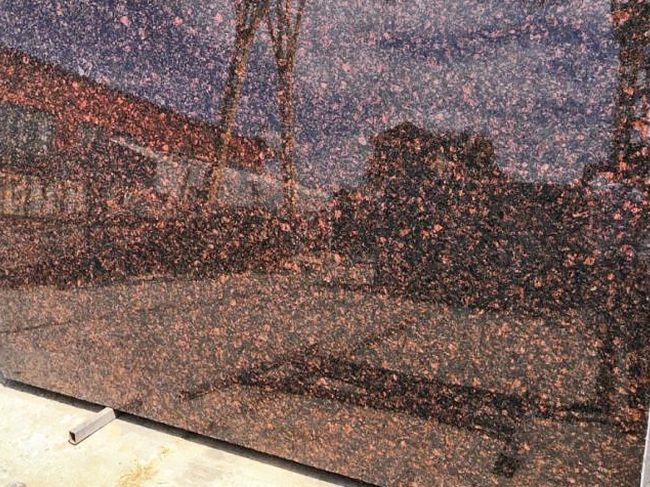


Granite is the main component of the continental crust, formed by the condensation of magma below the surface. This magmatic rock belongs to deep intrusive rocks and is primarily composed of minerals such as quartz and feldspar. The etymology of granite comes from the Latin word granum, meaning grain or particle. As a deep-seated rock, it often displays well-developed mineral particles visible to the naked eye, hence the name.
Granite is characterised by its fully crystalline structure. High-quality granite, such as absolute black granite or absolute cream granite, exhibits fine and uniform grains, a tight structure, high quartz content, and a bright feldspar lustre. Notably, absolute black granite countertops are renowned for their sleek, modern appearance, making them a popular choice in luxury home designs.
Granite is hard, wear-resistant, pressure-resistant, fire-resistant, acid-resistant, alkali-resistant, and resistant to corrosive gas erosion. Most varieties feature coloured spots, while some are pure colours with subtle pattern changes, offering strong splicing and a wide range of applications, including absolute black granite tiles (12×24) and absolute white granite for various decorative projects.
01 Classification
Granite resources are abundant, and numerous varieties exist. It has been widely used in civil engineering since ancient times, with over 100 natural granite varieties found in China. Major production areas include Sichuan, Shandong, Guangxi, Fujian, Shanxi, Henan, and Inner Mongolia. The texture of granite is uniform, with colours that, while predominantly light, also encompass a rich variety.
Granite can be classified into several colour series:
- White Series: Includes varieties like Baishihua, Baihujian, and various flower whites.

- Black Series: Features American black granite and pure black options.

- Green Series: Includes sesame green and rice green varieties.

- Imported Granite: Features exquisite options such as Golden Diamond and Kashmir Gold.


02 Granite surface technology
(1) Machine-cut: Cut directly by circular saws, sand saws or bridge saws, the surface is rough and has obvious machine-cut lines.

(2) Honed: Honed means the surface is flat and less polished with resin abrasives. The mirror gloss of the stone is very low, generally less than 10 degrees.

(3) Polished: The surface is very smooth, highly polished, and has a high-gloss mirror effect. Granite, marble and limestone usually contain natural crystals. After polishing, these crystals reflect light and make the stone surface shiny, but different maintenance methods are required to maintain its gloss.

(4) Flamed: The surface is rough. During production, the stone is heated at high temperature, the crystals burst, and the rapid cooling forms a rough flamed surface. It is the most common type of granite finish and the most commonly used finishing material in landscape design.

(5) Bush-hammered: The surface is rough and uneven. Small holes are chiseled densely on the surface with a chisel, which simulates the effect of water dripping on the stone over the years.

(7) Flamed+brush: In order to eliminate the prickly characteristics of the flamed surface, the stone is first flamed and then brushed with a steel brush 3-6 times to form an antique surface. There are many other ways to make an antique surface, such as water flushing after flamed, acid etching, direct steel brushing or high-pressure water flushing. The processing of antique surface is time-consuming and expensive.

(10) Natural cleft: The surface of the natural surface is rough, but not as rough as the flamed surface. Generally speaking, natural surface stone refers to the surface that is naturally formed without any treatment. It is the surface formed naturally in the stone, such as the slate texture of slate, the joints of granite, etc. However, the natural surface mentioned in the market refers to the naturally undulating surface formed by splitting, knocking and breaking, so it is also called natural split surface or split natural surface.

(11) Grooved surface: The stone wire drawing surface is also called machine planing surface. Grooves of a certain depth and width are opened on the surface of the stone. It is a special processing technology for stone, which can play a role in anti-slip and special texture.

(12) Sandblasted surface: Ordinary river sand or diamond sand is used instead of high-pressure water to wash the surface of the stone to form a decorative surface with a smooth frosted effect.

(13) Water-jet surface: Use high-pressure water to directly impact the surface of the stone to peel off the softer components and form a unique rough surface decorative effect.

(14) Pickling surface: Use strong acid to corrode the surface of the stone, leaving small corrosion marks, and the appearance is more rustic than the polished surface.

03 Common Specifications and Thickness
Specifications for granite products vary:
- Street Stone: Typically sized at 100mm x 100mm x 100mm, but can be thinner for specific applications.
- Flat Stone: Customised according to design specifications.
- Mushroom Stone: Usually measures 1000mm-1200mm long, 500mm-600mm wide, and 100mm-130mm thick.
04 Precautions for Granite Paving
When paving with granite, several precautions must be considered:
Radiation:

- Granite, being a natural stone, inherently contains trace amounts of radioactive substances, primarily due to its mineral composition. These substances, such as uranium, thorium, and radon, are naturally occurring and can vary significantly depending on the geographical source of the granite. While the levels of radiation in most granite types are typically low and considered safe for everyday use, it is crucial to adhere to established safety standards in construction. Regulatory guidelines, such as those outlined in the “Limits of Radioactive Nuclides in Building Materials” (GB6566-2010), classify materials based on their radioactivity. Understanding these classifications helps builders and architects select suitable granite varieties that meet safety requirements, ensuring the health and safety of occupants. Additionally, conducting regular testing and monitoring can provide peace of mind, confirming that the granite used in a project remains within safe limits.
Alkali Efflorescence:

- 1Alkali efflorescence is a common issue associated with porous materials like granite. It manifests as white crystalline residues on the surface of the stone, resulting from soluble salts within the stone or the mortar used during installation. These salts are brought to the surface by moisture, where they crystallize upon evaporation. To mitigate this phenomenon, it is essential to consider alkali efflorescence during the design phase. Incorporating moisture barriers and selecting appropriate sealants can help prevent water ingress, thereby reducing the likelihood of efflorescence. Designers and installers should also educate clients about the nature of this occurrence, emphasizing that while it is primarily aesthetic, proactive measures can minimize its impact. Regular maintenance and cleaning can help manage any efflorescence that does appear, ensuring the long-term beauty and integrity of the granite installation.
Corner Treatment: - 1In granite installations, especially in high-visibility areas, corner treatment plays a vital role in achieving a polished and professional appearance. Ensuring that corner stones are cut and shaped to match the surrounding pieces is essential for creating a seamless look. Mismatched corners can detract from the overall aesthetic and indicate poor craftsmanship. To achieve a consistent finish, installers should pay close attention to the specifications of the surrounding stones, using non-standard size edge stones where necessary to accommodate unique angles or design elements. This attention to detail not only enhances visual appeal but also contributes to the structural integrity of the installation. Proper corner treatment helps prevent chipping and wear over time, ultimately leading to a more durable and visually cohesive project.
On-site Paving:

- 1The success of granite paving hinges on several critical factors, including material selection, layout, and bonding layer control. Selecting high-quality granite varieties, such as absolute black granite or absolute cream granite, ensures that the finished surface meets both aesthetic and durability standards. Before commencing installation, it is vital to conduct a thorough layout review. This involves verifying that the dimensions and design specifications align with the drawings, which can help identify any potential issues before installation begins
- During the actual paving process, meticulous attention must be paid to the bonding layer. The thickness and composition of the mortar used to adhere the granite to the substrate can significantly impact the stability and longevity of the installation. Ensuring that the bonding layer is consistent and applied evenly prevents potential issues such as cracking or shifting, which can compromise the entire surface. Furthermore, the seam width should be controlled carefully, as uneven seams can create an unsightly appearance and impact water drainage.
- In summary, careful consideration of radiation safety, management of alkali efflorescence, meticulous corner treatment, and vigilant on-site paving practices are paramount for successful granite installations. By adhering to these precautions, professionals can enhance the longevity, safety, and visual appeal of their projects, ensuring that the natural beauty of granite is preserved for years to come.
05 Material Selection
Material selection is critical in ensuring the final product meets aesthetic and quality standards. For instance, selecting stones like absolute black granite and absolute cream granite should consider colour saturation and coordination with the overall design theme. Screening materials before site entry and conducting sample trial pavings can help maintain quality consistency.
By understanding the properties, classifications, and best practices associated with granite, including the various types like absolute black granite tiles and American black granite, professionals can achieve stunning and durable installations that meet the demands of modern architecture and design.