


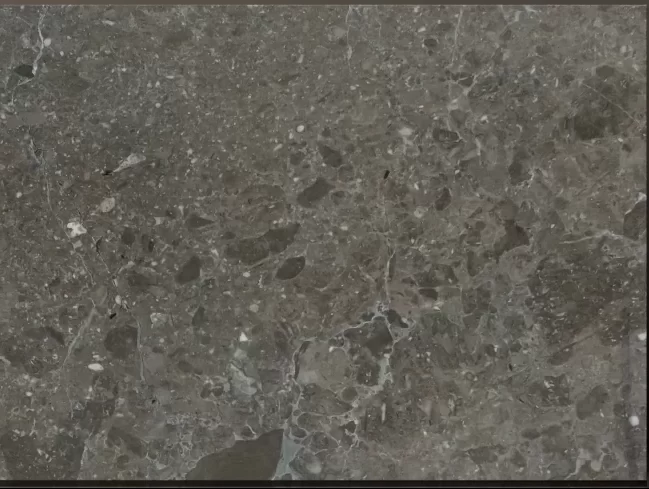
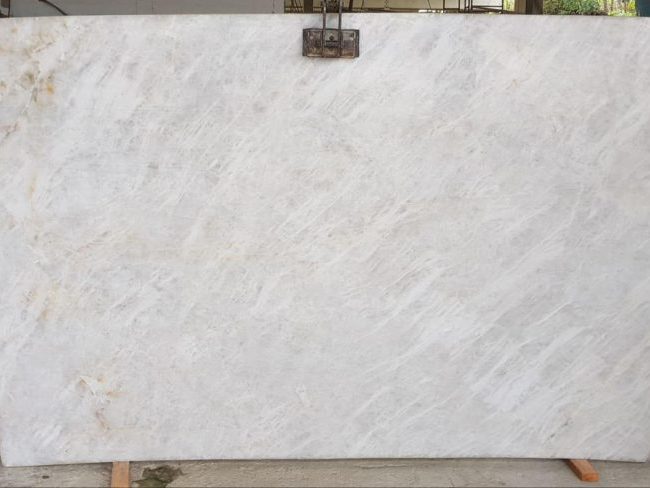

Stone leftovers are the remaining products in the production process, so how to deal with them? We usually make them into stone product and recycle them. After more than thirty years of industrial development and functional technology transformation and upgrading, my nation now ranks as the biggest stone processing and trading centre in Asia and even the world. Originally developed a contemporary stone industry system, it is presently the biggest stone product industry cluster in the world having produced dozens of varied-sized clusters of stone product industry. The means by which this accomplishment was attained was the effective development and transformation of functional technology.


With an annual output value greater than five hundred billion yuan, the yearly production of a wide range of stone product in my nation has lately greatly exceeded one billion square meters. This is an outstanding accomplishment.
By contrast, the processing of stone product generates a significant volume of waste, comprising pulp residue, scraps, and trash. The way the stone is being handled produces this waste. Should these wastes be dumped in landfills, not only would they use a lot of land resources but also seriously affect the local natural environment and the balance of the food chain near the dump. For the neighbourhood around the landfill, this will lead to consequences with both far-reaching and permanent effects.
In actual terms, these leftover stone product are a great source of raw materials for manufacturers and other businesses. By means of several thorough use actions, they can be brought back into our life and utilized by us in their whole.

The reuse of stone scraps has broad prospects in the production of daily necessities. These scraps can be turned into treasures through clever design and processing, and made into various daily necessities that are both practical and artistic, adding a unique beauty to our daily life.
For example, the dry brewing table is one of the indispensable items for tea lovers. The dry brewing table made of stone scraps is not only hard and durable, but also its natural texture and color can complement the tea set, creating a simple and elegant atmosphere, making the tea tasting process more ritualistic. The table lamp base is also an excellent application of stone product scraps. A fine stone table lamp base can not only firmly support the lamp body, but also become a beautiful landscape on the desk or bedside table. Its unique texture and luster are more charming under the light.

The desk calendar board is a small decoration on the desk. The desk calendar board made of stone product scraps, with its simple and generous design and natural texture, adds a sense of tranquility and elegance to the office environment. As a good helper for stationery storage, the pen holder made of stone scraps can not only hold various pens, but also become a work of art on the desk with its unique texture and color, inspiring the user’s creative inspiration.
The inkstone is one of the important symbols of Chinese traditional culture. The inkstone made of stone scraps can perfectly show the delicate texture and natural texture of the stone, and the ground ink is more delicate and uniform, providing a high-quality creative tool for calligraphy and painting enthusiasts. The ruler is used to press the paper to prevent the paper from moving when writing or painting. The ruler made of stone scraps, with its calm texture and exquisite shape, has become a powerful supplement to the four treasures of the study, adding a bookish atmosphere.
The painted screen is a decorative and practical household item. The painted screen made of stone scraps can be used as a partition or decorative background in the room. Its unique texture and color can be perfectly integrated with the painting to create a visual effect full of artistic atmosphere. In addition, various door and table handles are also common applications of stone product scraps. Although these small accessories are inconspicuous, the handles made of stone scraps, with their exquisite craftsmanship and unique texture, can enhance the overall grade of furniture and make it more high-end.
Used Stone Product As Mosaic Material

Regarding interior design, parquet flooring is regarded as a quite traditional method. The main idea behind this approach is the building of a unique creative design by means of cutting and glueing stones with various colours and textures. By means of parquet flooring, one can accomplish the integration of floor tiles and the plane level will be fuller than what could be attained by means of one ornamental effect.
Thanks to the developments in modern design and manufacturing technologies, this technology is currently rising to the top of the heap. Businesses nowadays have a tendency to employ parquet to improve the decorative impact in different home projects. These initiatives comprise those involving hotels, restaurants, shopping centres, airports, and other establishments fitting for these. This not only produces more variety and numbers of stone parquet but also guides the designs to become ever more detailed. This makes the designs increasingly intricate.The waste generated during the stone processing operation can be used to create a parquet from stone. For the construction of stone parquet, these leftovers are perfect supply of materials. One can build these leftovers using a great range of fake stones as well as marble and granite. Processing stone wastes and leftovers for seamless processing parquet, seam processing parquet, water jet machine parquet, manual parquet, and other types of parquet helps one not only maximize waste resources to achieve environmental protection, ecological and economic effects, but also create the entire environment full of warmth and vitality by the beauty of stone and the lovely patterns. This is so because stone is a sturdy and lovely substance.
Used For Indoor And Outdoor Stacking And Veneer
As steel buildings became more common in the early 20th century, stone product was progressively turned into a surface decorative element for buildings. This caused the weighing material stone to be gradually less used. Concrete structures started to replace steel constructions following the 1940s, which gradually reduced the thickness of the stone used for decorative surfaces. As a result, stone product veneer has become a more popular approach of including stone into modern-day constructions.


Stone veneer is a wall technique whereby a pasting process or hook construction inlay stone on the surface of the wall column to provide the impression of ornamentation and preservation of the wall. This wall technique gets its name from its hook construction approach. Actually, veneer can be created from small-sized stone slabs as well as from large-sized waste created during stone product processing. There is use for these leftovers.
For veneer in interior decoration projects, small-sized tiles of different forms can be created from stone scraps. Small areas like toilets, balconies, and corridors could find usage for these tiles. They are beautiful, immaculate, orderly, and have a long lifetime. The remaining stone product can be handled based on actual usage needs, laid on the road surface, wall surface, sidewalk, etc., or employed following colour matching and splicing into various brilliant patterns, so enhancing the outdoor picture. One can apply all of these ideas for outdoor décor.
Often, directly using stone product to pile around the central body of the construction produces surprisingly positive results. This also goes along with using veneer.
Made Into Decorative Paint
Real stone paint is a form of paint with a decorative impact similar to that of granite and marble. This paint doesn’t work the same way granite or marble do. With a very few mica flakes used as aggregates, it is largely composed of synthetic resin emulsion, natural coloured sand, and composite rock flakes of varying particle sizes. To exacerbate the damage, it results from combining water with chemicals. Apart from its natural stone product look, it may also be utilized for base surfaces such cement brick walls, foam, gypsum, aluminium plates, glass, and other substitutes. It also seems to be real stone. As long as you paint the structure in line with its contours, you are allowed to do it anyway you choose. With regard to stain resistance and a service life spanning up to fifteen years, this material is better than any others. The most crucial point to observe is that falling out of such building is not dangerous since it will not cause the load pressure of the construction to rise.
The original natural granite stone product dry hanging construction is facing more difficulties in terms of safety and thermal insulation due to the broad application of external insulation of building walls and the adoption of national energy-saving criteria for new residential buildings. These difficulties directly follow the arrival of these norms. In this situation, paint derived from actual stone is a material more appropriate for usage. Simultaneously, real stone paint significantly lowers the time needed for building and the project’s expenditure of money since it is more constructible than actual stone. This allows building designers to reflect an unexpected natural granite stone look while still looking to nature.
Autoclaved Aerated Concrete Blocks
Autoclaved aerated concrete blocks are a brand-new kind of building material These lightweight, porous blocks have many desired features including high strength, heat preservation, heat insulation, sound absorption, fire resistance, sawing and planing capacity, and plenty more. For the average individual, the mass falls between 500 and 700 kg/m3, only roughly equivalent to one-fourth to one-third of clay bricks and lime sand bricks. Lighter than other forms of concrete, this one might be used to load-bearing walls of low-rise buildings as well as to fill the walls of high-rise ones.
Using this material has the possibility to not less than forty percent lower the total weight of the construction when compared to the self-weight of traditional brick-concrete buildings. The decrease in the building’s self-weight and the little destructive energy of an earthquake greatly increases the building’s resilience to earthquakes.
Among the main raw materials available for the manufacturing of autoclaved aerated concrete blocks are lime, fly ash, slag, gypsum, cement, sand, gasifier, bubble stabilizer, and regulator.
Made Into Terrazzo
Made from aggregates including crushed stone product, glass, and quartz stone mixed into adhesives to create a concrete product, Terrazzo is then ground and polished to form the surface. Usually using cement as a binder, traditional terrazzo results in a rough, easily weathered and abrasive surface with drastically limited colour expression. Since people started substituting epoxy resin for cement in recent years, a number of terrazzo flaws have been flawlessly corrected; the material is more delicate, it has become smooth and brilliant, and the colour also exhibits a great beauty. It also weighs less, hence there is no need to worry about overweight whether put on the second or third floor.


