


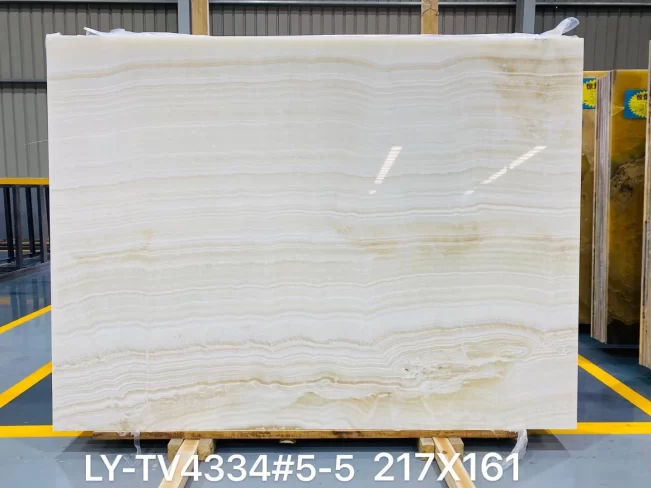
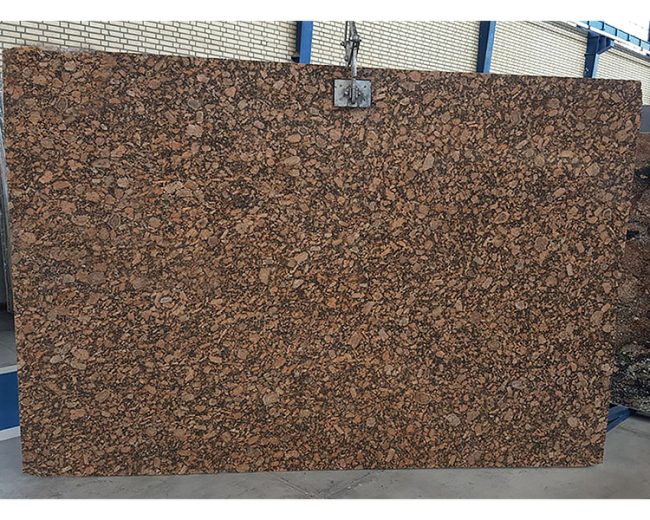

Marble vs Quartzite Dining Table: Which Is Better?
Marble is usually the better choice when visual character, sculptural elegance and a particular vein composition lead the design. Quartzite is often the stronger direction when the project wants dramatic natural movement combined with a different everyday-use profile.
That is a design decision rather than a universal performance ranking. Both materials can produce exceptional dining furniture, and both vary significantly from one named stone and one slab to another.
The correct comparison therefore goes beyond asking which stone is “harder” or “more luxurious.” A dining table is viewed from several directions, touched every day, supported by a base, moved through a building, assembled on site and eventually maintained as furniture. Material selection must work with all of those conditions.
Choose the complete furniture system, not only the stone family: Material + Actual Slab + Tabletop Shape + Edge + Weight Strategy + Base + Connection + Assembly + Packing. A spectacular slab can still become an unsuccessful table if the support, proportion or logistics are not resolved.
Side-by-Side Furniture Decision
| 디자인 요소 | 공학적 고려사항 | 구매자 결정 |
| 시각적 특성 | Marble can offer expressive veins and sculptural movement; Quartzite may offer linear, cloudy, crystalline or strongly graphic compositions depending on the stone. | Choose the actual slab that supports the furniture concept rather than selecting by material family alone. |
| Tabletop Geometry | Round, oval and rectangular outlines reveal different parts of the slab and can change the final composition significantly. | Approve the tabletop position on the real slab before cutting. |
| Daily Use | Dining surfaces encounter drinks, oils, acidic foods, abrasion and repeated cleaning. Actual behavior varies by stone and finish. | Set realistic maintenance expectations before material approval. |
| Weight and Span | Large stone tops require the support system and handling strategy to suit the real geometry and mass. | Develop dimensions and base structure together. |
| 제작 과정 | Natural features, edge profiles, joints and base interfaces can create different fabrication constraints. | Review the actual slab and furniture drawing before release. |
| Transport | Large tops and sculptural bases may require detachable components and geometry-specific packing. | Confirm access, assembly and packing before production is finalized. |
Choose Marble When the Table Should Feel Sculptural
Marble is particularly effective when the dining table is intended to behave as a decorative object rather than a visually neutral surface.
Depending on the selected marble, the tabletop can contain long directional veins, cloud-like mineral fields, brecciated structures, dramatic color contrast or quieter tonal movement. This makes slab selection an active part of furniture design.
A rectangular table may benefit from veins running along its long axis. A round or oval table can become more centered and sculptural when the cutting outline captures an intentional mineral formation.
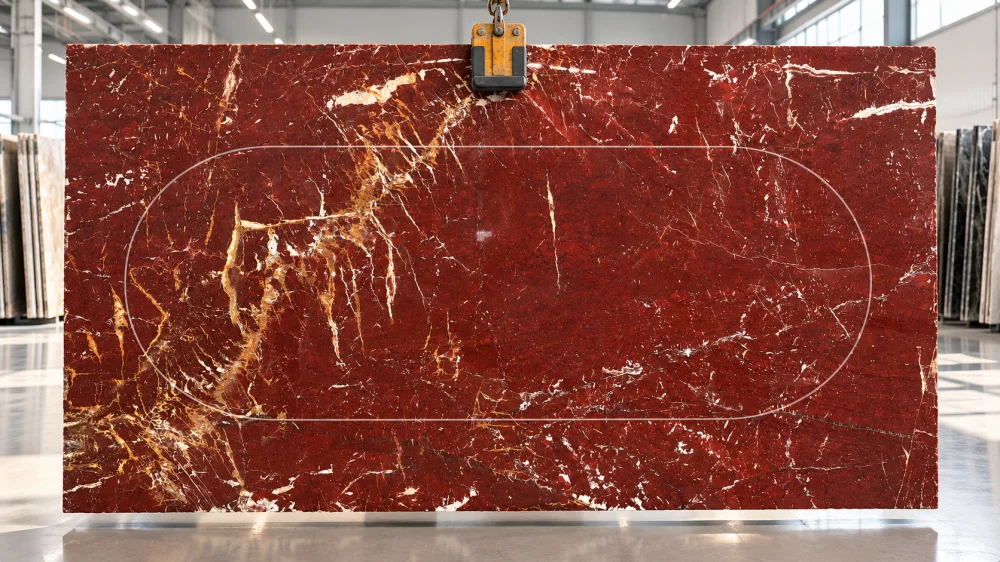
The furniture-specific challenge is that Marble should not be selected only from a small sample. The tabletop may expose a large uninterrupted stone area, and the visible edge or pedestal can also become part of the composition.
CENTURY STAR의 랑그도크 대리석 illustrates this particularly well: its strong red field and pale calcite movement allow the stone to function as custom furniture and table material, but the actual slab section determines which natural composition becomes the finished object.
Choose Quartzite When the Slab Composition Is the Main Artwork
Quartzite can produce an equally strong but different dining-table identity.
Some Quartzites show broad cloudy fields, others have dramatic linear movement, crystalline zones or strong color transitions. As a result, a Quartzite dining table can appear more geological and visually layered than a conventional neutral tabletop.
The strongest approach is often slab-first design: review the full slab, identify the most interesting visual area and then position the tabletop geometry over that composition.
CENTURY STAR의 샹그릴라 규암 demonstrates how a strongly colored Quartzite can become a dining-table focal point rather than functioning only as an architectural surface.
However, buyers should avoid treating every commercial Quartzite as if it has identical performance or fabrication behavior. Natural fissures, resin treatment, mineral structure and slab condition should be evaluated on the actual material.
What About Daily Dining Use?
Dining furniture is exposed differently from a decorative console or feature wall. Food, drinks, wine, oils, citrus, condiments and repeated cleaning all become part of the material decision.
Marble can develop changes in appearance from acidic contact because many marbles are calcite-based. Buyers who choose Marble should understand that the design may require more disciplined care and that some degree of natural aging may become part of the furniture’s character.
Quartzite is often chosen when buyers want a natural stone with a different practical profile, but it should not be sold as stain-proof, scratch-proof or maintenance-free. The actual Quartzite, finish and treatment still matter.
The useful design question is therefore not “Which one never marks?” but which material matches the expected use and the owner’s tolerance for maintenance and natural aging?
The Actual Slab Should Shape the Tabletop
A dining table presents a slab differently from a kitchen countertop. It is viewed from several directions, usually has a fully visible perimeter and often sits away from a wall where the entire composition can be seen.
That means the tabletop outline should be placed deliberately on the selected slab.
For a round table, shifting the cutting circle even a short distance across the slab can completely change the finished mineral composition. For an oval or racetrack shape, orientation can emphasize either long directional movement or a more centered composition.
For strongly veined Marble or Quartzite, the buyer should approve:
- the actual slab;
- the tabletop outline on that slab;
- the preferred direction of major movement;
- natural features within the final tabletop area;
- the relationship between top, edge and stone base where applicable.
For buyers still comparing broader material families, CENTURY STAR’s 럭셔리 다이닝 테이블에 최적의 천연 석재 provides the wider Marble, Quartzite, Travertine and Granite selection framework.
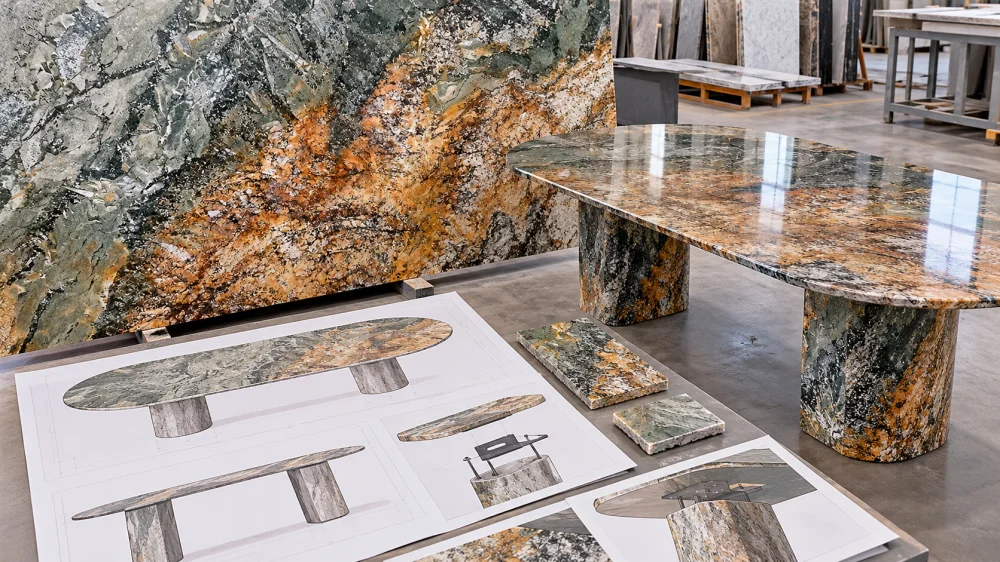
치수, 무게 및 비율은 함께 개발되어야 합니다.
A stone dining table should not be designed as a two-dimensional tabletop with a decorative base added later.
As the top becomes longer, wider or visually thicker, its mass and handling demands increase. That affects base design, support distribution, connection points, transport, site access and final assembly.
A visually thick table also does not necessarily require one massive solid block. Depending on the design and fabrication strategy, built-up or assembled edge treatments may create the desired visual proportion without unnecessary mass.
The correct construction method should be developed for the real furniture geometry rather than assumed from appearance alone.
Do not select Marble or Quartzite based only on a slab photograph and then ask the fabricator to “make the table work.” Final dimensions, top geometry, base footprint, support locations, connection method and transport strategy should be developed together. Where structural engineering is required, the appropriate project professional should review the design.
The Base Is Part of the Furniture Engineering
A stone tabletop and its base work as one object.
A long rectangular top, round pedestal table and oval dining table create different stability and support conditions. The base may be stone, metal, timber or a mixed structure, but it must suit the dimensions and load path of the actual top.
Important questions include:
- Where is the top supported?
- How wide is the base footprint?
- How is lateral stability controlled?
- How are top and base connected?
- Can the connection be accessed during installation?
- Does the support interfere with leg clearance?
- Can the finished table be transported safely in its intended configuration?
If the base is fabricated from stone, its joints, internal support concept and assembly sequence require the same level of attention as the tabletop.
모서리 디자인은 외관과 제작 모두를 변화시킵니다.
Dining-table edges are continuously visible, which makes them an important furniture detail.
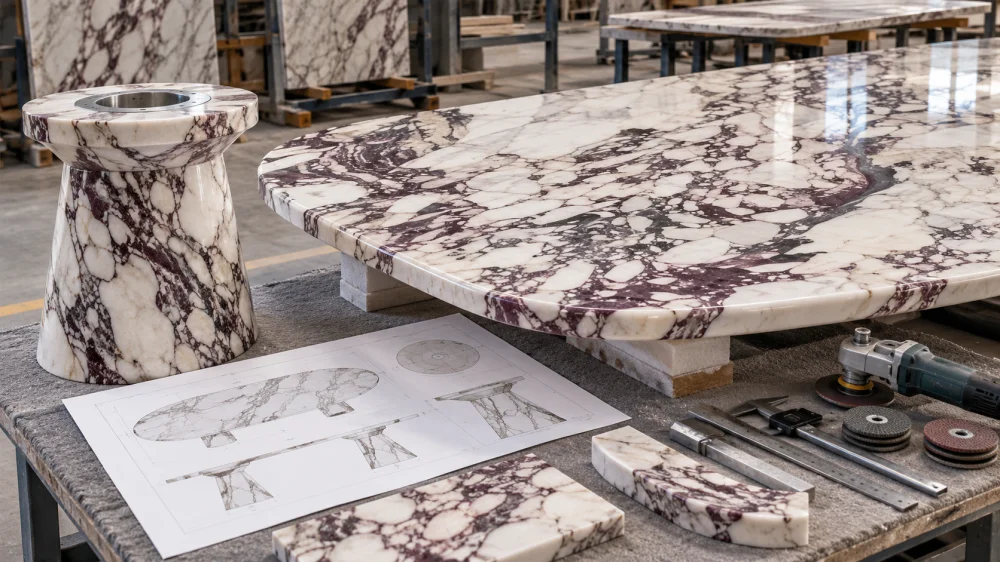
A slim straight edge creates a lighter modern appearance. A thicker built-up or mitered profile can create a more monolithic object. Rounded or shaped edges soften the furniture but introduce a different fabrication process.
With Marble, a strongly veined top may require careful review of how the vein terminates at the perimeter. With Quartzite, crystalline or irregular geological fields can create similarly important edge relationships.
The edge should therefore be approved as both a design detail and a fabrication detail.
Marble and Quartzite Need Different Maintenance Expectations
For Marble, buyers should understand the possibility of etching and surface change from acidic foods or beverages. Sealing may help manage staining risk where appropriate, but it does not prevent chemical etching of calcite-based stone.
Quartzite can offer a different use profile, but actual absorption, treatment and finish still vary. A compatible sealing strategy may be appropriate for some tables, but there is no responsible universal resealing schedule for every Quartzite.
For either material, use natural-stone-compatible cleaning products, remove spills promptly and avoid promising the user that the finished table will remain completely unchanged through unlimited use.
Should the Dining Table Be Designed as a Knock-Down Object?
For export projects, often yes—if the design benefits from it.
A completely assembled stone dining table may be difficult to crate, move through building access points or position safely on site. A removable tabletop, detachable pedestal or multi-part base can reduce some logistics constraints.
But the assembly strategy must be designed before fabrication begins. Connection points should be accessible, component orientation should be clear and the finished connection should remain visually controlled.
The supplier and buyer should agree on which parts arrive assembled and which parts require installation at the destination.
Trial Assembly Is an Important Furniture QC Stage
Custom stone furniture should be inspected as furniture before it is packed as cargo.
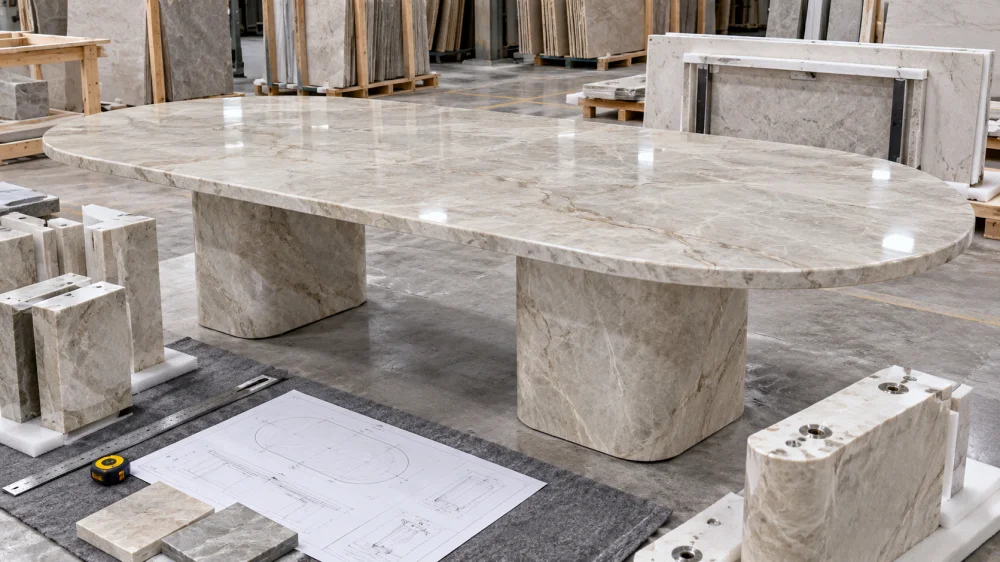
Where appropriate, trial assembly allows the factory and buyer to confirm:
- tabletop geometry and dimensions;
- surface finish and natural variation;
- edge profile and visible joints;
- alignment between top and base;
- connection-point position;
- assembly sequence;
- visual proportion of the complete object;
- component identification for final installation.
Photographic or video evidence of trial assembly can be especially useful for designers, distributors and hotel procurement teams reviewing custom furniture remotely.
수출 포장은 가구 기하학에 따라 이루어져야 합니다.
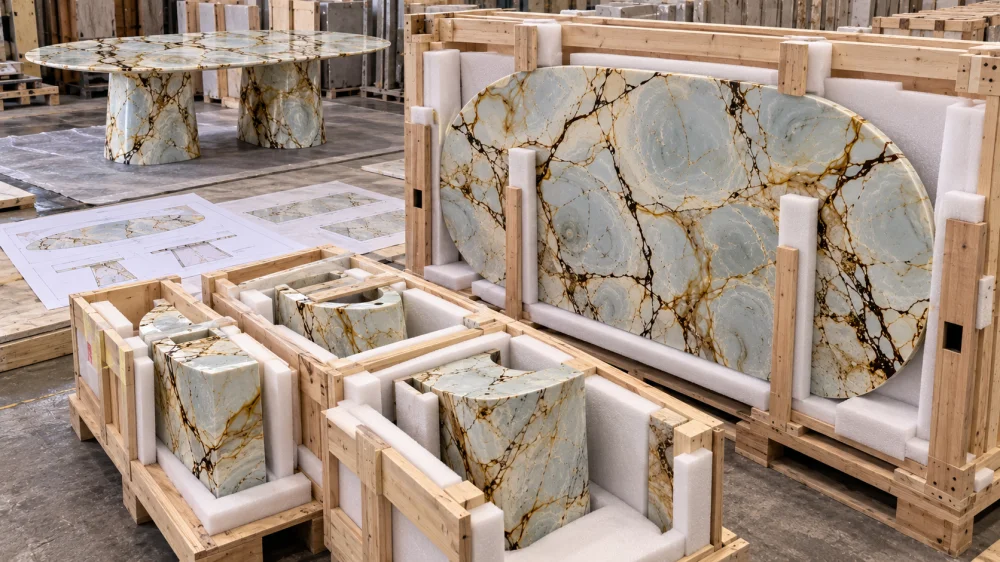
A dining tabletop and sculptural pedestal should not automatically receive the same packing treatment.
Large flat tops need support against bending and impact during handling. Curved or sculptural bases may contain projecting areas or joints that require different protection. Heavy components also need restraint so they cannot shift inside their packing.
For knock-down furniture, individual components should be identified clearly so that the correct top, base and connection parts can be reassembled at the destination.
The packing design should therefore respond to the actual component geometry, finished surfaces, joint locations, handling method and shipping route.
Which Should You Choose: Marble or Quartzite?
- The table should emphasize expressive veining or sculptural elegance.
- The designer values the specific Marble’s color and mineral composition more than minimal maintenance.
- The owner accepts a natural material that may develop patina or surface changes with use.
- The selected slab creates the strongest composition for the tabletop and base concept.
Choose Quartzite If
- The design calls for crystalline, geological or strongly graphic natural movement.
- The expected use favors the practical profile of the selected Quartzite.
- The actual slab provides a compelling furniture-scale composition.
- The fabricator has reviewed the specific slab, natural features and proposed geometry.
Neither choice eliminates the need for engineering. The table still needs the right dimensions, support distribution, connection, edge details, assembly method and transport plan.
Buyer Specification Checklist
- 가구 유형: dining table and intended use environment.
- 최종 치수: length, width or diameter, and finished height.
- 모양: rectangular, oval, round, racetrack, irregular or custom.
- 재료 방향: Marble or Quartzite, plus named stone if already selected.
- 실제 슬랩 승인: required when pattern positioning is important.
- 마감 처리: confirm the intended visual and tactile surface.
- Edge: straight, rounded, built-up, mitered or custom.
- Base: stone, metal, timber or mixed construction.
- Support concept: base footprint, support distribution and connection method.
- 조립: fully assembled, removable top or knock-down construction.
- Access: doors, lifts, corridors, stairs and site-handling restrictions.
- QC: dimensions, finish, visible joints, trial assembly and component identification.
- 포장: protection designed around the actual tabletop and base geometry.
There is no universal winner in the Marble vs Quartzite dining table decision. Marble is often the stronger choice when veining, sculptural elegance and the character of the stone should lead the design. Quartzite can be the better fit when the project wants distinctive geological movement with a different practical use profile. Whichever material is selected, approve the actual slab, position the tabletop deliberately, develop the dimensions with the base and support system, define edges and connections, trial-assemble when appropriate and design the packing around the finished furniture—not around a generic stone crate.
자주 묻는 질문
1. Is Marble or Quartzite better for a dining table?
It depends on the design and use conditions. Marble is often preferred for expressive veining and sculptural character, while Quartzite can provide dramatic natural composition with a different practical profile. Compare actual slabs rather than deciding only from the material-family name.
2. Is Quartzite more practical than Marble for everyday dining?
Some Quartzites may suit demanding daily use better than some Marbles, but the answer depends on the actual stone, finish, treatment and maintenance expectations. Quartzite should not be assumed to be stain-proof, scratch-proof or maintenance-free.
3. Does Marble etch on a dining table?
Many marbles are calcite-based and can be affected by acidic foods and beverages. Buyers choosing Marble should understand that sealing can help manage some staining risks but does not prevent acid-related etching.
4. Should I approve the full slab before making a dining table?
Yes, when natural pattern placement matters. The tabletop shape can capture very different areas of the same slab, so the proposed round, oval or rectangular cutting outline should be reviewed before fabrication.
5. Does a large stone dining table need special support?
Large stone tops require a support and connection concept appropriate to their actual dimensions, geometry, weight and base design. Generic furniture assumptions should not replace project-specific structural review where it is required.
6. Can Marble or Quartzite dining tables have removable tops?
Yes. A removable top or knock-down base can make transport and installation more practical when the connection and assembly method are designed into the furniture before fabrication.
7. Why should a custom stone table be trial assembled?
Trial assembly allows the project team to review top-to-base alignment, connection points, visible joints, overall proportion and component identification before export packing.
8. How should a Marble or Quartzite dining table be packed for export?
Packing should follow the actual furniture geometry. Large flat tops, stone pedestals, curved bases and detachable components have different handling and fracture risks, so protection and internal restraint should be adapted to each component.
참조
- Natural Stone Institute — Dimension Stone Design Manual, current applicable edition, for general natural-stone fabrication and design guidance.