



簡単なまとめ
To choose sintered stone for bathroom vanity projects in North America, buyers should look beyond color and focus on how the surface performs as a complete vanity system. The strongest choices usually balance tone, finish, slab style, sink cutout practicality, edge expression, and day-to-day usability. A successful vanity should feel elegant at close range, coordinate with the room’s palette, and remain convincing after fabrication and installation.

Bathroom vanities in North America are increasingly treated as design anchors rather than secondary utility elements. In luxury homes, boutique hospitality settings, and high-end residential developments, the vanity often becomes one of the first surfaces people notice. It sits under mirror lighting, interacts closely with fixtures and cabinetry, and must work beautifully at very short viewing distance. That is why learning how to choose sintered stone for bathroom vanity use is no longer a simple color-selection exercise. It is a project decision that affects style, usability, and long-term visual satisfaction.
Sintered stone has become more relevant in vanity applications because it offers a controlled and contemporary surface language. Buyers are drawn to its low porosity, its broad design range, and its ability to create clean lines that suit modern and transitional interiors. But the material category alone does not guarantee a strong result. Some designs look excellent on a hand sample yet feel flat or repetitive when fabricated into a full vanity. Others look appealing in isolation but do not work well with basin cutouts, backsplash returns, or the scale of the cabinetry below.
For that reason, the best approach is to evaluate sintered stone as a full bathroom vanity solution. Buyers should think about how the selected panel will read under actual bathroom lighting, how the finish supports the intended mood, whether the pattern remains balanced once interrupted by sink openings and faucet holes, and whether the overall design fits the surrounding palette. A strong vanity surface is not only attractive. It is well matched to the bathroom’s architecture, use pattern, and fabrication requirements.
Why Sintered Stone Works Well for Bathroom Vanities
Sintered stone is especially suitable for vanity use because bathrooms reward material control. Unlike floors or distant wall surfaces, a vanity top is seen close up every day. Reflections, color temperature, surface texture, and edge details are highly noticeable. A surface used here must therefore feel visually disciplined. Sintered stone can do this well because it offers a clean manufactured consistency and a wide range of stone-look, marble-look, mineral-look, and contemporary neutral designs.
Another reason the material performs well is practical maintenance. North American buyers often want a bathroom surface that looks refined but does not create unnecessary concern in everyday use. Vanity areas are exposed to water splashes, soap, cosmetics, skincare products, and repeated cleaning. A material that combines premium appearance with a more manageable daily rhythm can be very attractive for both homeowners and project specifiers. That is one reason sintered stone is often considered alongside quartz and natural stone in modern vanity decisions.
Sintered stone also adapts well to different aesthetic directions. In some projects, the vanity is meant to feel quiet and architectural, using soft greige or limestone-look tones. In others, it is meant to carry a more luxurious marble-inspired visual. In still others, the goal is a minimalist monolithic top with slim lines and restrained detail. The material category can support all of these directions, but the exact panel design and fabrication logic must be selected carefully.
What North American Buyers Usually Need from a Vanity Surface
Most buyers in this market want a vanity that feels premium without becoming difficult to live with. They typically want a surface that coordinates well with mirrors, cabinetry, fixtures, wall tile, and lighting while still looking clean and intentional after repeated daily use. In primary bathrooms, the preference is often for calm sophistication. In powder rooms, buyers may accept a more expressive material statement. In hospitality and developer-led work, consistency and specification stability often carry even more weight.
That leads to several common decision factors. One is tone. Another is pattern scale. Another is finish reflectivity. Thickness expression also matters because some bathrooms look better with a minimal slim top while others benefit from a stronger mitered profile. Sink style matters too. A surface that works well with an undermount sink may not create the same visual effect with a vessel basin or integrated-style look. These decisions should not be made separately. They should be reviewed as one system.
A good vanity surface also needs to feel right for the room’s emotional direction. A bright marble-look panel may work well in a crisp luxury bathroom. A softer stone-look or warm mineral surface may feel more natural in a layered residential interior with wood cabinetry and brushed brass. The best sintered stone for bathroom vanity use is therefore not universal. It depends on how the bathroom is meant to look, feel, and function.

How to Evaluate Sintered Stone for Bathroom Vanity Use
背景色調
Background tone shapes the room more than many buyers expect. Warm whites, soft taupes, pale beiges, muted greiges, and gentle stone-look grays often perform strongly in North American bathrooms because they coordinate well with layered residential palettes. Sharper cool whites can still work, particularly in more contemporary projects, but they should be reviewed carefully against lighting temperature and fixture finish. A vanity that feels too cold or too stark can make the room less comfortable than intended.
Pattern Scale
Vanities are close-view surfaces, so pattern should be chosen with scale discipline. Highly active designs may feel broken once sink and faucet cutouts interrupt them. Softer stone-look and quieter marble-look visuals usually create a more composed result because they let the vanity read as a whole object rather than a collage of parts. Stronger patterns can succeed, especially in powder rooms, but they should be reviewed against the real vanity dimensions rather than admired only in sample form.
Finish Selection
Finish affects both style and everyday perception. Matte and honed-style finishes are often favored for contemporary and calm luxury bathrooms because they feel soft, architectural, and easy to integrate. Polished finishes can create a brighter and more formal effect, particularly in statement spaces, but they change how light reflects from the surface. The right finish should match the bathroom’s intended mood and not simply follow a showroom trend.
Thickness and Edge Strategy
A slim vanity top can create a clean modern profile, especially when paired with minimalist cabinetry and refined basin detailing. A thicker look, often achieved through mitering, can make the vanity feel more substantial and luxurious. Neither approach is automatically better. The important point is that thickness expression should match both the cabinet design and the surface pattern. A crisp contemporary panel often looks strongest with a cleaner, thinner line. A more expressive or formal surface may tolerate a heavier profile more successfully.
Fabrication Practicality
Small samples do not reveal how the material will behave around faucet holes, undermount sink cutouts, side panels, splash pieces, and corners. Good selection includes understanding the vanity as a fabricated object. The chosen sintered stone should still look balanced after these details are introduced. Buyers should ask whether the pattern remains attractive around openings and whether the selected design still feels intentional once the full vanity assembly is complete.

Popular Sintered Stone Profiles for Vanity Projects
| Sintered Stone Profile | 最適な用途 | メリット | 柔らかい模様の白大理石 |
|---|---|---|---|
| Soft Stone-Look Beige or Greige | Primary bathrooms, warm residential interiors, master suites | Calm, elegant, easy to coordinate with wood and brass | May feel too quiet if the room lacks contrast |
| White Marble-Look Surface | Luxury bathrooms, bright vanities, hotel-style projects | Premium visual appeal, brightens the room, familiar market appeal | Pattern repetition should be reviewed at full vanity scale |
| Light Concrete-Look Gray | Contemporary and minimalist bathrooms | Architectural, restrained, modern | Can feel flat if lighting is weak |
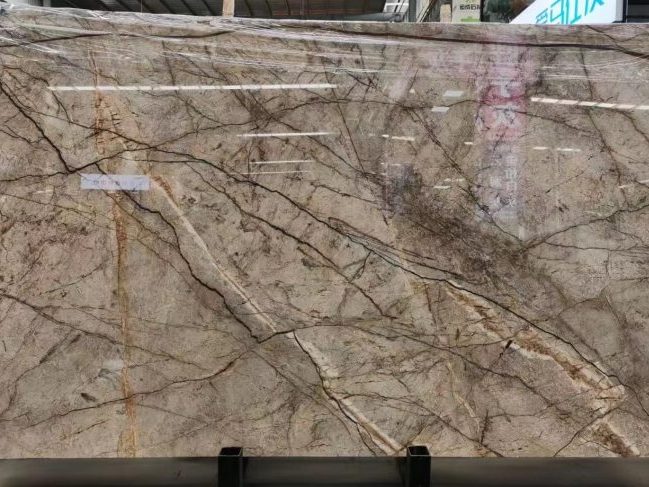
| Warm Taupe Mineral Surface | Soft luxury and layered residential bathrooms | Comfortable tone, broad palette compatibility | Needs review under actual project lighting |
| Bold Vein Statement Panel | Powder rooms and focal-point vanity designs | Strong visual identity, memorable luxury impact | Can feel too busy in family-use bathrooms |

Best Approaches by Bathroom Type
In primary bathrooms, calmer sintered stone designs usually perform best. These rooms are intended for daily use and often benefit from surfaces that feel refined without becoming visually exhausting. A soft stone-look or restrained marble-look panel usually produces a better long-term result than an overly dramatic design. Because these bathrooms often include larger mirrors, layered lighting, and more extended cabinetry, surface calm can help the room feel more complete.
In powder rooms, buyers can usually take greater aesthetic risks. The vanity is often the main focal element, and the room is used less intensively. This makes stronger marble-look or more expressive surfaces more feasible. Even then, the design should still be reviewed with the actual sink placement and edge condition in mind so that the finished vanity does not feel fragmented.
In hospitality and developer-led projects, repeatability is especially important. A surface that looks premium while remaining stable across multiple rooms and fabrication cycles can be more valuable than a visually dramatic option that creates inconsistency. In these contexts, the best choice is often the one that balances appearance with specification discipline and practical execution.
購入者がよく犯す間違い
The first mistake is choosing entirely from a sample chip. Vanity design is close-range and detail-sensitive, so full-scale review matters. The second mistake is separating material choice from sink and edge design. A surface that looks attractive as a flat sample may lose its balance when drilled, cut, or wrapped. Another mistake is assuming that a more dramatic pattern automatically means a more luxurious vanity. In many premium bathrooms, restraint creates a stronger and more enduring effect than intensity.
Buyers also sometimes ignore lighting. A sintered stone that feels warm and elegant in one lighting environment may read cooler or flatter in the actual bathroom. This matters because vanity surfaces are framed by mirror lighting, wall color, fixture metals, and often glossy surrounding materials. Selection should happen in relation to those conditions rather than independently from them.
A final mistake is treating the vanity top as separate from the cabinet below. The best sintered stone bathroom vanity solutions emerge when the surface, cabinet lines, basin, mirror, and metal finish all work together. The vanity is a composition, not only a slab.
購入者が承認前に確認すべきこと
Before approving sintered stone for a bathroom vanity, buyers should review a large panel view or full slab image whenever possible. They should confirm the base tone, pattern rhythm, finish choice, sink cutout location, faucet configuration, and whether the material remains convincing once fabricated into the intended size. If the project includes matching backsplash pieces, side returns, or integrated wall accents, those should be considered part of the decision as well.
It is also wise to compare the selected design directly with cabinetry tone, fixture metal, floor material, and mirror lighting. A vanity may look excellent on its own and still feel slightly out of place in the finished bathroom if these relationships are not reviewed early. Careful approval almost always produces a more elegant result.
How Supplier Support Improves Vanity Decisions
For buyers sourcing from China, supplier support matters because selecting sintered stone for bathroom vanity use is not simply about choosing a popular surface. It also involves confirming whether the panel design fits vanity scale, whether the chosen finish supports the room style, whether the fabrication details will read cleanly, and whether the project’s overall visual goals remain realistic after production.
In practical terms, supplier support may include comparing several panel options, identifying which designs are better for calmer master bathrooms versus more expressive powder room applications, and helping buyers avoid surfaces that look strong in small samples but become less balanced after fabrication. For premium residential and repeat-project work, this review process can significantly improve the final outcome.

よくあるご質問
1. Is sintered stone a good material for bathroom vanities?
はい。焼結石は、低孔隙率、幅広いデザインの柔軟性、そして多くの北米のバスルームスタイルに合うクリーンで現代的な表面仕上げを提供するため、強固な洗面台素材となり得ます。.
2. What finish is best for a sintered stone bathroom vanity?
マット仕上げと研磨仕上げは、落ち着いた印象でモダンな雰囲気を演出できるため、最も汎用性が高い場合が多いです。光沢のある仕上げは、より格式高いまたは主張の強いバスルームに適しています。.
3. Should I choose a marble-look or stone-look vanity surface?
それは部屋によって異なります。大理石調のパネルはしばしば明るく高級感のある効果を生み出しますが、石調の表面は通常、より静かで建築的な印象を与えます。.
4. Does thickness matter in vanity design?
はい。薄いプロファイルは通常、よりすっきりと現代的に感じられますが、厚みのある視覚的エッジはより重厚で格式高い印象を与えることがあります。どの選択が適切かは、キャビネットのスタイルやバスルーム全体の方向性に依存します。.
5. Is a bold pattern always better for a premium vanity?
いいえ。多くの高級バスルームでは、視覚的に攻撃的ではなく、空間全体に溶け込むような、規律があり静かな表面の方がより効果的です。.
6. What matters more for vanity success: the surface design or the fabrication details?
どちらも重要ですが、加工の詳細はしばしば軽視されます。美しいパネルでも、シンクの切り抜きやエッジ、バックスプラッシュ、戻り部分などが適切に処理されていないと、そのインパクトが損なわれてしまうことがあります。.
最終的な注意点/実用的なポイント
To choose sintered stone for bathroom vanity projects in North America, buyers should evaluate the full vanity system rather than the surface alone. Tone, finish, thickness, sink integration, and fabrication logic all influence whether the final vanity feels calm, premium, and durable in real use.