


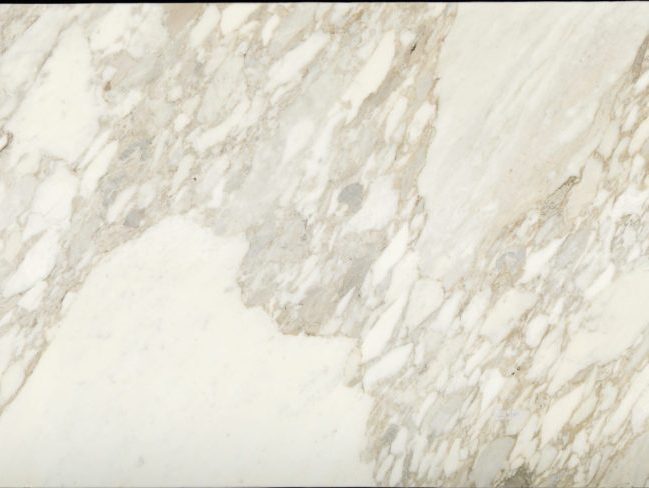
Over the long history of human civilization, natural stone has consistently been regarded as a priceless gift in the fields of art and building. This has been the case during whole human history. Because of its unique texture, good temperance, and amazing physical qualities, marble has come to represent high-end building and creative expression. Marble is a substance with all these attributes. This can be seen in the seriousness of the Pantheon in ancient Rome as well as in the Renaissance figures Michelangelo produced with such finesse. Still, the passage of time leaves traces of its existence always. Many marble objects have progressively lost their former magnificence with time, which has inspired people to consider the lifetime of stone carefully. This has inspired the creation of some fascinating concepts.


1. Formation mechanism of mineral color
Mineral colors are akin to those of a vibrant picture; behind them lie intricate scientific ideas. Minerals’ colors can be separated as autochromatic and heterochromatic. Whereas heterochromatic is the color of the mineral resulting from the presence of colored impurities, which has nothing to do with the nature of the mineral, autochromatic is the inherent color of the mineral itself. For instance, pure quartz is colorless and transparent; but, if manganese oxide is added in small quantities, it will be colored black or smoky, producing the known smokey quartz. This color shift is like nature embedding vibrant seeds in the mineral; as the surroundings alter, these seeds silently blossom and display changing colors.
Apart from the effect of contaminants, the internal cleavage or fissures in the oxide film on the surface of the mineral will also create interference of light waves, therefore producing misleading colors. An ordinary example is calcite. The cleft surface’s developed reflectance and interference with light will create a halo like to a rainbow. This halo lets minerals reveal erratic colors under various light, like a secret veil handed to them by nature.
These ideas provide the foundation of stone’s coloring technologies and color changing. People can give stones a brand-new hue by adding dyes or altering the surface structure of minerals, hence coating stones. This method not only meets people’s want of beauty but also creates more area for the usage of stones.
2. The cause of the color of some decorative stones

Unlike minerals, the color development mechanism of rocks is more complex and usually results from the combined activity of several elements. For instance, light gray to almost black marble could have different levels of organic content and finely scattered heavy metal sulfides (mostly iron, then copper, aluminum, etc.). These elements are like a “palace” hidden in the stone, lending the stone varying colors. Typical ones are “Guilin Black” in Guangxi, “Crystal Black” in Zhijin, Guizhou, “Suzhou Black” in Jiangsu, “Moyu” in Huolu, Hebei, and “Dalian Black” in Liaoning. Most of these stones are carbonaceous or asphaltene, among which “Guilin Black” will volatilize a sulfide smell during processing and a thin film of oil will float on the stone slurry. On the polished board surface, occasionally designs akin to fossil leaves or ferns will show up.
Typical hydrates of iron oxide found in red, maroon, purple, brown and yellow stones are hydrohematite, hematite, hydrohematite and limonite. These minerals give the “Red Wanluo” marble from Lingbi, Anhui Province, its red color. Usually, purple stone results from the presence of manganese oxide and iron oxide in a specific ratio, as the “Purple Bean Ban” marble from Huolu, Hebei Province does.
Usually connected to low-valent oxides of iron and silicon-magnesium compounds, such as glauconite, chlorite, serpentine, amphibole, diopside, olivine, garnet and actinolite, the creation of green and grass green stone is more complex. Sometimes the stone seems green because of copper or compounds as well. Serpentine is mostly responsible for the green marbles including “Jinyu” from Changping, Beijing, “Clouds” from Huolu, Hebei, “Dandong Green” from Liaoning, “Laiyang Green” from Shandong, and “Diecui” from Zhenghe, Fujian Province. Serpentine’s chemical formula is Mg₆Si₄O₁₀₈. It might include variations including FeO, Fe₂O₃, NiO, etc. Usually in dense blocks, it features a range of green tones including dark green, dark green, yellow-green, light green, and so on. The name “serpentine” comes from the surface’s blue-green marks like those of snake skin.
Granite’s color is mostly defined by the hue of its rock-forming minerals. Granite consists fundamentally in quartz, feldspar, amphibole, pyroxene, olivine, and biotite. Among them, quartz and feldspar are light-colored minerals; the stone color is lighter when the quantity of black minerals is less than 1%; white granite will thus be produced, as the “Lotus White” in Fenyi, Jiangxi. Granite’s hue will progressively darken as the content of dark minerals rises, creating a gray or gray series including the “Quanzhou White” in Fujian and the “Sesame Gray” in Huanggang, Hubei. Granite will show a darker tone, such “Jinan Blue” and “Fengzhen Black,” when the dark minerals expand farther.
Granite’s color is largely influenced by the form of feldspar. Plagioclase generally gives the stone a white appearance; so, when the plagioclase content is considerable, the rock will seem gray or gray in several tones, such “Huanggang Gray”. This type of granite is more precious as the content of labradorite in granite grows will exhibit blue, green, purple, golden and other hues in a certain direction. As the potassium feldspar level rises, the stone will seem pink or crimson, like to “Taoyuan Red”. Most of the red stones found both domestically and internationally are this kind.
Furthermore influencing the hue of the rock will be its dryness and dampness. In the wet condition the color is darker; in the dry condition it is lighter. To thereby differentiate the color, mineral composition, and structural structure of the stone, stone professionals may employ moist water. Furthermore influencing the color will be varying degrees of polishing; the mirror polished surface is darker and the rough surface is lighter. Additionally important is the freshness of the rock; the hue of the aged stone is lighter while the fresh stone is darker. Usually, the color of the face stone we discuss is the color obtained after polishing.
3. Factors causing stone to fade.

Fading in Marble
Marble, the ancient and well-known stone aristocracy, has lost its former majesty over the years; what can have led to this? The main constituents of this material are calcite ( CaCO3) and dolomite ( CaMg(CO3), the “culprits” of fading.The fast reaction between very active carbonate ions [CO2] and sulfur dioxide gas in the environment generates gypsum (CaSO2H2). This gypsum produces turbid particles connected to the surface of the stone. These particles seem like a layer of gray veil covering the marble’s natural brilliance. Calcite is also readily reacted with water to produce water-soluble calcium bicarbonate [Ca(HCO2), which would subsequently change into calcium carbonate (calcite) as the water evaporates. In places marked by limestone, this mechanism is in charge of the development of caverns, stalactites, and stalagmites. Marble used outside will fade really greatly and become much less bright after two to three years of exposure to wind and rain.
Outre les processus chimiques, un long “ combat ” entre la pierre et son habitat naturel environnant entraîne la dégradation de la pierre. Ces éléments naturels – le soleil éclatant, les pluies abrasives, l’érosion du vent et du sable – agissent comme des artistes impitoyables qui modifient progressivement l’apparence du marbre. La réaction chimique à la surface de la pierre s’accélère sous l’effet des rayons UV, ce qui finit par estomper sa teinte. Les composants acides des pluies acides interagissent avec le carbonate de calcium présent dans le marbre, accélérant ainsi la décoloration de la couleur. L’usure physique due au vent et au sable fait que la brillance de la surface du marbre s’estompe progressivement, rendant ainsi la couleur moins vive.
Le récit de la perte d’attrait du marbre se raconte depuis très longtemps dans l’histoire riche et remarquable de la civilisation humaine. Déjà depuis longtemps dépouillé de sa blancheur éclatante par le passage du temps, le Panthéon de la Rome antique est considéré comme une merveille architecturale qui traverse plus de deux mille ans. Durant la Renaissance, qui s’étend sur plusieurs centaines d’années, nombre de sculptures en marbre réalisées par Michel-Ange ont vu leur teinte de surface évoluer. Ces phénomènes de décoloration affectent non seulement la valeur des œuvres d’art, mais ils incitent également les gens à réfléchir aux moyens de protéger ces trésors culturels inestimables grâce à des initiatives de préservation.
Ddégradation Of Grouille
Le granit semble avoir un effet plus “ anti-âge ” que le marbre. Constitué principalement de minéraux ignés tels que le feldspath, le quartz, le pyroxène, l’amphibole, le mica et d’autres composants, le granit est une forme de roche. Chaque ion silicium dans la structure de ces minéraux silicatés est entouré de quatre ions oxygène, formant ainsi un tétraèdre silicium-oxygène – l’unité structurale de base des silicates. Le granit résiste fortement aux intempéries ; il est relativement stable ; il résiste aux acides et est difficilement soluble. Le granit interagit moins facilement avec les acides présents dans l’air que ne le fait le marbre, ce qui produit des particules de gypse semblables à des nuages qui adhèrent à la surface et décolorent le matériau.
Pourtant, les roches ne font pas exception ; la nature ne connaît aucun objet totalement stable. Outre le granit, l’érosion touche même les montagnes les plus élevées. Les minéraux constituent les roches ; l’eau chauffée et le processus d’altération feront que les minéraux commenceront à se transformer en d’autres minéraux secondaires. Le feldspath, le mica et l’amphibole deviendront kaolin ou limonite ; le pyroxène se transformera généralement en épidote ; la chlorite ou la calcite finiront par se convertir en olivine ; et la serpentine ou la magnésite se développera à partir de l’olivine. Ces transformations affecteront certainement la couleur de la roche ; néanmoins, ce processus demande beaucoup de temps et certaines modifications sont presque incompréhensibles pour l’homme. En réalité, la couleur du granit pourrait avoir changé pour diverses raisons avant même ces transformations minérales.