



Quartzite Taj Mahal ou Quartzite Mont Blanc : lequel est le mieux ?
Le quartzite Taj Mahal convient généralement mieux aux cuisines chaleureuses et discrètes, tandis que le quartzite Mont Blanc est souvent le choix le plus adapté pour les cuisines plus claires qui bénéficient d'un mouvement directionnel gris plus visible. Telle est la réponse de conception. La réponse pour le projet dépend des dalles réelles.
Les deux sont des quartzites naturels utilisés pour les plans de travail de cuisine, les îlots et autres surfaces intérieures, mais les acheteurs ne devraient pas les considérer comme deux pierres beige-blanc interchangeables. Leur tonalité de fond, la direction du motif, le contraste visuel et la composition des dalles peuvent donner des résultats très différents sur une grande île.
Pour les architectes et les acheteurs de projets, la meilleure comparaison pose donc quatre questions simultanément : Quelle pierre s'harmonise avec la palette intérieure ? Quelles dalles réelles conviennent à la géométrie du plan de travail ? Quelles décisions de fabrication sont nécessaires ? Et quel matériau peut être approuvé avec le risque visuel et d'approvisionnement le plus faible pour la cuisine envisagée ?
- Choisissez le quartzite Taj Mahal Choisissez le quartzite Mont Blanc.
- Pour un grand îlot en cascade : Table de décision pour cuisines côte à côte.
- Meilleur choix quand Crème chaud, beige, gris-clair et taupe.
Blanc crémeux à gris-clair avec un potentiel visuel plus froid
| Facteur | Taj Mahal Quartzite | Quartzite du Mont Blanc | Assortissez la pierre à la palette des armoires, du sol et de l'éclairage |
| Teinte générale | Caractère du motif | Mouvement minéral large et restreint, fluide | Stries grises fines et mouvement directionnel plus visibles |
| Choisissez une continuité apaisante ou une direction plus marquée | Effet d'îlot grand format | Doux, expansif et sobre | Plus clair, plus linéaire et visuellement articulé |
| Basez la décision sur le caractère souhaité de l'îlot | Sensibilité à la disposition | La tonalité et la continuité du mouvement global sont importantes | La direction du mouvement linéaire gris est particulièrement importante |
| Examinez la disposition complète des dalles avant de procéder à la découpe | Planifiez les bords, les ouvertures et le flux en cascade autour des zones minérales visibles | Contrôlez l'orientation des composants pour éviter toute rotation involontaire du mouvement directionnel | Laissez les dessins et les dalles réelles guider la fabrication |
| Fabrication | Priorité d'approvisionnement | Regroupez les dalles selon la compatibilité de ton et de mouvement | Regroupez les dalles selon la tonalité et le caractère directionnel constant |
| Approuvez les dalles réelles du projet, et non seulement les images de catalogue | La principale différence visuelle : flux chaud contre mouvement linéaire plus léger | La distinction la plus utile entre le quartzite Taj Mahal et le quartzite Mont Blanc n'est pas simplement beige contre blanc. C'est la manière dont chaque pierre contrôle le rythme visuel d'une cuisine. | Le quartzite Taj Mahal pour les cuisines |
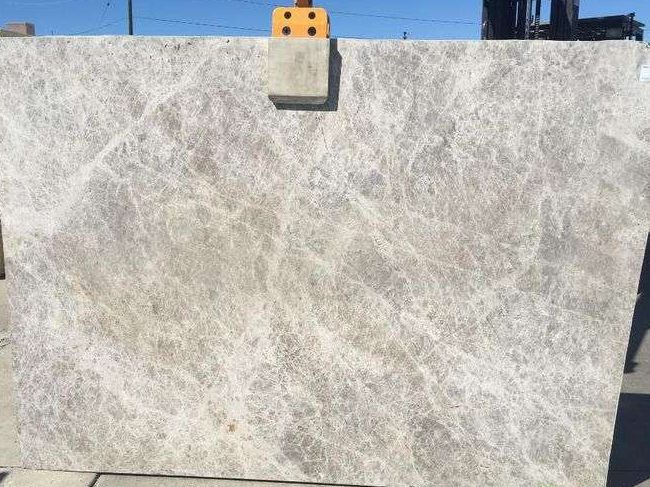
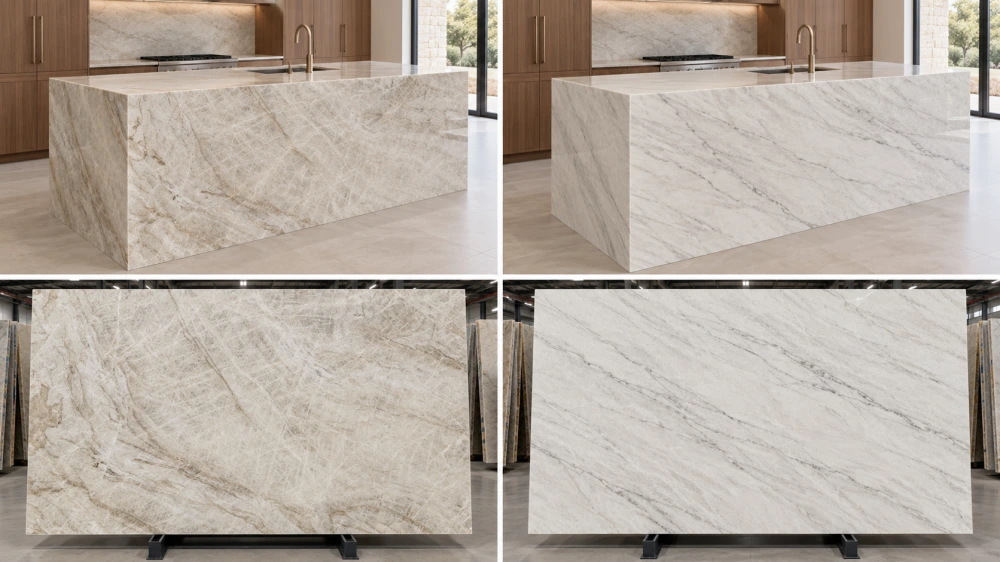
est généralement choisi pour un champ ivoire chaud, crème-beige ou gris-écru avec un mouvement minéral taupe et gris discret. Sur une grande surface, ce mouvement peut rester large et relativement calme. Cela rend la pierre particulièrement utile lorsque le plan de travail doit relier les armoires chaudes et les finitions architecturales sans devenir l'élément le plus voyant de la pièce.

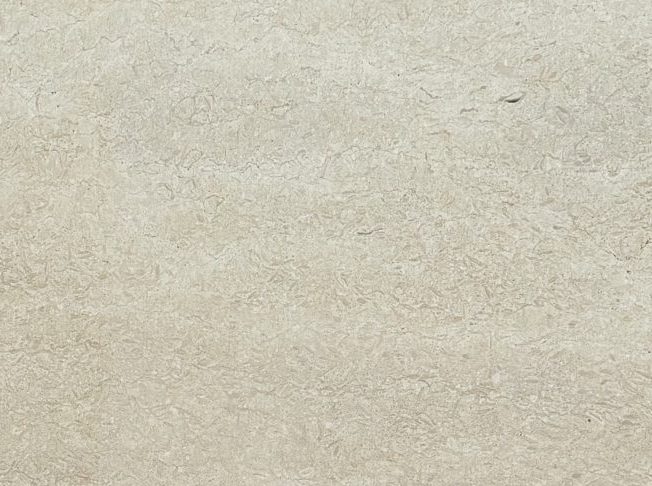
Le quartzite Mont Blanc évolue dans une direction plus claire. La référence actuelle de CENTURY STAR.
montre un fond blanc-crème avec de fines stries grises et un mouvement linéaire délicat. Sur un long îlot, ces lignes peuvent créer une direction visuelle plus nette que le mouvement plus doux et diffus habituellement associé au Taj Mahal. Par conséquent, la question n'est pas de savoir quel matériau est plus luxueux. Les deux peuvent convenir à des cuisines haut de gamme. La question est de savoir si le design a besoin de.
chaleur discrète Quartzite blanc Mont Blanc définition directionnelle plus légère.
Quel matériau s'accorde mieux avec les couleurs des armoires de cuisine ? Avec des armoires en noyer, chêne moyen, beige chaud, champignon, taupe ou crème, le Taj Mahal forme souvent le pont visuel le plus naturel. Sa tonalité plus chaude peut relier le bois et les finitions neutres sans introduire un fort contraste blanc-gris. ou Le Mont Blanc peut particulièrement bien s'harmoniser avec des armoires laquées blanches, en chêne clair, gris pâle et des intérieurs contemporains où le design requiert plus de luminosité. Son mouvement linéaire gris peut également s'intégrer efficacement à des détails métalliques froids ou à des finitions architecturales grises subtiles..
Ce sont des tendances de design plutôt que des règles fixes. L'éclairage peut modifier considérablement la couleur perçue de la pierre, et les dalles individuelles peuvent être plus chaudes ou plus froides qu'un échantillon représentatif. Les échantillons d'armoires et de pierre doivent donc être examinés sous un éclairage comparable avant l'approbation définitive.
With walnut, medium oak, warm beige, mushroom, taupe or cream cabinetry, Taj Mahal often forms the more natural visual bridge. Its warmer undertone can connect timber and neutral finishes without introducing a strong white-grey contrast.
Mont Blanc can work particularly well with white lacquer, light oak, pale grey cabinetry and contemporary interiors where the design needs more brightness. Its grey linear movement can also relate effectively to cool metal details or subtle grey architectural finishes.
These are design tendencies rather than fixed rules. Lighting can significantly change perceived stone color, and individual slabs may run warmer or cooler than a representative sample. Cabinet and stone samples should therefore be reviewed under comparable lighting before final approval.
For a Kitchen Island, Slab Composition Matters More Than the Name
A large island exposes much more natural variation than a small sample. This is where a theoretical Taj Mahal vs Mont Blanc comparison becomes a real procurement decision.
For Taj Mahal, buyers should inspect whether the cream-beige background remains visually compatible across the slabs required for the project. Broad taupe or grey movement should be positioned where it enhances the island rather than disappearing into a cooktop or sink opening.
For Mont Blanc, the direction of its grey striations deserves particular attention. Rotating a waterfall panel, miter strip or secondary countertop component simply to maximize material yield can make the natural lines change direction unexpectedly.
Neither stone should therefore be released for fabrication until the actual countertop geometry has been mapped onto the proposed slabs. For larger island procurement, a broader quartzite kitchen island sourcing process can also help buyers coordinate slab allocation, visible faces and fabrication approvals.
Is One Quartzite More Practical Than the Other?
Because both names are used for natural quartzite products, it is tempting to declare them technically equal. That would be too simplistic.
Natural stone performance should be evaluated from the actual material being supplied. Geological classification, mineral composition, natural fissures, slab condition, finish, fabrication and installation can all influence practical behavior. A commercial stone name alone does not establish every engineering property of every slab.
For kitchen use, both materials should therefore be evaluated using the same project questions: What is the actual slab condition? Where are major natural features? What finish is specified? Where are openings located? How will the countertop be supported? How will pieces be handled and installed?
This is more useful than repeating generic claims such as one quartzite being universally “stronger” than the other without verified test data for the actual material.
Fabrication and Detailing: Where the Comparison Changes
The two stones may enter the same fabrication workshop, but their visual layout priorities can differ.
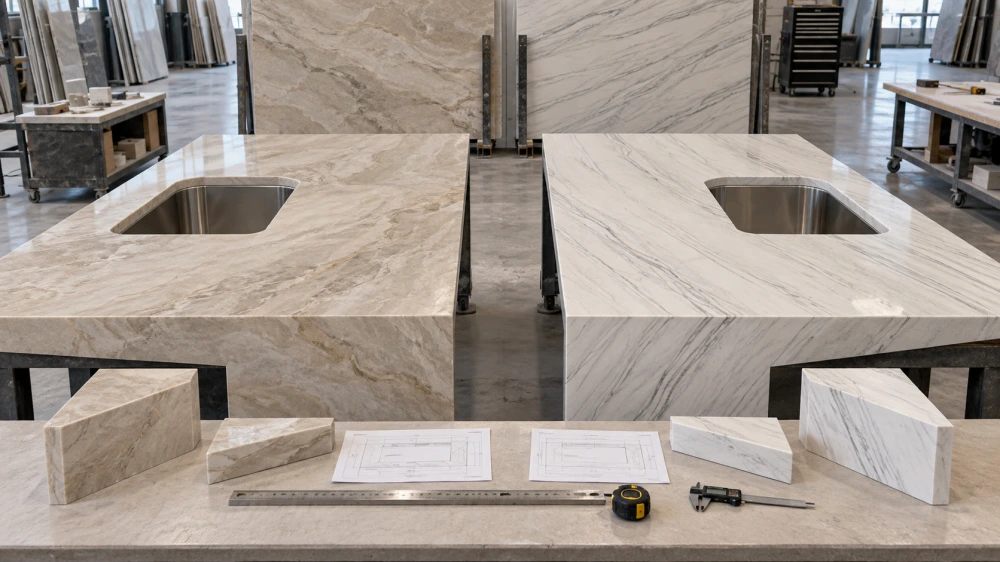
On Taj Mahal, the fabricator should protect the broad visual flow of the selected slab. A mitered edge or waterfall panel should appear intentional relative to the warm mineral movement. If an especially attractive area of the slab has been approved for the island, major openings should be placed with that composition in mind.
On Mont Blanc, directional control becomes more prominent. Long grey striations may visually lengthen the island, but the same lines can look disconnected if adjacent pieces are rotated without planning. The cutting layout should therefore identify component orientation clearly.
For both stones, undermount sink openings, cooktops, narrow rails, faucet holes, mitered build-ups, seams and seating overhangs should be coordinated on approved fabrication drawings. Neither stone name removes the need for project-specific engineering review.
Which Is Better for a Waterfall Island?
Both can work well, but for different reasons.
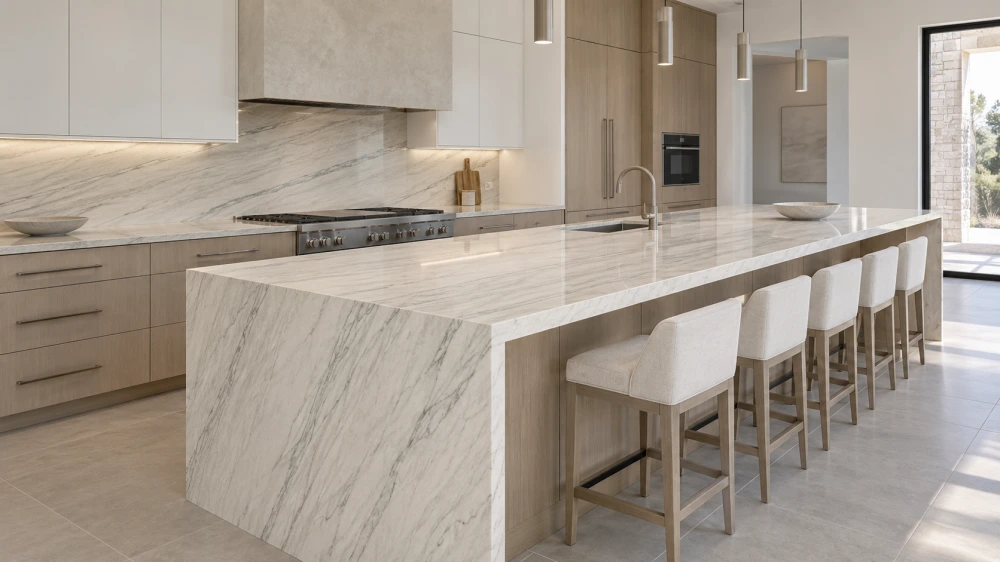
Taj Mahal can create a particularly calm waterfall composition because its broader, restrained movement may flow softly from the horizontal surface to the vertical end. It is well suited when the island is intended to feel monolithic rather than highly patterned.
Mont Blanc can create a more visibly directional waterfall effect. This can be highly effective in a contemporary kitchen, but the junction needs careful planning because the linear structure makes changes in orientation easier to see.
In either case, the top and waterfall components should be allocated together before cutting. A waterfall should not be treated as a secondary panel made from whatever material remains after the top is nested.
Maintenance: Do Not Choose Either Stone on a “Maintenance-Free” Claim
Neither Taj Mahal nor Mont Blanc should be presented as maintenance-free, completely stain-proof or scratch-proof. Natural stone care depends on the actual material, finish, treatment, installation and use conditions.
The Natural Stone Institute recommends first understanding the geological classification and composition of the stone and advises neutral or stone-appropriate cleaning practices. It also notes that impregnating treatments can improve stain resistance in appropriate cases but do not make natural stone stain-proof.
For buyers, the practical comparison is therefore not “Which one never stains?” but “What care is appropriate for the actual slabs and finish being supplied?”
How Do Their Cost Drivers Differ?
Without current verified project pricing, there is no responsible basis for stating that Taj Mahal or Mont Blanc is always the cheaper kitchen stone.
The real cost comparison should consider usable slab yield, number of slabs required, visual grade, slab matching requirements, island dimensions, backsplash scope, waterfall ends, edge construction, sink and cooktop machining, seam strategy, reinforcement where required, finish, packing and project logistics.
A visually quieter Taj Mahal slab may produce excellent yield on one project, while another kitchen may require additional slabs to maintain tone continuity. Likewise, directional Mont Blanc material may require a less efficient cutting orientation if the designer wants all visible striations to run consistently.
Procurement and Slab Approval: What Changes Between Them?
For Taj Mahal Quartzite, procurement should focus strongly on background warmth, consistency among multiple slabs and the distribution of broad movement. If an island, backsplash and perimeter counters will all be visible together, the slabs should be reviewed as one composition.
For Mont Blanc Quartzite, buyers should check the same factors but add a more explicit orientation review. Long grey mineral lines should be assessed across the island, waterfall, perimeter pieces and backsplash before cutting begins.
For either material, a useful approval package should identify the exact slabs, current drawing revision, intended finish, component layout, visible-face orientation, major cutouts, seam locations and any particularly important visual zones.
Which One Should You Choose?
Choose Taj Mahal Quartzite if:
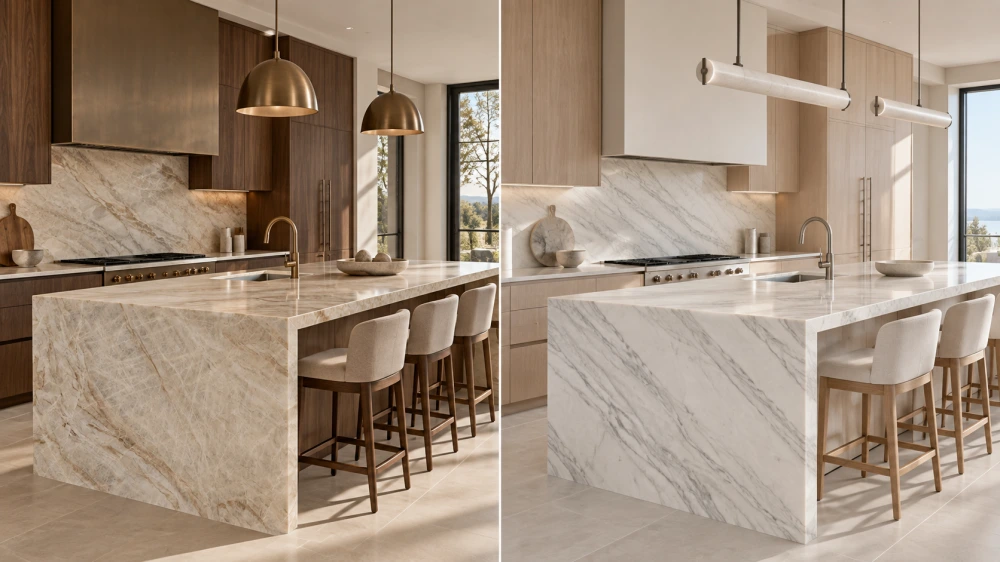
- The kitchen palette is warm cream, walnut, oak, beige or taupe.
- You want the stone to feel refined without creating strong visual contrast.
- A large island needs broad, calm natural movement.
- The design depends more on tonal continuity than obvious linear pattern.
Choose Mont Blanc Quartzite if:
- The kitchen palette is brighter white, light grey or contemporary neutral.
- You want visible grey striations to contribute to the architecture.
- The island design benefits from directional movement.
- You are prepared to control orientation carefully across adjoining pieces.
If both fit the color scheme, choose from the actual slabs. Place the fabrication drawing over the slab images or digital layout and compare what the finished kitchen will actually look like. That decision is more reliable than selecting between two product names in isolation.
Questions fréquemment posées
1. Is Taj Mahal Quartzite or Mont Blanc Quartzite better for kitchen countertops?
Cela dépend du design et des dalles réelles. Le Taj Mahal convient généralement mieux aux palettes de cuisine plus chaudes et plus douces, tandis que le Mont Blanc peut s'adapter à des intérieurs plus clairs où un mouvement directionnel gris est souhaitable. Dans les deux cas, une approbation spécifique au projet concernant les dalles et la fabrication reste nécessaire.
2. Which looks warmer, Taj Mahal or Mont Blanc Quartzite?
Taj Mahal Quartzite generally presents a warmer cream, beige, greige and taupe direction. Mont Blanc Quartzite usually reads lighter and whiter, with more visible grey striations. Actual slab color should still be checked under the project’s lighting.
3. Which stone is better for a large kitchen island?
Les deux peuvent être efficaces. Le Taj Mahal peut créer une île continue plus apaisante, tandis que le Mont Blanc peut utiliser un mouvement gris directionnel pour souligner visuellement la longueur. Le choix le mieux adapté dépend des dalles disponibles et de la géométrie de l'île.
4. Is Taj Mahal more durable than Mont Blanc Quartzite?
Une affirmation générale ne devrait pas être tirée uniquement des noms commerciaux. Les deux sont vendus comme quartzites naturels, mais l'adéquation technique doit être évaluée en fonction de la pierre réelle, de l'état des dalles, de la finition, des détails de fabrication, ainsi que des exigences en matière de support et d'installation.
5. Which is better for a waterfall countertop?
Le Taj Mahal crée souvent une transition de chute d'eau plus douce et plus silencieuse, tandis que le Mont Blanc peut produire un effet directionnel plus marqué. Dans les deux cas, le panneau supérieur et le panneau de la chute d'eau doivent être prévus ensemble avant la fabrication.
6. Do Taj Mahal and Mont Blanc Quartzite require sealing?
The need for an impregnating treatment should be determined for the actual stone and finish rather than assumed from the commercial name. Sealing or impregnation can improve stain resistance in appropriate situations, but it does not make natural stone completely stain-proof.
7. Which quartzite is more expensive?
There is no universal answer without current project pricing. Cost depends on the selected slabs, grade, usable yield, number of slabs, fabrication, openings, edge details, waterfall panels, finish, packing and logistics. Buyers should compare the complete approved fabrication solution rather than raw slab price alone.
8. What should I request before choosing between Taj Mahal and Mont Blanc?
Request current full-slab images or inspection, slab dimensions, the proposed slab allocation against the kitchen drawing, finish samples where relevant, vein orientation, seam planning, major cutouts, edge details and the pre-fabrication approval process.
Références
- Natural Stone Institute — Care & Cleaning of Natural Stone. Industry guidance covering geological classification, cleaning practices and sealing considerations.
- Natural Stone Institute — Natural Stone Countertops: Considerations for Kitchen and Bath Applications. Industry education covering natural-stone characteristics, fabrication, installation, care and maintenance.