


Stone Waterscape Origin: The Philosophy of the Encounter of Water and Stone
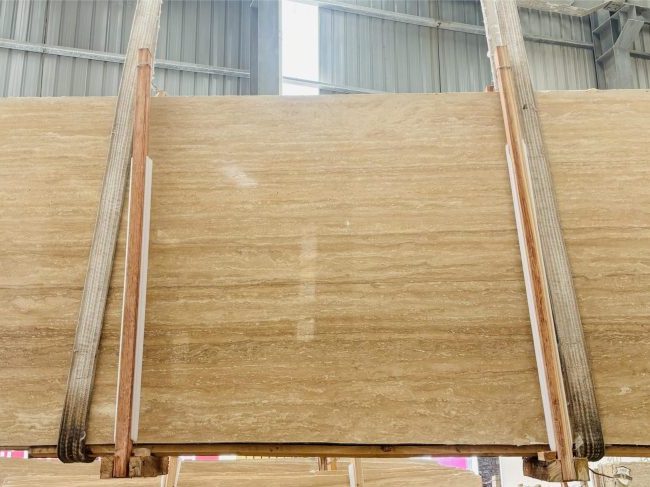
Since ancient times, gardens have been considered “invigorated without water.” However, today’s “stone waterscape” is more than simply digging deep into the ground and filling it with water to create a pool. It’s more like a carefully choreographed drama: stone is the stage, water is the actor, and light, wind, temperature, and even the footsteps of visitors are the directors. The hardness, roughness, and plasticity of stone mirror the softness, transparency, and fluidity of water, together creating a dialogue between the “momentary and the eternal.” Therefore, designers are no longer content with simply “putting water into stone” but are considering how to “make stone awaken in water.” From the mirror-like reflections of Shanxi black granite, to the porous, breathable breath of Iranian travertine, to the dark, serene luster of Chinese black stone, the character of the material determines the mood of water: from trickling to surging, or as still as a black mirror. Innovation in concepts drives technological upgrades: six-sided waterproofing, dry hanging with back bolts, overhead universal supports, and epoxy adhesive reinforcement… These seemingly cold processes are precisely designed to allow nature to breathe freely within the artificial.


Stone Waterscape Materials: The Personality of Stone and the Emotion of Water

Once stone and water are combined, they face multiple challenges: freeze-thaw, salinity, ultraviolet light, and foot traffic. Granite, with its high hardness of 6-7 on the Mohs scale, is the preferred choice for waterfall walls. Shanxi Black Mirror, after polishing, can reflect the full blue of the sky through a 10mm thin layer of water. Yellow Rust Stone, with a lychee finish and a friction coefficient of 2.5, protects children’s dry fountains. Sandstone, with a porosity of 15%, serves as a microbial “hotel,” silently purifying water in ecological ponds. Travertine’s honeycomb pores absorb water and reduce noise, but they fracture due to ice expansion in northern winters, necessitating epoxy resin filling and back-covering with mesh. Dark stone easily appears dirty in modern lighting, so designers opt for 4000K neutral light or singe the slate surface to diffuse light through the dimples. Black phyllite is a new favorite for creating a “black mirror” effect in minimalist spaces. Its natural surface, after foliation, becomes glossy black after being soaked in water, seemingly freezing the night in the courtyard.
Stone Waterscape Construction: A Journey of Craftsmanship from Drawing to Construction

A 35m x 6.2m indoor stone water curtain wall in Tongzhou, Beijing, can be considered a “cross-section textbook” for contemporary waterscape design. The original design, inspired by the Grand Canyon, employed 25mm-thick slate on the main facade. A T-shaped stainless steel trough was installed on the back. A pump pumped water at 0.4 MPa pressure to the 6.2-meter top, where it was channeled through CNC-controlled V-shaped joints to form a uniform water curtain. To prevent efflorescence, all slabs were factory-sealed with a six-sided penetrating epoxy sealant. The wall base was waterproofed with a double layer of “2mm penetrating crystallization + 1.5mm polyurethane.” Dry hanging of the stone was permitted only after 48 hours of water storage without leakage. The 3mm joints between the slabs were filled with polysulfide glue, which absorbs structural micro-vibrations while maintaining elasticity at -20°C. The pool’s bottom is paved with colorful rain-flower stones, with a particle size of 8-12 cm, which conceal the backflow and soften the water’s sound. Finally, the water curtain, stone, lighting, mist, and digital projection are synchronized, so that when diners toast in the VIP room, the wall transforms into a breathtaking canyon waterfall.

Story 1: “Sunken Box”—Chengdu Dehua Yuhu Hejing is a complex community that pushes the concept of a “three-dimensional city” to its extreme. The entrance plaza was originally a triangular site measuring only 40 meters square, sandwiched between two main city roads. It was noisy, had a large height difference, and lacked room for maneuver. The design team simply “slashed” the entire ground floor, creating a 7-meter-deep rectangular cavity, like a “negative” seal carved out of the urban mass. The walls of the cavity are clad in Shanxi black mirror granite, measuring 900 x 1800 mm with a 3 mm staggered gap. The extremely black surface, after polishing, achieves a 90° mirror finish, almost resembling liquid metal. To allow the stone Waterscape to “catch” light even at night, a 2 mm acrylic light guide plate was added to the back of the stone. The LED color temperature is locked to 4200 K, neither too warm nor too cold, perfectly capturing the bluish-gray color of Chengdu’s night sky. Standing on the street corner, one’s first impression is a surface flush with the road, resembling a piece of black glass embedded in the city sidewalk. Upon closer inspection, the glass reveals itself to be a “well,” projecting the entire ground floor of the building backward into the ground. 12 mm ultra-clear glass replaces traditional railings and is fixed in place in a cantilevered manner, leaving only a 1 cm air gap between the glass and the water surface. During the rainy season, this gap is quickly flooded, the mirrored boundary disappearing abruptly. The water overflows the edge of the glass, instantly obliterating the boundary between the building and the street, as if the city itself is slowly sinking. During the dry season, the water level drops to -2 cm, and the mirror reappears intact, like a sharp knife re-dividing the upper and lower worlds. To precisely control this 2 cm fluctuation, a German-imported linear groove overflow system was installed on the pool floor. The 10 cm wide groove can adjust the water level by ±3 cm within a minute. The water pump is hidden in the equipment room on the second underground floor, and a variable frequency motor and rain sensor synchronize each rise and fall with the actual rainfall.

On summer evenings, children run along the edge of the mirror, and the splashing water from their feet shatters the LED light spots into golden star clusters. On winter mornings, mist rises from the water, and the mirror reflects the lavender of the sky back into the air, like a double exposure of the city. The coldness of the stone and the softness of the water, the emptiness of light and the reality of the architecture, complete the dialectic in this 7-meter-deep well: the architecture has not disappeared, it has simply learned to “fold” itself. Story 2: “Folding Nature”—Tai’an Qingyun Town is located on a gully terrace in the foothills of Mount Tai. The original site had an 8-meter height difference from east to west and was less than 30 meters wide from north to south, yet it serves as a triple function as a city exhibition hall, visitor service center, and a prominent entrance. The design eschews traditional retaining walls and vertical elevators, instead allowing the height difference to flow naturally: a “folding staircase” constructed of yellow rust-colored litchi-faced granite descends gently from west to east, like the pages of a book blown by the wind. Each step is 900 mm wide and 120 mm high, varying in length from 1.2 to 3.6 meters according to the terrain, forming a subtle fan-shaped opening. The litchi-faced granite shimmers with fine golden dots in the sunlight, resembling the morning glow of Mount Tai frozen on the stone Waterscape surface. Water overflows from the top step at an extremely low flow rate of 5 L/min.

A silk-thin film of water glides along the stone’s grain, amplifying the unevenness of the lychee surface into flowing sand dunes on sunny days. During heavy rain, the flow rate instantly increases to 200 L/min, and the film thickens to a 3 cm torrent, transforming the entire staircase into an 8-meter-high flood channel, draining any accumulated water within 30 seconds. To address these two extreme conditions, the design team collaborated with the Tongji Hydraulic Engineering Laboratory to conduct a 1:1 wind tunnel and hydraulic engineering model. The team ultimately settled on a hidden stainless steel blade weir at the leading edge of each step. The weir’s crest, just 3 mm high, normally holds thin water but allows it to flow over in a flash during heavy rain. The sound of the water was also meticulously calculated: during the day, the sound pressure level at 0.5 meters is controlled at 45 dB, reminiscent of distant pine waves; at night, it drops to 35 dB, even lower than an air conditioner’s outdoor unit, ensuring a mountain and forest-like experience from the hotel room window. At the highest point stands a solitary tallow tree, with an 18 cm diameter at breast height and a 5-meter canopy. Its roots are channeled into a 1-meter-deep gabion pond, the walls of which are made of the same material as the steps, creating the illusion of branches growing from the stone. In late summer, the leaves turn red, their reflections falling on the water film, as if projecting a trailer for the autumn of Mount Tai at the entrance to the city. After the leaves fall in winter, the sharp lines of the branches contrast with the rough texture of the yellow rust stone, creating a stark contrast. The absence of water allows the stone Waterscape to take center stage again.


Story 3: “Black Mirror Courtyard” – The first development of Tianjin Vanke Emerald Purple Terrace measures only 15 m x 6 m, yet it simultaneously accommodates the diverse scenarios of returning guests, welcoming guests, children playing in close proximity, and even a temporary market. The traditional concept of a “pond” in a waterscape feels overly heavy here, so the design condenses the “pond” into a “black mirror” with a mere 8mm of water layer: 3cm-thick Chinese black stone slabs, measuring 600 x 1200mm, with 2mm gaps, are laid with universal supports, creating a 1.5% two-way slope. This ensures a uniform water layer and allows for drainage and frost protection in winter. The stone Waterscape surface is finely polished to a matte finish of 25 GU, avoiding the glare of a mirror while still reflecting the skylight and tree shadows.

During the day, children run on the surface, and the water droplets from their shoes tumble down like diamonds. At dusk, underwater linear lights, emitting a warm 2700K light, wash the stone from bottom to top, stretching the tree shadows into a massive 20-meter silhouette, projected onto the sales office’s glass curtain wall like a silent shadow play. To balance safety and interaction, the Black Mirror has no railings. Instead, its perimeter is gently sloped at a ratio of 1:20, the top of the slope level with the building’s interior floor. Elderly people can rest on the edge, while children can slide directly into the water. During the rainy season, the entire courtyard self-cleans within 90 seconds via a linear drain. After draining in winter, the 8mm water layer serves as a temporary light trough. 300 LED point lights are embedded in the stone crevices, transforming the courtyard into a starry sky you can walk on. The coolness of stone and the softness of water, the warmth of light and human activity, are pushed to their limits on this miniscule scale: water is no longer an object of appreciation, but a part of the paving; stone Waterscape is no longer a paving, but a vessel of time that carries memories. Three years later, fine cracks appeared on the stone’s surface, like tree rings, recording the community’s seasonal changes. Rather than rushing to renovate, the property management company regularly reapplies protective coating—they believe these cracks are the Black Mirror’s diary for the city. Maintenance: Let Time Leave Marks on the Stone, Not Scars.

The completion date of a waterscape isn’t the end; it’s the beginning of the “honeymoon period” between stone and water. During the first three months, calcium hydroxide will precipitate from the water, forming white tear marks. These need to be gently wiped with a 1% oxalic acid solution, immediately neutralized, and then reapplied with a protective agent. Fluorosilicone penetrant sealing should be performed every six months, and a complete inspection should be performed every two years. Projects in northern China should lower the water level to 5 cm below the stone’s top in winter to prevent frost heave and cracking. Projects in southern China should be wary of algae growth and can install UV modules on the front of the water pump. New materials such as regenerated stone, photovoltaic stone, and microbial stone are rewriting the maintenance equation. Regenerated stone, made from construction waste aggregates under high pressure, emits only 30% of the carbon emissions of natural stone. A TiO₂ photocatalyst treatment on the surface can decompose 65% of organic pollutants within a year, shortening chemical cleaning cycles from quarterly to annual. Designers even began to reserve “time interfaces”—installing replaceable stainless steel planting boxes on the surface of the sandstone water feature wall, allowing climbing plants to gradually cover the stone each year, making the building slowly “disappear” with the seasons. As a result, the stone water feature is no longer an expensive decoration, but a scale of time, a container of memory, and a gentle negotiation between nature and man-made objects.