


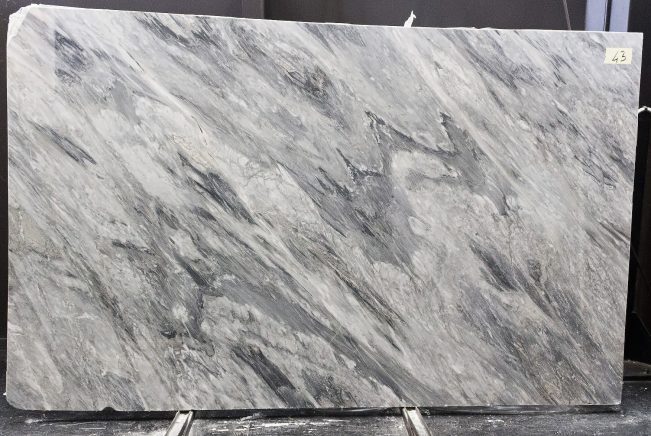
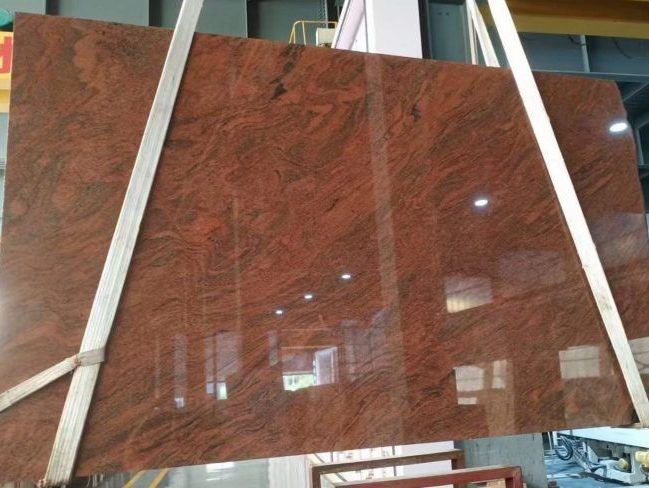
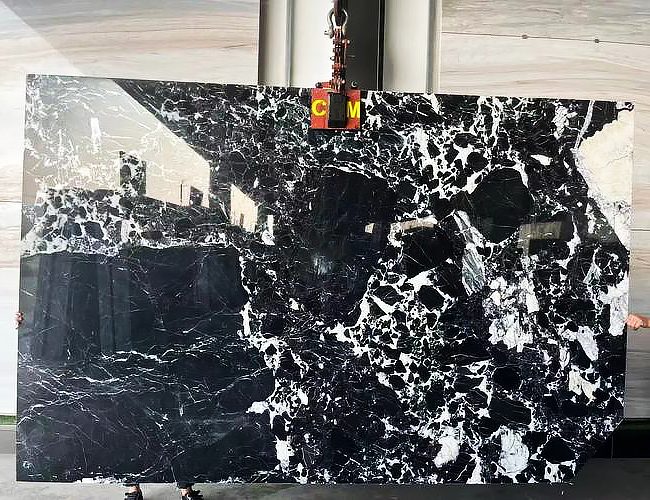
Resumen rápidoBlue Roma Quartzite is especially suited to feature walls where its pale blue-grey field, cloud-like movement, dark brown-to-black fissure lines, cream-white crystalline areas and warm brown-gold transitions can be read across a large surface. For a successful wall, do not select the material by stone name or small sample alone. Approve the actual slabs, decide the visual direction, map panel boundaries and architectural interruptions onto the slabs, review seams and cutting positions, and confirm the assembled composition before shipment whenever the project complexity justifies it.
Is Blue Roma Quartzite a Good Choice for a Feature Wall?
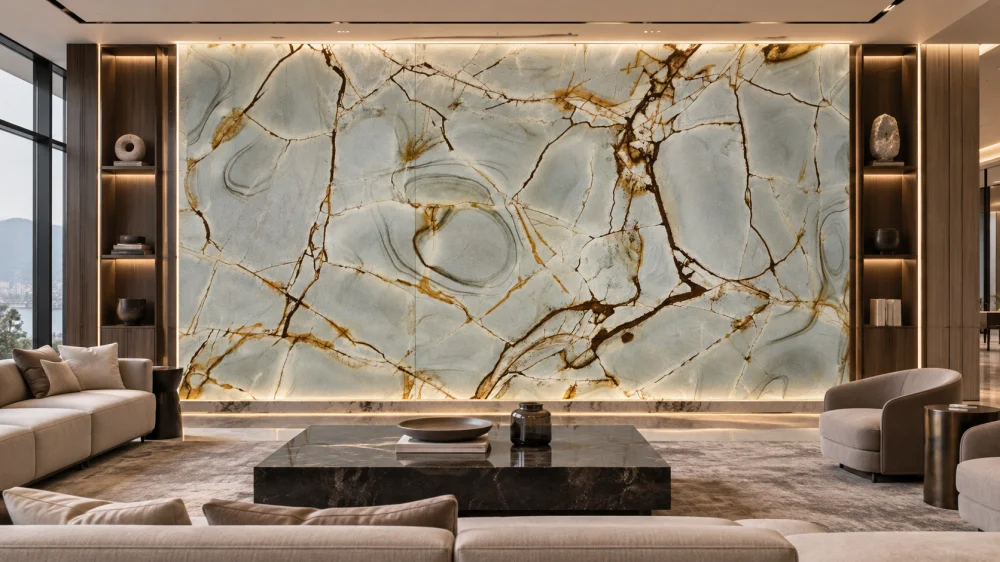
Yes, when the design needs a visually expressive natural-stone surface and the project team is prepared to control the slab layout before fabrication. Blue Roma Quartzite can create a strong feature wall because its visual identity is built from large-scale movement rather than a uniform repeating pattern.
The key project issue is not simply whether Blue Roma looks attractive as a slab. It is whether the selected slabs can be converted into the required wall geometry without losing the composition that made the material attractive in the first place.
That makes Blue Roma particularly appropriate for projects where architects and designers can review actual slab photographs, wall elevations and cutting layouts together before production.
Application-First Rule
For a Blue Roma feature wall, select the slabs against the wall elevation—not independently from it. Panel dimensions, joints, corners, openings, furniture, screens and other architectural interruptions can determine which part of a slab should become the focal area.
Blue Roma Quartzite Stone Snapshot
| Factor | Lo que los compradores deben saber |
| Color base | Typically read as pale icy blue to blue-grey, with natural tonal changes across the slab. |
| Movement | Broad cloudy movement is crossed by stronger fissure-like lines and contrasting mineral zones. |
| Contraste | Dark brown-to-black lines can sit beside cream-white crystalline areas and warmer brown-gold transitions. |
| Feature-Wall Value | Its large-scale geological movement can become a major architectural focal point when panel layout is controlled. |
| Variation | Actual slabs can differ in tone, movement, fissure distribution and crystalline areas; full-slab approval is important. |
| Primary Buyer Decision | Decide how the selected slab composition should be translated into finished wall panels before cutting begins. |
Why Blue Roma Needs Full-Slab Selection
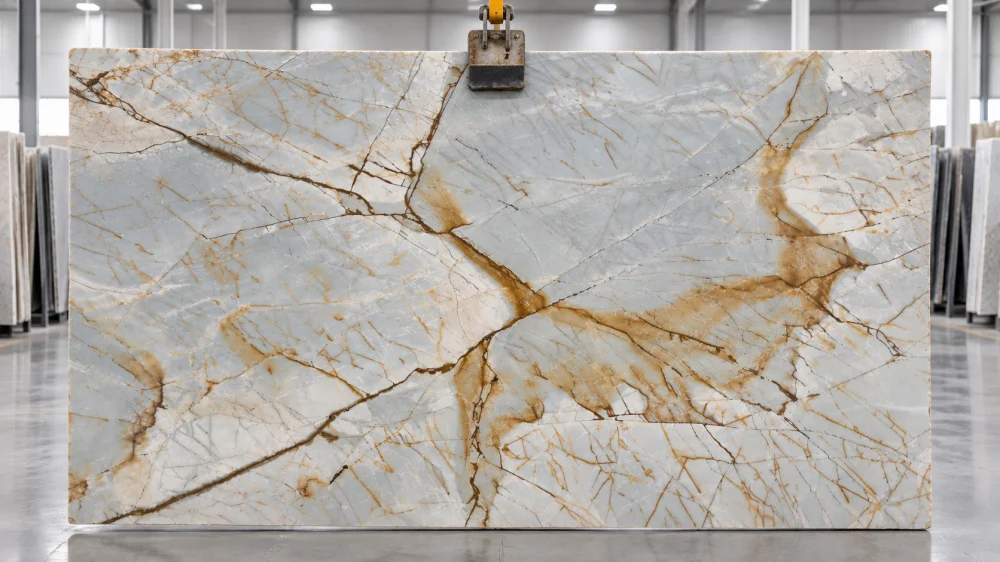
A small Blue Roma sample can confirm part of the color family, but it cannot explain how the complete geological composition will behave across a large wall.
One area of a slab may be dominated by pale blue-grey clouds, another by cream-white crystalline formations, and another by stronger dark fissure lines and brown-gold transitions. The balance between these areas is what gives the material much of its character.
For this reason, buyers should compare complete slabs at a consistent viewing scale. If several slabs are required, evaluate them as a group rather than approving each one independently.
Ask whether the wall needs a relatively calm center, a strong diagonal movement, a dark line positioned as an intentional focal feature, or a more evenly distributed composition. Those are design decisions that should happen before the cutting plan is finalized.
Start the Layout with the Wall Elevation
For feature-wall work, the wall elevation is the bridge between architectural design and slab selection.
The elevation should show the geometry that materially affects the stone composition: overall wall boundaries, intended panel divisions, openings, returns, corners and other major interfaces. If televisions, fireplaces, shelving, sanitary fittings or fixed furniture interrupt the stone, their relationship to the panel layout should be considered before the visually important slab zones are assigned.
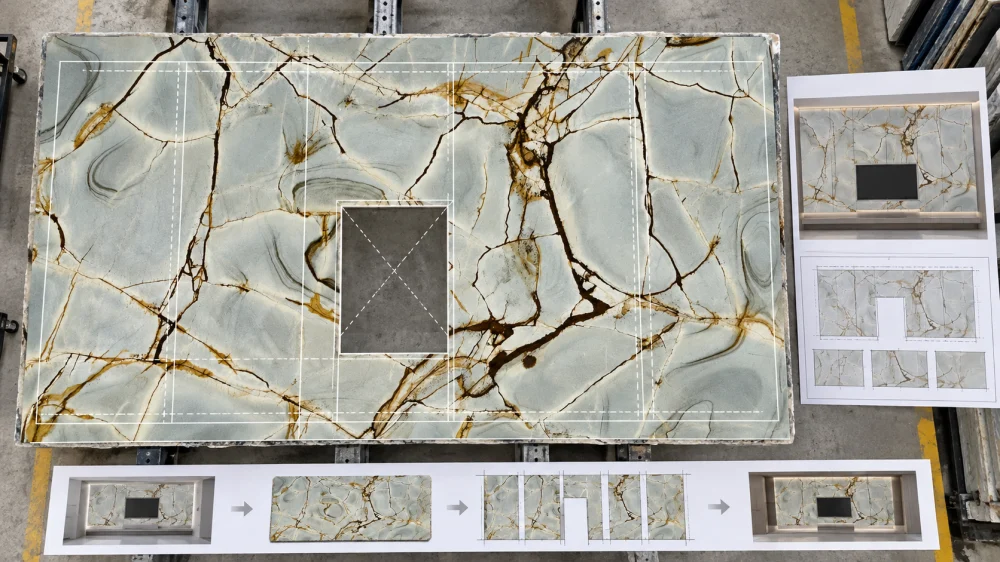
Once that geometry is understood, the selected slabs can be photographed and used as the visual basis for a cutting-layout review.
- Confirm the wall geometry. Use the current approved architectural information rather than an outdated concept image.
- Select candidate slabs. Review complete slabs and identify their strongest visual zones.
- Set the overall direction. Decide whether the geological movement should rise, fall, flow laterally or form a more centered composition.
- Map panel boundaries. Place the intended wall pieces onto the actual slab images.
- Review interruptions. Check where seams, openings, corners and fixtures cross important features.
- Approve before cutting. Resolve the visual composition while changes can still be made digitally rather than after fabrication.
Vein Direction Is a Design Decision, Not a Factory Afterthought
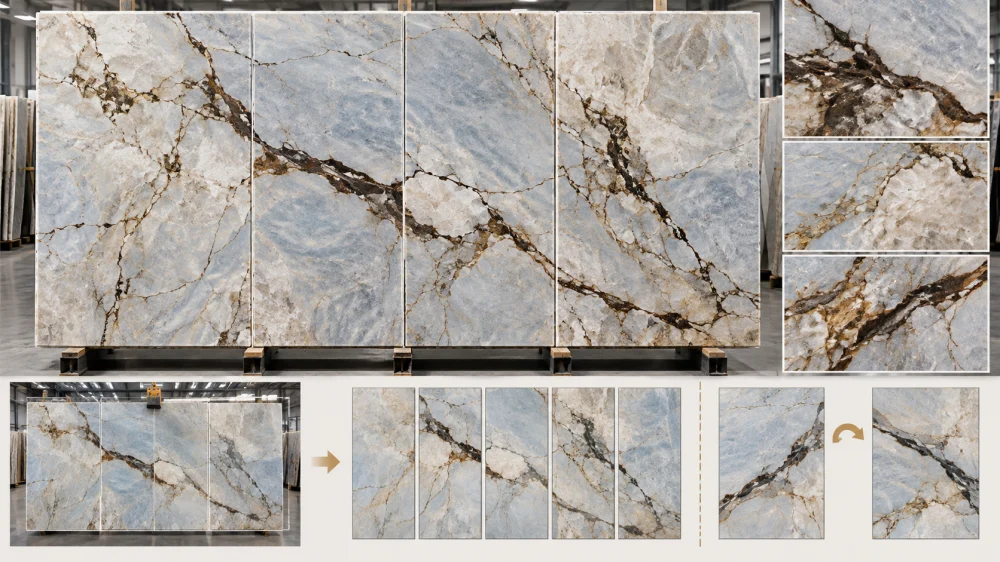
Blue Roma does not behave like a visually uniform surface. Rotating a panel can materially change the way its movement connects to the surrounding pieces.
A dark fissure line that looks dramatic on an isolated slab may become visually awkward if it stops abruptly at a seam or points toward an unrelated architectural element. Conversely, a deliberate line crossing adjacent panels can help organize the wall and make the natural geology feel intentional.
This is why panel orientation should be visible in the approved layout. For multi-piece walls, piece identification and orientation control become part of preserving the approved design through fabrication, packing and installation.
Dirección de diseño
Do not automatically center the most dramatic area of Blue Roma. First ask what the architecture needs. Sometimes the strongest dark movement should anchor the composition; in another project, a quieter blue-grey crystalline field may be better behind the primary focal object.
How Should Seams Be Planned?
Seams are both technical joints and visual boundaries. Their location should respond to the architecture, available slab geometry and the natural movement of the selected material.
A seam through a relatively quiet field may read differently from a seam that divides a strong dark fissure or cream crystalline area. This does not mean every natural line must continue perfectly across every joint. Natural stone is not printed material, and forcing artificial continuity can create poor slab yield or unsuitable fabrication geometry.
The goal is controlled composition: decide which transitions are visually important, which can occur naturally, and where technical requirements should take priority over pattern matching.
Bookmatch, Slip Match or Natural Sequence?
Blue Roma can support different layout strategies depending on the available slabs and the intended architecture, but no matching method should be promised solely from the commercial stone name.
A mirrored or bookmatched arrangement can create a highly formal composition when the slab sequence supports it. A slip-match or directional sequence can preserve a more continuous flow. In other cases, carefully arranged independent panels may better suit the wall geometry.
The correct approach depends on the actual slab sequence, cut faces, panel dimensions and visual objective. Buyers should therefore request a proposed panel composition rather than specifying “bookmatch” without first confirming that the available material can create the desired result.
Fabrication Planning for a Blue Roma Feature Wall
Once the visual layout is approved, the same information should remain connected to fabrication.
Large crystalline fields, natural fissure-like features and changes in mineral structure should be considered in relation to the finished panel geometry. Visual attractiveness alone does not establish whether a particular location is the preferred place for every narrow strip, opening or edge condition.
The fabricator should review the project geometry and actual slab condition before critical cutting. Where a wall includes cutouts, internal corners, narrow returns or other concentrated details, those areas deserve specific fabrication planning.
Edges and exposed returns also affect the final appearance. If the wall turns a corner, the relationship between the front face and return should be reviewed rather than leaving the return as an unrelated leftover cut.
Riesgo técnico
A visually attractive CAD layout is not, by itself, fabrication approval. The selected cutting positions still need to be reviewed against the actual slab, natural features, panel geometry, openings, edge conditions and the support or installation system specified for the project.
Finish Selection Changes How Blue Roma Reads on the Wall
The specified surface finish affects reflection, color depth and how the stone is perceived under architectural lighting.
A polished surface can emphasize depth and contrast, while a lower-sheen finish can create a softer visual reading. The correct choice depends on the interior concept, viewing distance, lighting direction and surrounding materials.
For important projects, approve the intended finish on representative material rather than assuming that a warehouse slab photograph accurately predicts the installed appearance.
Lighting should also be evaluated as part of the wall design. Directional or grazing light can make natural surface and mineral variation more visible. This can be desirable, but the lighting concept should be coordinated with the actual finish and panel arrangement rather than added after stone approval.
Should the Wall Be Dry Laid Before Shipping?
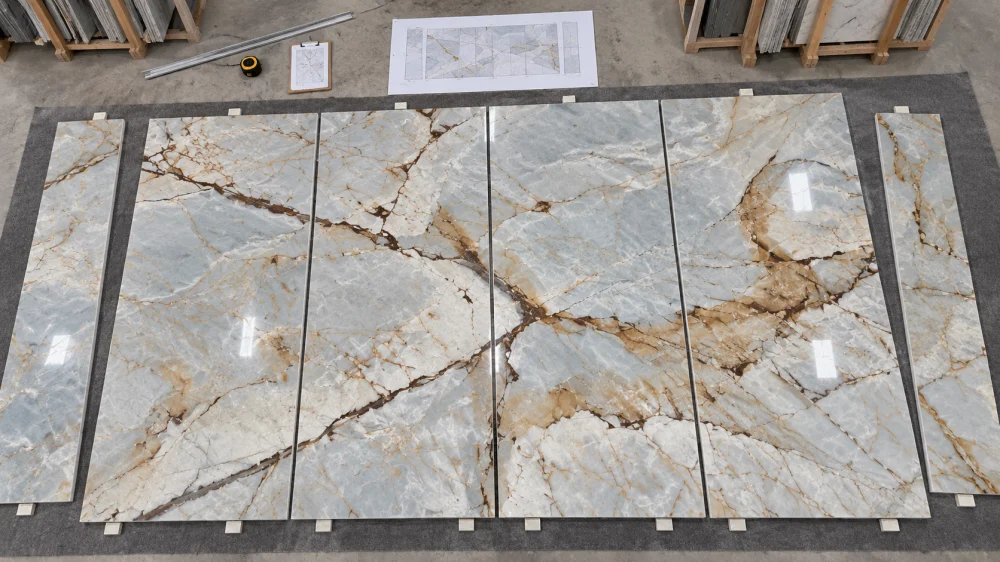
For a complex multi-panel Blue Roma feature wall, a controlled dry review can be valuable because it allows the project team to see the fabricated composition before the pieces are separated for packing.
The review can help confirm panel sequence, orientation, visual transitions, finish consistency and whether the fabricated pieces correspond to the approved layout. It can also create a useful photographic reference for the installation team.
Dry lay should be proportional to project risk. A simple one-piece application does not need the same review process as a large multi-panel lobby wall with prominent geological movement.
What Should Buyers Approve Before Production?
For architects, designers and project buyers, the most useful approval sequence is not simply “sample approved → production.” A Blue Roma feature wall benefits from several connected decisions.
- Aprobación de la losa real: confirm the specific slabs intended for the project.
- Wall elevation: confirm current geometry and architectural interruptions.
- Visual direction: define the preferred movement and focal zones.
- Cutting layout: show finished pieces on the actual slabs.
- Panel identification: preserve sequence and orientation through production and packing.
- Finish approval: confirm the intended surface appearance.
- Fabrication review: connect natural features with openings, edges and other critical geometry.
- Pre-packing QC: review fabricated appearance and panel relationships where project complexity warrants it.
For buyers managing broader natural-stone procurement, the CENTURY STAR stone drawing and site surveying guide provides additional context on connecting design information to production drawings.
Procurement Checklist for Blue Roma Quartzite Feature Walls
| Approval Item | What to Review | Por qué importa |
| Losas | Complete slab photographs and slab-to-slab relationship | Controls tone, geological movement and available focal zones |
| Wall Geometry | Current elevation, openings, returns and major interfaces | Prevents important slab features from being lost behind interruptions |
| Layout | Piece positions, orientation, seams and visual direction | Translates slab selection into the finished composition |
| Acabado | Representative finished surface under relevant lighting | Confirms reflection, depth and overall visual character |
| Fabricación | Critical openings, narrow pieces, edges and corner conditions | Separates visual approval from engineering suitability |
| Control de calidad final | Panel sequence, orientation, finish and agreed visible relationships | Helps preserve the approved composition through packing and installation |
Conclusión práctica
The strongest Blue Roma Quartzite feature walls are planned from the actual slabs outward. Approve the complete material, connect the wall elevation to the slab photographs, decide the movement and focal zones, review panel boundaries and seams, then keep that approved layout connected to fabrication and QC. Blue Roma’s dramatic geology is an advantage only when the project controls where that geology appears in the finished wall.
Preguntas frecuentes
1. Is Blue Roma Quartzite suitable for a feature wall?
Yes, it can be highly effective where the design calls for expressive natural movement and strong blue-grey, cream, brown-gold and darker geological contrast. The actual slabs and wall layout should be reviewed together before fabrication.
2. Should I select Blue Roma Quartzite from a small sample?
A small sample can help review color and finish, but it cannot represent the complete slab composition. For a feature wall, full-slab photographs or direct slab review are more useful for evaluating movement, variation and panel positioning.
3. How should vein direction be chosen for a Blue Roma wall?
Direction should respond to the wall geometry and intended focal composition. Review the actual slabs against the elevation and decide how major fissure lines, cloudy fields and crystalline areas should move across the finished panels.
4. Can Blue Roma Quartzite be bookmatched?
A bookmatched arrangement may be possible when the available slab sequence and cut faces support it, but it should not be promised from the stone name alone. The actual slabs should be reviewed to determine whether bookmatch, slip match or another panel sequence best fits the project.
5. Where should seams be placed on a Blue Roma feature wall?
Seam positions should balance architectural geometry, slab dimensions, fabrication requirements and visual composition. Important geological features should be reviewed at seam locations, but technical requirements should not be sacrificed merely to force pattern continuity.
6. Should Blue Roma wall panels be dry laid before shipment?
For large or visually complex multi-panel walls, dry review can help verify sequence, orientation, finish and visual transitions before packing. The need for dry lay should reflect the complexity and visual risk of the specific project.
7. Does the finish change the appearance of Blue Roma Quartzite?
Yes. Finish affects reflection, perceived color depth and how mineral movement appears under architectural lighting. Representative material should be reviewed in the intended finish for visually important projects.
8. What should I approve before Blue Roma Quartzite is cut?
Confirm the actual slabs, current wall geometry, visual direction, panel layout, seam strategy, finish and critical fabrication conditions. For multi-piece work, the approved layout should also preserve piece sequence and orientation.
Referencias
- Natural Stone Institute — Dimension Stone Design Manual, current applicable edition, for general natural-stone design, fabrication and installation guidance.