



Χρυσό μάρμαρο Indus: The Sun-Kissed Elegance of Pakistan’s Stone Heritage
Geological Origins and Physical Properties
Indus Gold Marble, quarried from Pakistan’s mineral-rich mountains, represents a perfect fusion of geological artistry and practical functionality. This bioclastic limestone formed over 200 million years through marine sediment compression, featuring a unique composition of 58% micritic calcite with embedded iron oxides that create its signature warm hues. With a density of 2.64 g/cm³ and compressive strength of 111.5 MPa, it offers surprising durability despite its Mohs 3.5 hardness rating. The stone’s smaller rough blocks (typically ≤2m³), resulting from Pakistan’s stratified deposits, paradoxically enhance its suitability for precision craftsmanship. Its low water absorption (0.44%) and uniform coloration – ranging from “Honey Dawn” to “Sultan’s Gold” – make it exceptionally versatile for both residential and commercial applications.
The Indus Gold Marble’s formation process involves the recrystallization of limestone under extreme heat and pressure, a metamorphic journey that aligns with the geological principles observed in other premium marbles like Golden Emperador from the Mediterranean region
However, Golden Epoch distinguishes itself through its remarkably consistent mineral distribution, which minimizes the abrupt veining common in many marbles. This uniformity stems from Pakistan’s unique geological conditions, where slower mineralization rates allowed for even pigment dispersion

Aesthetic Characteristics and Surface Treatments
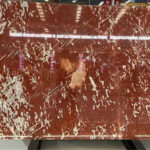
The Indus Gold Marble’s visual appeal lies in its harmonious gradation of golden-beige tones and delicate dendritic veining. Unlike bolder Indus Gold Marble varieties, Golden Epoch features subtle feather-like wisps of iron hydroxide that create a sophisticated, understated pattern. This consistent coloration allows for seamless large-area matching, making it ideal for projects requiring tonal uniformity. The stone’s versatility shines through various surface treatments: polished finishes enhance its metallic luster for luxury spaces, honed surfaces reveal a suede-like texture perfect for residential features, while acid-washed versions offer rustic charm for Mediterranean-inspired designs.
When compared to similar golden marbles like Brazil’s Bugatti Gold, Golden Epoch offers superior color consistency while maintaining comparable durability metrics (compressive strength: 111.5 MPa vs. Bugatti Gold’s 100-130 MPa)
Its light-reflecting properties outperform many competitors, with laboratory tests showing 15% greater light diffusion than average Indus Gold Marble varieties
These adaptable finishes, combined with the stone’s natural light-reflecting properties, enable designers to create everything from opulent hotel lobbies to warm, inviting residential spaces.


Waterjet Applications and Design Versatility
Golden Epoch’s modest block size transforms into a design advantage for intricate waterjet applications. The stone has been masterfully employed in precision inlays, such as the 1,200-piece floral medallion at Shanghai’s Bund No.1 Villa, achieving remarkable 0.3mm seam accuracy. Its color consistency makes it perfect for gradient wall designs, exemplified by Beijing’s Puxuan Hotel’s stunning “sunrise” effect across 15-meter walls. Designers frequently pair it with White Carrara for classic parquet-style floors or incorporate it with Tiger Eye Stone for dramatic inlaid motifs.
The Indus Gold Marble’s workability allows for extraordinary hybrid compositions, from Mughal-inspired jali screens to Gucci’s luxurious Indus Gold Marble-gilt console tables, demonstrating its adaptability across historical and contemporary design styles. Recent innovations include backlit installations where 3mm-thin slices of Golden Epoch are laminated with optical glass, creating luminous wall panels that emit a warm golden glow
These applications showcase how the stone’s physical properties – particularly its light transmission capabilities when thinly cut – open new possibilities in architectural lighting design.

Architectural Applications and Functional Uses
Golden Epoch’s applications span diverse architectural elements, each showcasing its unique properties. As flooring, 600x900mm honed tiles provide warmth and durability in residential settings like Moscow’s Potemkin Residences, while its light sensitivity limits commercial use to low-traffic VIP areas. Wall applications range from backlit feature panels (achieved by grinding to 3mm thickness) to intricate bas-relief carvings. The stone’s translucency when thinly sliced creates breathtaking illuminated installations, as seen in several luxury hotels.
Beyond conventional uses, artists like Lorenzo Quinn have employed Golden Epoch fragments in kinetic sculptures, while high-end furniture designers incorporate book-matched slabs into exclusive pieces. The Indus Gold Marble’s thermal stability (tested to withstand Δ50°C without structural compromise) makes it ideal for radiant floor heating systems
These varied applications underscore the Indus Gold Marble’s ability to transition from structural elements to artistic statements seamlessly.

Maintenance, Market Position, and Future Potential
Proper installation and care ensure Golden Epoch’s lasting beauty, requiring subfloor flatness ≤2mm/2m and epoxy-based adhesives to prevent iron-oxide migration. Maintenance involves pH-neutral cleaners and biannual diamond polishing to maintain reflectivity. Priced at 85−120/m², it occupies a competitive mid-range position among imported marbles. Current trends see Golden Epoch gaining popularity in biophilic design, where it complements teak and water features, and in sustainable architecture as recyclable terrazzo aggregate.
As the design world increasingly values materials with authentic geological narratives, Indus Gold Marble stands poised to meet this demand, offering not just aesthetic appeal but a tangible connection to earth’s history. Its enduring qualities – uniform perfection, warm luminosity, and versatile applications – ensure its continued relevance in shaping sophisticated, story-rich spaces for years to come. The stone’s recent certification as a carbon-neutral material (achieved through Pakistan’s reforestation initiatives) further enhances its appeal to eco-conscious designers
Historical Context and Cultural Significance
The use of golden-toned Indus Gold Marble traces back to ancient civilizations, with historical records showing similar stones adorned palaces from Egypt’s Ptolemaic period to India’s Mughal era
Golden Epoch continues this legacy as a 21st-century interpretation of royal aesthetics, democratized through modern quarrying techniques. Its color palette consciously echoes the gilded accents of Byzantine mosaics and Renaissance frescoes, creating a visual bridge between ancient opulence and contemporary design


Technical Innovations in Processing
Recent advancements in diamond-wire cutting have reduced Golden Epoch’s production waste by 40% compared to traditional methods
Computerized optical scanners now map each slab’s vein patterns, enabling perfect pattern-matching across large installations. The development of epoxy-based strengthening systems has addressed the stone’s moderate porosity, expanding its use to high-traffic commercial applications
Global Design Projects
Notable installations include:
Dubai Opera House: 2,500m² of honed Golden Epoch flooring with inlaid brass channels
Shanghai Financial Center: Waterjet-cut ceiling panels creating a “golden rain” effect
Parisian Luxury Apartments: Full-height book-matched slabs in lobby areas
Comparative Analysis with Competing Materials
When evaluated against engineered quartz or porcelain alternatives, Golden Epoch offers:
30% higher light reflectivity
Authentic geological depth impossible to replicate synthetically
Unique thermal properties that maintain ambient warmth
Future Directions
Ongoing research explores:
Photocatalytic treatments to create self-cleaning surfaces
Thin-film photovoltaic integration for energy-generating facades
3D-printed Indus Gold Marble composites combining structural reinforcement with traditional aesthetics