


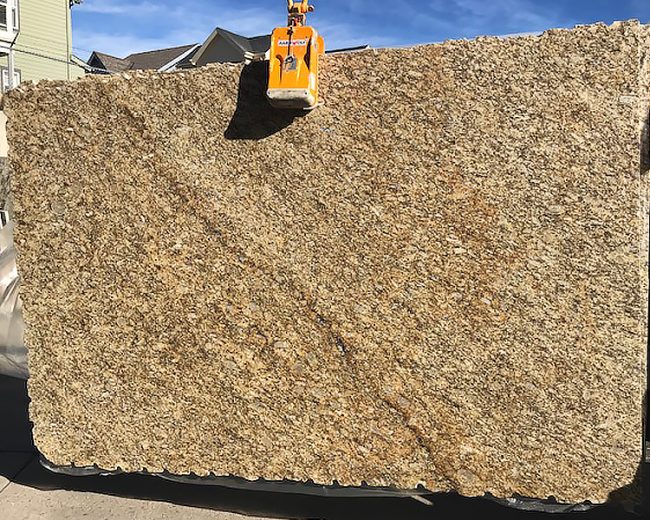
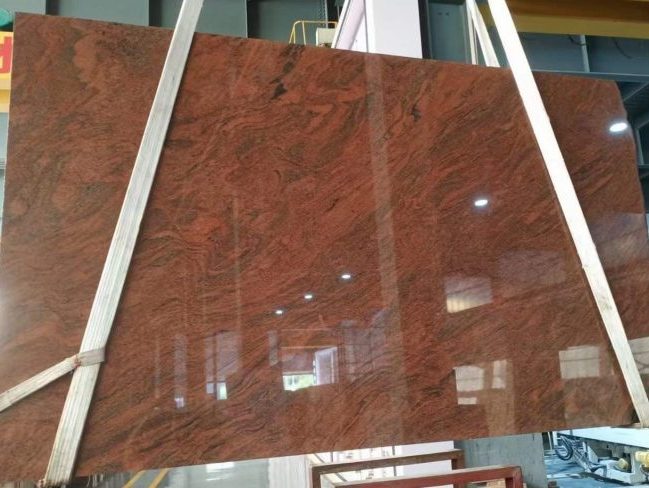

Granite, as an irreplaceable granite paving material in landscape design, derives its core value from the perfect fusion of geological characteristics and humanistic aesthetics. This igneous rock, formed through deep crustal magma activity and tempered over hundreds of millions of years of geological processes, features a dense crystalline structure with a Mohs hardness of 6-7 and compressive strength generally exceeding 200 MPa. These properties enable it to withstand high-frequency foot traffic and vehicle loads, making it one of the most durable natural materials for pathway paving. Its unique mineral composition (including quartz, feldspar, and mica) not only grants it a rich color spectrum but also creates ever-changing natural textures—from the fine granular appearance of Sesame Gray to the nebula-like crystalline patterns of Golden Leaf. Each slab is a unique masterpiece of Earth’s artistry.


In terms of aesthetic expression, granite paving achieves a balance between functionality and artistry through the dual interplay of material combinations and pattern compositions . Warm-toned granites such as Wulian Red and Indian Red, colored by high-temperature oxidation of iron elements, possess strong visual impact and are often used in focal areas like plaza centers or entrance feature walls, enhancing spatial highlights through color contrast. Conversely, cool-toned granites like Sesame White and Sesame Gray, with their neutral hues, extend visual depth and are particularly suitable for linear paving in elongated garden paths, avoiding spatial oppression. In modern landscape design, designers often employ three fundamental compositional principles— gradation, repetition, and radiation —to activate the narrative potential of the stone. For example, the waterfront promenade of Shanghai’s Bund uses 600×300 mm Sesame Gray slabs arranged in a stepped gradation from dark to light gray, creating a visual guide reminiscent of ink wash painting that subtly echoes the tidal rhythms of the Huangpu River. Meanwhile, the central plaza of Beijing’s Olympic Park features a 12-meter-diameter radial pattern, with 600×600 mm China Black slabs as the base -cut Golden Leaf slabs radiating outward, symbolizing the burning Olympic flame while enhancing the plaza’s centripetal cohesion through structural mechanics.

The diversity of surface treatments further expands granite’s adaptability to various scenarios. Areas requiring a sense of strength, such as plaza entrances, often utilize flamed or bush-hammered finishes—where high-temperature flame or mechanical chiseling creates a textured surface with a friction coefficient exceeding 0.7, providing slip resistance and a rugged, rocky aesthetic. In contrast, tranquil settings like courtyard pathways or Zen tea gardens favor polished or honed finishes. The grinding of quartz crystals produces a mirror-like effect, reflecting delicate halos under moonlight and harmonizing with moss and bamboo shadows to evoke the serene of Eastern aesthetics. Notably, the same granite variety can exhibit color variations under different treatments: for instance, Golden Leaf granite, when flamed, undergoes secondary oxidation of iron elements, shifting from light yellow to an orange-red tone. This characteristic offers designers richer color modulation possibilities.

From a technological evolution perspective, contemporary granite paving has transcended traditional single-material applications, developing innovative models of ecological integration and smart interaction . The permeable pathways of Shanghai’s Qiantan Leisure Park combine 50 mm-thick flamed granite paving with φ30-50 mm pebble inlays, layered over a base of geotextile and gravel blind drains to achieve a rainwater infiltration rate of 5 mm per hour. In Shenzhen’s tech district, experimental installations embed photovoltaic films beneath granite pavers, with LED-lit joints forming dynamic light strips at night, transforming pathways into hybrid platforms for low-carbon technology and digital art. This shift from “functional substrate” to “spatial medium” foreshadows granite paving’s increasingly multifaceted role in future landscapes.


By integrating geological endurance with artistic sensibility, granite paving continues to redefine the boundaries of landscape design, bridging the ancient and the avant-garde in a dialogue of stone and space.
Granite paving for garden pathways requires a harmonious integration of functional performance and artistic expression , with distinct styles adapted to various environmental contexts. This sophisticated paving system combines structural integrity with visual appeal through carefully considered design approaches and precise construction techniques.
1. Formal Paving Patterns: Precision and Symmetry


The formal paving category, represented by herringbone and basket-weave patterns, exemplifies structured elegance. The herringbone configuration employs 200×100mm rectangular slabs laid at a precise 45-degree angle with joint widths controlled within 3mm, creating dynamic visual rhythms ideal for European-style gardens and commercial walkways. This pattern’s interlocking geometry provides exceptional load distribution, making it particularly suitable for high-traffic areas. The basket-weave pattern, achieved through “T”-shaped alternation of 400×200mm slabs, mimics traditional textile weaving with its crisscross arrangement. This pattern demands a robust 200mm-thick C25 concrete subbase to prevent differential settlement that could disrupt its intricate visual continuity. The formal patterns’ mathematical precision requires exacting installation tolerances, with slab-to-slab height variations limited to ≤1mm to ensure both visual perfection and trip-free walking surfaces.
2. Naturalistic Paving Styles: Organic Beauty and Ecological Sensitivity

Naturalistic paving finds its most expressive forms in ice-crack and fragmented patterns. The ice-crack technique utilizes 300-500mm irregular straight-edged stone pieces with 10-15mm joints, creating the appearance of naturally fractured stone surfaces. This approach has been masterfully executed in the Suzhou Museum’s contemplative dry landscape, where bluestone slabs interspersed with black pebble inlays produce a “textured ink-wash” effect reminiscent of traditional Chinese landscape painting. The fragmented style represents sustainable design at its finest, creatively repurposing stone offcuts while incorporating ecological enhancements. The 20-30mm wide joints between irregular fragments are filled with a specialized growing medium (a 3:1 blend of peat moss and vermiculite) that supports moss colonization, transforming what would be waste material into a living pavement system that improves microhabitats and stormwater infiltration.
3. Performance-Oriented Paving: Specialized Solutions for Demanding Applications

Functional paving addresses specific use requirements through tailored material selections and construction methods. Vehicular access routes demand 40mm-thick flamed-finish granite paving (such as Mongolian Black) with compressive strength ≥40MPa, combined with reinforced concrete foundations capable of withstanding axle loads up to 5 tons. The flamed surface treatment increases slip resistance (coefficient of friction >0.6) while maintaining cleanability. For health-promoting walking paths, φ30-50mm river pebbles are strategically embedded in an S-shaped configuration aligned with foot reflexology points, creating both therapeutic benefits and sensory interest. These specialized applications require particular attention to edge restraints and jointing materials to maintain long-term stability under their respective loading conditions.
4. Structural Integrity: The Science Behind Durable Paving
Granit döşeme sistemlerinin ömrü, üç kritik yapısal katman aracılığıyla uygulanan titiz inşaat sıralamasına ve sıkı temel hazırlığına bağlıdır:
Kompakt Alt Taban: Plastisite indeksi <7 olacak şekilde ≥93% yoğunlukta tasarlanmıştır; bu hedef, titreşimli plaka sıkıştırıcılar kullanılarak ≤50mm'lik katmanlar halinde ilerleyen sıkıştırma yöntemiyle sağlanır.
Agrega Temeli: 20-40mm ebatında ezilmiş taşlardan oluşan 150mm kalınlığında bir katman, drenaj ve yük dağılımını sağlar; kötü drenajlı topraklarda jeotekstil ayırımı yapılır.
Beton Destek: ≥0.3% enine eğime sahip 80mm kalınlığında C15 beton plaka, farklı hareketlere karşı direnç gösterirken uygun drenajı garanti eder.
5. Montaj Hassasiyeti: Mükemmel Yerleştirme Sanatı
Bağlama sistemi, 30mm kalınlıkta uygulanan 1:3 kuru karışım çimento harcı (tutuşu “top elde” yöntemiyle test edilir) ile başlar; ardından yapışmayı güçlendirmek için akışkan çimento harcı (su-çimento oranı 0.5) uygulanır. Döşeme işlemi, lazer seviyeleri kullanılarak her 10m'de bir belirlenen ana kontrol hatlarıyla başlar; kavisli bölümler, yay uzunluğu farkı hesaplamaları sayesinde hassas biçimde çizilir ve kesim toleransları ≤2mm korunur. Plakalar, boşlukları ortadan kaldırmak için merkezden kenara doğru vurma tekniğiyle lastik çekiçlerle yerleştirilir; ardından hemen 2m'lik düz cetvellerle doğrulama yapılır (tolerans ≤3mm/m).
6. Koruyucu Önlemler: Uzun Dönemli Performansı Garantilemek
Kapsamlı bir koruma stratejisi şunları içerir:
Çiçeklenme Önlemesi: Montaj öncesi tüm altı taş yüzeyine uygulanan nüfuz edici silan/siloksan kaplamalar (≥95% katı madde).
Derz Sistemleri: Araç trafiği için 8mm genişliğinde, yaya trafiği için 5mm genişliğinde epoksi bazlı derz dolgu malzemeleri; termal hareketliliği karşılayacak elastomerik modifikatörlerle formüle edilmiştir.
Sertleşme Protokolleri: Nefes alabilen jeotekstil örtüler altında 48 saat ıslak sertleşme, harcın hidratasyon gücü gelişimini korur.
Granit döşeme için bu entegre yaklaşım, zaman içinde kanıtlanmış zanaatkarlıkla çağdaş malzeme bilimi bir araya getirerek hem dayanıklı hem de güzel yollar oluşturur. Sistemin esnekliği, resmi bahçe yürüyüş yollarından ekolojik doğa parkurlarına kadar her tür uygulamayı kapsar; granitin doğal özelliklerine saygı duyarken her uygulamanın özel ihtiyaçlarını da karşılar. Doğru uygulandığında, bu döşeme teknikleri uygun bakım sayesinde on yıllarca işlevsel ve estetik niteliklerini korur.