


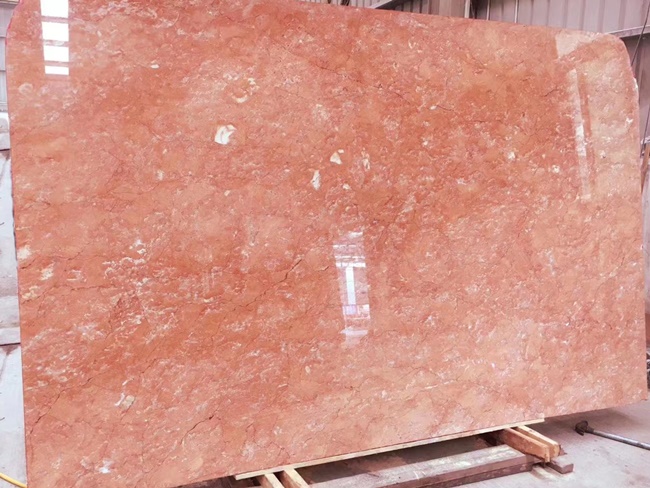
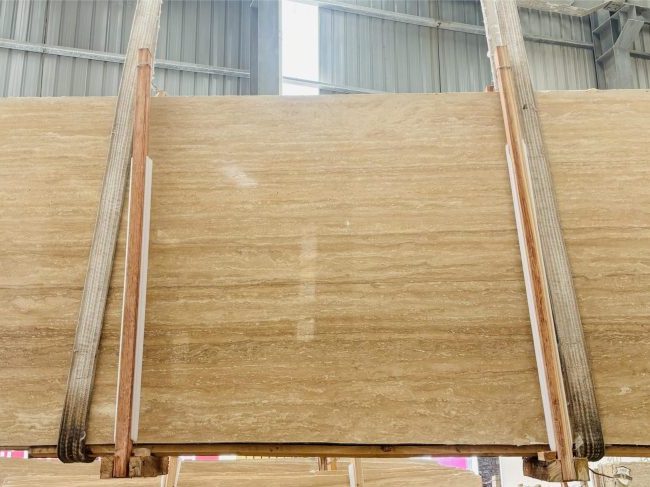
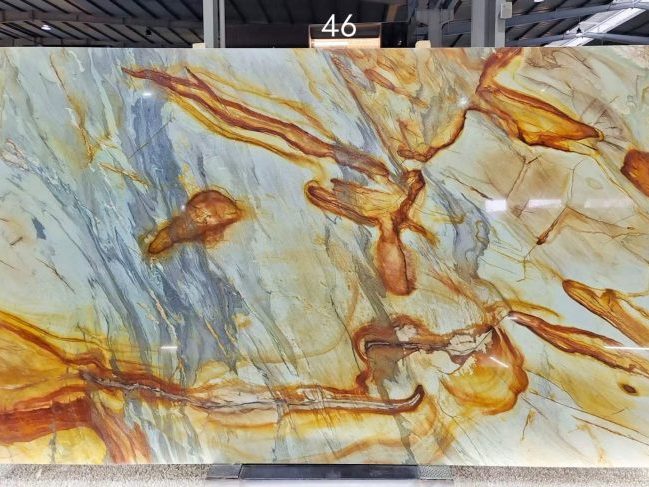
The public’s perspective and acceptance of Color Difference Marble has changed significantly in the last few decades. People with “obsessive-compulsive disorder” used to have somewhat negative opinions regarding colour variation. Many people wanted a consistent, uniform, and straightforward design style since they thought it would represent grade and quality. Color Difference Marble discrepancy is seen by them as a flaw and a sign of inadequate grade of materials. People are constantly eager to eradicate stone colour difference, or when buying Color Difference Marble, they try their best to find products with less colour difference as if only in this way will the decoration impact be flawless.

But designers started to see stone colour variation from a fresh angle as aesthetic notions evolved constantly and design ideas grew more mature. Color Difference Marble with colour variation is a treasure, in their view, and colour difference engineering is the finest art form available in nature. It is more valuable the bigger the colour difference. This shift in perspective results from a great regard for the natural beauty and a strong knowledge. Natural is great. German philosopher Leibniz once remarked: “There are no two leaves in the world that are exactly the same”. This also holds true for stone. Stone people understand well: “There will be no two pieces of Color Difference Marble that are exactly the same in the world.” Exactly the appeal of stone is the inherent colour diversity. Good utilization of the colour difference will cause the entire room to blossom with a different aesthetic appeal and individual style.

Actually, a misinterpretation of stone materials is the reason many consumers believe the used materials are of low grade. They are unaware that the colour variations of stone are a distinctive feature of natural Color Difference Marble rather than a flaw. We must thus have a thorough awareness of the reasons behind stone colour variation in order to grasp this.
First of all, one major factor distinguishes surface mines from deep mines. Color Difference Marble is taken from the mine in batches from top to bottom and from outside to inside. The outside stone will have different colour and texture in the natural surroundings since it is more exposed to natural elements such water, air, and sunlight. Since the stone buried deep inside lacks this environment, its colour and texture are rather more consistent. Surface mines and deep mines thus differ generally in colour from one another. Furthermore, the stone will change in a fresh atmosphere including sunlight, air, and water following the deep mine is dug, so producing variations in colour. This natural formation is the distinct personality of stone in various surroundings.
Second, a major contributing reason of colour variation is unequal mineral concentration. Marble is essentially composed of limestone, or calcium carbonate. Apart from the fundamental minerals, different elements and minerals are combined to create the always changing colours and textures of stone. Using South American Color Difference Marble as an example, South America has abundant copper, iron, and other metal minerals underneath significant geological motions. Consequently, South American manufactured stones typically exhibit rich colours and significant textural fluctuations. The unequal distribution of mineral content produces this rich colour and textural shift. Different minerals in nature have different distribution. This unevenness gives the stone special charm and generates variations in its colour.

Furthermore, certain mining and processing techniques can also produce colour difference. Usually a whole piece of rough material, the Color Difference Marble taken from the mine must be cut into pieces—which we refer to as big slabs. Different cutting directions apply in the processing of rough materials. Even with particular attention to it during stone processing, this processing variation cannot be totally avoided. The cut plates will differ somewhat much. Various cutting and processing procedures will affect the surface and interior structure of the Color Difference Marble differently, so producing variations in colour. The processing method inevitably produces this colour variance, which also reflects the stone’s distinctiveness.
At last, several degrees of surface preparation are also among the causes of the colour variance. The same variety of stones exhibits varied colours on the polished and rough surfaces. Furthermore quite clear in the polished surface is the difference between polishing to 10 degrees and polishing to 50 degrees, 70 degrees, and 90 degrees. While the rough surface has a hazy beauty, the more evident and brilliant the stone pattern and colour; the polishing brightness determines this. This several surface treatment technique influences not only the appearance of the Color Difference Marble but also people’s impression of the colour difference of it. varied surface treatments allow varied beauty and styles of stone to be exhibited, so giving designers more creative latitude.


One finds inherent beauty in stone colour diversity. One industrial output is not natural marble. Its texture and colour must absorb the core of the sun and the moon in nature to form by means of hundreds of millions of years of geological movement. One could say it to be absolutely “naturally beautiful”. Just as Chinese people in Shanghai, Heilongjiang, Ningxia, and other locations will still be distinct, yet each has its own beauty, stones of varied terraces, surroundings, and levels will have minute variations in colour and texture. From an artistic perspective, first of all, depending on knowledge of Color Difference Marble, the use of natural stone calls more respect and tolerance for nature. Natural environments produce stone following at least hundreds of millions of years of intricate physical and chemical transformations along with geological movement evolution. The stone will vary in many different ways depending on both internal and outside elements. This is an objective change. The pigment ions found in the Color Difference Marble and the interior structure define the Color Difference Marble because it is naturally developed. Simultaneously, the colour shift will be influenced by the various sequence of development of several minerals forming the stone. Marble’s worth comes mostly from its rich and pure natural textures. One cannot consider Marble with colour variation as “inferior”. Every bit of marble taken from the natural world is unique. Its texture and hue are somewhat similar but not precisely the same. More creative inspiration and opportunities are given to designers by colour diversity since it can create a beautiful mix and diverse effects.

Make beauty so natural using colour differences. Appreciating from the standpoint of art and designing from the standpoint of design can help you to suddenly realize the range of possibilities related to colour difference. Using colour difference can accomplish more layering, sense of space and rich beauty, precisely representing the designer’s particular customizing plan, much like a picture has more comparable colours from 12 colours to 18 colours, 24 colours, or even 64 colours. Re-spliced and mixed stones with different colours create original and unmatched designs. For unique designs as well, stones with holes and fracture lines might accentuate their flaws. Actually, any dyeing, polishing, and colouring agent cannot produce natural beauty and long-term benefits even following reprocessing and re-treatment. Natural works of art transcend one aesthetic taste. Nature does not produce natural stones in line with human need. Perfect stone projects that we observe are all laid with well chosen stones following screening and selection from a great variety of stones. Marble’s best value is its natural, rich textures and patterns. One cannot consider stone with colour variance as “inferior products”. Every marble fragment gathered from the natural world is unique. Its texture and colour are just rather comparable, not precisely the same. Moreover, this “colour difference” that emphasizes style, taste and personality has progressively evolved into a new popular trend of indoor materials. Stone’s most appeal is maximized by its colour variations. Given to us by nature, the most natural and pure beauty is the inherent “colour difference”. Gradually, this “colour difference” emphasizing style, taste, and personality has created a new popular trend. Chinese people who seek a better quality of life are destined to embrace this decoration style that is not easy to produce dullness and resemblance and full of personality instead of the monotony and tiredness of a single colour.
Color Difference Marble Design

In real-world design projects, artists have started to boldly construct magnificent masterpieces using stones of different colours. They now see colour variation as a distinctive design aspect included into the whole design, not as a flaw. Stones with different colours not only change the décor impact but also give the space a special appeal and artistic feeling by means of creative matching and combination. For instance, designers create a succession of beautiful patterns using different splicing techniques, as if each piece of Color Difference Marble is a unique picture, displaying the wonder of nature, in the decoration of some high-end homes, where they employ marbles with colour variations to produce floor and walls. Some commercial venues’ designers also deftly combine stones with varying colours to produce visually striking effects that draw attention from onlookers and hence increase the space’s commercial value.
Apart from the design application, the growing acceptability of Color Difference Marble colour diversity has had a significant influence on the stone business as well. People’s misinterpretation of colour variation used to waste many excellent stones in the past. These stones that were first disregarded have lately attracted interest as people’s awareness of colour difference deepens gradually increases. Furthermore starting to pay more attention to the production and application of color-difference stones are stone enterprises. By means of technological innovation and process enhancement, color-difference stone processing quality and utilization rate have been raised, so offering the market more varied options. This has also driven the stone sector to pay greater focus on sustainable development, lower resource waste, and safeguard the environment concurrently.
In essence, the growing acceptance of stone colour diversity has not only changed people’s definition of beauty but also presented fresh possibilities and difficulties for the design and Color Difference Marble business. By deftly using color-difference stones, designers can produce more individualized and artistic works that enhance the beauty in people’s life. Stone enterprises must keep investigating and developing, raise the degree of processing and application for color-difference stones, and offer the market more premium goods. Let us value and welcome variations in stone colour with a more inclusive attitude, experience the special beauty of nature, and cooperatively advance the sustainable growth of the design and stone sector.