



The Years of Molten Gold: The Epic of a Piece of Hermes Orange Quartzite
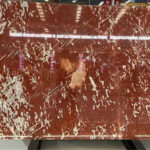
Deep in the folded mountains of Minas Gerais, Brazil, every breath of the earth’s crust carves a geological legend. Hermes Orange Quartzite was born in a nirvana that lasted 260 million years – originally a sandstone on the edge of the ancient continent, it was dragged into the furnace of the mantle under the huge force of the collision of plates. In the 1200°C flame, quartz particles began to dance, and iron elements penetrated into every crystal gap like molten gold, intertwining with titanium-containing minerals to form a fiery vein. When the orogeny lifted me back to the surface, the miners exclaimed at Hermes Orange Quartzite face: the sun penetrated the dust and fog, and the entire rock wall burned orange-red like the sunset molten gold, the white lines pierced the clouds like lightning, and the deep veins were faintly glowing with the starlight of rutile fines. Carlos, the old mine manager, tapped Hermes Orange Quartzite body with his knuckles, and the vibration echoed in the mine with a clear metallic sound: “Do you hear it? This is the drumbeat of sunrise sealed by the earth.” His diamond wire saw slowly kissed the rock layer, and the powder it brought up fluttered in the light, which was the same color as the 18th-century Hermès saddle copper nails displayed in a museum 30 kilometers away – a color conspiracy across time and space, quietly resonating between human civilization and geological power.
In the São Paulo Hermes Orange Quartzite workshop, the water jet hissed and shaped Hermes Orange Quartzite. When the blade cut the section of the rough material No. N-017, designer Anna suddenly held her breath: the splashing crystal dust evaporated a familiar orange mist under the ceiling light of the workshop, reminding her of the Hermès Kelly bag box she opened last night. The workers took out the Pantone color card and compared it repeatedly, and finally stopped at No. 16-1462TPX – the overlap with the orange of the Hermès trademark was as high as 98.7%. The name “Hermès Orange Quartzite” was born, but this is not a marketing fabrication, but a harmony of the essence of the material. At the Hermès headquarters in Paris, Emile Maurice, the founder who chose orange for the brand, once wrote: “This is the color of tanned leather exposed to the Alpine sun in March.” And the orange on Hermes Orange Quartzite body is the ultimate version of the Brazilian plateau sandstone and geothermal dance for 300 million years. This coincidence was deciphered by the Milan Polytechnic Laboratory: the hematite microcrystals formed when the iron element is oxidized at a constant temperature of 573°C have a refractive index that is surprisingly consistent with the azo compounds in Hermès leather dyes. The twin flames of nature and craftsmanship, at the top of the color spectrum pyramid, have different paths and the same destination.

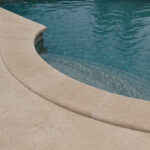
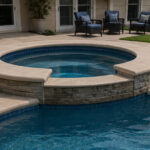
In the top-floor apartment of Roppongi Hills in Tokyo, architect Riken Yamamoto embedded me into the entire kitchen island. When the first ray of morning light penetrated the bulletproof glass, the 21 mm thick polished plate suddenly woke up – the orange-gold light waves refracted and jumped between the quartz crystals, dyeing the morning mist into liquid amber. The hostess, Yuki Sato, stroked Hermes Orange Quartzite surface and sighed: “In the past, you had to kneel down to wipe the red wine stains on the marble countertops, but now the children just throw the hot pot on it.” She deliberately overturned half a cup of Cabernet Sauvignon, and the wine rolled down like dew on a lotus leaf. Seven hours later, when the Michelin chef grilled Wagyu beef on the countertop, the iron plate at 280°C touched me, and only fleeting white smoke rose. Three sets of defense codes are sleeping in Hermes Orange Quartzite body: a Mohs hardness level 7 armor constructed of 93% quartz crystals; a nano-scale hydrophobic layer formed by a water absorption rate of less than 0.03%; and a thermal conductive buffer network woven by hematite and rutile. In the dome lounge of the Bulgari Hotel in Shanghai, the lighting designer used me as the stage: when the spotlight penetrated the 3 cm thick plate at a 37-degree angle, the suspended rutile needle-shaped crystals disassembled the light into countless light needles, and the whole bar suddenly fell into the molten gold galaxy. The most poetic experiment took place in a Miami beachfront villa, where the architect used an acid-washing process to remove Hermes Orange Quartzite glaze, allowing the water to carry the sunset over the pool wall. Billions of quartz crystals flickered in the waves, and the homeowner took a video with the caption: “The wedding of fire and seawater is eternally broadcast on the Hermes Orange Quartzite.”


In a private library in the 16th arrondissement of Paris, collector Jean Duras gazed at the whole board desk that had just been delivered. On the surface of the 5.2-meter-long single board, three lightning-like white lines wandered in the orange-gold background, shooting from the edge of the table to the rutile star cluster in the center – to capture this “Geological Rhapsody”, the mine selected 37 pieces of rough material. The main vein in Brazil can only mine 200 square meters of top-grade materials each year, and 52% of the impurity area must be removed for each cubic meter of rough material. In the underground mines of Minas Gerais, miners still use the exploration wisdom of the 16th century: drilling holes in the rock wall and filling them with black powder, and identifying the density of quartz by the sound of blasting. What really determines the value is the direction of the crystal veins – when the cutter Marcos operates a 2-meter-diameter diamond circular saw, he needs to keep the blade and the rutile thread at a perfect angle, otherwise the whole plate will shatter like glass. This luxurious elimination rate makes me worth high, but it has led to more extreme creations: in the Hermès flagship store in Dubai Shopping Center, the designer used me as the floor, and the brass caulking lines imitated the leather sewing process. When customers walked on the 6-meter-long and 3-meter-wide whole plate, they said: “It’s like walking on the molten sunset.” At Sotheby’s auction house, the rough material numbered OHQ-019 was sold for 380,000 euros, just because the pattern on the plate surface resembled the ribbons of Dunhuang flying fairies. The buyer wrote on the appraisal certificate: “Buy the fragments of the sun to fight against the inflation of time.”
Now, Hermes Orange Quartzite life continues to write a new chapter in human civilization: At the Milan Furniture Fair, Italian craftsmen used water jets to carve 2.8 cm thick plates into hollow domes, and the suspended Hermes glassware cast flowing orange shadows in the Hermes Orange Quartzite crevices. The curator named it “When Handicraft Meets Geological Time”. In the “Diary of the Earth’s Center” art installation at the Song Art Museum in Beijing, broken scraps were reorganized into a 7-meter-high magma eruption column, and electronic sensors caused pulsating orange light to seep out of the Hermes Orange Quartzite crevices. The child in the top floor apartment in Tokyo scribbled on me with crayons, and his mother did not stop him: “The memory of Hermes Orange Quartzite is longer than that of humans.” One evening ten years later, Yuki Sato found that the child’s graffiti had faded long ago, and when the sun penetrated the window ridges, the crystals in the graffiti area at that time actually refracted a stronger golden light-the iron element completed secondary color development in continuous oxidation.

At the Swiss Federal Materials Laboratory, scientists are exploring Hermes Orange Quartzite ultimate possibility: coating a 7-nanometer-thick quartz crystal layer with a photovoltaic film to create a building skin that generates electricity; using X-ray tomography to establish a crystal stress model and 3D print lightweight aerospace building materials. But at this moment, when the last line of text condenses on the screen, I am still waiting in the original state of the deep-buried mineral vein. Billions of years of silence turned into a geological whisper: when humans use courage to carve the unknown and use aesthetic survival to fight the law of increasing entropy, I will eventually offer Hermes Orange Quartzite blessing at the intersection of light and time – the life of this solidified lava is far more permanent than the civilization that wears it, but it has gained the meaning of transcending Hermes Orange Quartzite because of human obsession.


자주 묻는 질문
1. 에르메스 오렌지 쿼리사이트의 시각적 매력은 무엇인가요?
Hermes Orange Quartzite is prized for its high-fashion aesthetic, featuring a vibrant orange background with striking white and grey veining. It carries an energy of luxury and warmth, reminiscent of high-end boutique interiors, making it a premier choice for bold statement pieces.
2. 헤르메스 오렌지 쿼츠라이트는 화장대 상판에 적합한가요?
Yes, it is an excellent choice for master bathroom vanities. Its natural resistance to moisture and its extreme hardness ensure that it remains beautiful even in high-use bathroom environments, providing a stunning splash of color against neutral cabinets.
3. 이 돌을 식탁과 같은 맞춤 가구에 사용할 수 있나요?
물론입니다. 저희는 센추리 스타, we often see Hermes Orange used for custom dining or coffee tables. Its unique color and durability make it a perfect “functional art” piece that serves as a conversation starter in any luxury residence.
4. 헤르메스 오렌지는 대리석에 비해 내구성이 얼마나 뛰어나나요?
Hermes Orange is significantly more durable than traditional marble. As a quartzite, it is resistant to acid etching (from citrus or alcohol) and is much harder on the Mohs scale, meaning it won’t scratch as easily as softer stones.
5. 헤르메스 오렌지 쿼리사이트의 유지보수는 어떻게 해야 하나요?
We recommend sealing the stone upon installation to protect its vibrant orange hues. For daily cleaning, use only warm water and a pH-neutral cleaner. Avoid harsh chemicals or acidic cleaners to maintain the stone’s natural polished luster over time.