



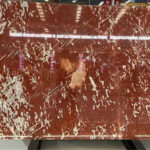

ロッソ・アンティコ大理石 その驚くべき美しさで広く知られるロッソ・アンティコ大理石——別名イタリアン・レッド大理石とも呼ばれる——は天然石です。時折、「イタリアン・レッド大理石」という呼称はロッソ・アンティコ大理石を指すこともあります。この大理石の特徴的な点は、濃いクリムゾン色と白い筋模様の2つです。この特定の大理石が初めて発見されたのは、ジェノヴァ近郊のイタリアの町ピエトララヴェッツァラでした。その珍しい色合いと筋模様から、この大理石はいくつかの別名で呼ばれています。その中にはロッソ・アンティコ・レヴァント大理石、マルモ・ロッソ・ディ・イタリア、ピエトララヴェッツァラ・ロッソ・マル・マリなどがあります。ロッソ・アンティコ大理石は主に暗い赤や茶色のトーンが特徴で、そこには数少ない白いアクセントが際立っています。その色調はほとんどが濃いチェリーレッドで、極めて白い筋模様と色合いが洗練されながらも唯一無二の外観を生み出します。この大理石は屋内外の装飾用途に最適です。豊かなカラーパレットと繊細な白い筋模様が石の全体的な優雅さを高め、視覚的魅力を引き立てます。キッチンやバスルームのカウンター、モニュメント、建築用石材、装飾用石材、階段、内装および外装の壁や床材、モザイク、ウォータージェットパーケット、壁パネル、天板など、あらゆる用途において、ロッソ・アンティコ大理石はその空間に豪華さと洗練された雰囲気を演出します。これはロッソ・アンティコ大理石が独特の見た目と感触を備えているためです。[QWEN_MT_ITEM_3] [QWEN_MT_ITEM_4]伝統的にイタリアン・レッド大理石であるロッソ・アンティコ大理石は、落ち着いた色調と輝くような白いストライプ模様が特徴です。また、ロッソ・アンティコ・ブラック大理石としても知られています。このデザイン要素は視覚効果と贅沢な感覚を向上させ、現代アート展覧会場の背景壁や床の装飾を一層引き立てます。この展覧会場の建築アイデアは、現代建築と古代の美しさを完璧に融合させることを目指しています。デザインコンセプトの目的は、ロッソ・アンティコ大理石を使用することで部屋の色彩だけでなく、その特有の質感も引き立て、直線的な魅力をさらに強化することです。高い評価を得ている大理石の一種がロッソ・アンティコ大理石です。展覧会場のメインの壁構造は大理石で作られており、これが背景壁の素材にもなっています。そのため、深い赤色のトーンと白い色の質感が重なり合って、複雑で奥深い印象を与えます。これは二つの色調が調和して混ざり合うからです。スラブとして考えられる例としては、一枚の大きなスラブか、小さなパーツを組み合わせて素晴らしいイメージを作り出す方法があります。磨き上げられた表面は色の彩度を高め、光が当たると背景壁が輝いて見えます。こうして展覧会場の注目ポイントは背景壁へと移ります。床の装飾にもロッソ・アンティコ大理石が使われており、背景壁へのオマージュとなっています。そのため、統一感のある視覚的印象が生まれます。タイルの配置については、円形や正方形のパターンなど、大理石のパーケットデザインによく見られる複雑なパターンを選ぶこともできますし、シンプルな直線的な敷き方を選ぶことも可能です。これらのパターンは、デザイナーの芸術的コンセプトと組み合わされることで、驚くべき模様を生み出し、空間に豊かさと芸術的な表現をもたらします。これらのデザインは、自然な色合い、質感、素材によって他とは一線を画しています。来場者が展覧会場に到着すると、まず目に留まるのがロッソ・アンティコ大理石の背景壁です。この壁の独特な色調と質感はすぐに観客の注目を集め、床も同じ素材で作られていることから、見る人の視覚体験がさらに深まります。さらに、地面から壁まで一貫したデザインは、展示されている作品にとって素晴らしい背景を提供するだけでなく、すべての展示品をこの尊い赤色のトーンで際立たせます。これにより、展覧会場全体がより魅力的になります。このように設計されたロッソ・アンティコ大理石は、装飾要素として展覧会場の品質を高めるだけでなく、伝統と現代、芸術と自然をつなぐ架け橋としても機能し、訪れた人々に長く記憶に残る視覚的盛宴を提供します。[QWEN_MT_ITEM_4] [QWEN_MT_ITEM_5]この素材を維持する方法
Renowned all around for its remarkable beauty, Rosso Antico Marble—also known as Italian Red Marble—is a natural stone. Sometimes the moniker Italian Red Marble is used in reference to Rosso Antico Marble. Two unique qualities of it are the rich crimson tones and white veins. The first discovery of this specific marble took place at Pietralavezzara, an Italian town near Genoa. Because of its unusual color and veins, this specific marble is referred to under several aliases. Among these nicknames are Rosso Antico Levanto Marble, Marmo Rosso Di Italia, Pietralavezzara Rosso Mar Mari, and others. Rosso Antico Marble defines itself mostly in dark red and brown tones, which are often accentuated by a few white touches. Its color is mostly dark cherry red, and its extremely white veins and tones give it a refined yet one-of- a kind look. This marble is a great choice for ornamental purposes both indoors and outside since its rich color palette and fine white veins improve the general elegance of the stone and add visual appeal. Whether it’s used for countertops in kitchens and bathrooms, monuments, architectural stones, decorative stones, stairs, wall and floor applications in both interior and exterior spaces, mosaics, water jet parquet, wall panels, tabletops, or any other use, Rosso Antico Marble can provide the area an air of opulence and sophistication. This is so because Rosso Antico Marble exhibits a unique look and feel.


デザイン事例
Traditionally Italian red marble, Rosso Antico Marble is distinguished for its mellow tones and brilliant white stripe pattern. It also goes as Rosso Antico Black Marble. This element of the design improves the visual effect and luxurious sense thanks which enhances the backdrop wall and floor décor of the modern art exhibition hall. The architectural idea for this exhibition hall seeks to provide a flawless fusion of modern architecture with ancient beauty. The design concept’s goal is to Using Rosso Antico Marble improves the color of the room as well as the specific texture it features, therefore augmenting its linear attractiveness. One kind of marble with great reputation is Rosso Antico Marble. The main wall construction of the exhibition hall is made of marble, which is also the background wall material. Given this, the tone of its deep red color and the texture of its white color expose a layered complicated sensation. This is so because the two hues mix harmonically. Two examples of what may be regarded as a slab are a big slab in its whole or a collection of smaller pieces arranged to create an amazing image. The polished surface enhances color saturation, which lets the background wall sparkle when it comes under light. The exhibition hall’s focal point thus turns to be the background wall. The floor ornamentation makes use of Rosso Antico Marble, a reference to the wall serving as the background, therefore producing a unified visual impression. Regarding the tile arrangement, you might choose a more complex parquet pattern, including the circular or square patterns typically seen in marble parquet design, or a straightforward straight line laying technique. These patterns provide the area an appearance of wealth and an environment with artistic expression since they, when combined with the artistic concept of the designer, produce amazing patterns. These designs stand out from others by virtue of their natural colors, textures, and materials. As visitors arrive to the exhibition hall, the first thing they notice is the Rosso Antico Marble background wall. The unique hue and texture of this wall grab the audience’s attention right away; the fact that the floor is also built of the same material underneath intensifies the visual experience the observer encounters even more. Furthermore, this constant design from the ground up to the wall not only gives the displayed artworks a great backdrop but also accentuates every exhibit in this honorable red tone. This is in addition to making the show hall more generally appealing. Designed in this way, Rosso Antico Marble not only improves the quality of the exhibition hall as a decorative element but also acts as a link between the traditional and modern, as well as between art and nature, so giving guests a visual feast they will remember for very long.


How To Maintain This Material
Deep red color and distinctive white veins make Rosso Antico Marble, a priceless natural marble, much sought for. But good care and upkeep are absolutely necessary if one wants to preserve its natural beauty and elegance. These thorough care guidelines will help Rosso Antico Marble to keep its beauty and value for a long period.
Maintaining the shine and extending the life of Rosso Antico Marble depend on daily maintenance. While avoiding damaging the marble, gently clean the surface with a soft, moist cloth or sponge to remove dust and stains. Rough brushes or cleansers with abrasives should not be used since they could harm the marble’s surface. Furthermore avoided should be cleaners including acidic components since they could erode the marble and dull the surface.
Steer clear of friction and heavy dragging by rubbing or dragging big objects on the marble surface could scratch or harm them. Soft pads or cushions should thus be utilized to protect the surface and lower friction and pressure when shifting bulky goods or furniture. This keeps the marble’s integrity and helps to avoid pointless scratches and damage.
Marble’s particular water absorption means that liquids should be avoided from sitting on the surface for extended periods of time to prevent them from seeping into the stone and damaging it. Should liquid be unintentionally spilled, it should be cleaned right away with a fresh towel to stop stains and wet marks from developing.
Polish routinely: Marble’s surface could show fine wear and scratches over time. Frequent polishing will bring the marble’s brilliance back and give it brand new appearance. To guarantee best results, hire a professional to polish it or use a professional marble polisher.
Rosso Antico Marble must be routinely sealed if it is to be kept from contamination and water damage free. A protective film created by the sealer can stop moisture intrusion and discoloration. For everyday cleaning, is advised to use a pH-balanced stone cleaner or mild dishwashing soap; then, wipe dry with a fresh soft cloth.

Marble flooring should not come into touch with acidic or alkaline chemicals as vinegar, lemon juice, detergues, etc. These compounds will damage the marble surface and leave challenging-to-fix markings. Should contact occur, rinse right away with fresh water and wipe dry with a dry towel.
Marble can be influenced by either high or low humidity since it is sensitive to it. Maintaining an interior humidity between 40% and 60% is advised to prevent too dry or damp conditions. One can accomplish this by shielding the marble from humidity fluctuations by means of a dehumidifier or humidifier.
Professional maintenance treatment every six months to one year is advised to help the marble floor to remain beautiful and to extend its life. To guarantee that the floor is always in the greatest state, you should hire a professional stone care firm to wax, polish and seal.
小さな傷の場合、大理石補修液または研磨パウダーで修復できます。傷に補修剤や研磨パウダーを塗った後、スポンジや柔らかい布で優しく拭き取り、傷が消えるまで行います。深い傷の場合は、さらなる損傷を防ぐため、専門の石材修復業者に依頼することをお勧めします。.
これらのメンテナンスガイドラインに従うことで、ロッソ・アンティコ大理石が持つ本来の美しさと優雅さを保証するとともに、その寿命を延ばすことができます。適切なメンテナンスとケアは、あなたの投資を守るだけでなく、あなたの空間が常に独創的な魅力と価値を放つことを保証します。ロッソ・アンティコ大理石の特徴的な美しさと高貴な品格は、注意深くお手入れすることで、あなたの住宅やビジネススペースをさらに輝かせます。それは自然石が持つ時代を超えた魅力を証明し、どんな空間にも優雅さと統一感を与えます。.